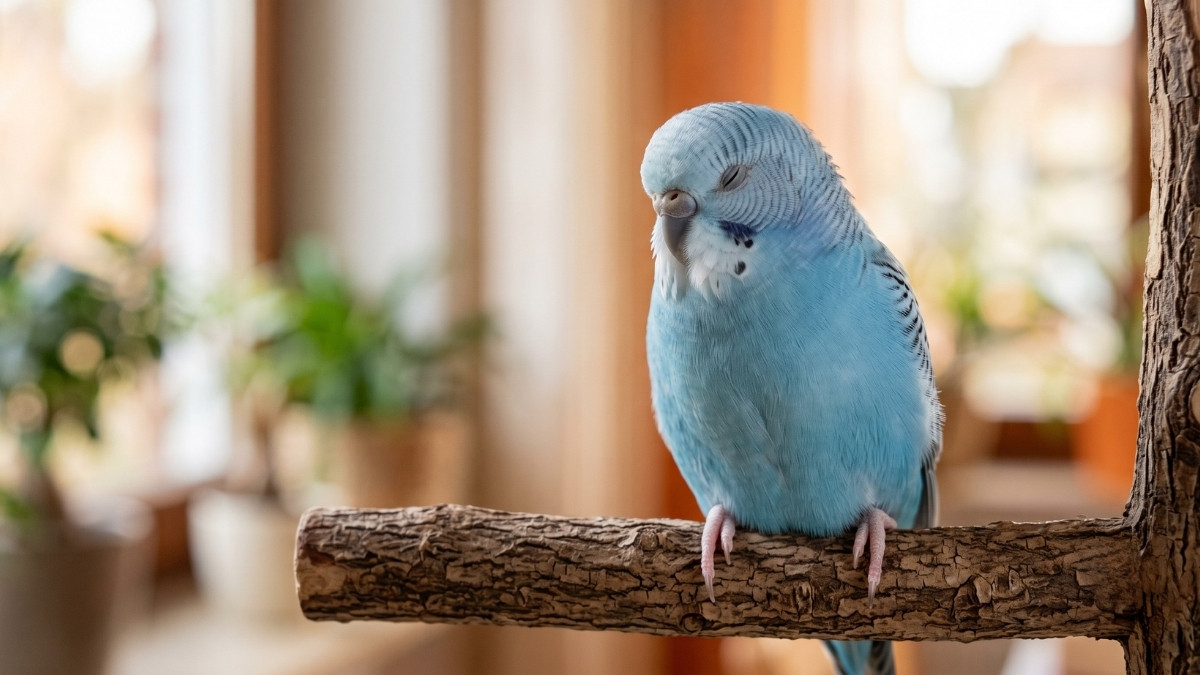
How to calm down a parakeet starts with taking things away, not adding them. Lower the noise and movement around the cage, dim the lights, speak softly, give the bird space, and don’t reach in to grab it. That is what calms parakeets down most reliably: a quiet, predictable room and a little time.
Budgies startle easily because they are prey animals. A shadow passing overhead, a sudden noise, a new object or an unfamiliar room can all register as a threat, and their first instinct is to flee or freeze.
The two stress responses look very different. An acute fright is loud and obvious: thrashing, frantic flapping, crashing against the bars, or a panicked scramble around the cage. Chronic, subtle stress is easy to miss. The bird may freeze, stay silent, sit hunched or stay tense for long periods.
The quiet type deserves attention, because the Merck Veterinary Manual notes that birds often hide illness until a problem is well advanced. If stress signs persist, or come with other changes, an avian vet can help.
Below are seven gentle ways to settle a frightened budgie.
How to Calm Down a Parakeet (Step-by-Step Calming Techniques)
1. Reduce Immediate Sensory Overload (Dim Lights and Cover Three Sides)
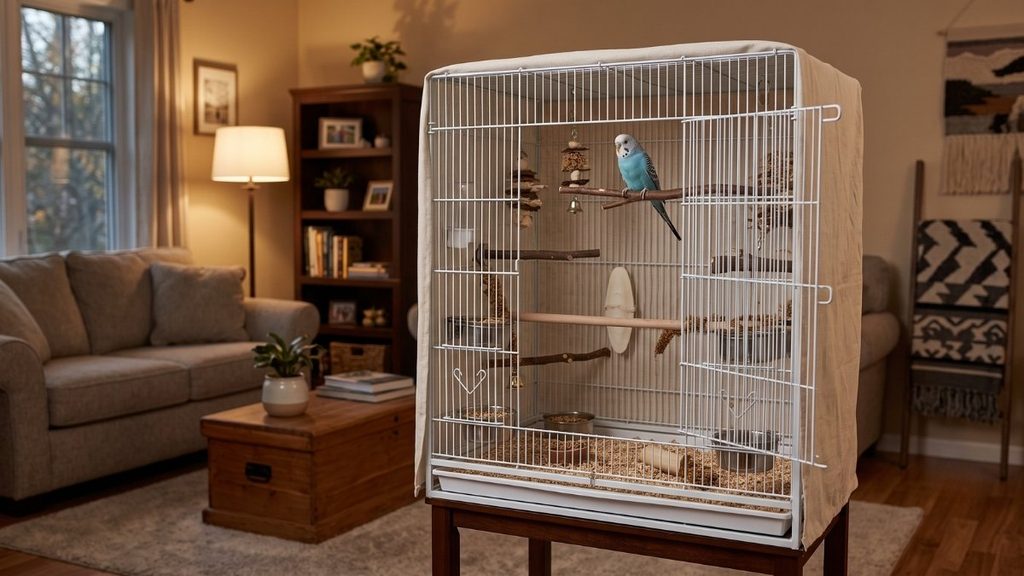
A frightened budgie is overwhelmed by input: bright light, movement, and shapes moving past the bars. Turning down the lights and draping a light, breathable cloth over three sides of the cage cuts the visual triggers and gives the bird a sheltered spot to settle in.
Leave the front open. Covering the whole cage can plunge the bird into sudden darkness, which can frighten a bird that’s already panicking, especially one prone to night frights. A dim room with a partly covered cage is gentler, and your bird can still see you and the room.
Use a cloth that doesn’t trap heat or shed loose threads, and keep it clear of food and water dishes.
2. Speak in a Low, Rhythmic, Monotone Voice
Birds are very sensitive to sound. Sharp gasps, shrill exclamations and sudden loud noises tend to read as alarm, and a frightened bird can feed off an anxious human’s tone.
A low, steady murmur works the opposite way. Flock birds keep up a soft, continuous background chatter when all is well, so an even, quiet voice mimics a calm flock. Say the bird’s name, hum, or read aloud, and keep the pitch down and the pace slow.
Don’t expect instant results. It’s the consistency that helps, and it may take several minutes of calm talking before the bird’s posture loosens.
3. Eliminate Sudden Predators and Room Movements
To a budgie, anything large and moving can look like a predator. Take away the likely triggers:
- Other pets: Move cats, dogs or any curious animal out of the room. Even a pet that’s behaving well can frighten a bird by staring.
- Ceiling fans and spinning objects: Switch them off. A whirling fan is a hazard for any bird that takes flight in a panic.
- Fast movement and noise: Pause the vacuum, TV or busy activity until the bird settles.
Give your bird space as well. Stepping back a few feet, roughly 3 to 4 as a guide, lets it keep a comfortable flight distance so it doesn’t feel cornered. Sit quietly nearby, look away from it and avoid reaching toward the cage.
4. Avoid Grabbing, Chasing, or Cornering the Bird
Reaching in to grab a frightened budgie is the fastest way to make things worse. To a bird, a hand closing around its body is exactly what a predator does. It can set trust back significantly, and a chased bird may panic, injure itself against the bars, or learn to dread your hands.
Do this instead:
- Stop and step back. Pulling away tells the bird the threat has passed.
- Let it settle on its own. Most birds calm down once they stop being pursued.
- If it’s loose in the room, dim the lights, close windows and doors, and wait. A bird usually settles on a perch or high spot, and it can then be coaxed to a finger or back into the cage.
Trust is the foundation for everything that follows. A calm, predictable home is what lets a budgie relax enough to show how parakeets show attachment to their owners, and each grab undoes some of that progress.
5. Use Soothing Background Audio (Soft Whistling or Low Classical Radio)
Some keepers find that complete silence unsettles a nervous bird. In the wild, a flock normally keeps up a steady chatter, and a sudden hush can signal danger. Soft, steady sound may therefore feel safer than a dead-quiet room, though there’s no research I can point to that proves it.
Keep it gentle:
- Whistle or hum quietly a simple, repeating tune.
- Play low-volume classical music or soft radio talk. Avoid loud, sharp or sudden sounds.
- Keep it steady. Don’t switch tracks or raise the volume abruptly.
6. Offer High-Value Familiar Treats from a Safe Distance
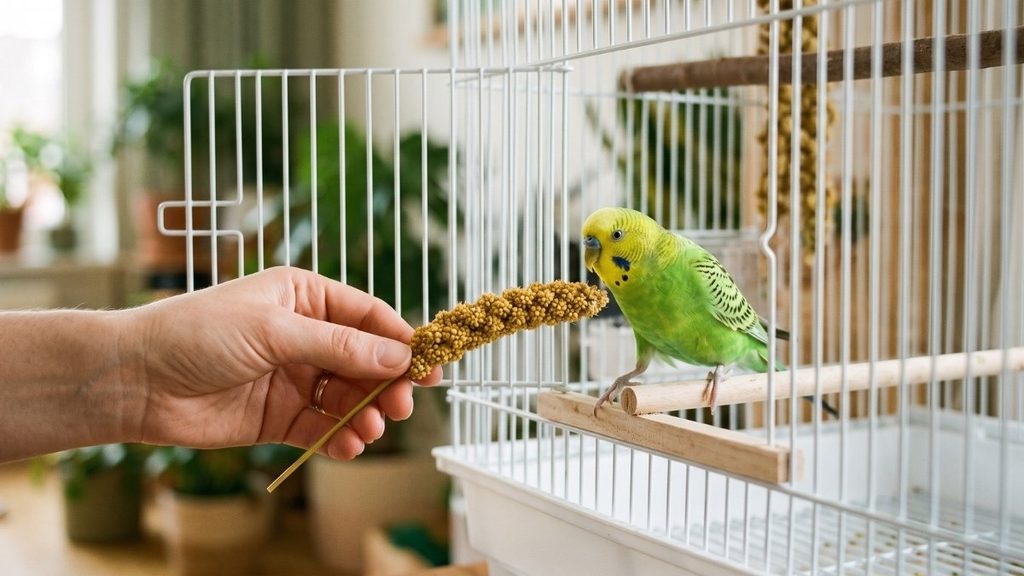
A favorite food can help a bird relax, but don’t force it. Place a spray of millet near the cage, or hold it at arm’s length and let your bird come to it in its own time. A budgie that starts eating again is usually starting to feel safer.
Keep amounts small. VCA Animal Hospitals notes that seeds lack key nutrients, so millet works as a reassurance treat and shouldn’t replace regular meals. Don’t push it toward the bird, and don’t hold your hand close if it backs away.
7. Respect the 15-Minute Decompression Window
After a scare, a bird’s body stays on high alert for a while. A common rule of thumb among keepers is to give it about 15 minutes of quiet before trying any interaction, though some birds need longer.
Use that time to sit still, talk softly if you like, and watch. Signs it’s settling include loosening feathers, resumed preening, soft chatter, or eating.
If your bird stays panicked, breathes with its mouth open, or doesn’t settle, contact an avian or exotics vet.
Dealing With Budgie Night Frights and Sudden Panic
A night fright is a burst of blind panic in the dark. A sleeping budgie is startled by a noise, a shadow or a flash of light, then flaps wildly, crashes into the bars and screeches. The danger is injury, especially a broken blood feather, which can bleed heavily on a bird this small.
What to do right away
- Turn on a soft, low light. A lamp is better than the ceiling light. Seeing its perch helps a bird orient.
- Speak softly and steadily until the bird returns to a perch.
- Avoid grabbing unless it’s unavoidable. Handling a panicked bird can add stress or injury.
- Check for bleeding once it’s calm. Look at the cage floor, the bird’s wings and tail, and its head.
Don’t try to treat a bleeding feather yourself. If you see blood that doesn’t stop quickly, or the bird is fluffed, weak, panting, holding a wing oddly or not using a leg, contact an avian or exotics vet right away.
Preventing repeat episodes
- Add a dim night light in the room or hallway, since total darkness can leave a startled bird disoriented.
- Use a breathable cover, ideally leaving part of the cage uncovered so the bird can still see some light.
- Choose a draft-free spot away from windows, vents and fans.
- Remove triggers: headlights through curtains, TV glare, pets and nighttime noise.
- Keep perches clear of the bars so wings have room to move.
If frights keep recurring, track when they happen and ask a vet to rule out other causes.
After the panic passes
Once things settle, watch for a return to normal: soft beak grinding, relaxed preening and quiet chatter. Our post How Do I Know If My Parakeet Is Happy? 9 Signs Your Budgie Is Thriving shows what those look like.
What Never to Do When Your Parakeet Is Scared
A frightened budgie needs calm and space. A few well-meant reactions make things worse:
- Never shout. Raised voices add to the alarm. VCA Animal Hospitals notes that yelling at a screaming bird can accidentally reinforce the behavior, so stay quiet and steady.
- Never shake the cage. It can throw a panicking bird against the bars and cause injury, and it confirms the bird’s sense that something dangerous is happening.
- Never spray water to punish or calm. A spray is a startling, unpleasant experience, and it can damage the trust you’re trying to build.
- Never force physical contact. Grabbing, cornering or pushing a hand toward a frightened bird teaches it to fear hands. Let it come to you.
Some stress passes once the trigger is gone. Panic that keeps happening without an obvious cause, or extreme lethargy such as sitting fluffed and unresponsive, calls for professional medical evaluation. The Merck Veterinary Manual notes that birds often hide illness until it’s well advanced, so don’t wait for it to pass. Contact an avian or exotics vet.
Sources & Veterinary References
- Merck Veterinary Manual: “Management of Pet Birds“
- Lafeber Company: “Pet Bird Behavior“
- VCA Animal Hospitals: “Budgies – Feeding“
This article is for educational purposes and isn’t veterinary advice. If your budgie shows sudden behavior changes, panics repeatedly, or seems unwell, contact an avian or exotics veterinarian.