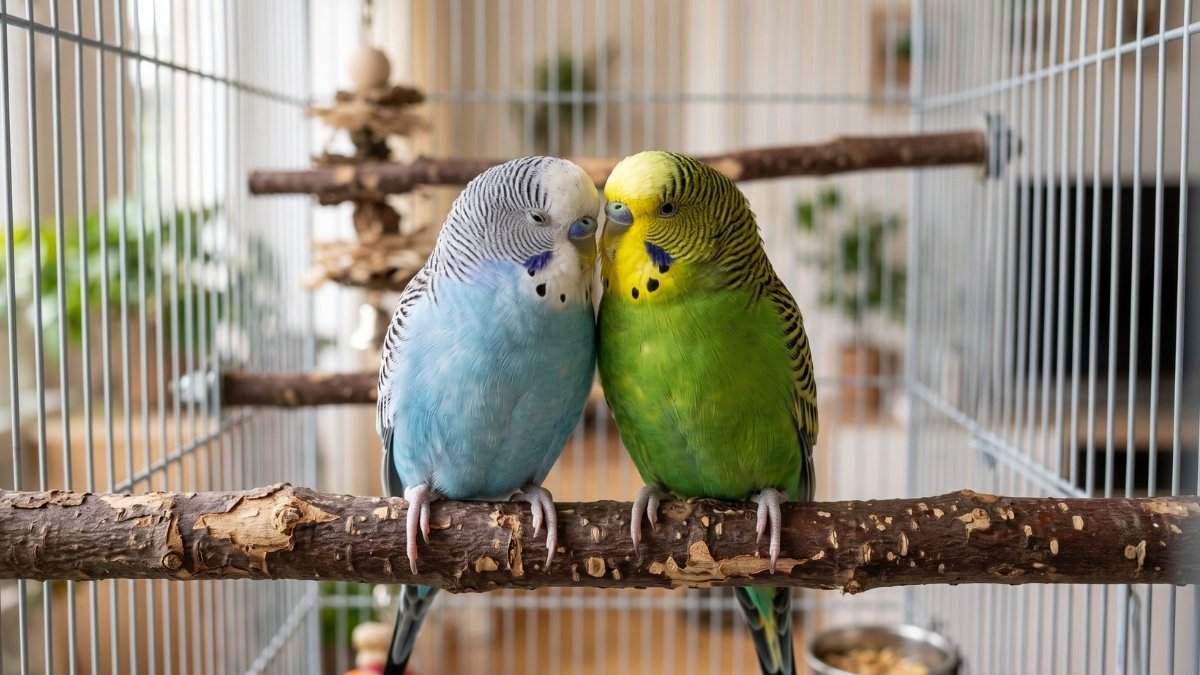
Yes, two parakeets can live together in the same cage, but success depends on the individual birds, sufficient cage space, and a slow introduction process. Get those things right and a pair can become genuine companions. Get them wrong and the cage can become a source of serious conflict.
The reason the answer isn’t a simple yes comes down to wild budgie behavior. In Australia, budgies travel in large flocks and rely on social contact for safety, foraging, and communication. A lone budgie in captivity may benefit from that companionship. But budgies can also defend nesting areas, food, and preferred spaces, and those instincts can become more noticeable in a confined cage. A cage with limited perches, feeders, and favorite spots can therefore create opportunities for territorial conflict.
That’s why rushing is one of the biggest mistakes when introducing a new bird. Placing two unfamiliar birds in one cage on day one gives neither bird enough time to adjust to the other, and the resident bird may see the newcomer as an intruder. Serious fights can result in injuries and prolonged stress. The sections below explain how to reduce those risks.
Gender Dynamics: Which Pairings Work Best?
Gender can influence compatibility, but it is not the only factor. Individual personality, previous social experience, age, and the way the birds are introduced can all affect whether two budgies live peacefully together.
Male and Male (Often a Good Pairing)
Can male parakeets live together? In many cases, yes. Male budgies often form close social bonds, preen each other’s head feathers, share perches, and eat side by side. However, individual personalities still matter, and even two friendly males can disagree over a favorite perch or toy.
Brief squabbles that end quickly can be normal. Sustained chasing, pinning, repeated biting, or preventing the other bird from eating are signs that you need to intervene.
Male and Female (Natural Companionship with Precautions)
A male and female may form a close bond, but their relationship can also encourage breeding behavior. Unwanted breeding and repeated egg-laying can create health risks for the female, including calcium depletion and potentially dangerous reproductive complications such as egg binding.
Remove coconut huts, nest boxes, and other dark, enclosed spaces that could encourage nesting behavior. Maintain a consistent day-and-night routine and avoid deliberately encouraging breeding behavior through nesting materials or similar setups. If a female begins laying eggs repeatedly, speak with an avian veterinarian about appropriate ways to manage chronic egg-laying rather than trying to treat the problem yourself. If eggs appear anyway, consult an avian veterinarian to safely manage chronic egg-laying rather than guessing. for more information.
Female and Female (May Require More Careful Monitoring)
Can two female budgies share a cage? Yes, they can, but some females may be more territorial or assertive than others. Female-female introductions therefore deserve careful monitoring, especially when the birds are unfamiliar with each other.
Watch for aggressive pecking, repeated chasing, food guarding, or one bird consistently blocking the other from feeders and perches. A bullied bird may become stressed or eat less. Females that have lived together successfully may have no problem sharing a cage, while unfamiliar adults may need more time and space to adjust.
Keep a second cage available so you can separate the birds quickly if serious aggression or injuries occur.
Can Three Parakeets Live Together? (Watch the Social Dynamics)
Technically yes, three parakeets can live together, but the number of birds is not a guarantee of compatibility. Two birds may form a particularly close bond while another bird spends less time with them or gets pushed away from preferred resources.
This does not mean every trio will become unstable. However, with three birds, you need to watch carefully for repeated exclusion, chasing, food guarding, or one bird being unable to access preferred perches. If one bird is consistently being bullied or excluded, separate the birds and reassess the setup. An avian veterinarian or qualified bird behavior professional can help if the problem continues.
Step-by-Step: How to Safely Introduce a New Parakeet
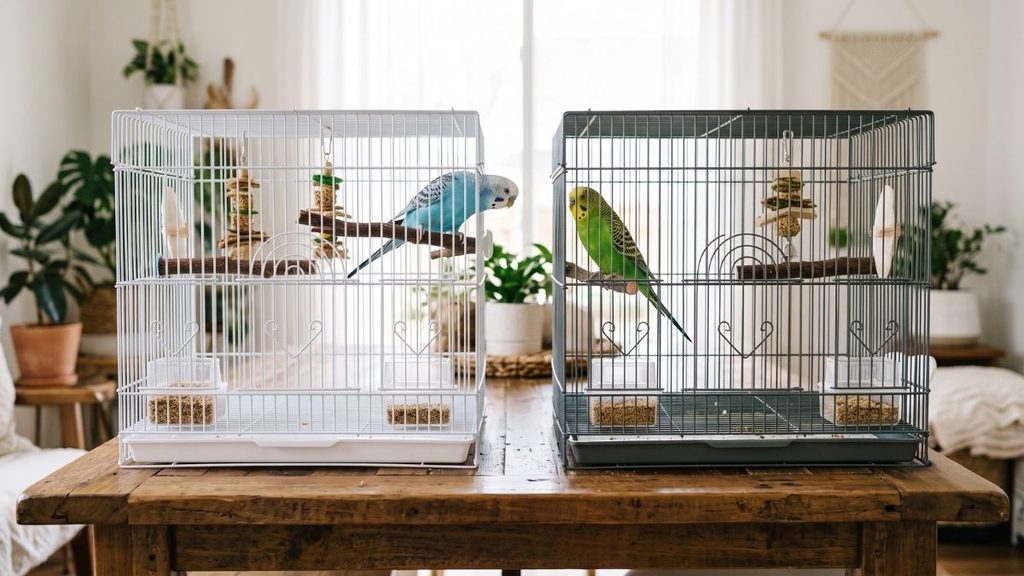
Introducing budgies is a process measured in weeks, not hours. Putting a new bird straight into an established bird’s cage, with no quarantine and no gradual contact, can create unnecessary health and behavioral risks. This is also an important point covered in What Not to Do With Parakeets: 10 Common Mistakes That Scare or Harm Your Budgie. The four steps below provide a safer approach.
Step 1: The 30-Day Quarantine
Keep the new bird in a separate room during a quarantine period before allowing direct contact. A period of around 30 days is a commonly recommended precaution, although the appropriate duration and testing can vary depending on the birds and veterinary advice.
Birds can hide signs of illness, so watch for tail bobbing, wheezing, fluffed feathers, abnormal droppings, unusual tiredness, or appetite changes. Wash your hands between handling birds and avoid sharing food bowls, toys, or other equipment during quarantine.
A pre-introduction avian vet examination can be especially useful. Your veterinarian can advise whether testing or other precautions are appropriate before the birds meet.
Step 2: Side-by-Side Cage Placement
Once the quarantine period is complete and the new bird is considered healthy, move the cages into the same room while keeping them safely separated. A gap of several inches can allow the birds to see and hear each other without being able to reach through the bars.
Look for relaxed behavior such as eating, preening, chirping, or calmly observing each other. Lunging, repeated attempts to attack through the bars, or persistent hiding means the birds may need more time.
There is no universal timetable for this stage. Some birds adjust within days, while others need one or two weeks or longer.
Step 3: Neutral-Territory Out-of-Cage Meetings
Next, let both birds out together in a room that neither bird strongly associates with its cage or territory. Bird-proof the room first by covering windows and mirrors, keeping other pets away, and removing potential hazards.
Supervise every session closely. Start with short meetings and increase the duration only when both birds remain relaxed around each other. Mutual preening, sitting nearby, and relaxed body language are encouraging signs.
If a serious fight starts, separate the birds calmly and return to an earlier stage of the introduction process.
Step 4: Moving Into the Shared Cage
Choose a cage large enough for two birds and, ideally, use a wide flight cage. Before placing both birds inside, rearrange the cage layout by moving the perches, toys, feeders, and other items.
A changed layout can reduce the resident bird’s tendency to defend familiar locations. Provide two food bowls and two water sources, placed apart, so one bird cannot easily guard all the resources.
Watch the birds closely during the first several days. Be prepared to separate them if you see sustained chasing, pinning, repeated biting, or any injury.
Friendly Bonding Signs vs Dangerous Aggression
Not every squabble signals trouble, and not every quiet cage signals peace. Learning to tell normal social interaction from genuine aggression helps you intervene at the right time.
Healthy Flocking and Affection
Bonded budgies often make their closeness obvious. Allopreening, where one bird gently grooms the other’s head and neck feathers, is one positive sign of social bonding. The receiving bird may relax, fluff its feathers slightly, or lean toward the other bird.
If you want a baseline for relaxed mutual behavior, How Do I Know If My Parakeet Is Happy? describes the body language in detail.
Other positive signals include:
- Mutual beak-tapping or gentle beak touching, which can be part of normal social interaction
- Soft chattering and quiet contact calls exchanged between the birds
- Perching close together and eating without signs of tension
- Sleeping side by side, especially when both birds appear relaxed
Brief disputes, such as a quick beak flick over a perch or a short chase that ends on its own, can happen between birds that otherwise get along. If both birds quickly return to normal activities such as eating or preening, there may be no need to intervene.
Red-Flag Aggression That Requires Immediate Separation
Budgie fights can cause serious injuries quickly. Separate the birds if you see:
- Relentless chasing that gives the target no chance to rest or eat
- Guarding food or water, especially when one bird blocks the other from accessing resources
- Pinning, where one bird holds the other down
- Screeching attacks accompanied by lunging, open-beaked charges, or repeated biting
- Drawn blood, including bitten toes, cere wounds, or torn skin
Use a towel or another safe method to separate the birds without putting your hands between fighting birds. Place them in separate cages and inspect the injured bird carefully. Contact an avian veterinarian if there is bleeding, swelling, a significant wound, or other concerning symptoms.
A bird that stops eating or has a significant drop in appetite needs prompt veterinary attention. For calming a shaken bird afterward, How to Calm Down a Parakeet: 7 Gentle Ways to Soothe a Stressed Budgie covers quiet, low-stimulation recovery.
Once both birds have settled, restart the introduction from side-by-side cages rather than immediately returning them to shared space.
Essential Cage Requirements for Two Budgies
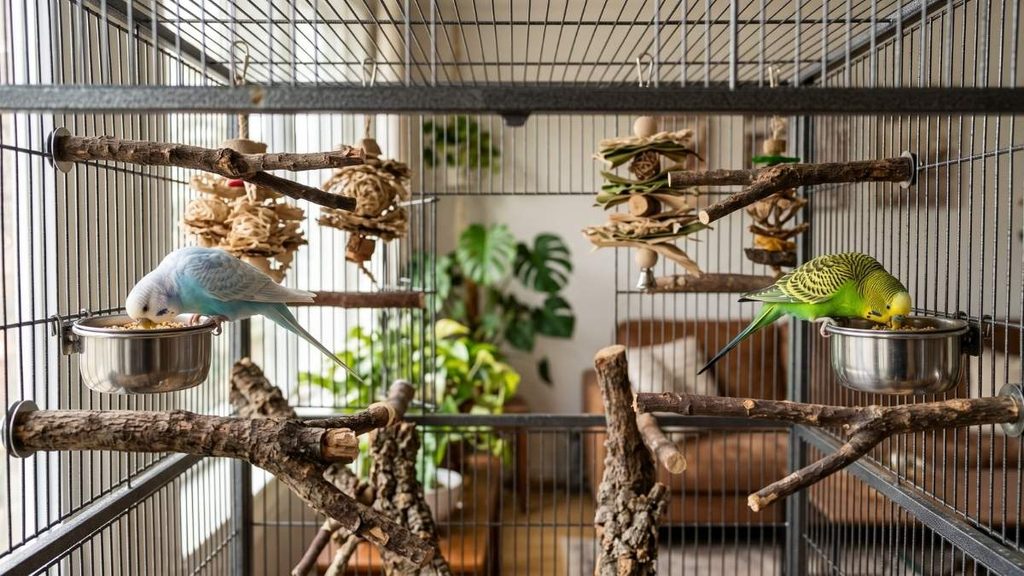
Space is one of the biggest factors in reducing competition between budgies. For a pair, aim for a cage of at least 30 inches wide, 18 inches deep, and 18 inches tall, while treating those dimensions as a baseline rather than an ideal target. Larger is better when practical.
Budgies benefit from horizontal flight space, so choose a wide rectangular cage rather than a tall, narrow tower or cylindrical cage. Bar spacing should be no wider than about half an inch, and the cage should provide enough room for both birds to move away from each other when needed.
The Golden Rule of Multi-Bird Cages: Duplicate Everything
Scarcity can create competition, so provide multiple resources:
- Two food bowls, placed apart so one bird cannot easily guard both
- Two water sources, also positioned separately
- Multiple perches at different locations, giving both birds options for resting and sleeping
- Duplicate toys and enrichment items, especially if the birds compete over particular toys
Add another feeding station if one bird tends to dominate access to food, and clean food and water dishes regularly.
Sources & Veterinary References
- Lafeber Company: Budgie Parakeet Care & Housing
- Lafeber Company: Understanding Pet Bird Behavior
Disclaimer: This article is for educational purposes only and does not replace professional veterinary advice. Birds can hide signs of illness, so if your budgie shows an injury, appetite loss, or a significant change in behavior, consult a qualified avian veterinarian promptly.
So, can two parakeets live in the same cage? Yes, many can, when the birds are compatible, the cage provides enough space and resources, and the introduction is gradual and carefully monitored.