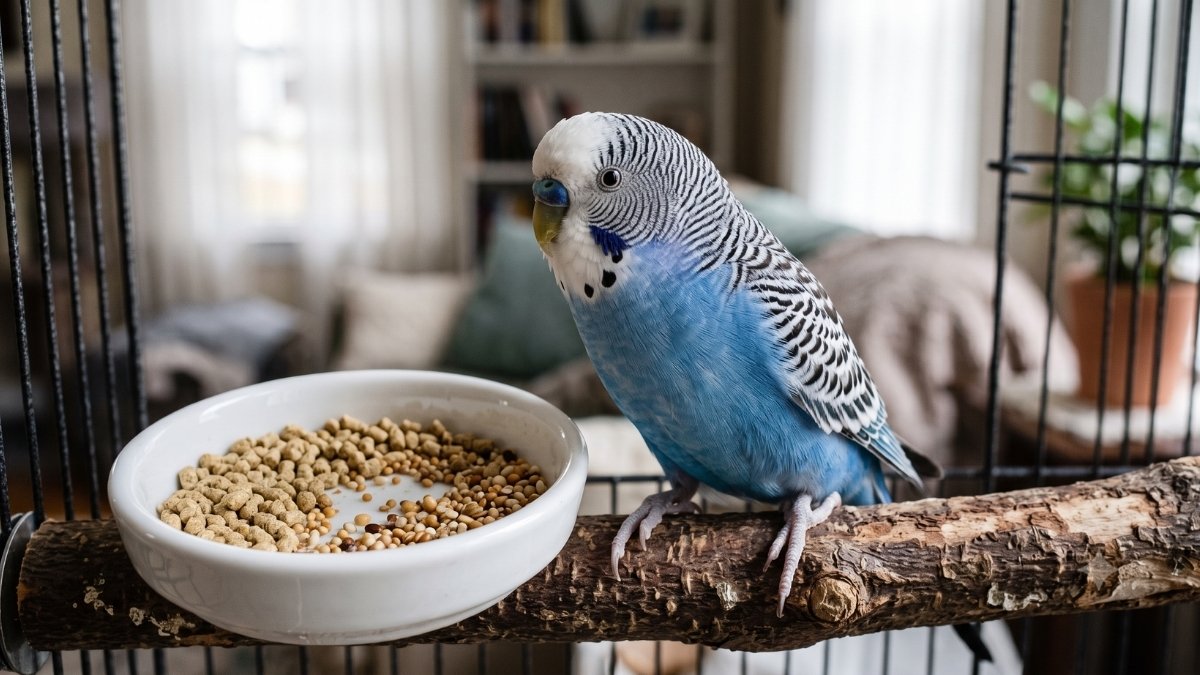
Standing in the pet aisle with a brand-new budgie at home, you’ve probably wondered one thing: what do parakeets eat? The bag of seed mix looks like the obvious answer. It isn’t the whole story.
Here’s the short version. A healthy budgie diet should be based on a nutritionally balanced food such as pellets, along with fresh vegetables and a smaller amount of seed and other suitable foods.
One quick note on names: budgerigar is one specific type of parakeet, while “parakeet” can refer to several small parrot species. This guide focuses on pet budgies, or budgerigars.
If you’re just getting started, our Parakeet Care Guide covers the basics of caring for a pet bird.
What Can I Feed My Parakeet? The Daily Diet Breakdown
Think of your budgie’s diet as a few different parts rather than one food doing everything.
Pellets: a nutritious foundation
Pellets are formulated to provide a more consistent mix of nutrients than a seed-only diet. Veterinary guidance commonly recommends making a nutritionally complete formulated food an important part of a budgie’s diet.
VCA Animal Hospitals recommends that pellets make up approximately 60–80% of a budgie’s diet. Other veterinary guidance uses different proportions for small birds, so there isn’t one percentage that applies perfectly to every bird.
The important point is that seed should not be the entire diet.
When you shop:
- Pick a size made for small parrots. Budgie-sized pieces are easier for them to handle.
- Check the use-by date. Fresh food is preferable.
- Choose a reputable, nutritionally complete product made for small parrots.
- Avoid relying on treats or sugary foods as a major part of the diet.
Seed: useful, but not the whole meal
Seed isn’t automatically bad. The problem is when a budgie eats mostly seed, especially if it selectively chooses only its favorite varieties.
Seed-based diets can be high in fat and may not provide all the vitamins, minerals and other nutrients a budgie needs. Budgies can also pick out the tastiest seeds while leaving other parts of a mixed diet behind.
Use seed in smaller amounts, including as a training reward or foraging food.
The exact amount depends on the rest of your bird’s diet, its health and the advice of your avian veterinarian. Don’t treat a single percentage as a universal rule.
Fresh vegetables and leafy greens
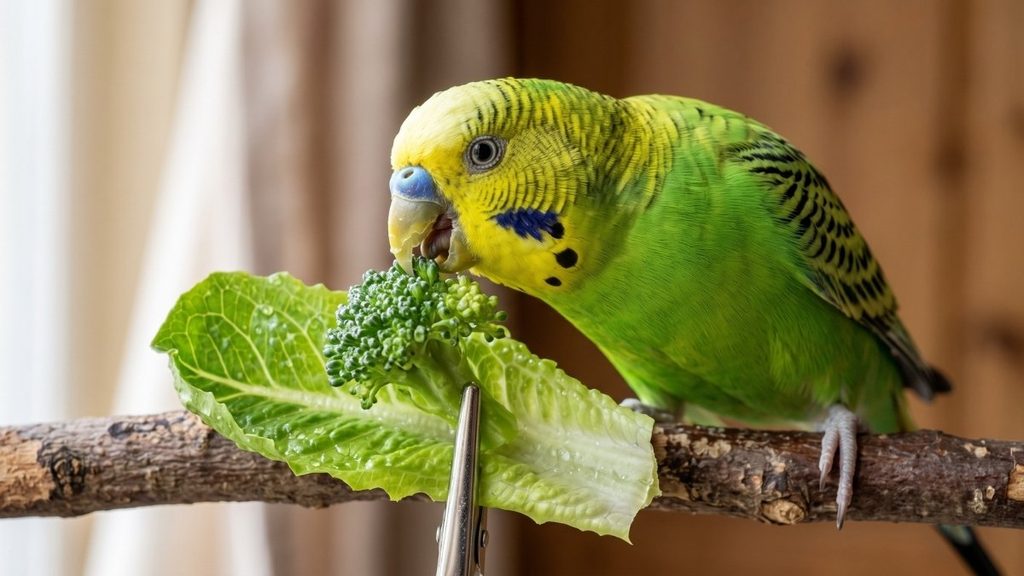
Fresh vegetables can add variety and useful nutrients to a budgie’s diet.
Good choices include:
- Kale and romaine
- Broccoli
- Shredded carrot
- Other suitable leafy greens and vegetables
VCA notes that fruits, vegetables and greens should make up a limited portion of the diet, with vegetables generally preferred over large amounts of fruit.
Wash fresh produce before serving and cut it into pieces that are easy for a budgie to handle.
Pale, watery vegetables such as iceberg lettuce and celery provide relatively little nutritional value compared with more nutrient-dense vegetables.
A simple daily routine
Consistency matters more than making every meal complicated.
A simple routine might look like this:
- Morning: Fresh water, the regular food and a small serving of vegetables.
- Later: Remove uneaten fresh food before it spoils.
- Evening: Check the dishes and make sure your bird has access to its normal food and clean water.
Feeding is only one part of keeping a budgie healthy. A proper cage, exercise, social interaction and regular observation matter too.
Quick takeaways:
- Pellets or another nutritionally complete formulated food should form an important part of the diet.
- Vegetables can be offered regularly in small portions.
- Seed is better treated as a smaller part of the diet rather than the main food.
- Fresh water should always be available.
Safe Human Foods: Whole Grains, Bread, and Fresh Produce
Your kitchen may contain a few foods that can be offered to a budgie in small amounts.
These foods are extras, not replacements for a balanced diet.
Plain cooked whole grains
Some plain cooked grains can be offered occasionally.
Suitable examples include:
- Brown rice
- Plain oats
- Quinoa
Serve them plain and cooled, with no salt, butter, oil or sugar.
A small amount is enough. Remove cooked food before it has a chance to spoil.
Bread and crackers
A tiny piece of plain bread may be offered occasionally, but it doesn’t provide the nutritional value of a balanced bird diet.
The bigger concern is processed bread, crackers and snacks containing a lot of salt, sugar, fat or added flavorings.
- Occasionally: a tiny piece of plain bread
- Skip: salted crackers, pretzels, chips and heavily processed snacks
When in doubt, stick with foods specifically recommended for pet birds.
Safe fruits
Fruit can be an occasional part of a budgie’s diet, but it shouldn’t replace vegetables or nutritionally complete food.
Some suitable choices include:
- Blueberries, strawberries and raspberries
- Small pieces of melon
- Apple without seeds
- A small slice of banana
Wash fruit before serving and cut it into manageable pieces.
Never give your budgie fruit seeds or pits.
Clear away fresh food
Fresh produce and cooked foods spoil much faster than dry pellets or seed.
Remove uneaten fresh food regularly, especially in warm conditions. Don’t leave perishable food sitting in the cage for long periods.
What Fruits and Foods Can Parakeets Not Eat?
Most of this list comes down to one simple rule: if you aren’t sure a food is safe for your bird, don’t offer it until you’ve checked with a reliable avian-care source or veterinarian.
Fruit seeds and pits
Don’t give your budgie apple seeds or the pits from fruits such as cherries, peaches, apricots and plums.
The safest habit is simple: remove seeds and pits before giving your bird fruit.
Avocado
Avocado should not be fed to pet birds.
VCA Animal Hospitals lists avocado as potentially toxic and advises that it should never be offered to a bird.
Chocolate, caffeine and alcohol
Keep chocolate, caffeinated drinks and alcohol away from your budgie.
That includes coffee, tea, energy drinks and alcoholic beverages.
Don’t allow your bird to drink from your cup or nibble leftovers simply because the amount seems small.
Onion and garlic
Onion and garlic should also be avoided.
This includes pieces of cooked food that contain these ingredients. Table scraps can contain other ingredients that aren’t suitable for birds as well, so they are generally best avoided unless you know exactly what is in them.
Salty, fatty and sugary snacks
Chips, pretzels, heavily salted foods, sweets and other processed snacks are poor choices for a budgie.
A bird’s nutritional needs are very different from ours, and these foods can add unnecessary salt, fat or sugar to the diet.
Quick Reference: What Can Budgies Eat?
| Daily diet | Occasional foods | Foods to avoid |
|---|---|---|
| Nutritionally complete budgie pellets/formulated food | Small amounts of plain cooked brown rice, oats or quinoa | Avocado |
| Fresh vegetables and suitable leafy greens | Berries and small pieces of melon | Chocolate |
| Clean, fresh water | Apple or banana with seeds/pits removed | Caffeine and alcohol |
| Appropriate amount of seed, depending on the overall diet | Tiny piece of plain bread | Onion and garlic |
| — | Small amounts of suitable fruit | Fruit seeds and pits |
| — | Salty, sugary or heavily processed snacks |
If Your Budgie Eats Something It Shouldn’t
If you think your budgie has eaten a potentially toxic food, don’t try to treat the bird at home.
Contact an avian or exotics veterinarian and tell them what your bird ate, approximately how much, and when it happened. If the situation appears urgent or it is outside normal clinic hours, contact an emergency veterinary service.
Daily Feeding Habits and Common Questions
Is your budgie actually eating?
Here’s a trap that catches many new owners: the food dish looks full, but much of it may be empty seed husks.
Budgies remove the outer shell from seeds before eating the inside, so a dish can appear full even when very little edible food remains.
A quick check each day can help:
- Look underneath the husks to see whether actual food remains.
- Watch your bird eat rather than assuming a full bowl means it has eaten.
- Pay attention to droppings and normal behavior.
If your bird’s eating habits suddenly change, take it seriously.
Setting up food and water dishes
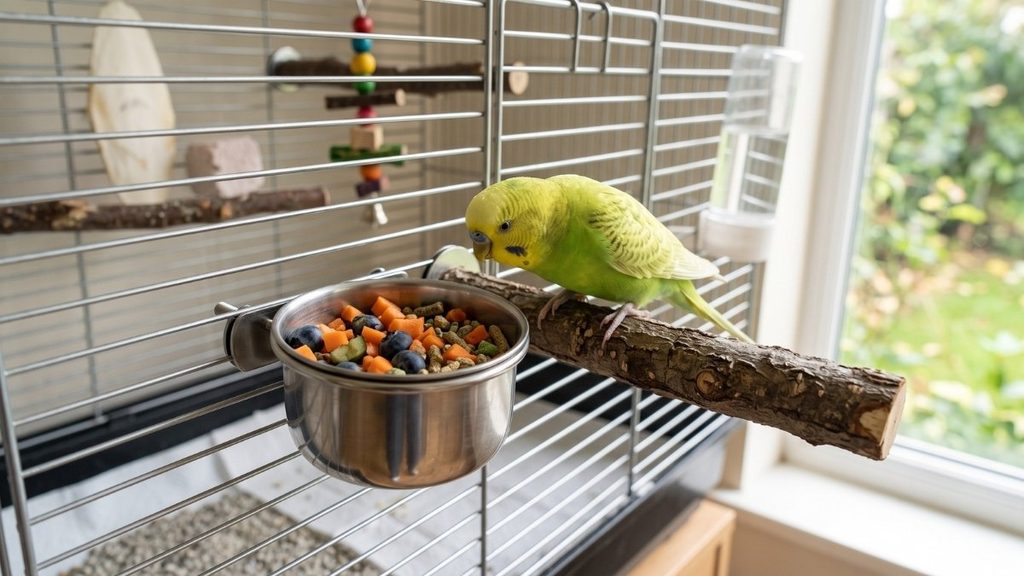
Put food dishes somewhere your bird can reach them comfortably, but avoid placing them directly underneath a perch where droppings can fall into the food.
Keep water away from the food if possible. Budgies can drop food into their water, making it dirty.
If you’re still setting up your bird’s home, our budgie cage size guide covers the ideal cage dimensions and bowl placement.
What if your budgie stops eating?
A budgie that suddenly stops eating needs prompt attention.
Birds can hide signs of illness until they are quite sick, so a major change in appetite shouldn’t simply be watched for several days.
If your budgie is eating very little or has stopped eating, contact an avian or exotics veterinarian.
Tap water or filtered water?
Fresh, clean water should always be available.
Whether tap water is appropriate depends on the quality of your local water supply. If there is a local water-quality warning, a boil-water advisory, or another concern about your supply, follow the appropriate local guidance and ask your veterinarian if you’re unsure.
The important part is not whether the water comes from a tap or filter; it is that the water is clean and changed regularly.
Keep dishes clean
Change your budgie’s water every day and clean food and water dishes regularly.
Wash dishes with warm water and mild soap, rinse them thoroughly, and allow them to dry before refilling them.
If food or droppings contaminate a dish during the day, clean it sooner.
How to Transition a Budgie From Seeds to Pellets
If your budgie has always eaten seed mix, don’t assume it will immediately recognize pellets as food.
A gradual transition is usually safer than suddenly removing the familiar diet.
A simple step-by-step approach
- Start with a mix. Introduce pellets alongside the food your bird already accepts.
- Shift gradually. Slowly increase the amount of pellets while reducing the amount of seed.
- Offer vegetables alongside the new food.
- Watch your bird eat. Don’t assume that food disappearing means the bird has eaten the nutritious part.
- Monitor weight if you can. A small gram scale can help you notice changes, but your veterinarian can advise you on what’s normal for your individual bird.
- Get veterinary help if your bird refuses food. A bird that eats very little during a diet change may need professional guidance.
The transition can take days, weeks or longer depending on the bird.
Never force a diet change by simply removing all familiar food and hoping your bird eventually eats the pellets. The priority is making sure the bird continues to eat while the diet is being changed.
Pulling It All Together
Here is the whole guide in a few lines:
- Pellets or another nutritionally complete formulated food should be an important part of the diet.
- Fresh vegetables can be offered regularly in small portions.
- Seed should not be the only food your budgie eats.
- Fruit and human foods are occasional extras rather than dietary foundations.
- Toxic or unsuitable foods stay out of reach, including avocado, chocolate, caffeine, alcohol, onion, garlic and fruit seeds or pits.
- Fresh water should always be available and changed regularly.
- Sudden changes in appetite or eating behavior deserve attention.
When to Call the Vet
Call an avian or exotics veterinarian if your budgie:
- Stops eating or eats much less than normal
- Loses weight
- Develops a noticeable change in droppings
- Becomes unusually quiet or lethargic
- Looks fluffed up for an extended period
- Develops breathing problems or other unusual symptoms
Your veterinarian can also help you choose an appropriate diet based on your bird’s age, health, body condition and existing food.
Sources & Veterinary References
- VCA Animal Hospitals: Feeding Budgies
- Merck Veterinary Manual: Management of Pet Birds
- Merck Veterinary Manual: Nutritional Disorders of Pet Birds
This guide is for general education and is not veterinary advice. For concerns about your bird’s diet, weight, eating habits or health, contact an avian or exotics veterinarian.