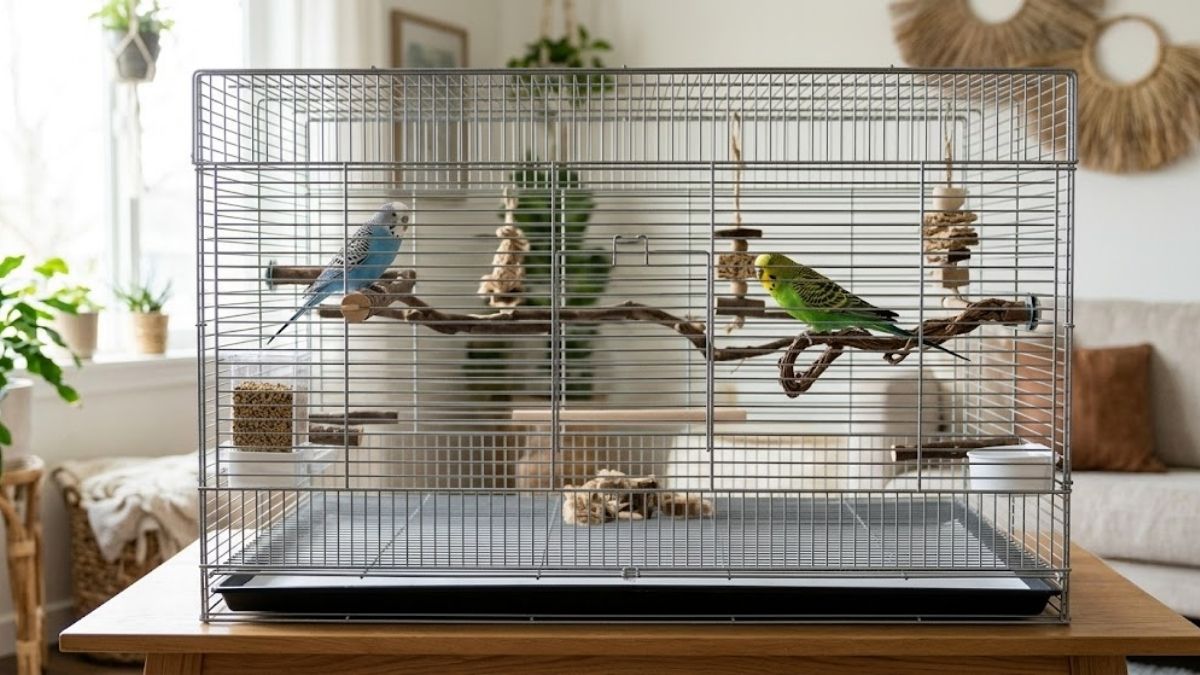
Budgie cage size is one of the biggest welfare decisions you’ll make for a pet budgerigar, because the cage is where the bird spends most of its life. It decides how far your budgie can climb and flap, how easily it can get away from a cagemate, and how much it moves in a day. The Merck Veterinary Manual notes that keeping pet birds in small cages with limited exercise has both physical and psychological consequences. In practice, that can mean a restless, stressed bird, one that gains weight because it has little room to move, or both. Weight gain is common in pet budgies and diet plays a large part, but the cage is the contributor you can fix straight away.
This guide covers cage dimensions for one, two, or more budgies and how horizontal and vertical designs compare. Published minimums vary between veterinary sources, so we explain where they differ instead of treating one number as final. Bar spacing and a few setup details come up too. The short version: buy the largest safe cage your space allows, and if you’re still settling in with your first bird, our parakeet care advice covers the other basics.
Do Budgies Need a Vertical or Horizontal Cage?
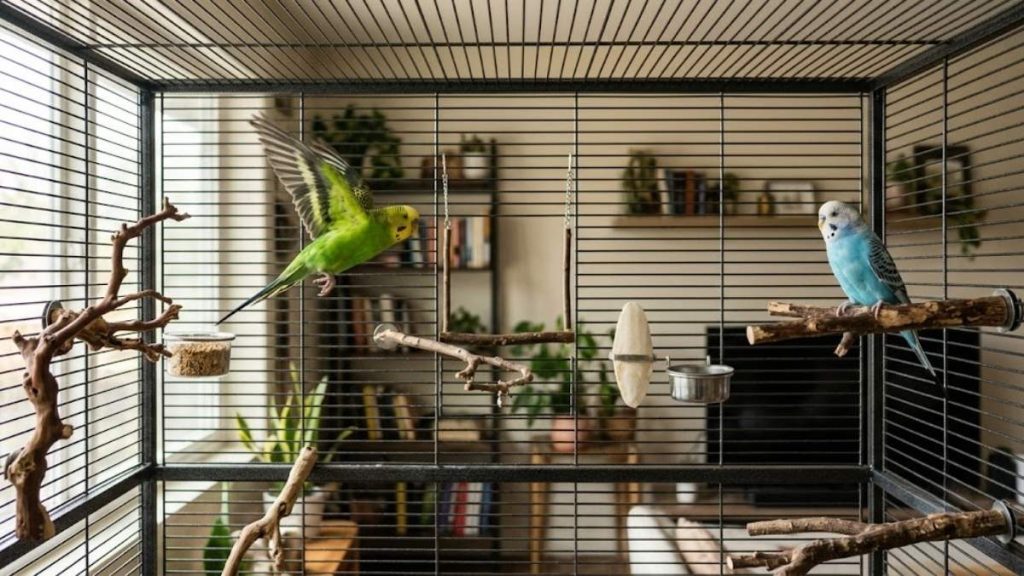
Horizontal, in almost every case. Veterinary guidance for small birds like budgies is consistent: they need room to fly from one side of the cage to the other. Birds tend to move back and forth, not straight up and down, which is why VCA Animal Hospitals calls tall, narrow cages impractical.
A cage can look generous in the shop and still offer almost no flight space once it’s in your home.
Where tower and round cages fall short
- Tall, narrow “tower” cages: The height gives climbing room but no flight path. A budgie can reach the top, yet the longest distance it can fly between perches is a short hop.
- Round cages: Veterinary sources advise against them. Birds like to settle into a corner, and a round cage doesn’t have one. VCA also notes that every perch in a round cage ends up directly above the one below it, which wastes space and restricts movement.
Why usable length matters
The Merck Veterinary Manual says a cage must be large enough for natural movement, activity and exercise, and that small cages with limited exercise have both physical and psychological consequences for pet birds. Horizontal length is what lets a budgie flap fully and fly short laps between perches, rather than only climbing and shuffling along the bars.
When comparing cages, look at the longest unobstructed gap between perches, not just the outside measurements. Toys and food dishes use up that space quickly.
Height still has a place. Budgies enjoy climbing, and the cage should be tall enough that the tail clears the floor. The best choice is a rectangular cage that is longer than it is tall.
Recommended Budgie Cage Size by Number of Birds
Published guidance varies, so the figures below are what the sources actually say, with a practical target next to each.
Minimum Cage Size for 1 or 2 Budgies
PetMD’s budgie care sheet gives 18 x 18 x 18 inches (length x width x height) as the minimum for a single budgie. Treat that as a floor, not a goal. At that size a bird can turn around and stretch its wings, but it can’t fly. It only suits a budgie that spends much of the day out of the cage, and the Merck Veterinary Manual’s own table lists a larger 20 x 20 x 30 inches for budgies and similar small parrots.
For two budgies, PetMD gives 30 x 18 x 18 inches. A single bird will also use that extra length, so a cage of at least 30 inches long is a sensible target for one or two birds that spend real time inside it. The extra length gives them room to fly short laps between perches. Both Merck and PetMD advise buying the largest cage you can fit.
Cage Dimensions for 3 to 4 Budgies
For more than two budgies, PetMD lists 32 x 18 x 20 inches. In a group, space is also a social matter. Cramped birds compete over perches, food dishes and favored sleeping spots, so a longer cage with several perches at different heights and more than one feeding and water station helps keep arguments down. For three or four birds, aim for 32 to 36 inches of length at the least and a width of 18 to 20 inches, going bigger where you can.
Summary Table
| Number of birds | Published minimum (L x W x H) | A more comfortable target |
|---|---|---|
| 1 | 18 x 18 x 18 in | 30 x 18 x 18 in or larger |
| 2 | 30 x 18 x 18 in | 30+ in long, wider if possible |
| 3 to 4 | 32 x 18 x 20 in | 36 in long, 20 in wide, or larger |
Cage bars should be no more than ½ inch apart. Whatever the size, daily time outside the cage is still part of a budgie’s exercise.
Bar Spacing and Wire Safety
Bar spacing. For budgies, bars should be no more than ½ inch (about 1.3 cm) apart. Merck lists this spacing for budgerigars and other small parrots, and VCA warns that bars must be close enough to stop a bird from getting its head or legs caught. Wider gaps risk serious injury, so check spacing before buying, since some cages sold for “small birds” are wider.
Horizontal or vertical bars. Horizontal bars give budgies something to climb, which adds exercise. A cage with horizontal bars on at least two sides, or a mix of horizontal and vertical, offers more climbing options and more places to hang toys.
Materials. Powder-coated steel or wrought iron and stainless steel are the usual safe choices. Stainless steel is the most durable and the safest for a bird that chews the bars. Powder coating is generally fine, as long as it isn’t chipped or flaking.
Avoid these:
- Galvanized wire: It is coated in zinc, which is toxic to birds. Pet Poison Helpline says hot-dipped galvanized wire isn’t safe.
- Chipped or flaking paint: Flakes can contain zinc or lead, and old antique cages may carry lead-based paint.
- Rust: White rust signals zinc. Replace a damaged cage or have it repaired.
If your bird shows any sign of illness after chewing metal or paint, contact an avian vet promptly.
Common Cage Setup Mistakes to Avoid
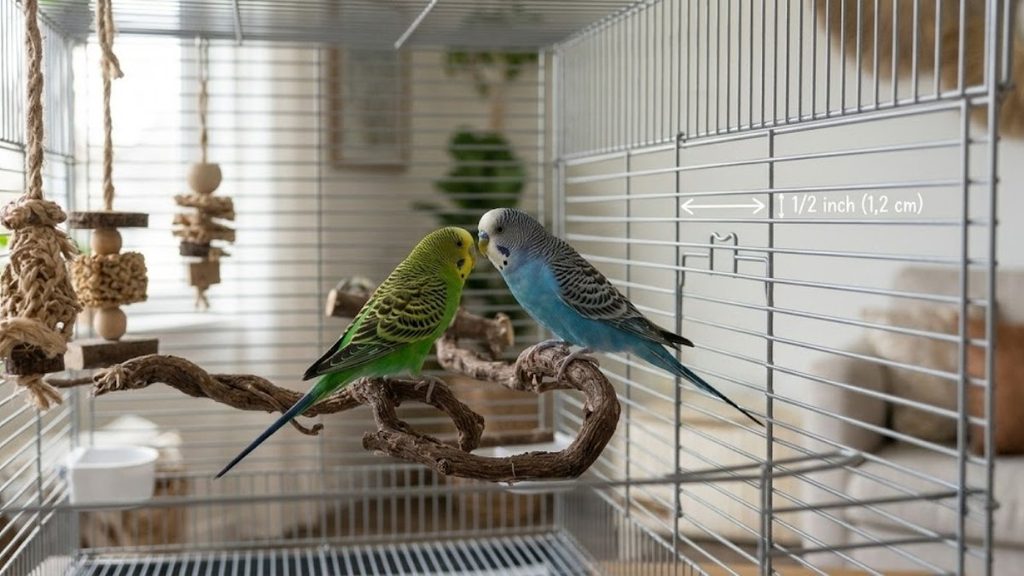
A cage can be the right size and still be set up badly. The most common problem is filling it. Plastic perches, mirrors, swings and ornaments crowd out the open space a budgie needs to fly, so a 30-inch cage can feel like a much smaller one. Keep the middle clear and place perches and toys toward the sides.
The perches matter too. Many cages come with smooth plastic or dowel perches of one diameter. VCA notes that perches of uniform size put constant pressure on the same part of the foot, which can lead to pressure sores and bumblefoot. Natural wood branches in varied thicknesses let the foot change position through the day. Bumblefoot is considered uncommon in parrots and has several causes, but a mixed perch setup is a simple way to lower the risk. Use bird-safe wood and clean perches regularly.
Can a Budgie Be Left Alone in a Cage for 3 Days?
No. Lafeber, a bird-care and avian veterinary resource, advises that birds should never be left alone for more than overnight. Fresh food and water, a quick cage check, and some company are part of every day, which is why the daily routine in our beginner’s guide to parakeet care is built around short, regular visits, not occasional long ones.
- Food: Budgies drop seed hulls back into the dish, so a cup can look full when it holds mostly husks. Lafeber suggests having a sitter empty, wash and refill the dish daily.
- Water: It can be fouled by droppings, food or bathing within a day. Water systems that store water can grow bacteria and mold.
- Temperature and power: An outage could leave the room too hot or cold, and nobody would be there to notice.
- Loneliness: Budgies are social birds, and days without company can be stressful.
Better options:
- A pet sitter who visits at least once or twice a day, ideally one experienced with birds.
- Boarding at an avian vet or a trusted bird boarder.
- A friend or relative who knows your bird, with written instructions and your vet’s number.
A good budgie cage comes down to a few things: enough length to fly, bars no wider than ½ inch, safe metal, and a layout that leaves open space in the middle. Buy the largest cage your home can hold, and treat published minimums as a floor. Add natural perches of different thicknesses, keep the interior uncluttered, and never leave your bird alone for more than a night. If you’re unsure about a cage or your bird’s behavior, an avian veterinarian can help.
Sources & References
- Merck Veterinary Manual: “Overview of Pet Birds“
- Lafeber Company: “Budgie Housing, Cage Setup and Care“
- PetMD: “Budgie Care Sheet“
- Lafeber (Pet Birds and LafeberVet): “How To Find A Pet Bird Sitter” and “Ask Lafeber: taking vacation“