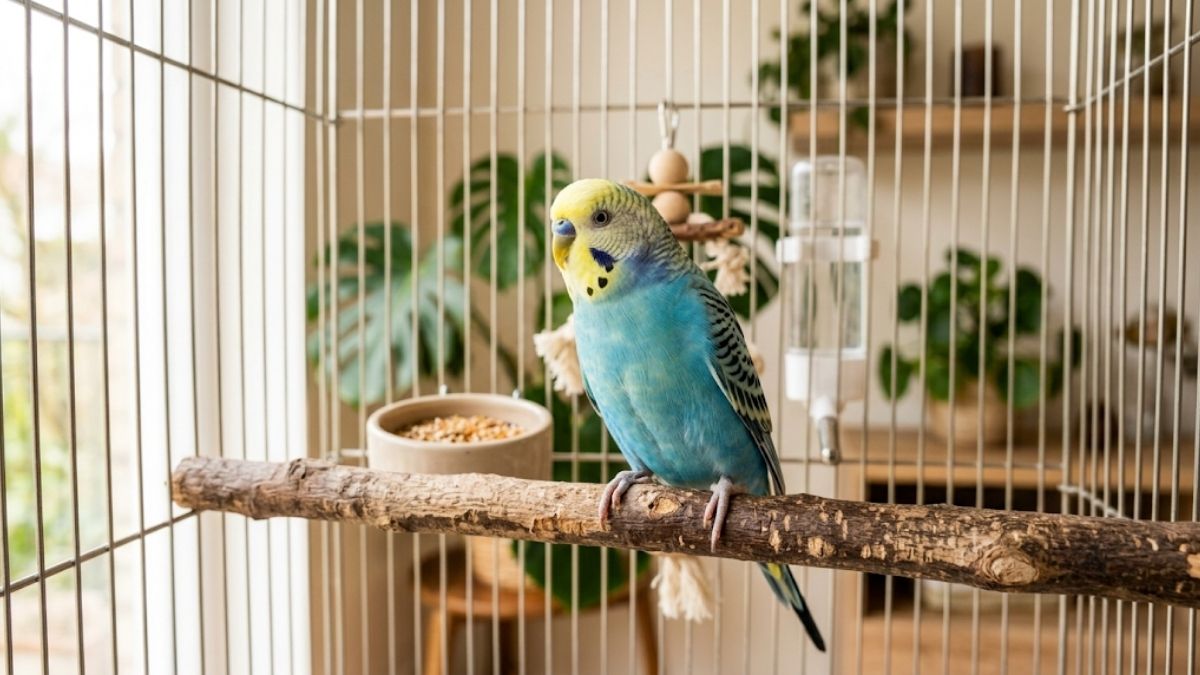
Good parakeet care is not just about putting food and water in a cage. Your bird needs a suitable living space, a balanced diet, regular exercise, enough sleep, mental stimulation, and daily attention.
If you are a new parakeet owner, this guide will help you understand the basics and build a simple routine for your bird. For more beginner-friendly information, you can also explore our Parakeet Care section.
Choose a Comfortable Cage
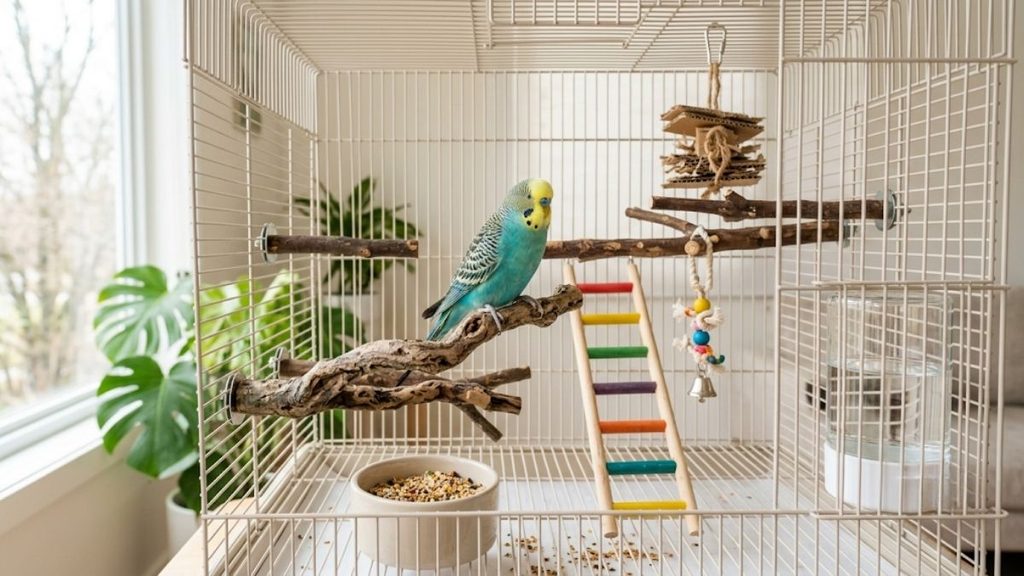
The cage is your parakeet’s main living space, so it should be large enough for the bird to move around comfortably.
When choosing a cage, look for one that provides enough horizontal space for your parakeet to move between perches and stretch its wings. Avoid overcrowding the cage with too many toys or accessories.
A good cage should have:
- Safe bar spacing
- Secure doors and latches
- Easy-to-clean surfaces
- Enough room for food and water bowls
- Several suitable perches
- Space for toys and movement
Where you place the cage matters too. A room where your parakeet can see and interact with people is usually better than an isolated area.
Keep the cage away from kitchen fumes, cigarette smoke, strong chemical smells, direct intense sunlight, and constant drafts.
For more information about creating a suitable living space, visit our Cage & Environment section.
Give Your Parakeet Safe Perches and Toys
Parakeets are naturally curious and active. They need opportunities to climb, explore, chew, and play.
Use several safe perches rather than making every perch exactly the same. Bird-safe natural branches can be useful when they have been properly prepared and are free from pesticides or other chemicals.
Toys can also keep your bird mentally occupied. Swings, ladders, chewable toys, and simple foraging activities are some options.
Check toys regularly. If a toy becomes broken, develops loose pieces, or creates a potential safety problem, remove it.
Remember that a cage full of accessories is not necessarily a better cage. Your parakeet still needs open space to move.
Provide a Balanced Diet
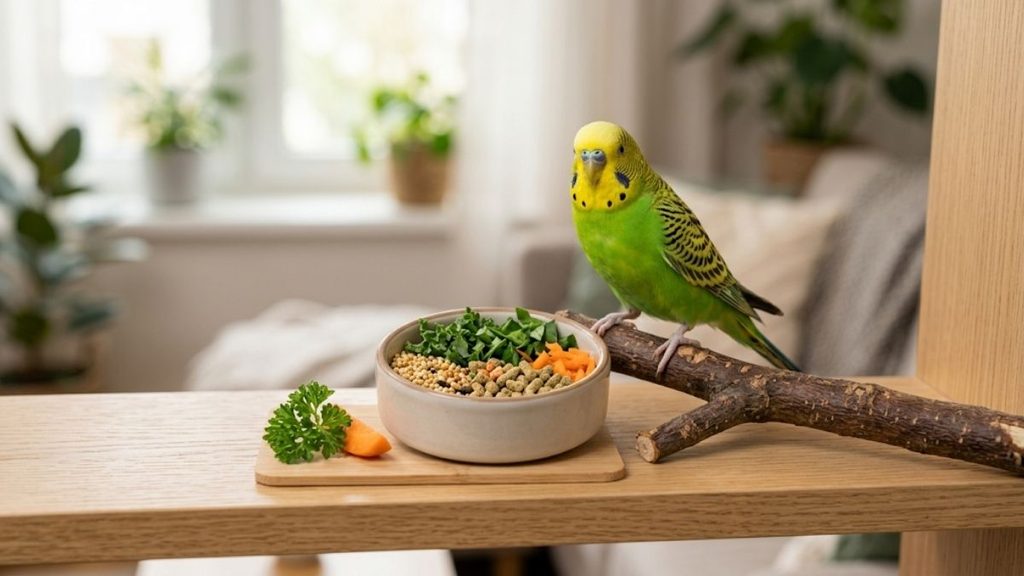
Food is one of the most important parts of caring for a parakeet.
A suitable diet can include quality commercial pellets or formulated food along with appropriate fresh vegetables. Seeds may be included depending on the overall diet, but feeding only seeds for a long period can make it harder to provide balanced nutrition.
Some vegetables that can be offered in suitable portions include:
- Carrot
- Broccoli
- Bell pepper
- Peas
- Leafy greens
- Cucumber
Introduce new foods gradually. If you offer fresh food, remove leftovers before they spoil.
Your parakeet should also have access to clean drinking water every day. Clean the water container regularly and replace the water at least daily, or sooner if it becomes dirty.
You can find more information about feeding and nutrition in our Parakeet Food section.
Make Sleep Part of the Daily Routine
Parakeets need a regular period of quiet and darkness to sleep properly.
Try to keep your bird’s sleeping schedule consistent. If the room remains noisy or brightly lit late at night, your parakeet may have difficulty getting undisturbed rest.
A simple routine can help. Reduce household activity around the cage when it is time for your bird to sleep and avoid unnecessarily disturbing it during the night.
Give Your Parakeet Daily Exercise
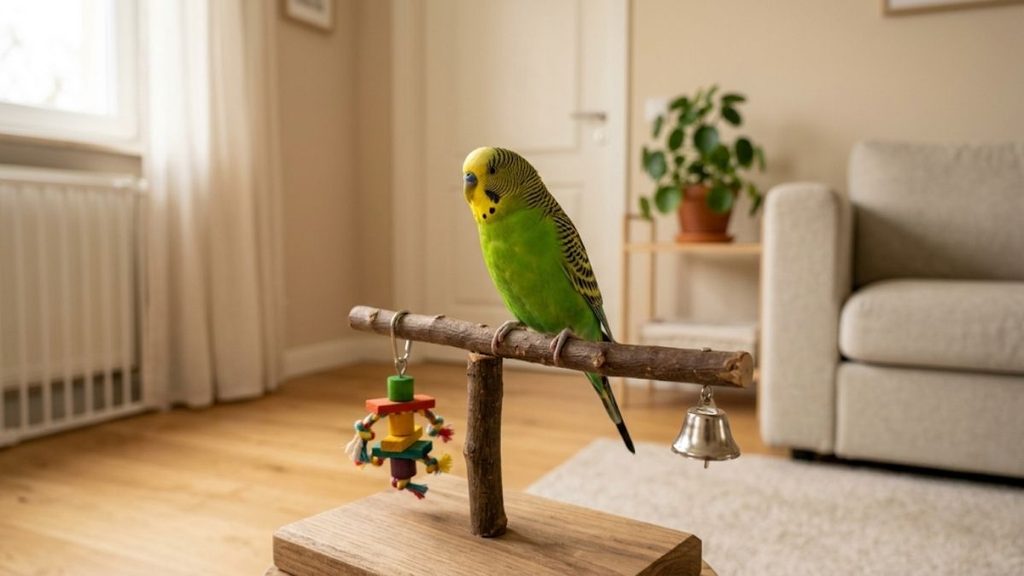
Parakeets are active birds and need regular movement.
If your bird is comfortable outside its cage, supervised flying time can provide both exercise and mental stimulation. However, never let a parakeet fly freely in an unprepared room.
Before opening the cage:
- Close windows and doors.
- Turn off ceiling fans.
- Keep cats and dogs away.
- Keep electrical cables out of reach.
- Be careful around mirrors and large windows.
- Remove open containers of water.
A new or nervous bird may need time to become comfortable before it is ready for out-of-cage exercise.
Spend Time Building Trust
Parakeets are social birds, and many become comfortable interacting with their owners.
When you first bring your bird home, give it some time to adjust. Sit near the cage, speak calmly, and avoid sudden movements.
Once your parakeet becomes comfortable around you, you can gradually introduce hand training and simple commands.
Do not chase your bird around the cage or force it to sit on your hand. Building trust takes time, and every bird has its own personality.
Short, calm, reward-based training sessions are usually a better approach.
For more information about parakeet behaviour and training, explore our Parakeet Behavior section.
Keep the Cage Clean
Regular cleaning helps provide a healthier living environment.
Remove obvious waste and uneaten fresh food regularly. Food and water containers should also be cleaned frequently.
For a deeper cage cleaning:
- Move your parakeet to a safe location.
- Remove food, water, toys, and perches.
- Clean the cage and remove accumulated waste.
- Rinse surfaces properly after cleaning.
- Let everything dry before putting it back.
- Replace the food and water with fresh supplies.
Be particularly careful with cleaning products and strong fumes. Birds have sensitive respiratory systems, so strong chemicals and fumes should never be used around them.
Protect Your Parakeet From Household Hazards
Some everyday household items can be dangerous for birds.
Keep your parakeet away from:
- Cigarette and vape smoke
- Aerosol sprays
- Strong chemical fumes
- Open flames
- Overheated non-stick cookware
- Toxic plants
- Ceiling fans
- Electrical wires
- Open windows and doors
- Unsupervised cats and dogs
Good air quality is especially important. Never smoke or vape in the same area as your bird.
For additional safety information, visit our Health & Safety section.
Avoid Unsafe Foods
Not everything that is safe for people is safe for parakeets.
Foods and drinks to avoid include:
- Avocado
- Chocolate
- Alcohol
- Caffeinated drinks
- Very salty foods
- Highly processed foods
- Foods with excessive added sugar
If you are unsure about a particular food, check with an avian veterinarian before offering it.
Learn What Is Normal for Your Bird
One of the best things a new owner can do is learn their parakeet’s normal behaviour.
Pay attention to its usual appetite, activity level, appearance, and droppings. This makes it easier to notice unusual changes.
Contact an avian veterinarian if you notice concerning signs such as:
- Sudden loss of appetite
- Unusual weakness or inactivity
- Difficulty breathing
- Significant changes in droppings
- Loss of balance
- Visible injury
- A sudden and persistent change in behaviour
Parakeets can sometimes hide signs of illness, so significant changes should not be ignored.
Frequently Asked Questions
Are parakeets easy to care for?
Parakeets are relatively manageable pets, but they still need daily care. A suitable cage, proper nutrition, clean water, exercise, social interaction, and a safe environment are all important.
Can a parakeet live alone?
A single parakeet can be kept as a pet, but it needs regular interaction and enrichment. Some owners keep compatible birds together. The right arrangement depends on the individual birds and the care available.
Can parakeets eat only seeds?
Seeds alone are generally not considered an ideal long-term diet. A more varied and balanced diet can provide better nutrition.
Should I let my parakeet out of its cage?
Supervised out-of-cage time can provide exercise and enrichment. Make sure the room is safe and free from hazards before allowing your bird to fly.
Final Thoughts
Taking care of a parakeet becomes much easier once you establish a consistent routine. Provide a comfortable cage, appropriate food, fresh water, enough sleep, regular exercise, and plenty of safe interaction.
Most importantly, get to know your individual bird. Learning what is normal for your parakeet will help you notice changes early and understand what your pet needs.
With responsible care and a safe environment, a parakeet can be an active and enjoyable companion for many years.
If you are just getting started, you can explore the Parakeet Care section for more guides.
Disclaimer: This article is for general educational purposes and is not a substitute for professional veterinary advice. If your parakeet is sick, injured, or showing sudden concerning changes, consult a qualified avian veterinarian.