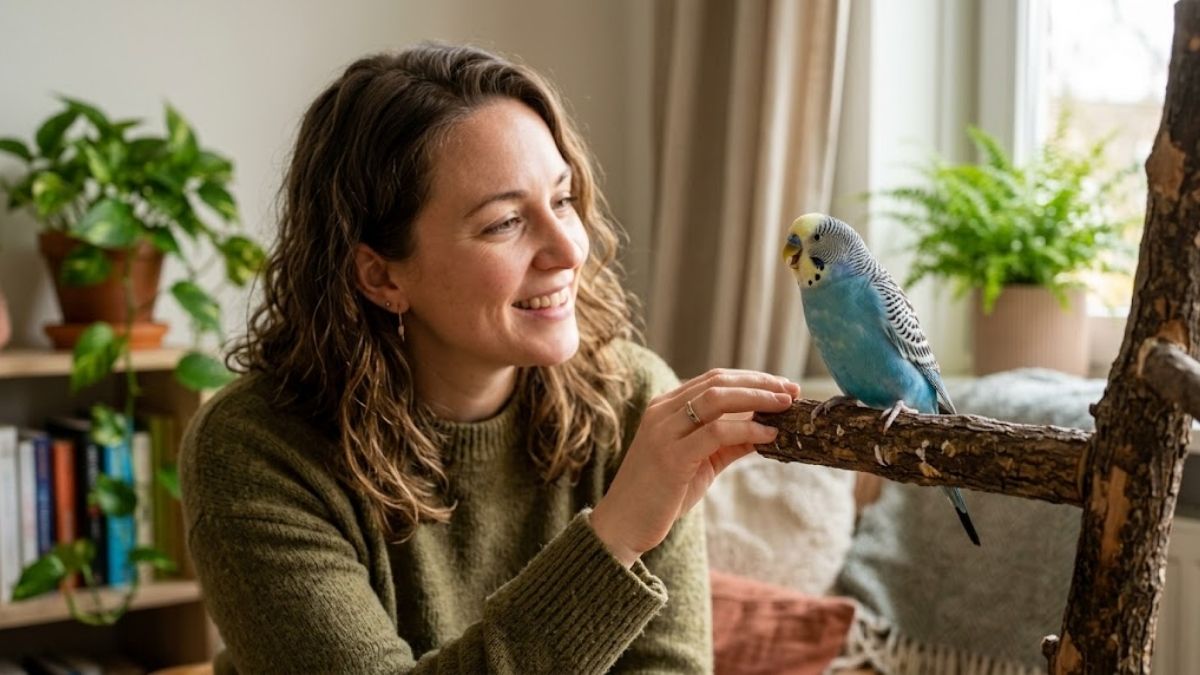
Yes, many parakeets can talk. The pet-store parakeet most people know is the budgerigar, or budgie, and it can be a surprisingly good mimic. Not every budgie will learn words, though, and even the ones that do rarely sound exactly like a person. Many learn a handful of words, a name, or a short phrase, along with plenty of whistles and household noises.
If you’re new to keeping a parakeet, you can also explore our Parakeet Care Guide for more practical advice on caring for your bird.
What “Talking” Means for a Budgie
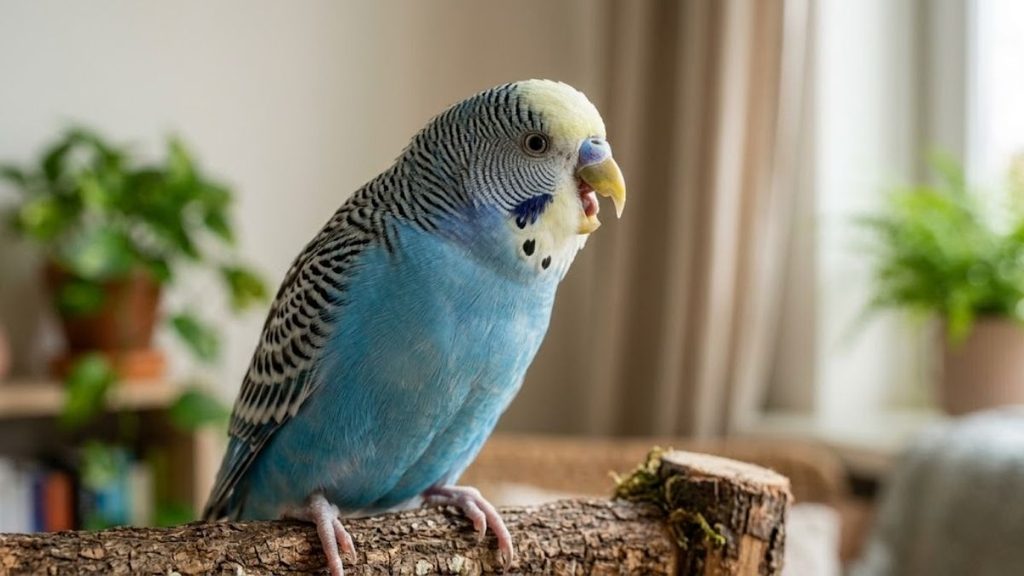
A budgie doesn’t speak the way a person does. It learns to copy sounds it hears repeatedly, including human speech, whistles, and noises around the home. Budgies naturally use vocalizations to communicate, and a pet bird may also learn sounds associated with its human companions and surroundings.
Budgie speech can also be easy to miss. Lafeber notes that a budgie’s voice can sound fast and somewhat indistinct, so owners sometimes don’t realize their bird is saying a word. Expect a quick, quiet, slightly chattery voice rather than the deep, clear speech you might hear from a larger parrot.
Vocabulary size varies enormously. A budgie named Puck was credited by Guinness World Records with a vocabulary of 1,728 words in 1995. That’s an extreme record, not a realistic target for an ordinary pet bird.
Sources also differ in how strongly they describe the budgie’s talking ability. The important point is that budgies are capable mimics, but individual results vary widely. Some learn several words, while others prefer whistles, chirps, or household sounds and never develop much human speech.
What Affects Whether Your Budgie Will Talk
There’s no way to predict in advance whether a particular budgie will become a talker, but a few factors can influence how much it vocalizes and what sounds it learns.
Individual personality. Some birds are naturally more vocal and interested in copying sounds, while others are more interested in whistling, chirping, or simply listening. You won’t always know which type you have until you give your bird a chance to learn.
Sex. Lafeber reports that male budgies tend to be better talkers, although females can also learn words and mimic sounds. It’s a tendency, not a rule. A male isn’t guaranteed to talk, and a female isn’t incapable of learning words.
Bond with you. A budgie that feels safe and comfortable around you is in a better position to interact with you and pay attention to the sounds you make. A nervous, newly arrived bird usually needs time to settle in before formal training begins.
If you’re still learning the basics of keeping a budgie comfortable and healthy, our guide on how to take care of a parakeet covers the essentials for beginners.
Companions. Budgies are social birds and benefit from appropriate companionship and regular interaction. A budgie living with another budgie may spend more of its social time communicating with its companion, but having a second bird does not automatically prevent it from learning human speech. One-on-one interaction with you can still be part of its daily routine.
How to Teach Your Budgie to Talk
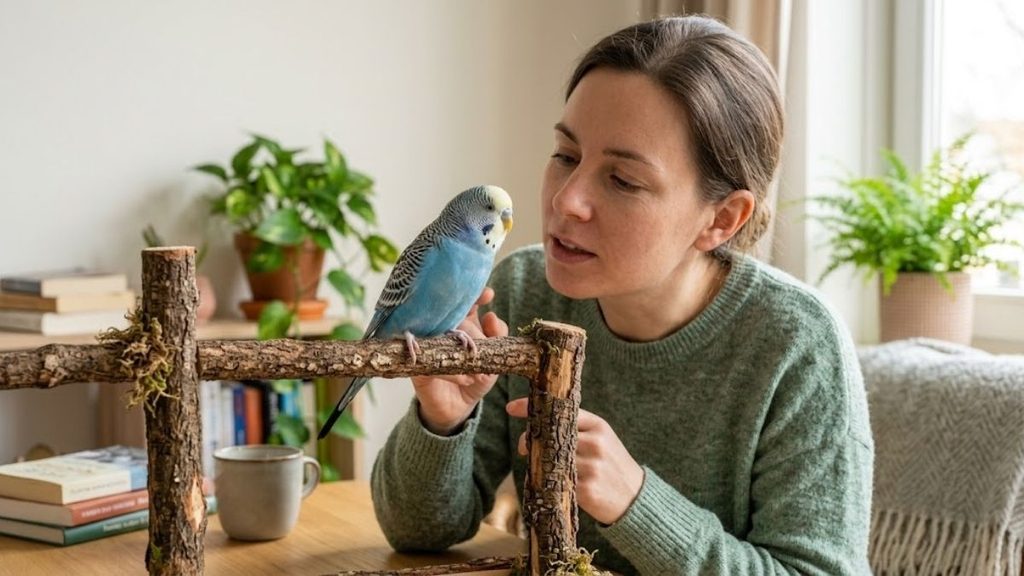
Patience matters more than any special trick. Some birds begin copying words relatively quickly, while others take months or never learn human speech at all. There is no reliable timeline.
- Let the bird settle first. Give a new budgie time to get used to its cage, surroundings, and your presence before expecting it to learn words. Spend time nearby and talk to it calmly.
- Pick one short word or phrase. A name, “hello,” or “good bird” is a simple place to start. Choose something you’ll naturally repeat in everyday situations.
- Repeat it clearly and consistently. Say the word in a calm, upbeat voice at the same moments each day. For example, you might say “hello” whenever you enter the room in the morning.
- Keep sessions short. Several brief sessions are generally more practical than keeping your bird focused for a long period. If your budgie loses interest, let it take a break.
- Reward attempts. If your budgie makes a sound that resembles the word you’re teaching, respond positively with praise, attention, or an occasional small treat. Positive reinforcement helps your bird associate the behavior with a pleasant response.
- Give the word time to stick. Don’t feel that you need to rush through a long list of words. Repeating a few useful sounds gives your budgie plenty of opportunities to hear and copy them.
Budgies can also pick up sounds you never intentionally teach them. If a phone rings, a microwave beeps, or another household noise happens repeatedly, don’t be surprised if your bird eventually adds it to its repertoire.
Common Mistakes
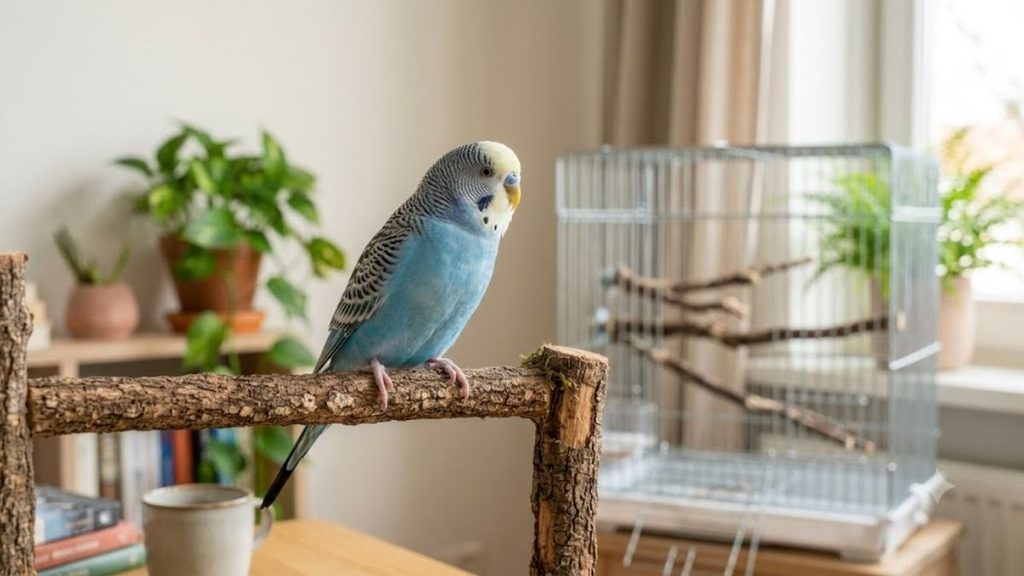
- Starting before the bird is comfortable. A frightened or highly stressed bird isn’t in a good position to learn from you.
- Expecting clear speech. If you only listen for crisp human-sounding words, you may miss what your budgie is already trying to copy.
- Teaching too many things at once. Focusing on a small number of sounds can make training easier to follow.
- Getting frustrated. Raising your voice or showing irritation can make training stressful rather than enjoyable.
- Treating silence as stubbornness. Some healthy budgies simply aren’t interested in talking. But a sudden change in vocalization is worth paying attention to.
When a Quiet Budgie Is a Health Concern
A budgie that has never talked is probably just not a talker. A budgie that suddenly becomes quiet, stops making its usual sounds, or develops a noticeable change in its voice is different.
VCA Animal Hospitals lists changes in vocalization among possible signs of illness in pet birds, along with signs such as fluffed feathers, reduced appetite, and unusual inactivity. The Merck Veterinary Manual also notes that birds can hide signs of illness, sometimes until they are quite sick.
If your bird’s voice or normal behavior changes suddenly, especially if you also notice fluffed feathers, reduced eating, weakness, breathing problems, or changes in droppings, contact an avian or exotics veterinarian. Don’t assume the change is simply a training issue.
Frequently Asked Questions
How many words can a budgie learn?
It varies enormously. Some budgies may learn no human words, while others learn several words or phrases. Exceptional birds have learned far more, but record-holding examples are not representative of the average pet budgie. It’s better to focus on whether your own bird is enjoying the interaction than on reaching a particular vocabulary size.
Do male budgies talk better than females?
Males are generally reported to be more likely to learn human speech, but females can also learn words and mimic sounds. If talking matters to you, don’t assume a female won’t talk, and don’t assume a male will.
Will a second budgie stop mine from talking?
Not necessarily. Budgies are social birds and can benefit from appropriate companionship. A pair may spend more of its social time communicating with each other, but that doesn’t mean they cannot learn sounds from people. If you have a budgie, regular one-on-one interaction can still be valuable whether it lives alone or with another budgie.
Does my budgie understand what it says?
You shouldn’t assume that a budgie understands human words in the same way people do. It may associate a particular sound with a person, situation, or routine—for example, hearing “hello” when you enter the room. The exact meaning a bird attaches to a copied sound is much harder to determine.
Final Thoughts
Plenty of budgies learn to talk, but plenty of happy, healthy ones never do. The best approach is to build trust, repeat a simple word consistently, and enjoy whatever sounds your bird comes up with, whether they’re words, whistles, chirps, or a perfect imitation of your microwave.
Talking can be a fun part of living with a budgie, but it shouldn’t be the measure of how intelligent, friendly, or well-bonded your bird is.
Sources & Veterinary References
- Lafeber Company: “Budgie Parakeet Species Profile“
- VCA Animal Hospitals: “Recognizing the Signs of Illness in Pet Birds“
- Merck Veterinary Manual: “Overview of Pet Birds“