What not to do with parakeets comes down to five big mistakes: grabbing from above, exposing them to non-stick fumes or aerosol sprays, feeding an all-seed diet, moving suddenly around them, and keeping a bird cramped or isolated. Most of the mistakes that harm budgies are made with good intentions.
Budgies are vulnerable for three reasons. Their respiratory systems are highly sensitive to airborne toxins, and VCA Animal Hospitals notes that budgerigars are among the birds most affected by fumes from overheated non-stick coatings. Their prey instincts make a large hand or sudden movement feel like an attack. And their trust is fragile: it builds slowly and can be lost in one rough moment.
The mistakes fall into two groups. Handling mistakes are visible: you see the flapping, the flinching, the bird pulling away. Environmental hazards are silent. Fumes, an unsuitable diet and cramped housing can harm a bird for a long time without obvious warning, and VCA notes that sudden death may be the only sign of non-stick fume poisoning.
The ten mistakes below are all avoidable once you know them.
Critical Handling Mistakes That Break Budgie Trust
1. Grabbing or Scooping Them From Above
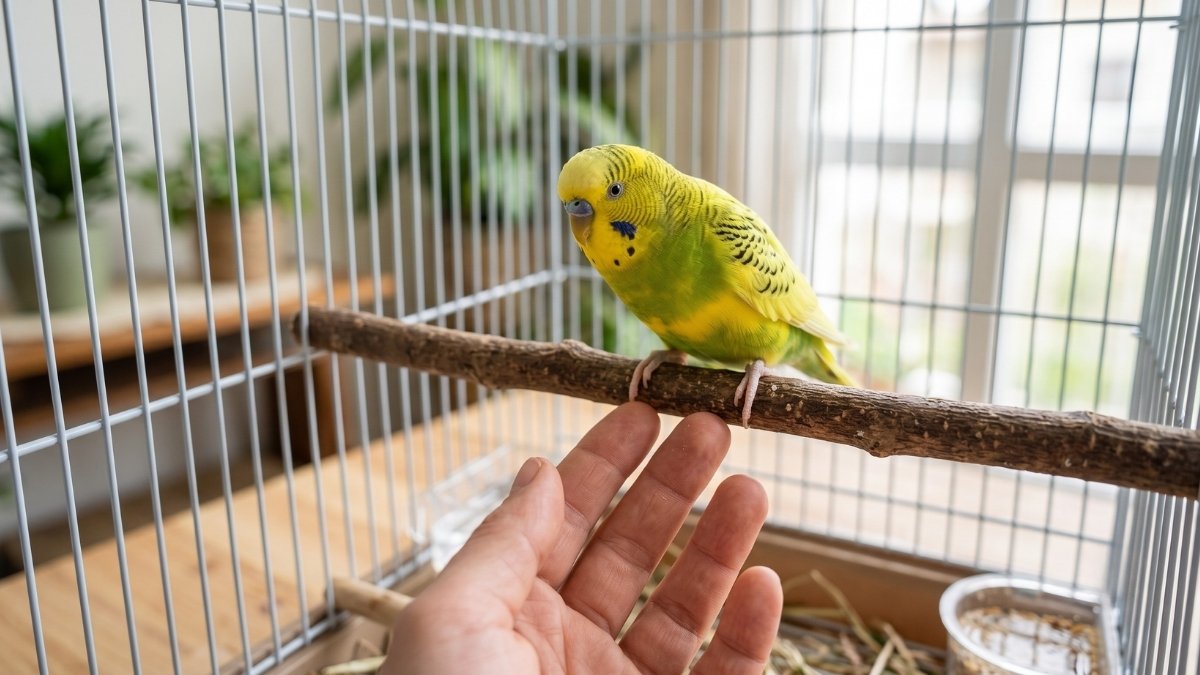
Of all the mistakes parakeet owners make, this is the one that does the most damage. A hand coming down from overhead looks like a hawk or other aerial predator, and a budgie’s instinct is to bolt. Repeated grabs can teach a bird to fear hands altogether, which is hard to undo.
Approach at the bird’s level, from the front or side, and offer a finger to step onto. If you need to move a frightened bird, wait until it settles.
2. Forcing Physical Contact and Chasing in the Cage
The cage should be a bird’s safe place. If you chase a budgie around it, corner it against the bars, or reach in repeatedly to pull it out, the cage stops feeling safe. The bird may start to panic whenever a hand approaches, even when you only mean to refill the water.
If a bird has already been frightened this way, the fix is patience and calm. Our guide on How to Calm Down a Parakeet: 7 Gentle Ways to Soothe a Stressed Budgie covers how to help a scared bird settle and rebuild trust.
3. Punishing, Yelling, or Shaking the Cage
Budgies don’t connect punishment with a specific behavior. A shout or a shaken cage just looks like danger from nowhere, and it makes a frightened bird more frightened.
Yelling can also backfire. VCA Animal Hospitals notes that people often make screaming worse by yelling back, which can reinforce it, and it recommends positive reinforcement training for problem behaviors. Reward calm behavior, and stay quiet when the bird is noisy.
4. Moving Too Fast or Making Sudden Overhead Gestures
Like many prey birds, budgies have eyes on the sides of their heads, which gives them a wide view of their surroundings. They notice fast movement, especially above them, and read it as a threat.
How not to handle a budgie comes down to pace. Move slowly, let the bird see your hand coming, and avoid waving, swooping or reaching over the cage. Deliberate, predictable movements teach your bird that hands are safe.
Dangerous Household & Environmental Hazards to Avoid
5. Using Non-Stick Cookware (PTFE/Teflon) and Aerosols
Birds have a highly efficient respiratory system, built around lungs and a network of air sacs, and that efficiency makes them very sensitive to airborne toxins. VCA Animal Hospitals explains that overheated PTFE coatings, the material in Teflon, release particles and acidic gases, and that budgerigars are among the birds considered most sensitive. A bird can be poisoned even from another room, and sudden death may be the only sign.
Other airborne irritants matter too. A Petco veterinary-content page lists aerosol sprays, tobacco smoke, burned food and cooking oils, and ammonia among them. It’s sensible to keep scented candles, incense and room sprays away from birds as well, since they also put particles in the air.
If you suspect fume exposure, move the bird into fresh air and call an avian or exotics vet or a poison helpline right away.
6. Leaving Ceiling Fans, Open Windows, or Standing Water Unattended
A budgie out of its cage is exploring, and ordinary rooms hold hazards that are easy to forget:
- Ceiling fans: Switch them off before any out-of-cage time.
- Open windows and doors: A startled bird can be outside in seconds.
- Open toilets, sinks and deep dishes of water: A small bird can drown in surprisingly little.
- Stoves and hot pans: Keep birds out of the kitchen while you cook.
Supervise all out-of-cage time, and bird-proof the room before you open the door.
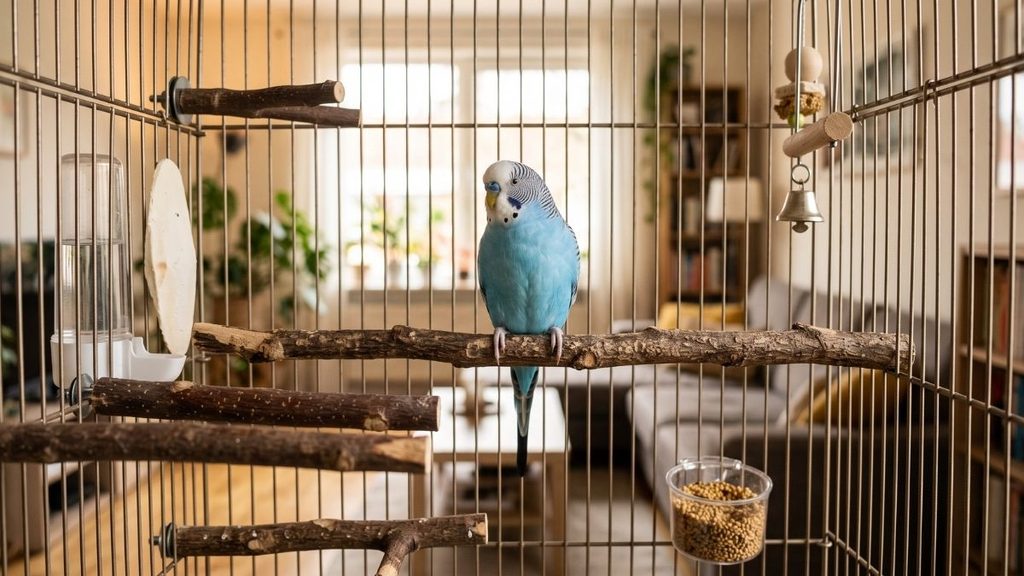
7. Housing in a Cramped Cage Without Flight Space
A cage that’s too small limits exercise. The Merck Veterinary Manual notes that small cages with limited exercise have both physical and psychological consequences for pet birds, and a stressed, under-exercised budgie is more likely to become restless or gain weight.
Shape matters as well. Veterinary sources advise against round cages and narrow tower designs, since birds tend to fly side to side and need corners and perches that aren’t stacked directly above one another. Choose a rectangular cage that’s longer than it is tall. Our budgie cage size guide covers minimum dimensions for one, two or more birds.
Diet and Social Mistakes That Affect Well-being
8. Relying Exclusively on an All-Seed Diet
Seed mix looks like a complete meal, but it isn’t. The Merck Veterinary Manual says strictly seed diets are suboptimal because seeds are deficient in vitamin A, protein, calcium and other nutrients, and too high in fat. VCA Animal Hospitals reports that obesity is common in budgies fed all-seed diets and that fatty liver disease often results and can be fatal.
Vitamin A deficiency is common but often overlooked, and it can affect the respiratory and digestive tracts and the immune system. The fix is a diet built on pellets and fresh vegetables, with seed as a smaller extra. Don’t start vitamin supplements on your own, since too much vitamin A can also cause harm. Our complete budgie diet and safe foods guide covers what to offer, and an avian vet can guide a switch.
9. Providing Mirrors as Companions
A mirror seems like a harmless substitute for a friend, but it can cause trouble. VCA notes that birds can pair bond to a mirror or other reflective surface, and that wild parrots normally have an intense relationship with a mate. A bird focused on a reflection may become frustrated and show hormone-driven behavior, which VCA says can include territorial aggression and screaming.
Bonding with a person works differently. Real attachment grows from daily, healthy socializing, which is what our post on signs your budgie is truly attached to you describes, not from fixating on a mirror. Take the mirror out, and offer foraging toys and time with you instead.
10. Social Isolation and Inconsistent Sleep Schedules
Budgies are flock animals, and a bird that’s ignored for long stretches can become bored, stressed and withdrawn. Lafeber, an avian veterinary resource, advises that birds shouldn’t be left alone for more than overnight. A single bird needs real daily company, and a pair needs enough space to get along.
Rest matters too. Many sources suggest about 10 to 12 hours of dark, quiet sleep each night, though I couldn’t confirm that figure on a veterinary organization’s page. A consistent bedtime, with a covered or dimmed cage in a quiet room, gives a bird the rest it needs.
When these basics are in place, natural behaviors tend to show up on their own. Our guide on how to tell if your parakeet is happy describes the signs of a budgie that’s thriving.
What to Do Instead: Building a Safe, Enriched Routine
Avoiding mistakes is half the job. The other half is a routine that gives your budgie a reason to relax.
- Keep a predictable schedule. Feed, clean, uncover and turn out the lights at roughly the same times each day. Birds settle when they know what comes next.
- Practice slow finger targeting. Offer one finger at chest level, at the bird’s pace, and reward any step toward it. Let the bird approach you, and stop if it backs away.
- Use vocal reassurance. Talk or hum in a soft, steady voice as you move around the room, so the bird learns that your presence means safety.
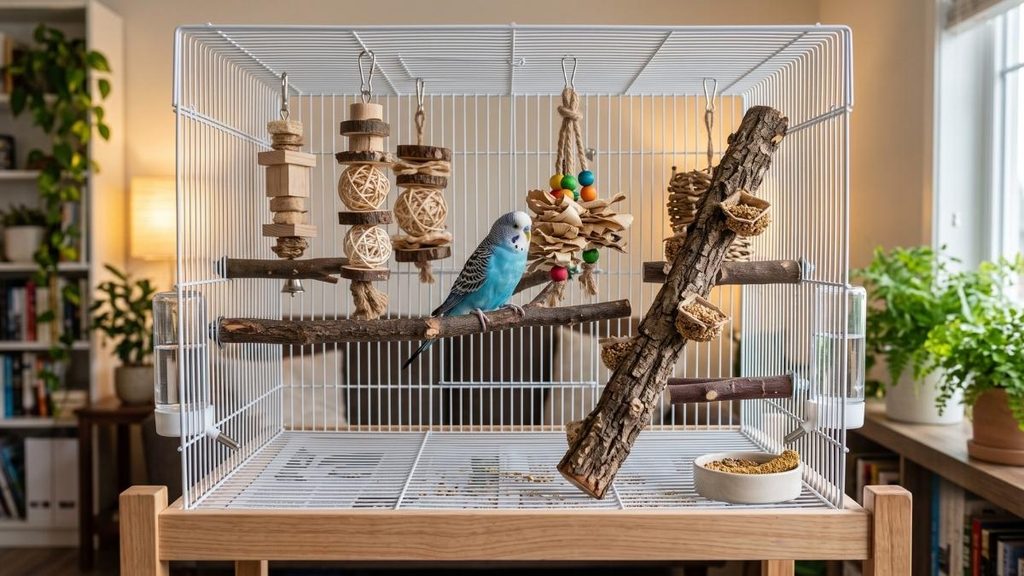
- Set up safe foraging. Hide a little food in a shallow tray, crumpled paper or a bird-safe foraging toy. Merck notes that limited exercise has physical and psychological consequences for pet birds, and foraging gives a budgie something to do.
A bird that’s been grabbed, chased or yelled at can recover, but it won’t happen quickly. Expect setbacks, keep sessions short, and never push past the bird’s comfort. Trust is rebuilt in small, calm repetitions, and a budgie that has learned to fear hands needs patience more than technique. If your bird stays frightened, stops eating or seems unwell, an avian or exotics vet can check for a physical cause.
Sources & Veterinary References
- Merck Veterinary Manual: “Overview of Pet Birds“
- VCA Animal Hospitals: “Budgies – Feeding“
- VCA Animal Hospitals: “Teflon (Polytetrafluoroethylene) Poisoning in Birds“
- Lafeber Company: “Pet Bird Behavior, Biting, and Hormones“
This article is for educational purposes and isn’t veterinary advice. If your budgie shows sudden changes in behavior, appetite or breathing, contact an avian or exotics veterinarian.