If you’re wondering what vegetables can parakeets eat, the short answer is plenty, and they should be offered regularly. Fresh vegetables are an important part of a varied budgie diet, alongside a suitable formulated diet and an appropriate amount of seed.
This matters because of where budgies come from. In the arid interior of Australia, wild budgies are nomadic grass-seed specialists. They forage on a variety of half-ripe and fully mature seeds, along with green shoots, and they burn enormous energy flying long distances to find water and food. That diversity and activity contribute to a varied natural diet.
A pet budgie on an all-seed diet lives a very different life. Seed-heavy diets can provide too much fat while being low in some essential vitamins and minerals, particularly when variety is limited. Nutritional problems can develop gradually, which is why offering a balanced and varied diet is important.
Vegetables are a practical way to add variety. Dark leafy greens and orange-fleshed vegetables supply carotenoids that your budgie can use to support vitamin A nutrition, along with fiber, hydration, and foraging enrichment. For the full picture of how vegetables fit alongside pellets and seeds, see our comprehensive guide on What Do Parakeets Eat? Complete Budgie Diet & Safe Foods Guide.
Best Daily Leafy Greens for Parakeets (Nutrient-Dense Staples)
Leafy greens are an excellent choice for regular vegetable offerings. They deliver useful vitamins and minerals, are generally low in calories, and their texture invites the shredding and tearing that budgies love. Rotating several types across the week gives your bird a wider variety of nutrients and keeps mealtime interesting.
Everyday Staples
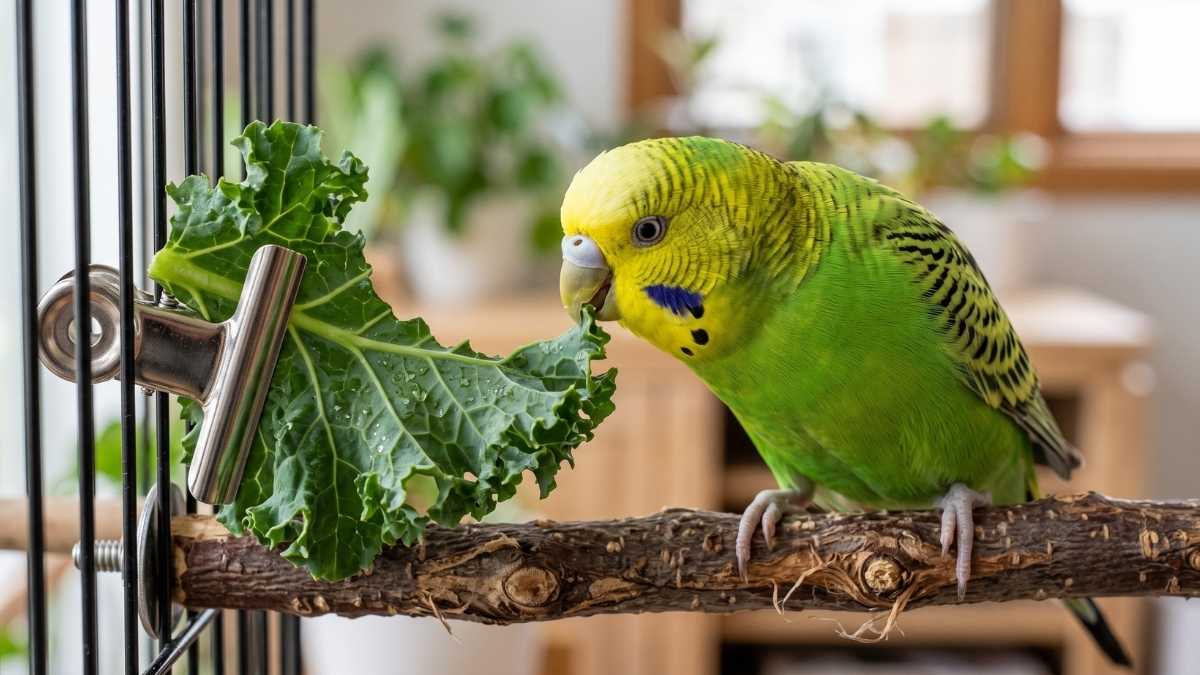
- Kale: One of the more nutrient-dense options, rich in vitamin A precursors, vitamin K, and calcium. Tear off the thick central rib if your budgie ignores it. Curly kale is easy to grip and shred, while flat lacinato kale is softer and often better for picky eaters. Wash thoroughly, since the ruffled leaves can trap dirt and residue.
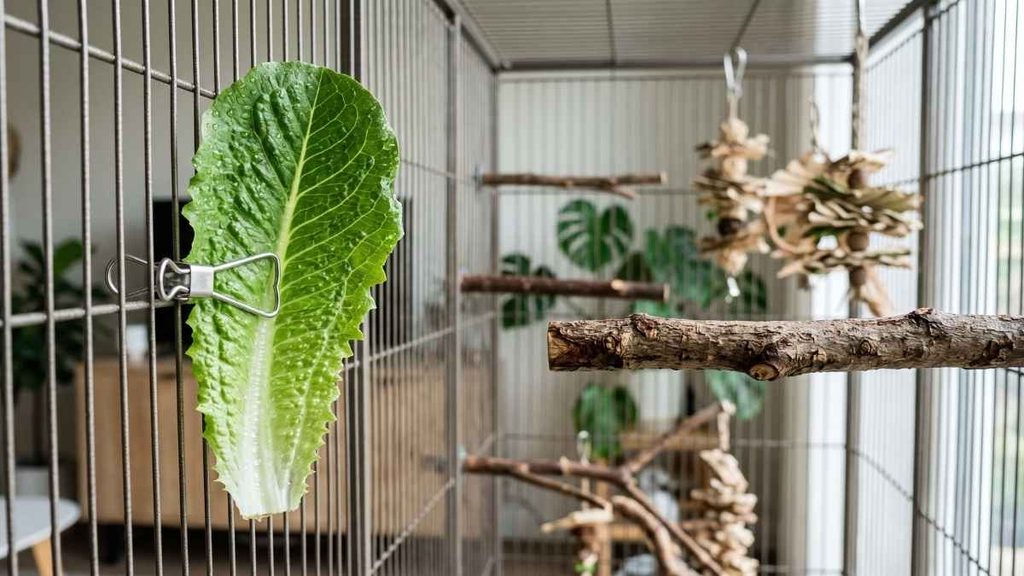
- Romaine lettuce: A gentle, crisp, mild-tasting green and a good starting point for birds new to vegetables. Choose the darker outer leaves, which generally contain more carotenoids than the pale inner heart. It’s higher in water than kale, so feed it as part of a mix rather than as the only green.
- Dandelion greens: A nutritious leafy option that can add variety to your budgie’s diet. Their slightly bitter, jagged leaves hold up well in a bowl or clipped to the cage bars. Only use greens from pesticide-free sources, never from lawns or roadsides that may have been treated with chemicals.
- Bok choy: Crunchy white stalks and tender green leaves give your budgie two textures in one vegetable. It supplies several vitamins and minerals. Chop the stalks finely if they seem tough, and offer the leaves whole for shredding.
Rotate, Don’t Rely: Spinach and Swiss Chard
- Spinach and Swiss chard: Both are nutrient-rich greens, but they are also relatively high in oxalates, compounds that can bind calcium and reduce its absorption. Rather than making these the main greens in your bird’s diet, offer them occasionally and rotate them with other vegetables such as kale, bok choy, and dandelion. Swiss chard’s colorful stems are easy to chop into a mixed salad, and spinach is best served in small, torn pieces alongside other greens.
Greens to Skip: Iceberg Lettuce
Iceberg lettuce is mostly water and provides fewer nutrients than darker leafy greens. It can be offered in small amounts, but it is not a particularly useful vegetable to rely on. Choose darker greens when possible to provide more nutritional variety.
Preparation basics: Wash all greens well, shake off excess water so they’re damp rather than dripping, and offer a loosely packed handful per bird each day. Remove any uneaten portion within a few hours so it doesn’t wilt or spoil.
Crunchy and Colorful Vegetables: Vitamin A and Foraging Boosters
Once your budgie is comfortable with leafy greens, brightly colored and crunchy vegetables add a second layer of variety. Orange, red, and yellow produce are rich in carotenoids, the plant pigments your bird can use as part of its vitamin A nutrition. They also provide opportunities to chew, shred, and explore.
Why Texture Matters: Sensory Foraging
Wild budgies spend much of their day searching for, husking, and picking apart food. A bowl of pellets disappears in minutes, but a firm carrot ribbon or a broccoli floret turns eating into an activity. Crunchy vegetables provide an opportunity to chew and manipulate food, adding variety and enrichment to your bird’s routine. Try skewering pieces on a veggie clip, wedging them between cage bars, or hanging a floret from a bell-style holder so your bird has to climb and reach.
Vitamin A Powerhouses
- Carrots (shredded ribbons): Peel long ribbons with a vegetable peeler or grate coarsely. Raw carrot is dense and hard, so thin shreds are far easier for a small beak to handle than chunks. Carrots are a useful source of beta-carotene, which contributes to vitamin A nutrition.
- Carrot greens: The leafy tops can also be offered as a vegetable. Wash them well and offer them like any other leafy green.
- Bell peppers (red, yellow, green): Red peppers are particularly rich in carotenoids, with yellow and orange varieties also providing useful nutrients. Green peppers are milder but still a fine option. Birds do not experience capsaicin in the same way mammals do, and budgies can eat the seeds found inside peppers. Cut thin strips or small dice and leave a few seeds in.
Fiber and Foraging Favorites
- Broccoli and cauliflower florets: Broccoli’s dark green florets supply vitamins and minerals, including vitamins A, C, and K. Offer small raw florets that your bird can pick apart, and expect some to be flung across the cage floor. Cauliflower is milder in nutrients but has a satisfying crunch, and the tight florets make excellent foraging opportunities.
- Zucchini and cucumber: Both have a high water content, making them a refreshing option, particularly in warmer weather. Because of their high water content, they should not dominate the bowl. Slice thin rounds or ribbons, leave the skin on for texture, and use them as a supporting vegetable alongside darker greens.
Occasional Treats: Sweet Corn and Green Peas
Corn and green peas are popular with many budgies. Both contain more carbohydrates than many leafy vegetables, so they are better treated as an occasional part of a varied vegetable mix rather than the main vegetable offered. Offer a few kernels or peas once or twice a week, served fresh or thawed from frozen with no salt or butter.
Safety note: Wash all produce and remove uneaten portions within a few hours.
How to Prepare Vegetables for Budgies: The Safe “Chop” and Hygiene Rules
Good produce can still cause problems if it’s prepared carelessly. A few consistent habits around washing, cooking, and serving keep every vegetable you offer safe and appealing.
Raw or Plain Steamed Only
Most vegetables are best served raw, since that preserves their texture and allows budgies to chew and shred them. Firmer vegetables like carrots, sweet potato, and winter squash can be lightly steamed until just tender, which makes them easier to eat, especially for birds new to vegetables. Let them cool completely before serving.
Whatever the method, the rule is simple: no salt, butter, oil, sauces, or seasonings. Flavored or canned vegetables can contain added sodium, fats, or other ingredients that are not appropriate for budgies. Avoid boiling vegetables for long periods as well, since some water-soluble vitamins can be lost. Garlic and onion should also be avoided.
Washing Steps That Actually Matter
Pesticide residue and soil bacteria are real concerns for a small bird. Follow this routine every time:
- Rinse under cool running water for at least 30 seconds, rubbing leaves and skins gently with your fingers.
- Scrub firm produce like carrots, peppers, and zucchini with a clean vegetable brush.
- Soak leafy greens briefly in a basin of cool water to loosen trapped dirt, especially curly kale, then rinse again.
- Pat or shake dry so the produce is damp, not dripping. Excess moisture can speed spoilage.
Choosing organic when you can is helpful, but it does not replace washing.
Two Ways to Serve: Chop vs. Whole Leaves
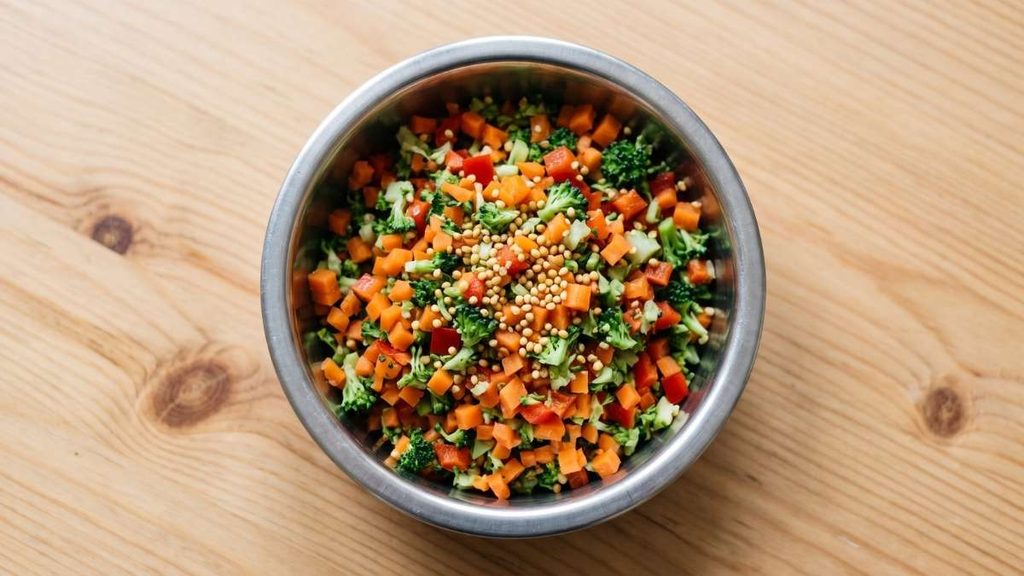
The finely minced “chop.” A budgie chop recipe is simply a mix of finely diced vegetables, which lets your bird sample many things in every beak-full instead of picking out favorites. A simple starter blend:
- 2 parts dark leafy greens (kale, bok choy, dandelion greens)
- 1 part shredded carrot or diced bell pepper
- 1 part broccoli florets, minced very small
- A small sprinkle of sprouted seeds or cooked whole grains, if you like
Mince everything finely in a food processor or by hand, and keep pieces small enough that they can’t be sorted out by size. Chop is especially useful for budgies who resist whole vegetables, because the mix of flavors makes it harder to reject.
Whole wet leaves clipped to the cage bars. Fresh, damp leaves such as romaine or dandelion greens, held with a food clip, invite both foraging and exploration. Many budgies will tear at the leaf and investigate the water droplets. Wet leaves should still follow the spoilage rule below.
Dish Placement and Hygiene
Use stainless steel or ceramic cups rather than plastic, which can become scratched over time. Place the vegetable dish away from perches and out from under them, because droppings falling into the bowl can contaminate fresh food. If your cage is on the small side, this is harder to manage, so review the dimensions in our Budgie Cage Size Guide: Dimensions for 1, 2, or More Birds to make sure there is room for a feeding station that stays clean. Wash the dish with hot soapy water after each use rather than just topping it off.
The 2-to-3 Hour Spoilage Rule
Wet, chopped vegetables can support bacterial growth as they sit at room temperature. For that reason, fresh produce should not be left in the cage for long periods. In a warm room, remove uneaten vegetables after about two to three hours, and check them sooner if the room is particularly hot. Never top off an old bowl with fresh produce.
How Often to Feed Budgies Vegetables
How often to feed budgies vegetables comes down to one word: daily. Offer a fresh portion every day, ideally in the morning when appetite is strongest, with roughly one to two tablespoons of chop or an equivalent amount of whole produce per bird. If your budgie is new to vegetables, start with small amounts and be patient, since it can take many exposures before a bird accepts something unfamiliar.
Toxic Vegetables and Plants Budgies Must Never Eat
Knowing the toxic foods for parakeets is just as important as knowing the safe ones. A budgie weighs only about 30 to 40 grams, so even a small bite of an unsafe food can be significant. Avian veterinary references consistently advise keeping certain foods and plants away from companion birds.
Avocado
Avocado contains persin, a compound that can be toxic to birds. Exposure can cause serious illness, including breathing difficulty, weakness, and cardiovascular problems. Because of the potential severity of avocado poisoning, do not offer avocado, including guacamole.
The Allium Family: Onion, Garlic, Leeks, and Shallots
Onion, garlic, leeks, and shallots contain compounds that can damage red blood cells and may cause anemia. Raw, cooked, dried, and powdered forms should be kept away from budgies. Check ingredient labels on anything seasoned, including cooked foods and snack mixes.
Raw Dried Beans
Uncooked dried beans can contain phytohaemagglutinin, a lectin that can cause gastrointestinal problems. Cooking beans thoroughly breaks down this compound, which is why beans should only be offered when fully cooked, cooled, and served plain. Never offer hard dried beans or partially cooked ones.
Tomato Leaves, Stems, and Green Tomatoes
Ripe red tomato flesh is generally considered acceptable in small amounts, but the leaves and stems should not be offered. If you grow tomatoes at home, keep plants out of your budgie’s reach during out-of-cage time, and remove the green calyx and stem before offering tomato.
Rhubarb
Rhubarb contains oxalates and is best avoided for budgies. Keep both the leaves and stalks away from your bird.
Other Foods to Keep Out of Reach
Chocolate, caffeine, alcohol, and the pits and seeds of apples and stone fruits are also unsafe. When in doubt about any plant or food, skip it and ask an avian veterinarian.
If You Suspect Poisoning
Act quickly. Remove the food, keep your bird warm and calm, and contact an avian or exotic-animal veterinarian or an animal poison control service right away. Do not wait for symptoms to worsen, and do not try to induce vomiting at home.
Clear Fresh Food Before Bedtime
Make food safety part of your nightly routine. Before your budgie settles down to rest, remove all fresh vegetable dishes, wet leaves, and any chop left in the cage. Perishable food left overnight can spoil and allow bacterial growth, and a hidden scrap of something unsafe can be nibbled at in the dark. Leaving wet, uneaten fresh food in the cage is one of the most frequent feeding oversights pet owners make—learn more about preventable hazards in our guide on What Not to Do With Parakeets: 10 Common Mistakes That Scare or Harm Your Budgie.
How to Get a Seed-Addicted Budgie to Eat Vegetables
If your budgie treats a fresh kale leaf like a suspicious intruder, you are not doing anything wrong. Budgies can be cautious about unfamiliar foods and objects. A bird raised on seed may also have learned that “food” looks, smells, and tastes a certain way. The goal is not to force a change but to make vegetables feel familiar, safe, and a little bit fun.
The Seed-Dusted Chop Method
Start with something your bird already loves. Lightly dampen finely minced greens, then roll or toss them in a small amount of crushed seed or a pinch of millet crumbs so the chop is flecked with a familiar taste and look. Your budgie may pick at the seeds and encounter bits of green along the way. Over one to two weeks, gradually reduce the seed dusting until the chop stands on its own. Keep the dusting light, since the aim is a bridge to vegetables rather than another high-fat meal.
Wet Leaf Foraging
Many budgies are drawn to water droplets before they are drawn to food. Rinse a kale, romaine, or dandelion leaf and leave it visibly beaded with water, then clip it to the cage bars at your bird’s eye level. Curious birds may investigate the droplets first, then nibble the leaf edges. If your budgie loves bathing, you can lay a wet leaf on a shallow dish of water and let them explore it. Familiarity builds with every exposure, even if nothing is eaten at first.
Social Mirroring
Budgies are social birds, and they pay close attention to what is happening around them. Sit near the cage and eat a slice of apple or a carrot stick yourself, making happy, relaxed noises as you go. Then offer a piece of the same food, or hold it near the bars and let your bird approach on its own terms. Seeing you interact positively with something may make the new food less intimidating. Remember that apple seeds must be removed and that only plain, unseasoned foods should be shared. Never offer anything from your plate that contains salt, oil, onion, or garlic.
Other Gentle Adjustments
- Offer vegetables first thing in the morning, when your budgie is hungriest, and delay the main seed portion by an hour or so.
- Try different shapes and textures. Some birds prefer shredded ribbons, others whole florets, others a finely minced chop.
- Keep portions small and fresh daily so a rejected vegetable does not turn into a spoiled one. Follow the two-to-three hour spoilage rule from earlier.
Avoid abrupt seed removal or “starving them into it.” Budgies can become seriously ill when they stop eating, so any diet change should be gradual, and you should weigh your bird regularly on a gram scale to confirm they are maintaining weight. If your budgie is not eating at all, contact an avian veterinarian promptly.
Patience and Consistency Win
Some budgies accept a new vegetable in days, and others need dozens of exposures over several weeks before they take their first bite. Both are possible. Keep offering small amounts, keep the mood relaxed, and celebrate small wins, like a pecked leaf or a licked droplet. Every positive encounter builds familiarity, and a bird who learns that fresh food is safe and interesting may be more willing to eat it regularly.
Veterinary References
- VCA Animal Hospitals: “Budgies – Feeding and Nutrition“
- Merck Veterinary Manual, sections on nutrition and nutritional disorders in pet birds, and on poultry and avian toxicology
Educational Disclaimer
This article is provided for educational purposes only and is not a substitute for professional veterinary advice, diagnosis, or treatment. Every bird is an individual, and dietary needs vary with age, health status, and breeding condition. Always consult a qualified avian veterinarian before making significant changes to your budgie’s diet, and seek immediate veterinary care if your bird shows signs of illness or has eaten something potentially toxic.