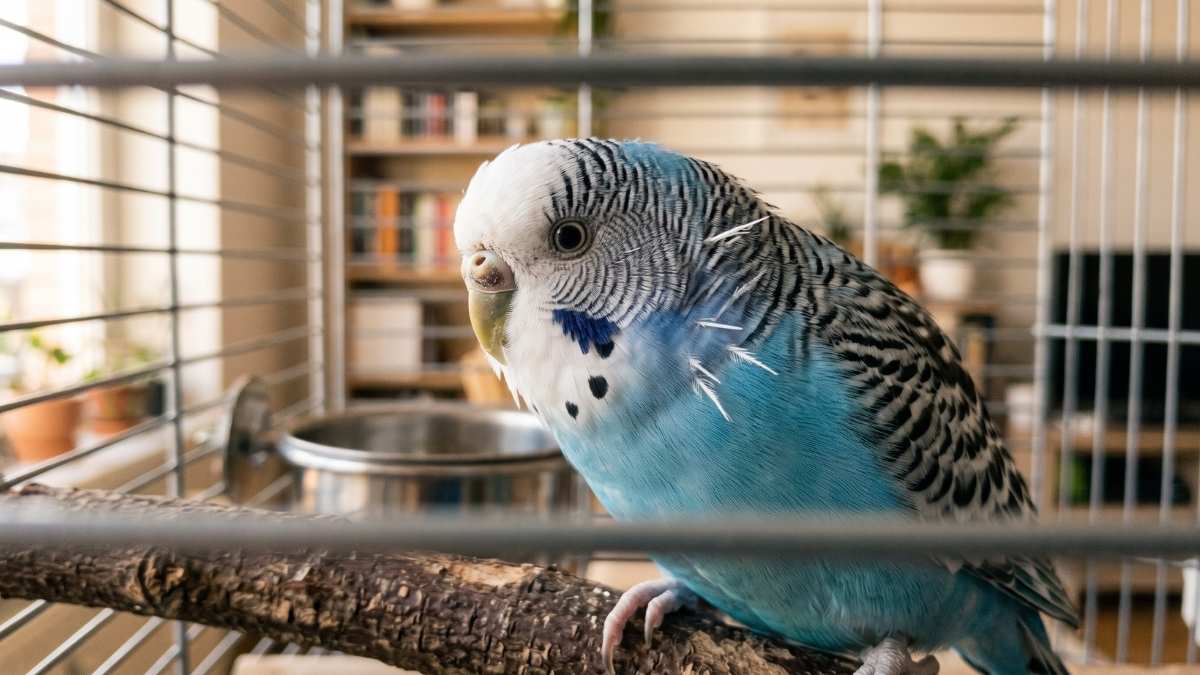
Budgie molting is the natural process by which your parakeet sheds old, worn feathers and grows fresh plumage in their place. If you’ve woken up to a cage floor covered in feathers and a bird that looks a little scruffy, take a breath: this is one of the most normal things a healthy budgie goes through.
Feathers are dead structures, much like human hair, and they gradually wear down from flying, preening, and daily life. Because they can’t repair themselves, birds replace them on a regular cycle. Most pet budgies molt once or twice a year, though the timing and intensity vary from bird to bird. Young budgies also go through their first major molt between roughly three and four months of age, as they trade their juvenile feathers for adult plumage. Avian veterinary references, including the Merck Veterinary Manual, describe molting as a routine physiological event rather than a medical problem.
It can still look dramatic. You may notice:
- Spiky, tube-like quills poking out around the head and neck
- White flakes or “dander” drifting from the new feather sheaths
- A patchy, ruffled appearance
- Temporary grumpiness, since growing feathers can feel itchy and tender
None of this signals disease. Your budgie is simply investing a lot of energy in rebuilding its coat. With a little extra support and patience, most birds sail through it comfortably, and the sections ahead will show you exactly how to help.
How Can I Tell If My Budgie Is Molting? (Signs & Visuals)
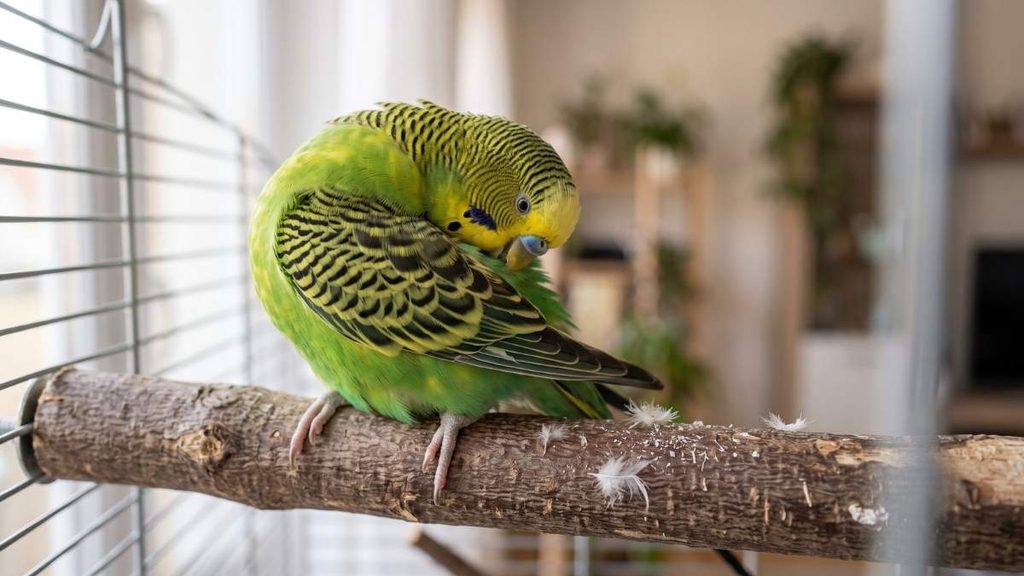
If you’re wondering how to tell if your budgie is molting, look for a combination of small changes rather than a single sign. Here is what budgies look like when they’re molting, and why each change happens.
Core Physical Signs
- Pin feathers (blood feathers): These spiky, tube-like quills appear mostly on the head, face, and neck, areas your budgie can’t easily preen alone. Each quill is wrapped in a keratin sheath and, while growing, is fed by a blood supply, which makes it sensitive to touch.
- Increased preening and feather dust: Your bird will groom more often to crack open the sheaths. The flaking casing looks like tiny white dandruff on the cage floor, perches, and your clothes.
- Symmetrical feather loss: Flight and tail feathers drop in balanced pairs, one from each side, so your budgie keeps its ability to fly. Bald patches, or loss on only one side, are not typical.
- Minor behavioral shifts: Expect extra napping, quieter chatter, and mild irritability, since new feathers are itchy and growing them takes real energy.
Molt Stages at a Glance
| Stage of Molt | What You Will See on Your Bird | Care Focus |
| Early Shedding | More loose feathers than usual on cage floor; slightly dull, ruffled plumage | Offer balanced nutrition and keep a calm, steady daily routine |
| Peak Pin-Feather Growth | Spiky quills on head and neck, visible dander, frequent preening, extra sleep | Provide extra rest, humidity/bathing options, and gentle handling |
| Feather Unsheathing | Quills opening into soft new feathers; flaking sheaths; noticeable itchiness | Allow natural preening; avoid touching sensitive, growing blood quills |
| Completion | Sleek, glossy plumage with vivid color; normal energy and vocal chatter | Return to regular activity and monitor overall feather quality |
According to resources such as the Merck Veterinary Manual and Association of Avian Veterinarians guidance, a normal molt should leave your budgie bright, alert, and eating well. If your bird seems unusually weak, fluffed up all day, or stops eating, that points to a different problem, which later sections will help you sort out.
How Long Do Budgies Take to Molt?
So, how long do budgies take to molt? A minor molt, where your bird mostly sheds a scattering of body feathers, usually wraps up in about two to three weeks. A heavy molt, such as a young budgie’s first juvenile-to-adult molt or a full annual renewal, can stretch to six to eight weeks. Birds also tend to molt in waves rather than all at once, so it may feel like the process comes and goes.
What Influences the Timeline
- Light cycles: Budgies respond to changing day length, which is why many molt in late summer or autumn. Irregular lighting, such as a bright room late into the evening, can trigger off-season or prolonged molting.
- Indoor temperature: Stable, comfortable warmth supports smooth feather growth. Sudden swings may disrupt the cycle or slow regrowth.
- Nutritional reserves: Feathers are made largely of protein, so a bird on a seed-heavy diet may molt more slowly and grow duller feathers. Well-nourished birds typically recover faster.
When Baldness Is Not Normal
Normal molting is patchy only in the sense of looking ruffled. Continuous, noticeable bald spots that don’t fill in with pin feathers deserve attention. According to avian veterinary sources such as the Merck Veterinary Manual and the Association of Avian Veterinarians, likely causes include:
- Mites: Parasites that irritate the skin and cause feather loss, often with scaly or crusty areas.
- French molt (circovirus or polyomavirus): A viral condition, most often seen in young birds, in which feathers fail to develop properly.
- Stress plucking: Self-inflicted feather damage from boredom, anxiety, or environmental stress.
If bald areas persist past the expected timeframe, an avian veterinarian can identify the cause and recommend treatment.
Is My Budgie Molting or Sick? Key Differences
Molting drains a surprising amount of metabolic energy. Growing a new coat of feathers demands extra protein and calories, so your budgie may nap more, chatter less, and sit quietly on the perch. To a worried owner, that can look a lot like illness. The good news is that a molting bird still behaves like itself underneath the tiredness, and a few clear markers help you tell the difference.
Molting vs Sick Budgie: A Quick Checklist
A molting budgie typically:
- Eats seed, pellets, and fresh foods at a normal pace
- Has a clean, dry vent with no staining
- Shows bright, clear, fully open eyes
- Produces normal droppings (a firm dark-green or brown portion with white urates)
- Drops feathers symmetrically and grows visible pin feathers in their place
- Perks up for short bursts of activity, foraging, or play
A sick budgie may:
- Stay puffed up continuously, often sitting on the cage floor
- Have watery or bright green diarrhea, or a soiled vent
- Show tail bobbing with every breath
- Vomit or regurgitate repeatedly (not to be confused with normal courtship feeding)
- Develop a crusty, swollen, or discolored cere
- Have dull, half-closed, or discharging eyes
When to Call an Avian Veterinarian
Birds instinctively hide illness, so subtle changes matter. According to the Association of Avian Veterinarians and the Merck Veterinary Manual, a fluffed-up bird with ruffled feathers but no new pin feathers coming in is a red flag, as is extreme lethargy or any labored breathing. These signs call for prompt veterinary action rather than a wait-and-see approach. For a deeper look at warning signs, our guide on how to tell if a parakeet is sick walks through each symptom in detail.
When in doubt, trust your instincts. A quick check-up is far better than a missed illness, especially since a molting bird has fewer energy reserves to fight infection.
How to Support Your Budgie During a Molt

You can’t speed up a molt, but you can make it far more comfortable. These four habits give your budgie the best chance of a smooth, quick renewal.
1. Nutritional Support
Feathers are roughly 90% protein, mostly keratin, so growing a new coat takes real nutritional fuel. Keep the base diet balanced with quality pellets or a varied seed mix, and add extras that supply protein and key nutrients:
- Plain cooked egg: Offer a pinch of hard-boiled or scrambled egg, with no salt, butter, or oil, about once a week. Remove leftovers within a few hours.
- Leafy greens: Offer washed kale, romaine, or dandelion greens daily for vitamins and moisture.
Treats should stay small, since too many sugary extras can crowd out balanced nutrition. Our guide on what fruits can parakeets eat covers safe portions and which fresh foods double as hydration boosters while your bird is regrowing feathers.
2. Misting and Warm Water Baths
Light misting with lukewarm, clean water softens the hard keratin sheaths and eases itchy skin. Use a fine spray bottle (never one that has held cleaning products), aim above the bird so the water falls like gentle rain, and stop if your budgie seems frightened. Many birds also enjoy a shallow dish of lukewarm water or damp greens to splash in. Let your bird dry in a warm, draft-free spot.
3. The Hands-Off Head Rule
Growing pin feathers have an active blood supply, so touching, rubbing, or pinching them can cause sharp pain, and a damaged one can bleed. Avoid petting the head, face, and neck until the quills have opened. Your budgie may be extra moody now, which is normal. Handle only when necessary, keep interactions calm, and let your bird set the pace. If you need tips on settling a grumpy, sensitive bird without causing stress, see our advice on how to calm down a parakeet.
4. Extra Rest and Warmth
Aim for 10 to 12 hours of uninterrupted, dark, quiet sleep each night, using a cage cover if the room is bright or noisy. Keep the room at a steady, comfortable temperature and place the cage away from drafts, windows, and air vents, since new feathers can’t insulate as well until they fully emerge. Avian veterinary sources, including the Merck Veterinary Manual and the Association of Avian Veterinarians, consistently emphasize adequate nutrition, rest, and low stress as the foundation of healthy feather regrowth.
Conclusion & Educational Disclaimer
Budgie molting asks a little extra of you: patience, a warm and quiet space, and a nutrient-rich diet to fuel new feather growth. It can be messy and a bit moody for a few weeks, but it is a healthy sign that your bird is renewing itself. Before long, those spiky pin feathers will open into smooth, vibrant plumage, and your budgie’s energy and chatter will return.
Sources & Veterinary References
- Association of Avian Veterinarians (AAV): Basic Care for Companion Birds
- Merck Veterinary Manual: Management of Pet Birds (Molting & Feathering)
Educational Disclaimer: This article is a general educational guide and is not medical advice. It cannot replace an examination by a qualified avian veterinarian. If your budgie shows signs of illness, persistent bald patches, or any change that worries you, contact an avian vet promptly.