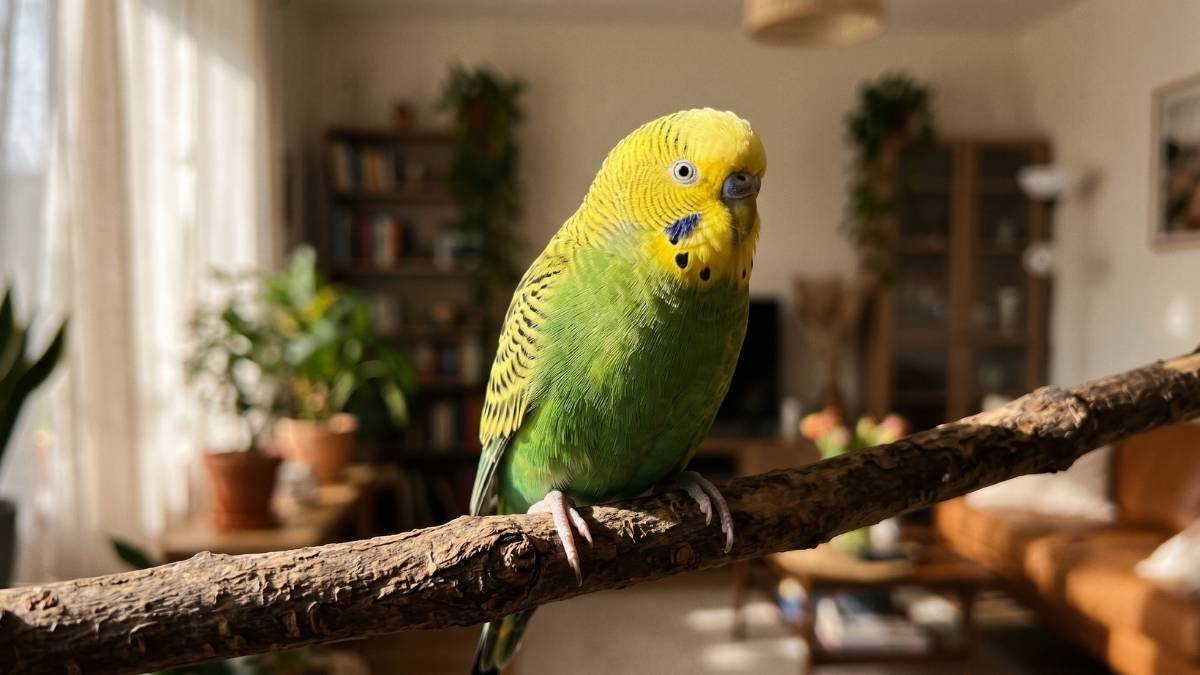
The average budgie lifespan is longer than many new owners expect, and much of it is shaped by the care a bird receives each day. Pet budgies typically live 7 to 12 years, and some well-cared-for birds can reach 15 years or more. Wild Australian budgies face predators, drought, food shortages, and extreme weather, which can affect their survival.
Avian veterinary sources, including the Association of Avian Veterinarians, emphasize the importance of balanced nutrition, a clean and safe home, and early attention from an avian vet when something seems off.
Budgie Lifespan Comparison
| Setting | Average Lifespan | Primary Survival Factors |
| Wild (Australia) | Varies with environmental conditions | Predation, drought, food and water scarcity, extreme heat |
| Pet (Typical Care) | 7 to 12 years | Diet quality, cage hygiene, home safety, routine observation |
| Pet (Exceptional Care) | 15+ years in some cases | Varied fresh diet, regular avian vet checkups, enrichment, low-stress environment |
The encouraging takeaway is that your daily habits matter. Offering fresh vegetables, keeping the cage clean, noticing small changes in behavior, and providing a calm, stimulating environment all add up over the years. Genetics play a part, but they are only one piece of the picture.
The sections ahead cover what you can control, from nutrition to home safety to senior care, so your budgie has the best possible chance at a long, comfortable life.
Key Factors That Influence How Long Budgies Live
Three everyday pillars do the most to shape a budgie’s lifespan: what the bird eats, the air and surroundings it lives in, and how much it moves and thinks each day.
Balanced Nutrition Beyond an All-Seed Diet
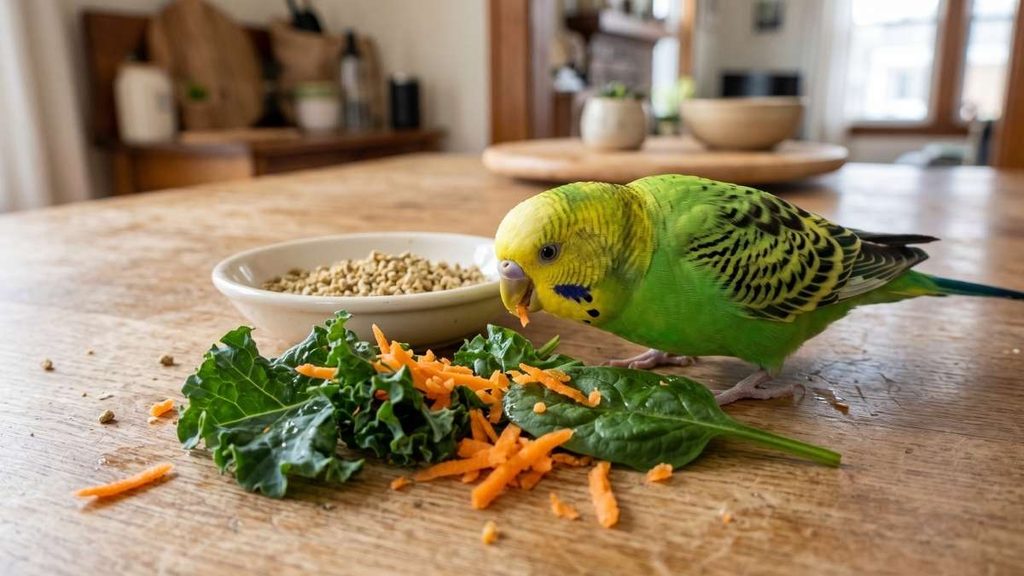
Seed-only feeding can create nutritional imbalances in pet budgies. Seeds are often high in fat and may be low in vitamin A, calcium, and other essentials when fed as the main diet. Over time, an imbalanced diet can contribute to health problems, including hepatic lipidosis, commonly called fatty liver disease, in which fat accumulates in the liver and affects its function. Avian veterinary guidance recommends a nutritionally balanced diet rather than relying mainly on seeds.
A healthier pattern is a quality pellet as the foundation, a modest portion of seed as a supplement, and fresh produce offered daily. Dark leafy greens, grated carrot, broccoli, and bell pepper are popular choices. Our guide to what parakeets eat, including pellets, fresh greens, and safe vegetables covers portions, foods to avoid, and how to gradually convert a stubborn seed lover.
Clean Living Environment and Air Quality
Budgies have delicate respiratory systems. Birds use a network of air sacs that supports efficient breathing, but they can also be sensitive to dust, mold spores, and other airborne irritants. Damp, soiled cage bottoms and droppings-coated perches can contribute to poor hygiene and unhealthy living conditions.
- Place the cage away from drafts, open windows, and direct air-conditioning vents, while keeping the room well ventilated.
- Change cage liners often so they stay dry.
- Wipe down perches, dishes, and toys regularly.
A consistent routine for cleaning a parakeet cage, from hygienic perches to dry liners, helps maintain a clean environment and reduce the risk of mold and bacterial growth.
Daily Exercise and Mental Well-Being
Budgies are active, intelligent flock animals. Without flight and stimulation, they can become stressed, bored, and overweight, and both chronic stress and obesity can negatively affect their well-being. Daily out-of-cage time in a bird-safe room, with supervised flight whenever possible, can support their physical and mental health.
Mental foraging is just as valuable:
- Hide millet or treats inside paper cups or crumpled paper.
- Offer shreddable toys and rotate them weekly.
- Use foraging boxes that make your budgie work for part of its meal.
A busy, engaged budgie gets more opportunities for physical activity and mental stimulation, which can help reduce boredom-related behaviors.
Common Causes of Early Death in Pet Budgies (And How to Prevent Them)
Many household risks can be reduced with proper precautions. Knowing them is the first step toward supporting a longer budgie lifespan.
Toxic Airborne Fumes
Birds’ sensitive respiratory systems make them especially vulnerable to airborne toxins, and severe exposure can be fatal within minutes. The most common culprits are:
- Non-stick cookware: Overheated PTFE (Teflon) coatings can release fumes that are deadly to birds, even in another room.
- Self-cleaning ovens: The high-heat cleaning cycle can release toxic fumes from the oven’s coating.
- Scented candles, plug-in air fresheners, and aerosol sprays: These can release particles and chemicals into the air that birds inhale.
Switch to stainless steel or cast iron cookware, keep your bird well away from the kitchen during cooking, and avoid aerosols entirely in rooms where your budgie lives. Avian veterinary guidance warns about the serious risks that fumes and airborne toxins pose to birds.
Concealed Illness
Budgies are prey animals, so they may instinctively hide weakness to avoid attracting predators. By the time a bird looks obviously unwell, a condition may already be advanced. Subtle early signs include tail bobbing with each breath, fluffed feathers, a hunched or changed posture, and droppings that shift in color or consistency. Our guide on how to tell if a parakeet is sick walks through subtle early warning signs to watch for. When in doubt, contact an avian veterinarian promptly rather than waiting.
Household Physical Hazards
Accidents are another potential cause of sudden injury or loss. Common dangers include:
- Uncovered windows and mirrors that birds may mistake for open space
- Open doors and unscreened windows that allow escape
- Active ceiling fans, which can cause severe injury
- Curious cats, dogs, and other pets with predatory instincts
Always turn fans off, cover or mark glass, and keep other animals separated from your budgie. For a fuller checklist, see what not to do with parakeets and how to bird-proof your home safely.
How to Tell the Age of a Budgie: Life Stages Explained
Knowing a budgie’s approximate age helps you adjust diet, vet visits, and expectations for its lifespan. The most useful clues in young birds are often found in the head and eyes.
Juveniles (Under 4 Months)
Young budgies often have barred stripes that run down the forehead toward the cere, the fleshy area above the beak. Their eyes usually look solid dark, with no clearly visible pale iris ring. Juveniles may also have less defined cere coloration.
Young Adults (4 to 8 Months)
The first molt is an important turning point. As the head bars clear, a solid yellow or white cap often appears on the forehead. During this stage, a faint grey iris ring may begin to develop around the pupil, though its appearance varies between individual birds.
Mature Adults (8+ Months to Senior)
By this stage, the iris ring is often more developed and may appear white or light grey. The cere coloration is usually more established: typically blue in mature males and tan, white, or brownish in females, though variations exist across mutations. From here on, visible changes are gradual and subtle.
Why Exact Age Becomes Hard to Judge
After about one year, determining true chronological age is difficult. Physical clues overlap, and individual birds age at different rates. Without leg bands or hatch records from a breeder, any estimate is a rough guess. If you adopt an adult budgie, an avian veterinarian can assess overall condition and offer a reasonable estimate, but it is best treated as a range rather than a firm number.
Senior Budgie Care: Supporting Older Parakeets
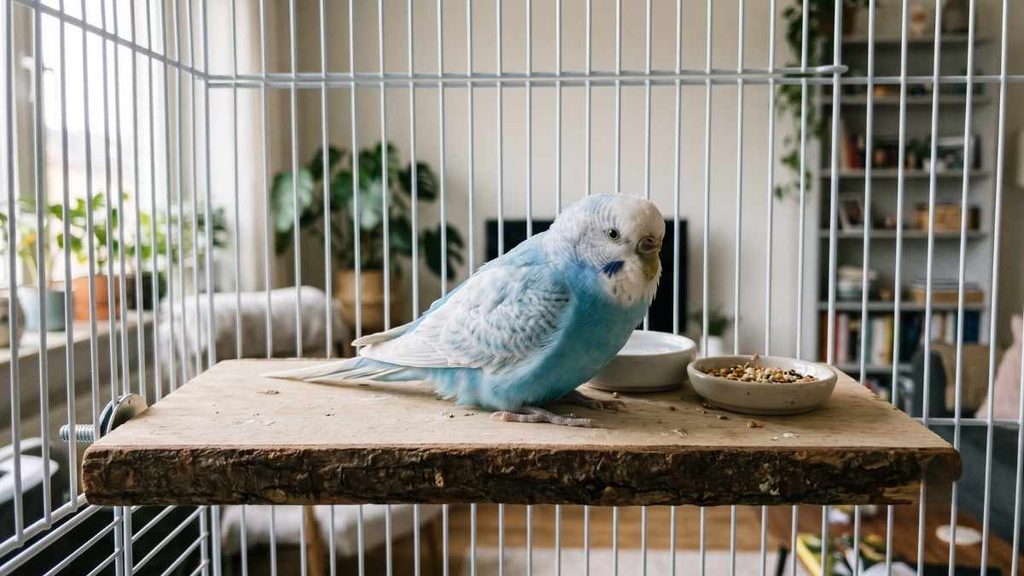
Budgies are often considered seniors from around 6 to 7 years old, though individual birds age at different rates. Older birds may slow down, sleep more, and become less steady on their feet. Small adjustments at home can keep them comfortable and support a healthy budgie lifespan well into their later years.
Adjust the Cage Layout
Aging joints and reduced balance can make high, narrow perches harder to use. Consider these changes:
- Lower perches closer to the cage floor so there is less distance to climb or fall.
- Add wider, flat platforms where your budgie can rest its whole foot.
- Choose secure perches with suitable diameters and textures. If your bird has mobility problems, ask an avian veterinarian about appropriate supportive perch options.
Keep Essentials Within Easy Reach
Place food and water dishes close to your bird’s main resting perches so it doesn’t need to climb or flutter far to eat and drink. Offering a second dish at a low level is a simple safeguard on days when your budgie feels less energetic.
Maintain Gentle Warmth
Older birds may be more affected by temperature changes. Keep the room comfortably warm and steady, and position the cage away from cold drafts, exterior doors, and air-conditioning vents.
Schedule Routine Wellness Checks
Avian veterinary guidance generally recommends regular wellness visits for companion birds, with the frequency adjusted to the bird’s age and health. Annual exams, and sometimes more frequent visits for seniors, can help catch subtle changes early, which matters because budgies often hide illness. Your avian vet can also advise on diet adjustments and any mobility concerns specific to your bird.
Sources & Veterinary References
- Association of Avian Veterinarians (AAV): Basic Care for Companion Birds
- Merck Veterinary Manual: Management of Pet Birds
Conclusion & Educational Disclaimer
A long, vibrant budgie lifespan is rarely the result of luck. It comes from consistency: a balanced diet built on pellets and fresh vegetables, a clean and safe home free of fumes and hazards, daily flight and mental stimulation, and close attention to small changes in behavior. Add routine checkups with an avian veterinarian, and your budgie has the best opportunity to thrive well into its senior years, often for a decade or more.
Educational Disclaimer: This article is provided for general educational purposes only and is not a substitute for professional veterinary advice, diagnosis, or treatment. Every bird is different. If you notice changes in your budgie’s appearance, droppings, breathing, or behavior, or if you have concerns about its diet or environment, consult a qualified avian veterinarian promptly.