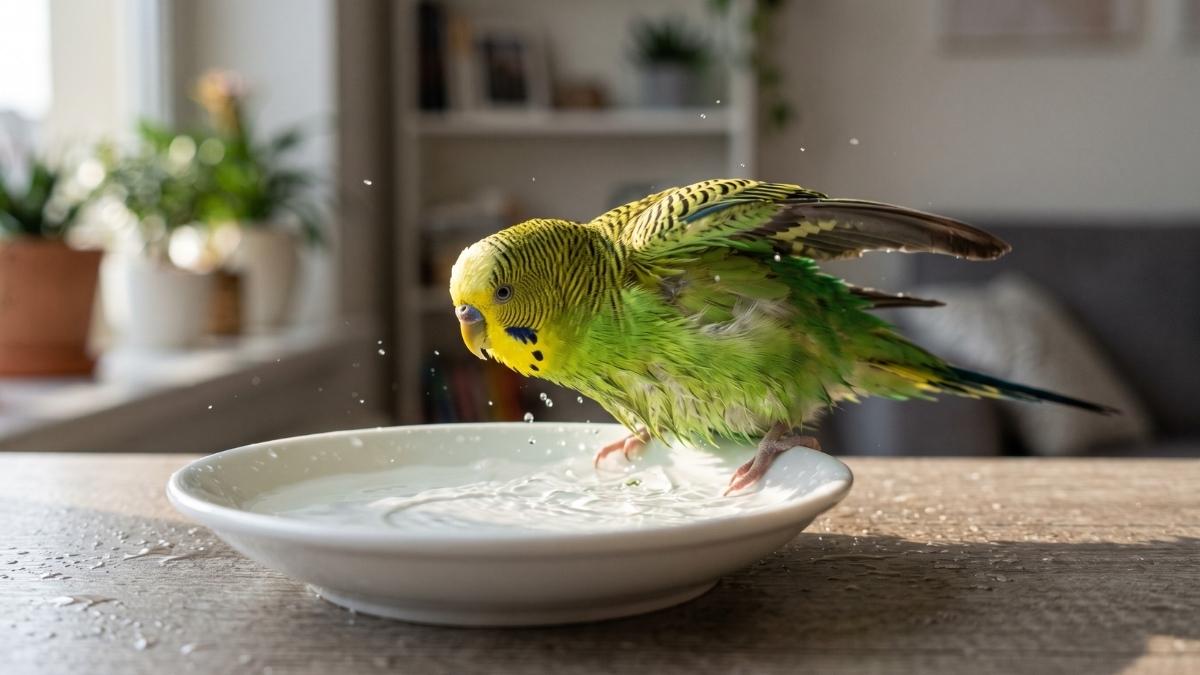
If you’re wondering how often should budgies bathe, the short answer is that many pet budgies benefit from regular opportunities to bathe, often around 1 to 2 times a week. Some birds enjoy a bath offered more frequently during warm weather or while they’re molting, while others are perfectly content with a weekly splash. Your bird’s own enthusiasm is the best guide.
Bathing is a natural behavior for budgies. Wild Australian budgerigars may bathe in dew-covered vegetation or shallow water when conditions allow. Offering safe bathing opportunities lets companion budgies express this natural behavior.
The benefits are practical as well as instinctive. Bathing helps:
- Maintain feather condition, while the preening that follows helps keep feathers neat and aligned
- Remove loose dust and debris, helping keep plumage cleaner
- Support skin and feather care, especially when a bird enjoys bathing as part of its regular how to take care of a parakeet routine
Most importantly, bathing should always be voluntary. A budgie that chooses to hop into a dish or flutter through a misting of water is learning that baths are safe and enjoyable. A bird that is forced, chased, or sprayed against its will can become fearful, and that fear can undo weeks of trust. Offer the opportunity, watch your bird’s body language, and let your budgie decide when, and whether, to take part.
Why Bathing Is Essential for Parakeet Health
A bath does more than get your budgie wet. It supports several parts of everyday feather and skin care.
Feather Alignment and Preening
Each feather is built from tiny interlocking barbs and barbules that help it hold its shape. When a budgie bathes, water can loosen dust and debris from its feathers. The preening that follows helps realign them and maintain their condition. Well-groomed feathers help with insulation and comfortable movement.
Skin Care and Cleaner Air
Bathing can help remove loose dander and debris from a budgie’s feathers. The amount of feather dust in your home can vary depending on the bird and its environment, so bathing should not be treated as a guaranteed way to reduce household dust.
Comfort During Heavy Feather Renewal
Molting can be uncomfortable. New feathers emerge inside keratin sheaths, and budgies often scratch and preen more than usual. A shallow dish of lukewarm water or gentle misting may help some birds feel more comfortable during this period. Our guide to budgie molting and keratin relief covers what to expect and how to keep your bird comfortable during each stage.
Bathing can be part of good everyday bird care, but it does not replace veterinary attention. If your budgie seems to be itching constantly or has bare patches, mention it to your avian vet.
Safe Bathing Methods: Finding What Your Budgie Likes
Every budgie has its own taste, so offer one method at a time and watch the response. Most birds settle on a favorite within a few tries.
1. Shallow Ceramic Dish
Fill a heavy, stable dish with 0.5 to 1 inch of clean, lukewarm water. A textured, non-slip bottom helps your bird feel secure. Remove the dish within 1–2 hours, since droppings and wet debris can contaminate the water. Our guide on how to clean a parakeet cage explains how to keep bath areas fresh.
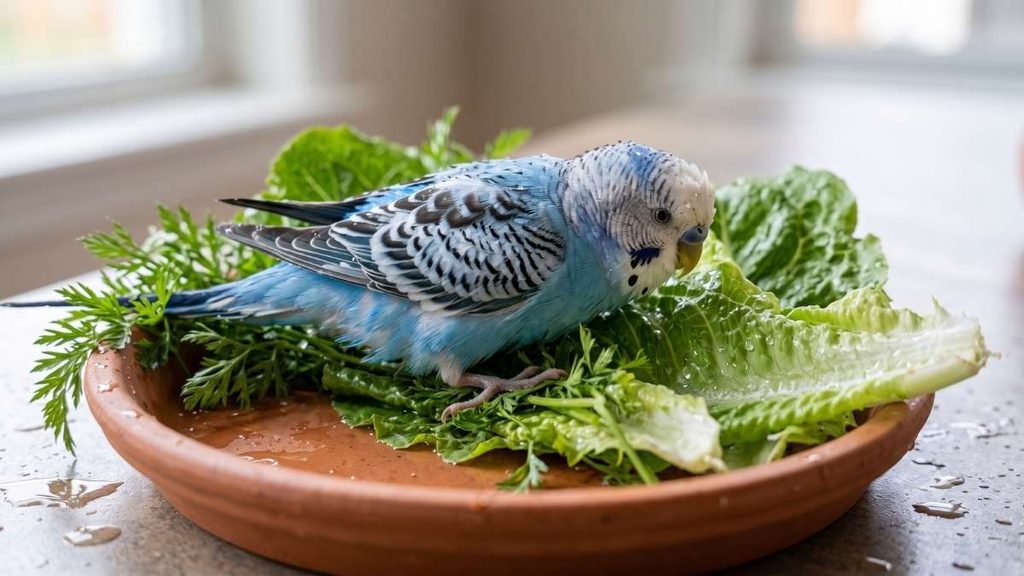
2. The Wet Greens Method
Place dripping-wet romaine, carrot tops, or kale in a shallow tray. Budgies may rub and roll through the leaves, making this a good choice for shy birds.
3. Fine Mist Spray Bottle
Do parakeets like spray baths? Many do, if the mist is gentle. Use a brand-new bottle that has never held cleaning products, and spray upward so the water falls like soft rain. Never aim at the face, eyes, or nostrils. Forcing a frightened bird into a bath can set back your bond, so review what not to do with parakeets before trying anything new.
4. Commercial Clip-On Bird Baths
These attach to the cage door and can help keep water off the floor. Wash them after every use, because small crevices can trap droppings and residue.
Method Comparison
| Bath Method | Best For | Water Level / Setup | Budgie Reaction Sign |
| Shallow Ceramic Dish | Confident, curious birds | 0.5–1 inch lukewarm water, non-slip base | Hopping in, splashing, wing flapping |
| Wet Greens | Shy or cautious birds | Dripping-wet leaves in a shallow tray | Rubbing against leaves, rolling, chirping |
| Fine Mist Spray | Birds that enjoy “rain” | Gentle upward mist, never at the face | Fluffing feathers, lifting wings, soft chatter |
| Clip-On Bath | Cage-bound or small-space setups | Mounted at cage door, shallow water | Perching on the rim, then dipping in |
A calm, relaxed bird is saying yes. If yours leans away, freezes, or flies off, end the session and try another method another day.
Water Temperature and Critical Safety Rules
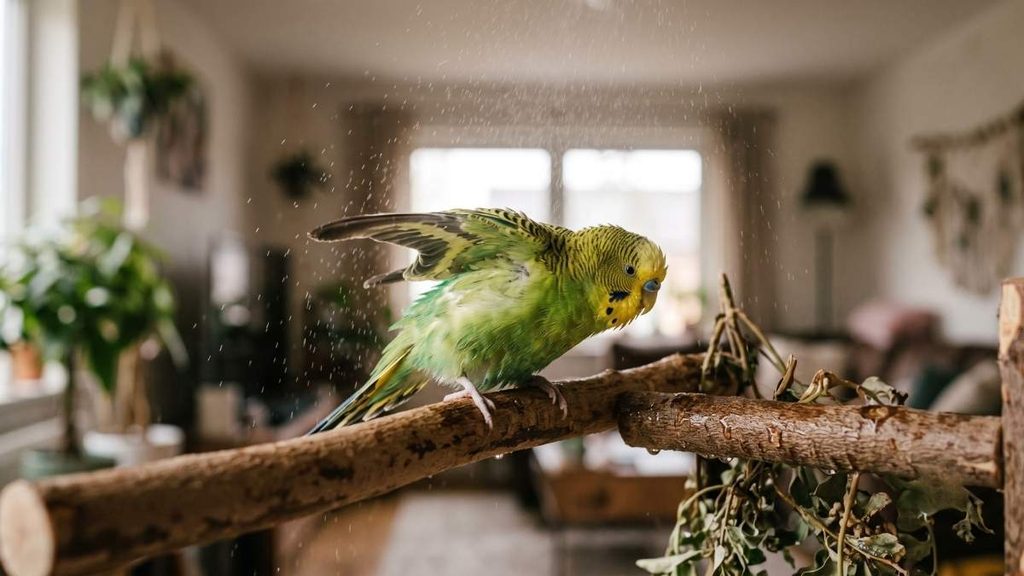
Small details make the difference between a joyful splash and a stressful bath, so keep these rules in mind every time.
Budgie Bath Water Temperature
Can budgies bathe in warm water? Yes, as long as it is lukewarm or around room temperature. The water should feel comfortable and neither hot nor icy cold when checked with your wrist.
- Never hot. Hot water can scald a budgie’s delicate skin.
- Avoid icy-cold water. Very cold water may cause discomfort and can chill a small bird, especially in a cool room.
Plain Water Only
Use clean, drinking-safe water and nothing else. Avoid soap, shampoo, detergent, and scented essential oils. These can irritate the skin or leave residues that your bird may swallow during preening. Birds also have highly sensitive respiratory systems, so fragrance is best avoided entirely.
Depth and Drowning Safety
Water should remain shallow enough for your budgie to stand securely and move easily. Your bird must be able to stand flat-footed without struggling. If your bird seems unsteady, choose a shallower dish or switch to misting. Stay nearby and supervise every bath, since even shallow water can be a risk for a tired or unwell bird.
Timing the Bath
Offer baths in the morning or early afternoon when practical. This gives feathers several hours to dry before night sleep, which is especially helpful if you cover your parakeet at night, helping your bird stay comfortable overnight.
Remove Water Promptly
Take the bath away once your budgie finishes, or within 1–2 hours at most. Standing water gets soiled quickly, and splashes can soak cage bottom liners and create damp spots where bacteria thrive.
The basic safety principles are straightforward: use plain water, keep it comfortably lukewarm, provide a safe depth, and supervise your bird.
What Never to Do When Bathing a Budgie (Drying Safely)
A few common mistakes can turn a pleasant bath into a frightening or even dangerous experience.
Mistakes to Avoid
- Never force a reluctant bird into water. Don’t grab, chase, or hold a budgie under a running tap. Fear and restraint can cause panic, injury, and lasting distrust.
- Never chase a bird with a spray bottle or spray directly into the face. If your budgie flees, the session is over.
- Avoid using a human hairdryer to dry your budgie. Hairdryers can cause overheating or burns, and some heated appliances may contain PTFE or other materials that release dangerous fumes when overheated. Keep birds away from potentially hazardous fumes and hot appliances.
How to Dry a Wet Budgie
Knowing how to dry a wet budgie properly is simple: your bird does most of the work, and you provide a safe environment.
- Choose a warm, draft-free room. Close nearby windows and keep fans off. A comfortable room temperature helps your bird dry without chilling.
- Allow gentle natural air drying. Budgies fluff, shake, and preen themselves dry. Resist the urge to rub them with a towel, which can stress them and damage feathers.
- Offer a comfortable perch. A perch in a comfortably warm room helps your bird relax and dry. Avoid direct heat sources such as heat lamps placed too close, or hot appliances.
Watch your bird as it dries. A wet budgie that fluffs up, preens, and perches calmly is generally behaving as expected. If it seems lethargic, stays puffed up, or shivers after drying, contact an avian veterinarian promptly.
Sources & Veterinary References
- VCA Animal Hospitals: “Bathing Birds”
- Merck Veterinary Manual: “Management of Pet Birds (Routine Care)”
Conclusion & Educational Disclaimer
Bathing works best as a calm, low-pressure ritual shaped around your budgie’s own personality. Whether your bird loves a splashy dish, a tray of wet greens, or a soft mist, the goal is the same: offer a safe choice, respect the answer, and let trust grow with every bath. Many budgies enjoy bathing opportunities around once or twice a week, but the right frequency depends on your bird’s preferences and comfort.
Educational Disclaimer: This article is for educational purposes only and is not a substitute for professional veterinary advice, diagnosis, or treatment. Every bird is different. If your budgie shows signs of illness, persistent itching, feather loss, lethargy, or breathing changes, consult a qualified avian veterinarian promptly.