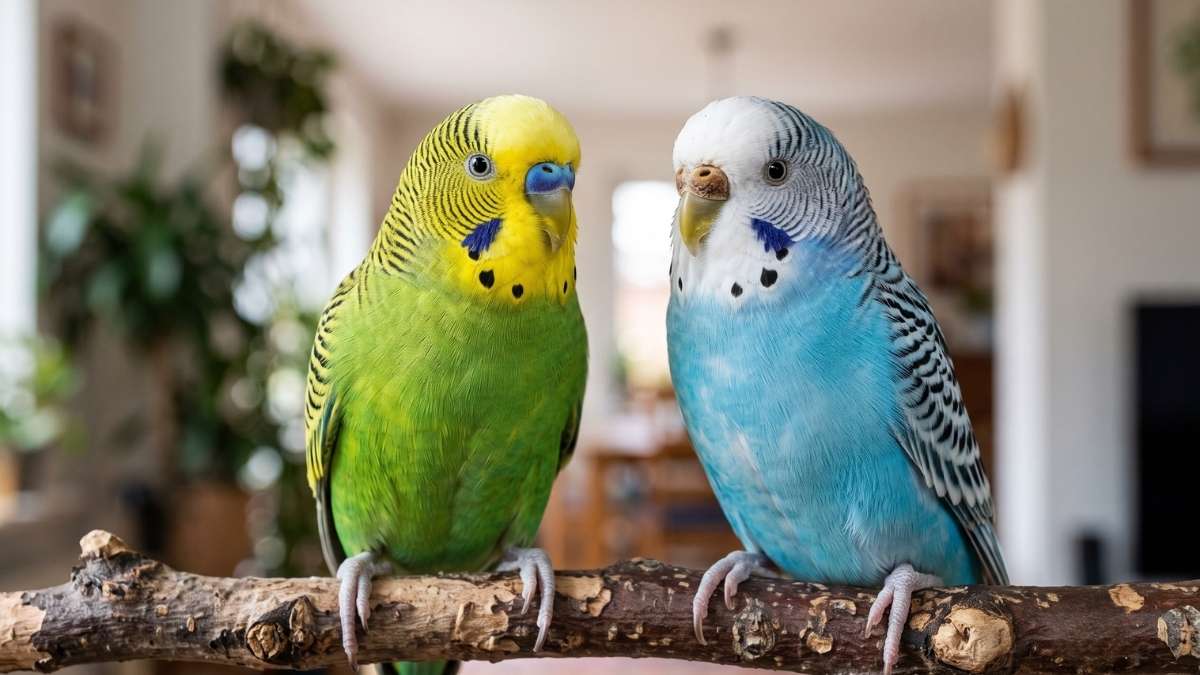
If you’re wondering how to tell if a budgie is male or female, the best place to start is a small, fleshy band of tissue right above your bird’s beak. Budgerigars show very little difference in size, feathering, or personality that holds up across individuals, so most keepers and avian veterinarians begin with this one feature.
The cere is the soft, slightly raised band that sits above the beak and surrounds the nostrils, known as the nares. It is hormone-sensitive, which is why it is the primary visual indicator of sex in budgerigars. As a bird matures and hormone levels shift, the cere’s color and texture change in predictable ways. This is the foundation of budgie gender identification, and it is also why a single glance at the cere often answers the question of budgie female vs male.
Guidance from the Association of Avian Veterinarians and standard companion bird care references consistently describes cere color as a helpful, but not infallible, clue.
Budgie Cere Color Quick Reference
| Gender / Life Stage | Typical Cere Color | Texture & Features |
| Adult Male | Bright blue (standard varieties) | Smooth, even, and slightly glossy |
| Adult Female (Non-Breeding) | Pale blue, whitish-blue, or beige-pink | Smooth to slightly matte, often a little paler around the nares |
| Adult Female (In Breeding Condition) | Tan to rich brown | Thickened, crusty, or flaky may look rough and slightly raised |
| Juvenile (Male/Female) | Pinkish-purple in males pale pink or whitish-blue in females | Smooth and fine color is still developing and can be unreliable |
Male vs. Female Budgie Cere Colors in Adult Birds
Once a budgie is past adolescence, cere color becomes far more dependable. Still, the shade shifts with hormones, so it helps to know what each sex typically looks like and where the confusion happens.
Identifying Adult Male Budgies
In normal (wild-type) varieties such as blue, green, and gray series birds, an adult male usually has a deep royal blue or purple-blue cere. The surface is smooth, even, and slightly glossy, with no thickening around the nostrils.
The color tends to stay consistent through the year, though it may deepen slightly when a male is feeling especially hormonal. Some males also show a faint pinkish tint during early maturity before settling into solid blue. If your bird’s cere is clearly blue, smooth, and uniform, that is a strong indicator of a male.
Identifying Adult Female Budgies
Outside breeding condition, a female’s cere is typically white, pale chalky blue, or beige-pink. A classic sign is a pale or white ring around each naris, which stands out against the slightly darker band of tissue.
When she becomes hormonal, the cere often turns tan, then dark brown. The texture changes too, becoming rough, thickened, crusty, or flaky. Avian veterinary references describe this as a normal response to rising estrogen, not a sign of illness, though a very heavy or persistent buildup is worth mentioning to your vet.
Common Misidentifications
Several mix-ups come up often:
- Pale blue female mistaken for a male: A non-breeding female with a light blue cere can resemble a young or pale male. Look for white rings around the nares and a chalky, matte finish.
- Brown cere assumed to be a health problem: Brown, crusty tissue in an adult female is usually hormonal.
- Males with unusual ceres: Rarely, a male may develop a brownish or flaky cere, often linked to cysts or certain health conditions, so color alone should not be treated as proof.
- Mutations: Lutino, albino, and recessive pied birds can have pinkish or atypical ceres that do not follow these patterns.
When in doubt, an avian veterinarian can confirm sex through DNA testing.
Why Telling Baby Budgie Gender Is Challenging
Young budgies are the hardest to sex by sight. Before roughly four months of age, hormone levels are still low and the cere has not yet taken on its adult color, so what you see is a preview rather than a final answer.
What the Cere Looks Like Under Four Months
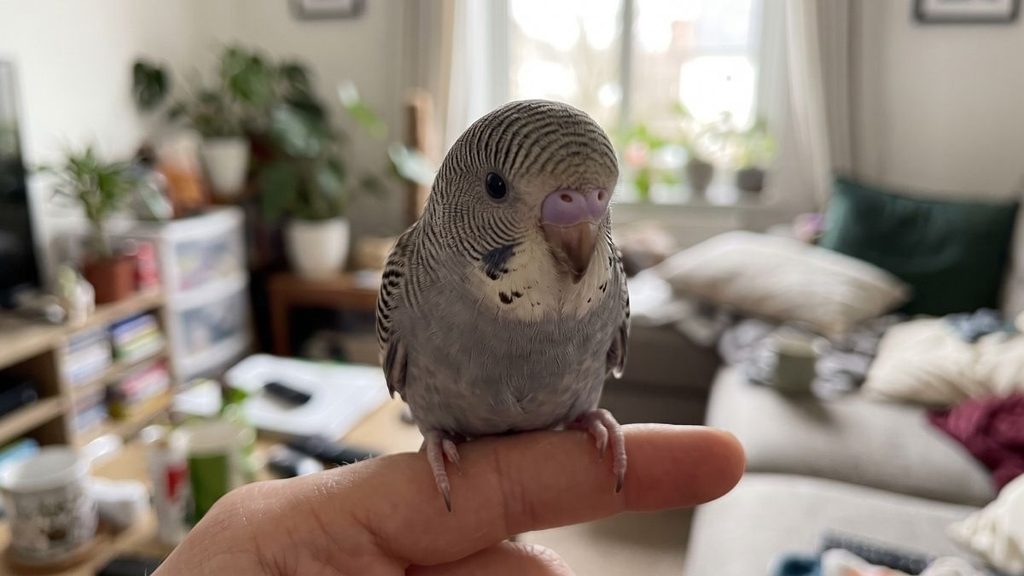
In young males, the cere is often translucent pink, purplish, or magenta. It may look slightly glowing or fleshy, and the shade can deepen toward blue as the bird approaches maturity.
In young females, the cere tends to look pale bluish or white, often with distinct white rings encircling the nostril openings. The surface looks smooth and fine, and the rings are usually the most useful clue at this stage.
Because these colors overlap and keep changing, even experienced breeders sometimes get a young bird wrong. Standard companion bird care references and the Association of Avian Veterinarians both advise treating early visual sexing as a guess rather than a conclusion.
Other Signs of an Immature Bird
Check the rest of the bird for context. Juvenile budgies have horizontal dark bars across the forehead that stretch down to the cere, plus dark “button” eyes with no visible iris ring. These traits tell you the cere has not fully settled. As the bird molts into adult plumage, the bars recede and a pale iris ring appears, which is when cere color becomes more trustworthy. Our guide to the budgie lifespan and life stages explains how these changes line up with each stage of development.
Handle Gently While You Look
Never grab or restrain a young bird to get a better view of its cere. Rough or tight holding can cause stress, injury to delicate bones and air sacs, and lasting fear of hands. Instead, observe in good natural light while the bird is calm, perhaps perched on a finger or on its cage. For a full list of mistakes to avoid, see what not to do with parakeets.
If you need a firm answer before maturity, DNA testing through an avian veterinarian is the reliable option.
Color Mutations That Break the Standard Cere Rules
The cere guidelines above work well for normal-colored budgies, but several mutations change how hormones show up in the cere. If your bird is a lutino, albino, recessive pied, or fallow, how to tell if a budgie is male or female takes a little more care, because the “royal blue means male” rule does not apply.
Lutino, Albino, and Ino Mutations
In ino varieties, which include lutino and albino birds, adult males do not develop the blue cere seen in standard varieties. Instead, they typically keep a fleshy, translucent pink to purplish cere into adulthood. A bright pink cere on a mature ino bird can therefore be a male, and it should not be mistaken for immaturity or a female.
Recessive Pied and Fallow Mutations
Adult males in these varieties often retain a baby-like pinkish-violet cere throughout life. Because this resembles a juvenile male’s cere, checking the bird’s age and overall maturity, such as forehead bars and eye color, helps avoid confusion.
What Stays the Same in Females
The most dependable clue across these mutations is the female’s response to hormones. A mature or breeding hen still tends to develop a tan to brown cere with a thickened, crusty, or flaky texture, just as in standard varieties. Pale or whitish ceres with lighter rings around the nares are also common in resting females.
Because the male and female colors can overlap in these birds, treat cere color as a clue rather than proof. Both the Association of Avian Veterinarians and standard companion bird care references recommend DNA testing through an avian veterinarian when visual signs are ambiguous.
Behavioral Differences: Do Males and Females Act Differently?
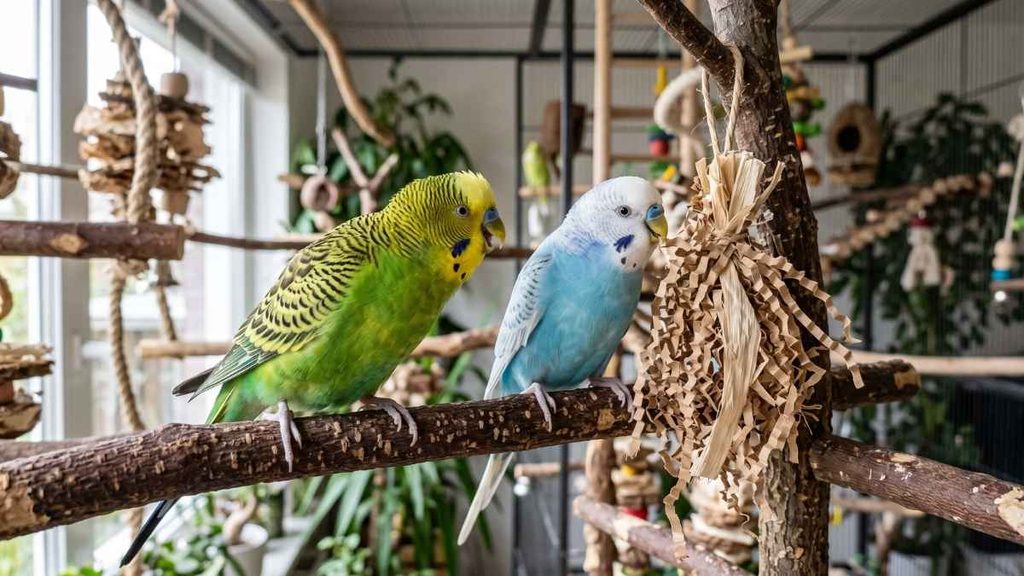
Behavior can offer supporting clues about sex, but it should never be your only evidence. Every budgie has its own personality, and age, environment, and hormone cycles all shape how a bird acts. Think of these patterns as tendencies, not rules.
Typical Male Behavior
Males are often described as the more outwardly showy sex. Common traits include:
- Head bobbing and tapping toward favorite people, toys, or cage mates
- Frequent singing and chattering, especially in the morning and when excited
- Persistent courtship displays, such as pinned pupils, strutting, and regurgitating food as a sign of affection
- Mirror fascination, with long sessions of singing to a reflection as if it were a potential mate
Typical Female Behavior
Hens tend to show their hormones through territory and nesting instincts. You may notice:
- Territorial cage habits, including guarding a favorite corner, nest-like spot, or food dish
- Chewing wood, cardboard, and paper, often shredding it as nesting material
- Strong nesting drive, such as seeking out dark, enclosed spaces
- Sudden mood changes, with more nipping or defensiveness when she is in breeding condition
These shifts are normal during hormonal cycles, and providing extra patience and quiet time helps support a hen through these phases.
Can Female Budgies Talk?
A common question is whether females can learn to speak. The answer is yes, though males tend to pick up words more readily and often develop larger vocabularies. Hens are usually quieter, but with patient, consistent, and positive training, many learn clear words and phrases. Success depends more on the individual bird, its bond with you, and daily practice than on sex alone. For realistic expectations and training tips, see our overview of whether parakeets can talk.
Because behavior overlaps so much between sexes, pair these observations with cere color and, when you need certainty, DNA testing through an avian veterinarian.
Sources & Veterinary References
- Association of Avian Veterinarians (AAV): Basic Care for Companion Birds
- Merck Veterinary Manual: Management of Pet Birds
Conclusion & Educational Disclaimer
Learning how to tell if a budgie is male or female comes down to careful observation. Checking the cere is the most reliable visual method, as long as you factor in your bird’s age and any color mutation. A blue, smooth cere points to an adult male in standard varieties, while a pale, white-ringed or crusty brown cere suggests a female. For young birds and for ino, recessive pied, and fallow varieties, those rules loosen considerably. Behavior can add supporting clues but never settles the question.
When the signs are unclear, DNA testing or an exam by an avian veterinarian is the definitive answer. This guidance reflects standard recommendations from the Association of Avian Veterinarians (AAV) and companion bird breeding guidance.
Educational Disclaimer: This article is for general educational purposes and does not replace professional veterinary advice. If your budgie shows unusual cere changes, discomfort, or other health concerns, consult a qualified avian veterinarian.