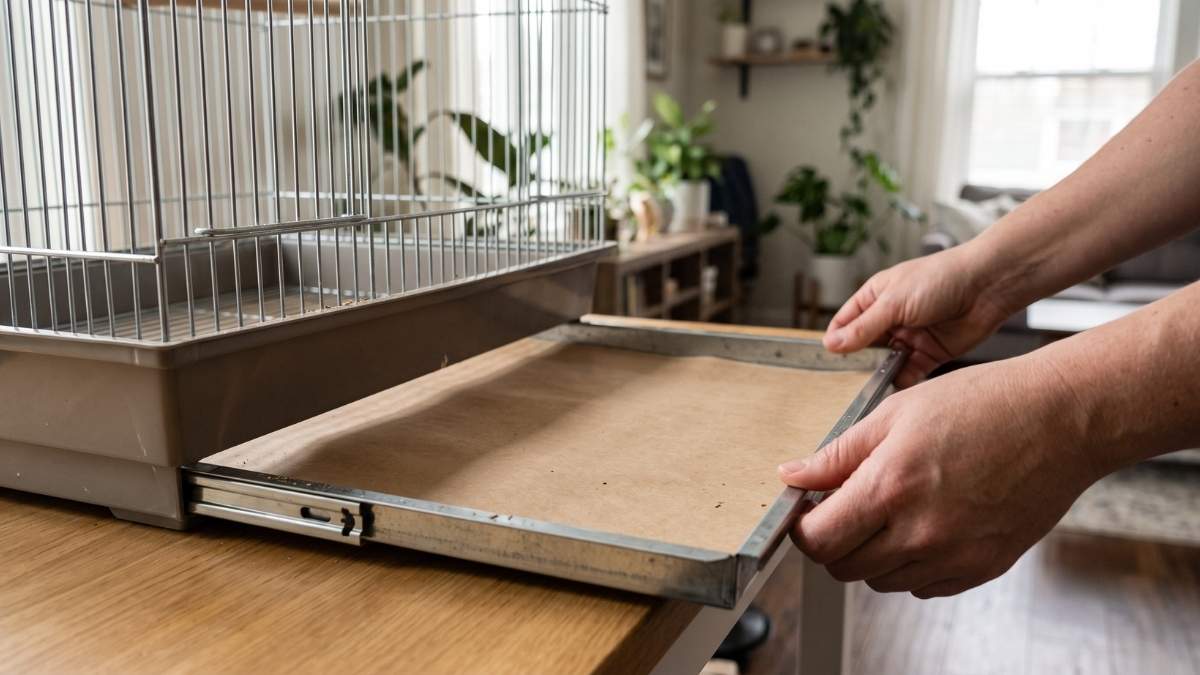
Knowing what to put at the bottom of a budgie cage is about more than keeping seed hulls off your floor. The cage bottom is one of the most useful daily health-monitoring tools you have. Budgies hide illness instinctively, and their droppings are often the first visible sign that something has changed.
A good liner lets you check four things at a glance:
- Consistency: Formed droppings with a distinct solid portion are typical; persistently watery or unusually dry droppings deserve attention.
- Color: Droppings are typically green or brown with white urates. Sudden shifts, such as black, red, or bright yellow-green, are worth noting.
- Urine-to-urates ratio: A clear liquid portion beside creamy-white urates is normal. A sharp increase in liquid can reflect diet changes or other factors and should be monitored.
- Volume: A noticeable drop in output may signal reduced appetite.
Avian veterinary guidance, including that from the Association of Avian Veterinarians, emphasizes observing droppings daily as part of routine care. Plain, light-colored liners make this easy. Loose bedding hides droppings.
Budgie Cage Liner Comparison
| Liner / Material | Safety Rating | Daily Dropping Visibility | Key Advantage / Risk |
| Plain Butcher / Kraft Paper | High | Good to Excellent | Unprinted, absorbent, and easy to replace |
| Black-and-White Newspaper | Generally suitable | Good | Inexpensive and widely available; avoid glossy or colored inserts |
| Paper Towels | High | Excellent | Highly absorbent; use plain white, unscented, and undyed only |
| Corn Cob / Walnut Shell Bedding | Poor choice | Poor | Hides droppings; damp material can harbor mold and may be ingested |
| Wood Shavings (Cedar / Pine) | Poor choice | Poor | Cedar and pine may release irritating aromatic compounds; bedding also conceals droppings |
The Safest Materials to Line Your Parakeet’s Cage
When people ask what is best for the bottom of a parakeet cage, a flat, absorbent paper surface is generally the most practical choice. Paper absorbs moisture, shows droppings clearly, and can be swapped out in seconds. Loose bedding does none of these things as well. It can bury droppings, retain moisture, and tempt curious budgies to nibble on pieces that were never meant to be eaten.
Plain Brown Kraft Paper & Unprinted Butcher Paper
Kraft paper is a simple option for budgie cage liners. Unprinted paper avoids concerns about printing inks and coatings, and its flat surface makes droppings easy to inspect. Cut sheets to fit your tray with a few spare layers beneath, and remove the top layer each day.
Black-and-White Newspaper
Newsprint is a budget-friendly option, and many bird keepers use it. Ink formulations vary by publisher, so choose ordinary black-and-white newsprint and skip glossy ads, colored inserts, and magazine-style flyers. Because newsprint is thin, layer several sheets for better absorbency.
Plain White Paper Towels
Paper towels are useful for hospital cages, quarantine setups, and monitoring young birds, since the white surface makes changes in droppings easier to spot. They are highly absorbent and can be useful for a bird that is weak or recovering. Choose plain, unscented, undyed towels with no printed patterns or added lotions. Because they tear easily, they can be less practical as a long-term daily liner for an active flock.
Why Flat and Absorbent Wins
A flat paper liner keeps droppings visible, makes it easier to notice damp areas, and reduces the temptation to forage in loose material. It also makes cleanup quick, which means you are more likely to do it consistently.
Substrates You Should Never Put at the Bottom of a Cage
Pet stores often shelve products labeled “bird bedding” or “cage floor liner” that are poor choices for budgies. Marketing language like “natural,” “odor-control,” or “extra absorbent” says little about safety. Avian veterinary guidance, including that from the Association of Avian Veterinarians, generally favors flat paper because some alternative substrates can create respiratory, fungal, or ingestion risks.
Wood Shavings: Cedar, Pine, and Aspen
Cedar and pine contain aromatic compounds that may irritate a bird’s respiratory system, particularly when dust or strong odors are present. Budgies have a highly specialized respiratory system, so it is sensible to avoid aromatic or dusty bedding. Aspen generally contains fewer aromatic compounds than cedar, but dusty material can still irritate breathing, and all loose shavings make droppings harder to inspect.
Corn Cob and Crushed Walnut Shells
These granular substrates can trap moisture, and damp material can harbor mold and fungal spores, including Aspergillus, which can cause serious respiratory disease in birds. Curious budgies may also nibble the pieces. Ingested substrate can cause digestive problems, and suspected blockage requires prompt veterinary care.
Scented Liners, Puppy Pee Pads, and Kitty Litter
Scented liners add fragrance chemicals to the air your bird breathes. Puppy pads contain absorbent materials and plastic backing that may be harmful if shredded and swallowed. Clumping and clay litters are unsuitable cage substrates because ingestion can cause digestive problems or blockages. Keep all such materials out of your budgie’s reach.
Sand Sheets and Grit Paper
Sandpaper-style perch and floor covers can be abrasive on delicate feet. Repeated contact may irritate the skin and contribute to foot problems, and any bird that picks at the surface may swallow gritty particles. These products offer no established need for routine use by pet budgies.
Spotting Risky Products Before You Buy
When a product promises to mask odor, absorb like a gel, or “feel natural,” treat that as a cue to look closer. Our guide on what not to do with parakeets covers household toxins, pet store gimmicks, and other ingestion hazards in more detail. When in doubt, plain paper is a practical default.
Wire Grates vs. Open Paper: Where Should the Liner Go?
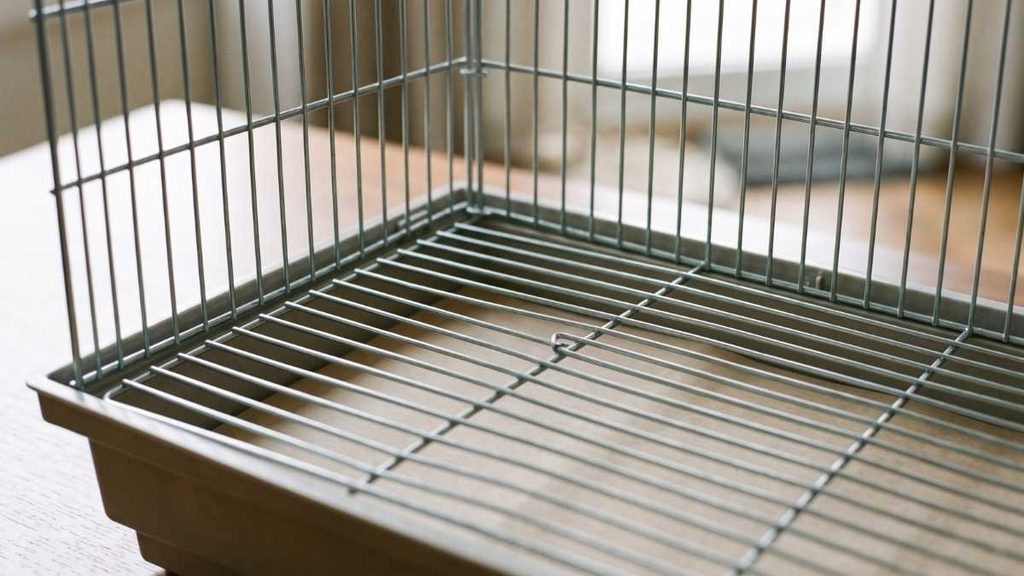
Most budgie cages come with a removable wire grate above a pull-out tray, and keepers often disagree about whether paper belongs under the grate or on top of it. The right answer depends on the bird and the cage design.
Why Many Keepers Use the Grate
With the liner below the grate, droppings and spilled food fall out of reach. Your budgie stays out of its own waste, and it cannot shred soiled paper or pick through discarded hulls. That separation can help keep feet and plumage cleaner, and it keeps the liner easy to inspect during your daily dropping check. Grates also let you slide the tray out without disturbing the bird.
When to Cover the Grate
Bare wire is not ideal for every budgie. Consider laying paper directly over the grate for:
- Elderly birds that have trouble gripping or balancing
- Birds with arthritis or stiff joints
- Clumsy fledglings still learning to walk and land
- Birds with foot problems, where a suitable flat surface may reduce pressure on the soles
If you cover the grate, change the paper daily. Soiled paper held against the feet can increase exposure to waste and moisture, so a quick swap is a necessary part of the routine.
Check Your Cage’s Bottom Design
Grate and tray designs vary widely. Wire spacing should be narrow enough that toes cannot slip through and get trapped, and the tray should sit securely so there are no gaps. Our guide to budgie cage size and dimensions explains horizontal floor dimensions, proper bar spacing at the bottom, and tray design in more detail. A roomier floor also gives you space to add a flat, stable perch or foraging dish where your bird can rest its feet on a different surface.
How Often Should You Change the Cage Bottom?
If you are wondering how often to change the bottom of a bird cage, a daily liner change is a sensible routine for budgies, along with regular washing of the tray and grate. The exact deep-cleaning schedule depends on how quickly the cage becomes soiled. Consistent sanitation helps prevent waste and damp debris from accumulating.
Daily: The 60-Second Liner Swap
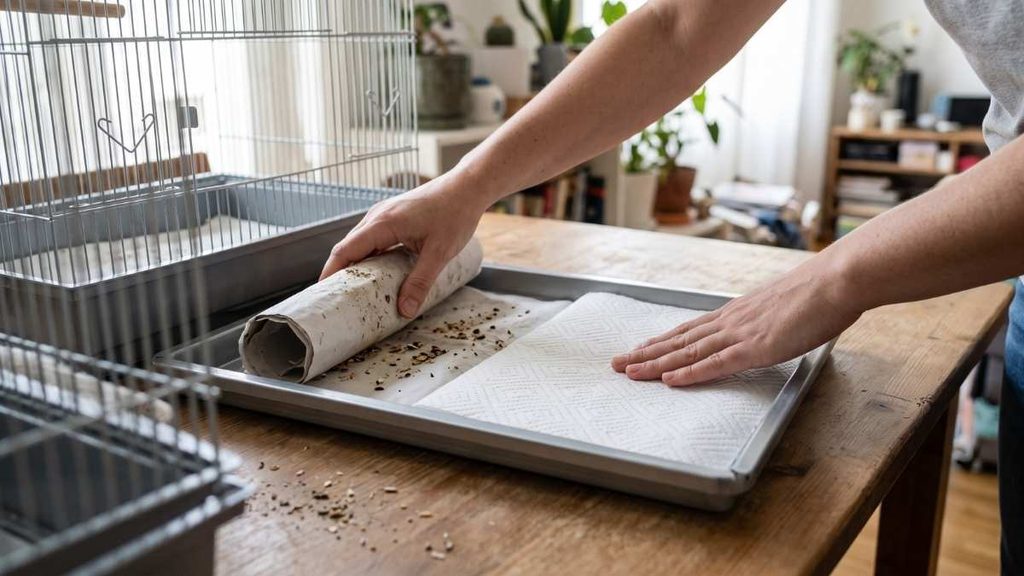
Each morning, roll up the top sheet of paper, discard it, and lay down a fresh one. The whole job takes under a minute. Daily replacement removes droppings, spilled water, and food debris before they accumulate. It also gives you a fresh, clean surface for reading the next day’s droppings, so changes stand out instead of blending into old waste.
Weekly: Deep Clean the Tray and Grate
Inspect the tray and grate daily and wash them thoroughly at least weekly, or more often if they become soiled. Scrub off dried droppings, rinse well, and let everything dry completely before reassembling. Use a bird-safe disinfectant according to its label when disinfection is needed, ensuring appropriate rinsing, drying, and ventilation. Never expose your bird to cleaning-product fumes. Plain white vinegar may help with some cleaning tasks, but it should not be treated as a reliable substitute for a suitable disinfectant. Our guide on how to clean a parakeet cage walks through the complete deep-cleaning routine, safe disinfectant dilutions, and tray scrubbing methods.
What Abnormal Droppings Are Telling You
Because you are checking daily, you will notice changes early. Watch for:
- Watery rings around the dropping, especially if the change persists or recurs
- Undigested seeds appearing whole in droppings
- Color changes, such as black, red, or unusually pale droppings
- Reduced volume or a sudden increase in output
A single unusual dropping after a new food or a stressful event may not indicate illness, but repeated changes should not be ignored. Black, tar-like droppings, blood-red droppings, reduced appetite, fluffed feathers, or lethargy warrant prompt veterinary advice; severe signs require urgent assessment. Take notes and photos, record the date, appearance, diet changes, and behavior, and share them with an avian vet. Budgies hide illness well, so that record can help the veterinarian assess what has changed.
Sources & Veterinary References
- Association of Avian Veterinarians (AAV): Basic Care for Companion Birds
- Merck Veterinary Manual: Management of Pet Birds (Hygiene & Environment)
Conclusion & Educational Disclaimer
When it comes to what to put at the bottom of a budgie cage, the simplest option remains the best: flat, unprinted paper or plain black-and-white newspaper, replaced daily. It is inexpensive, absorbs well, avoids many of the concerns associated with loose bedding, and keeps droppings visible for the daily health check that matters most. Pair it with regular tray and grate cleaning, and your budgie’s floor stays clean and informative.
Educational Disclaimer: This article offers general pet husbandry guidance, not veterinary diagnosis or treatment. If your budgie shows persistent changes in droppings, appetite, or behavior, consult a qualified avian veterinarian promptly.