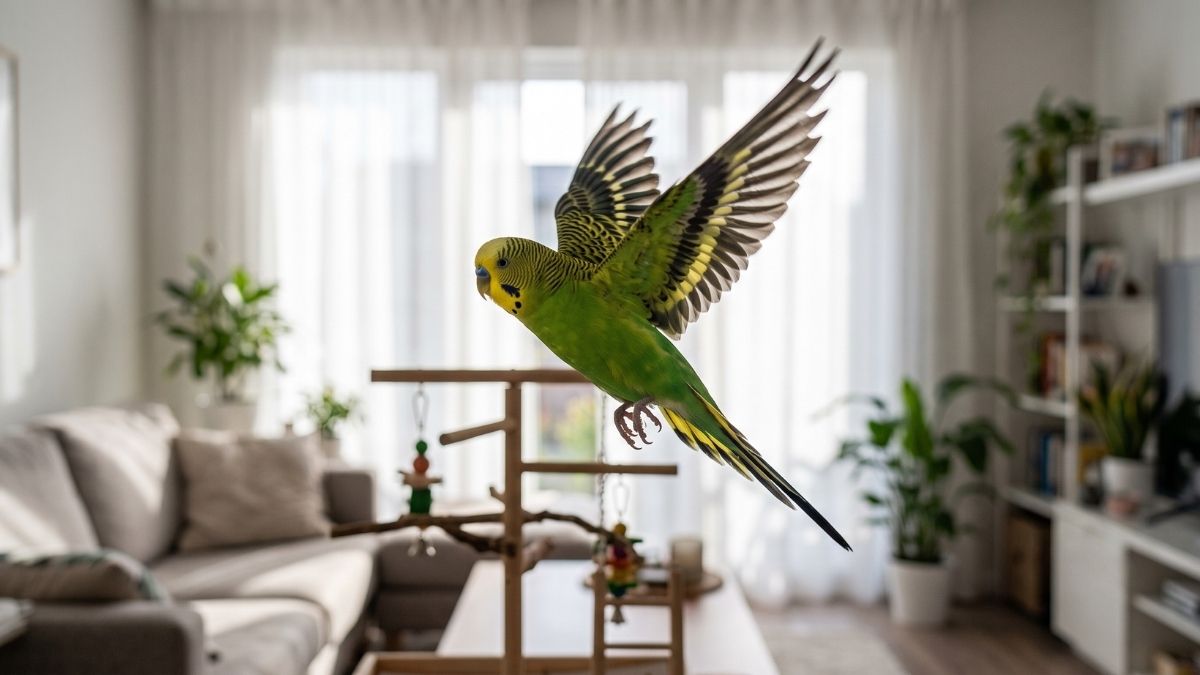
Can budgies be let out of their cage? Yes, and for their physical and mental health, they should be, every single day. Supervised time outside the cage is a core part of responsible care, as long as the room has been made safe first.
The cage still plays an essential role. It gives your bird security, protection from household predators such as cats and dogs, and a quiet, protected place to sleep. Think of it as a bedroom and a safe retreat, not a lifelong residence.
So, is it cruel to keep budgies in a cage? Owning a cage is not cruelty, but permanent, 24/7 confinement without adequate opportunities for exercise and enrichment can compromise a bird’s welfare. Wild budgies are nomadic flyers that travel across the Australian interior in search of water and seeds. A pet parakeet that rarely gets to fly may miss out on important physical activity. Over time, insufficient exercise and stimulation can contribute to weight gain, reduced flight-muscle fitness, boredom, and stress-related behaviors. Guidance from the Association of Avian Veterinarians and companion-bird care resources emphasizes exercise and enrichment as important parts of avian welfare.
Even the best housing has limits. A large, well-designed flight cage, like the setups covered in our budgie cage size guide, allows hopping, climbing, and short bursts of flapping. It still cannot provide the same space for movement as safe, supervised flight in a room.
How Long Do Budgies Need to Be Out of Their Cage?
Around 1 to 2 hours of supervised out-of-cage time can be a practical daily goal for many pet budgies, although individual needs vary. Highly active birds may benefit from longer sessions when the room is safe and supervision is available. More time outside can offer additional opportunities for movement and exploration, but safety, the bird’s health, and its comfort should always come first.
Constant confinement without enough exercise can have physical and behavioral costs. Flight muscles may weaken without regular use, while low activity can contribute to weight gain and other health problems. Mentally, a bird with little to explore may become bored, and some birds may develop stress-related behaviors.
Predictability matters as much as duration. Budgies can benefit from a steady routine, so choose consistent windows in the morning or late afternoon, ideally finishing well before sunset. Allow your bird time to settle back into the cage before bedtime.
| Daily Out-of-Cage Time | Possible Benefits or Concerns | Example Routine |
| Under 1 hour | May provide limited opportunity for exercise and exploration | Consider whether more safe, supervised time can be offered as circumstances allow |
| 1 to 2 hours | Can provide a useful daily opportunity for movement and enrichment | One session in the morning or late afternoon, with interactive play |
| 3+ hours | Offers more time for flight, exploration, and enrichment when safely supervised | Two split sessions or one longer session while you are available to supervise |
These are practical examples, not strict veterinary time limits. Start with short sessions and extend them gradually as your bird grows more confident.
How to Bird-Proof a Room Before Opening the Cage
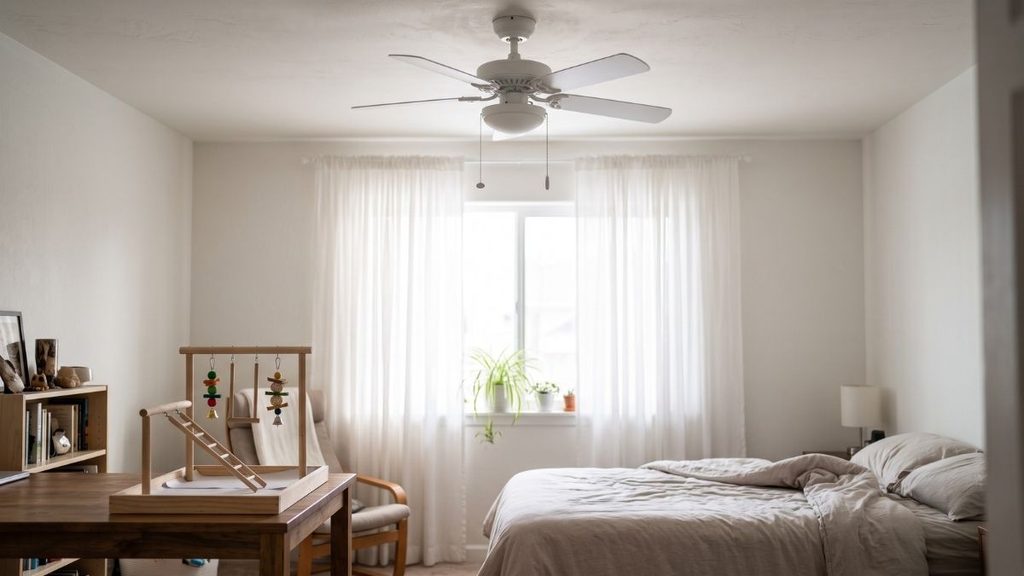
Run through this checklist every time, before the cage door opens. Hazards that seem minor to us can cause serious injuries to a flying bird.
Turn off ceiling and standing fans. Wait for the blades to stop completely. A fan that is still moving can cause serious injury, so confirm the blades are fully still before letting your bird out.
Make windows and mirrors visible. Budgies may not recognize glass as a solid barrier, and a collision can cause serious injury. Draw curtains, lower blinds, or apply decals or window film. Cover large mirrors during early flight sessions.
Close doors and check escape routes. Shut every door to the room and keep exterior doors closed. Inspect window screens for tears or gaps, and make sure no window is open without an intact screen. Let everyone in the household know a flight session is in progress.
Remove toxic plants and secure electrical cords. Take out pothos, lilies, ivy, and any other plant you cannot verify as bird-safe. Birds chew, so cover or tuck away exposed cords, and unplug anything you cannot secure.
Eliminate open water. Close toilet lids, cover aquariums, and remove cups, vases, and bowls. A small bird can drown in shallow water. Also check the room for hot surfaces, such as stovetops and candles, and keep birds away from nonstick cookware fumes, which can be deadly.
Keep predatory pets out. Place cats and dogs in a separate, closed room for the entire session. Even a friendly pet can injure a bird in a split second, and a cat’s saliva can introduce dangerous bacteria if a bird is scratched or bitten.
Before you open the door, take a quick scan from your bird’s eye level. A calm, safe room is the foundation for confident flying.
My Budgie Isn’t Coming Out of His Cage Anymore: What Should I Do?
A budgie that refuses to leave the cage is usually not being stubborn. The cage is his refuge, the one place he knows is safe. A large, open room can feel exposed to a small prey animal, especially if he has no obvious place to land. A past scare, such as a window collision or a startling noise mid-flight, can also leave him wary. Sudden changes like new furniture, a new pet, or a missed routine can trigger the same hesitation.
The solution is patience and positive reinforcement. Forcing a bird out may make him more fearful of leaving the cage.
Steps to Rebuild Flight Confidence
Never reach in to grab, shove, or force him out. Hands entering his safe space can create fear and damage trust. Let him choose to leave.
Attach an exterior perch, wooden bridge, or platform to the door threshold. A secure step just outside gives him a familiar bridge between cage and room.
Reward exploration with a favorite treat. Clip a fresh sprig of spray millet or a safe leafy green just outside the door so that stepping out earns something good. Use millet sparingly as part of a balanced diet.
Provide visual landing zones across the room. A play gym, rope perch, or high branch gives him obvious, reachable targets, so flying feels like a safe destination rather than a leap into nothing.
If he pants, fluffs up, or freezes, stop and let him retreat. Quietly lowering the pressure is often more effective than coaxing. Our guide on how to calm down a parakeet covers ways to soothe a nervous or fearful bird without adding to his panic.
Keep early sessions short and relaxed, with the door open and you sitting quietly nearby. Progress may be slow, with a day or two of simply peeking out, and that is fine. Persistent reluctance paired with fluffed feathers, lethargy, or changes in droppings can signal illness, so consult an avian veterinarian if anything seems off.
How to Get a Budgie Back Into Its Cage Safely
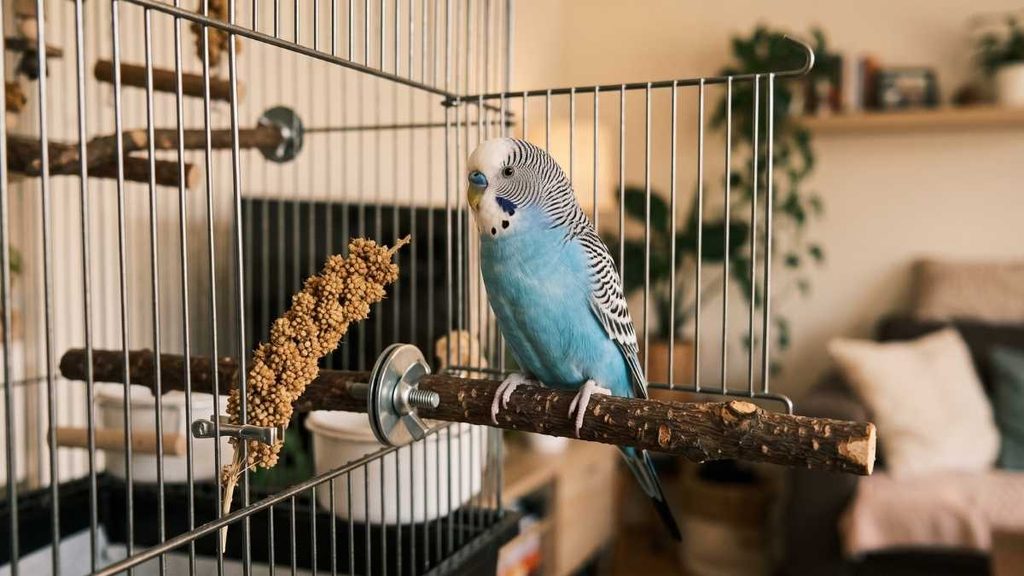
The best return is one your bird chooses. Three gentle, zero-force methods can turn the end of flight time into a calm, predictable part of the day.
Use the Dinner Routine
Keep the main food dishes inside the cage. When flight time winds down, a hungry bird may head toward the place where meals appear. Offer his favorite fresh foods or a small treat inside the cage as a reward each time he returns, so going home becomes a positive experience.
Dim the Room Lights
Lowering the lights can help signal that the day is winding down. Close the curtains, switch off bright overhead lights, and keep the room quiet. Some budgies may return toward the security of their cage as the room becomes calmer and darker, but do not rely on darkness alone to get your bird back safely.
Offer a Perch or Finger Ride
If your bird is already comfortable with step-up training, present a familiar wooden dowel or a steady finger and offer a quiet cue. Move slowly, let him step on voluntarily, and carry him calmly to the cage door. Practice step-up during relaxed moments, not only at the end of flight time, so it never becomes a signal that fun is over.
What Never to Do
Never chase, corner, swat, or throw a towel over a flying budgie to make him return to the cage. To a prey animal, a pursuing hand can feel like a predator attack. Chasing causes stress, risks collisions and injury, and can create a lasting fear of hands that undoes weeks of trust building. Our guide on what not to do with parakeets explains how common handling mistakes can harm trust and how to avoid them.
If your bird stays out longer than planned, stay calm, keep the room quiet, and wait while maintaining a safe environment. Patience protects the bond far better than urgency ever will. Reward-based, low-stress handling helps make future sessions easier.
Sources & Veterinary References
- VCA Animal Hospitals: Housing Small Birds (including Budgies)
- Merck Veterinary Manual: Management of Pet Birds (Environmental Requirements)
Conclusion & Educational Disclaimer
Daily time outside the cage can be one of the most valuable parts of a budgie’s routine. Regular, supervised flight provides opportunities to exercise, explore, and stay mentally engaged. When you pair it with a thoroughly bird-proofed room, a predictable routine, and patient, force-free handling, each session can also help build your bird’s confidence. The cage remains his safe haven, and the room becomes a place he can explore safely.
Recommendations on exercise, enrichment, and home safety throughout this guide reflect general companion-bird care principles. Every bird is different, so adjust out-of-cage time to your bird’s needs and abilities.
Educational Disclaimer: This guide offers educational information on bird safety and behavior. It is not veterinary medical advice. If your budgie shows signs of illness, injury, or sudden behavior changes, consult a qualified avian veterinarian promptly.