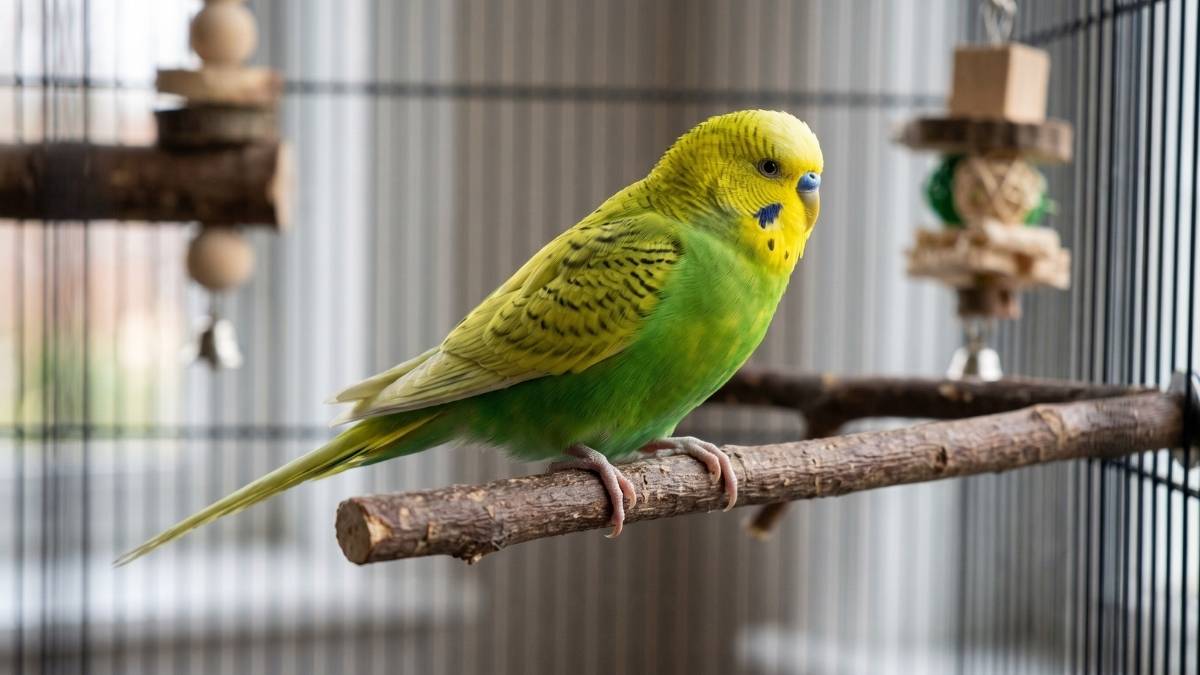
If you have caught yourself wondering, “why is my budgie tail bobbing?”, you are paying close attention to the right indicator. Tail movement is one of the most visible clues to how easily a parakeet is breathing, and learning to read it helps you tell normal behavior from a sign that needs urgent attention.
How Budgies Breathe
Unlike mammals, birds have no diaphragm. Instead, a budgie moves air by expanding and contracting its rib cage and keel (breastbone), which pumps air through a system of air sacs connected to the lungs. This is highly efficient, but it relies entirely on muscle effort. When breathing becomes difficult, the muscles of the chest, abdomen, and lower body work harder to compensate. The tail, anchored to that same region, bounces visibly with each breath. That rhythmic motion is what owners call tail bobbing.
Normal Movement vs. Respiratory Effort
Brief tail movement is common and usually harmless. Budgies flick or shift their tails for balance, during enthusiastic chirping, and for a minute or two while recovering from flight or play. Chronic, rhythmic bobbing while the bird is perched and resting is different, and it deserves a closer look.
Quick summary:
- Benign: Short, irregular tail movement tied to balance, chirping, or activity that settles within a few minutes.
- Concerning: Steady, repeated bobbing at rest, often with an open beak or visible chest effort.
- Key difference: Normal movement fades once the bird is calm; respiratory effort persists and may worsen over time.
When Is Budgie Tail Bobbing Normal?
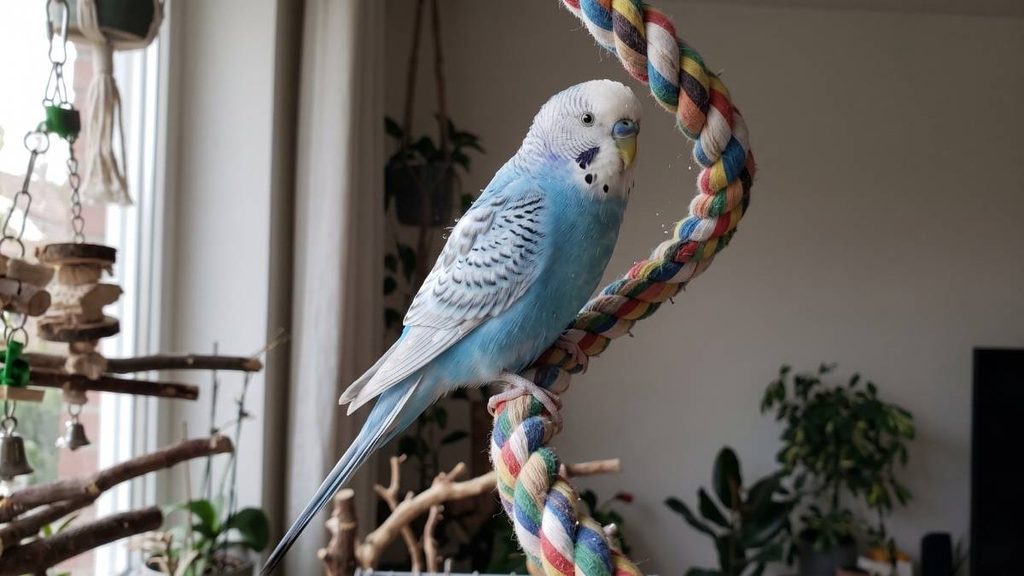
Budgies are small, high-energy birds with fast metabolisms, so some tail movement is part of ordinary life. Occasional bobbing is usually a temporary response to something specific, and it settles naturally without intervention.
Post-Flight Exertion & Physical Exercise
After active flying, a budgie may briefly breathe faster while recovering. Its breathing should settle promptly with rest. Flight demands a great deal from the respiratory system, and the bird is simply catching its breath. You may also see this after vigorous play, climbing, or a lively bout of chasing a flockmate. Once the bird has had a moment on a perch, the breathing should slow and the tail should settle. However, persistent tail bobbing—especially while perched at rest—should never be dismissed as normal exercise recovery and warrants prompt veterinary advice.
Vocalizing, Singing, and Balancing
Chirping, singing, and talking engage the same chest and abdominal muscles used for breathing, so a slight tail movement in rhythm with vocalizing is common. Budgies also use their tails as counterbalance, particularly when perched on swings, rope perches, or other unstable surfaces. This kind of movement is small, irregular, and tied to what the bird is doing at that moment.
Acute Fear or Startle Response
A sudden noise, a shadow overhead, or an unexpected hand near the cage can spike a budgie’s heart rate and breathing. Brief tail bobbing and rapid breaths are a normal part of that stress response. When the bird feels safe again, its breathing should return to baseline within a minute or two. Keep the room quiet and calm while it recovers.
What Normal Recovery Looks Like
In each of these situations, the tail returns to rest quickly and the bird stays alert, upright, and bright-eyed. It keeps its beak closed, perches steadily, and resumes normal activity such as preening, eating, or interacting with you. If the bobbing continues well beyond a few minutes without an obvious trigger, the next section covers what that may indicate.
Medical Reasons for Tail Bobbing in Parakeets
When tail bobbing continues at rest, it usually means the bird is working harder than it should to move air. Avian veterinary references, including guidance from the Association of Avian Veterinarians, treat persistent respiratory effort as a sign that warrants prompt evaluation. Budgies also hide illness instinctively, so by the time breathing changes are visible, the underlying problem may be well established.
Respiratory Infections
Bacterial, viral, and fungal infections can inflame the airways and air sacs. Aspergillosis, a fungal infection, is one of the better-known causes in companion birds. Typical budgie respiratory infection symptoms include tail bobbing, nasal discharge, sneezing, voice changes, and an open beak. Budgie tail bobbing and breathing hard together should always be checked by an avian veterinarian.
Air Sac Mites
Sternostoma tracheacolum lives in the trachea, lungs, and air sacs. It can cause clicking, wheezing, or open-mouth breathing, along with a changed or lost voice. Diagnosis and treatment need a veterinarian.
Internal Pressure on the Air Sacs
Anything that takes up space in the abdomen can compress the air sacs. Common causes include:
- Egg binding in females: This is a life-threatening medical emergency.
- Abdominal tumors: These are fairly common in adult budgies.
- Enlarged liver (Hepatomegaly): Often linked to high-fat seed diets or systemic disease.
Mites and Respiratory Irritants
Knemidocoptes mites, a relative of the mites that cause mange, usually cause crusty growths on the cere, beak, and legs rather than direct breathing trouble. Heavy cere buildup can sometimes obstruct the nostrils, however. Airborne irritants such as smoke, aerosols, and fumes from overheated non-stick cookware can also cause rapid, labored breathing, which can become fatal within minutes.
Recognizing Illness Early
Tail bobbing rarely appears completely alone. Our comprehensive guide on how to tell if a parakeet is sick explains how to spot subtle changes in droppings, appetite, and behavior before they become critical, helping you act while treatment options are widest.
Warning Signs That Require Immediate Attention
Tail bobbing becomes an emergency when it appears alongside other signs of respiratory distress. Because budgies instinctively mask illness, persistent tail bobbing at rest warrants prompt veterinary assessment. Furthermore, open-beak breathing at rest, pronounced breathing effort, or physical collapse requires immediate emergency veterinary care. Call the clinic before traveling so the medical team can prepare an oxygen chamber.
Breathing Changes
- Open-beak breathing or panting while sitting still: Budgies normally breathe with the beak closed, so an open beak at rest signals severe effort.
- Audible clicking or wheezing: Clicking, wheezing, or squeaking on inhalation or exhalation suggests narrowed or obstructed airways, a pattern associated with air sac mites or respiratory infection.
Posture Changes
- Puffed feathers while sitting low: A bird that stays fluffed on a low perch or at the bottom of the cage is conserving energy and is unwell. Our guide on why your budgie is fluffed up and sleeping a lot explains how to separate a relaxed nap or preening puff from the hunched, exhausted posture of a sick bird.
- Wings held slightly away from the body: This helps a bird expand its chest for easier breathing and is a clear sign of significant respiratory effort.
Visible Changes Around the Face
- Wet nasal discharge or moisture around the nostrils
- A crusty, blocked, or swollen cere
- Stained, matted feathers around the face, beak, or head
What to Do While You Arrange Care
Move the bird to a warm, quiet, dimly lit space with minimal handling, since stress and chasing can worsen breathing difficulty. Remove any smoke, aerosols, or cooking fumes from the room. Avoid home remedies or medications not prescribed by a veterinarian. Call ahead so the clinic knows a bird with breathing difficulty is on the way.
Environmental Factors and What to Do While Arranging Care
A budgie’s respiratory system is far more sensitive to airborne irritants than ours. The same air sac system that moves air so efficiently also exposes the bird to anything floating in the room, so household triggers are worth ruling out whenever you notice tail bobbing.
Airborne Triggers in the Home
- Cigarette smoke and residue: Smoke and the film it leaves on surfaces can irritate airways over time.
- Scented products: Candles, plug-in air fresheners, sprays, and aerosol cleaners release fine particles and volatile compounds that birds tolerate poorly.
- Non-stick PTFE/Teflon fumes: Overheated cookware, some air fryers, and certain heat lamps can release fumes that cause severe breathing distress very quickly, even from another room.
Temperature and Drafts
Sudden temperature swings and cold drafts add stress to a bird already working to breathe. Steady, moderate room temperatures and a spot away from vents, open windows, and kitchen fumes make a real difference. Our guide on where to put a budgie cage covers safe room positioning in detail.
Safe Immediate Home Measures
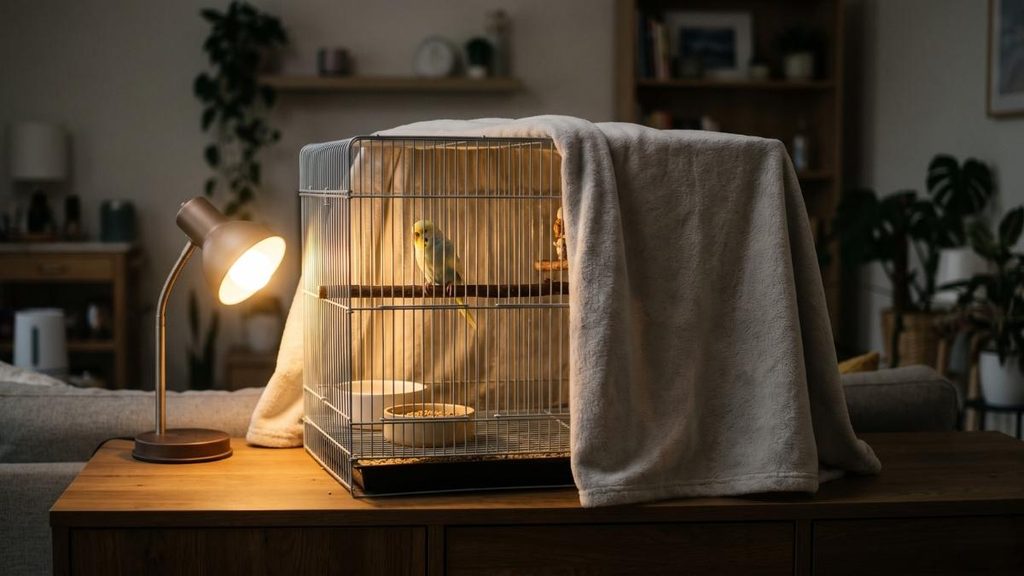
While you arrange care:
- Keep the bird warm and quiet: Move the cage away from drafts, dim the lights, and limit handling and noise.
- Remove irritants: Ventilate the room with fresh air and stop any cooking, spraying, or burning immediately.
- Do not give home medicines or liquids: Avoid human remedies or forcing liquids into the beak, as liquid can easily enter the trachea and cause fatal aspiration.
- Contact an avian veterinarian promptly: Describe the breathing changes and any recent exposure to fumes so the veterinary team can prepare oxygen support upon arrival.
Sources & Veterinary References
- Association of Avian Veterinarians (AAV): Signs of Illness in Companion Birds
- Merck Veterinary Manual: Lung and Airway Disorders of Pet Birds
Conclusion & Educational Disclaimer
Understanding why your budgie’s tail is bobbing comes down to three observations: how hard the bird is working to breathe, how long the movement lasts, and what else the bird is doing. Brief bobbing that settles quickly after flight, singing, or a scare is normal. Persistent bobbing at rest, especially with an open beak, clicking sounds, or fluffed posture, calls for prompt veterinary attention.
Educational Disclaimer: This article offers pet husbandry and health information only and is not a veterinary diagnosis. If your bird seems unwell or shows persistent breathing strain, consult a qualified avian veterinarian immediately.