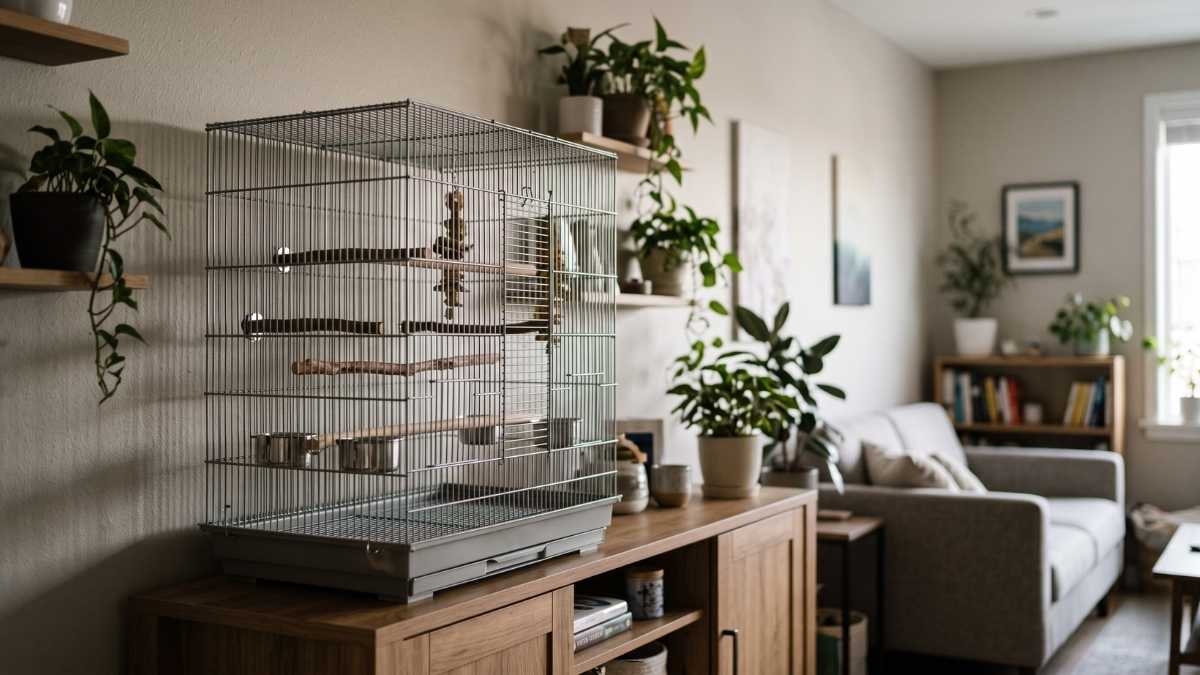
Deciding where to put a budgie cage is one of the most consequential husbandry choices you will make, because placement shapes how safe, rested, and socially engaged your bird feels every day. Budgies (parakeets) are prey animals, and their sense of security depends on three things: what they can see, how high they sit, and how much of their surroundings they can monitor. A cage that leaves a bird feeling exposed can contribute to chronic stress, which avian veterinarians recognize as a factor in feather damage, disrupted sleep, and reduced appetite.
The Wall Rule
At least one solid wall, ideally a corner with two, should sit behind the cage. A cage floating in the middle of a room leaves a budgie exposed from every direction, which means it cannot rule out a threat approaching from behind. Wild budgies rely on flock vigilance and cover, so a bird with no protected side may stay on constant alert. A solid backdrop reduces the angles to watch, letting the bird relax, preen, and sleep more deeply.
The Four Golden Placement Criteria
- Solid backdrop: One or two walls behind the cage, with no open space on the back.
- Chest-to-eye-level elevation: Position the cage so the birds sit near an adult’s chest or eye level. Very low placement feels threatening, while ceiling-height perches can encourage nervousness and make handling harder.
- Stable temperature and ventilation: Keep the cage away from extreme heat, cold, and sudden temperature changes. Maintain good room ventilation without directing strong airflow straight at the bird.
- Daily social inclusion: Choose a room where the household spends meaningful time, since budgies are flock animals that do best with regular interaction.
Best Rooms for Your Parakeet: Where to Place the Cage
The Living Room / Family Room
For most households, the living room is the best place to put a budgie cage. Budgies are flock animals, and a room where people gather lets the bird hear voices, watch routines, and interact daily without being the center of attention. Choose a corner or wall-backed spot with a clear view of the room, away from the television speakers and main walkways. Because evenings can be busy, a quieter corner or a light cage cover once the room settles down helps the bird wind down. Aim for a consistent 10 to 12 hours of dark, quiet sleep each night, a standard recommendation in companion bird husbandry.
Can a Parakeet Cage Be in the Bedroom?
Yes, parakeets can be kept in a bedroom, provided it suits both of you.
Pros:
- Quiet, predictable surroundings that support rest
- Easier control of light cycles and consistent sleep schedules
Cons:
- Seed husks, feather dust, and dander can build up overnight in a closed room
- Less daytime interaction if the room sits unused for hours
- Poor ventilation can worsen air quality
If you choose a bedroom, keep air moving gently without drafts, clean the cage surroundings often, and consider a HEPA air purifier placed away from direct airflow onto the cage. Make sure the bird still gets daily out-of-cage time and social contact elsewhere.
Why the Kitchen and Bathrooms Are Unsafe
The kitchen is one of the riskiest rooms in a home for any pet bird. Cooking causes sudden temperature swings, and heated non-stick cookware coated with PTFE (Teflon) can release fumes that avian veterinarians and the Association of Avian Veterinarians identify as seriously toxic to birds. Aerosol sprays, cleaning products, and scented candles add further airborne irritants. Read more in our guide on what not to do with parakeets, including toxic cookware and household products to keep away from birds.
Bathrooms bring their own problems: steam, high humidity, and shifting temperatures encourage mold growth, while hair sprays, deodorants, and cleaners irritate a bird’s sensitive respiratory system. Keep the cage in a separate, well-ventilated room instead.
Windows, Drafts, and Sunlight: Finding the Right Balance
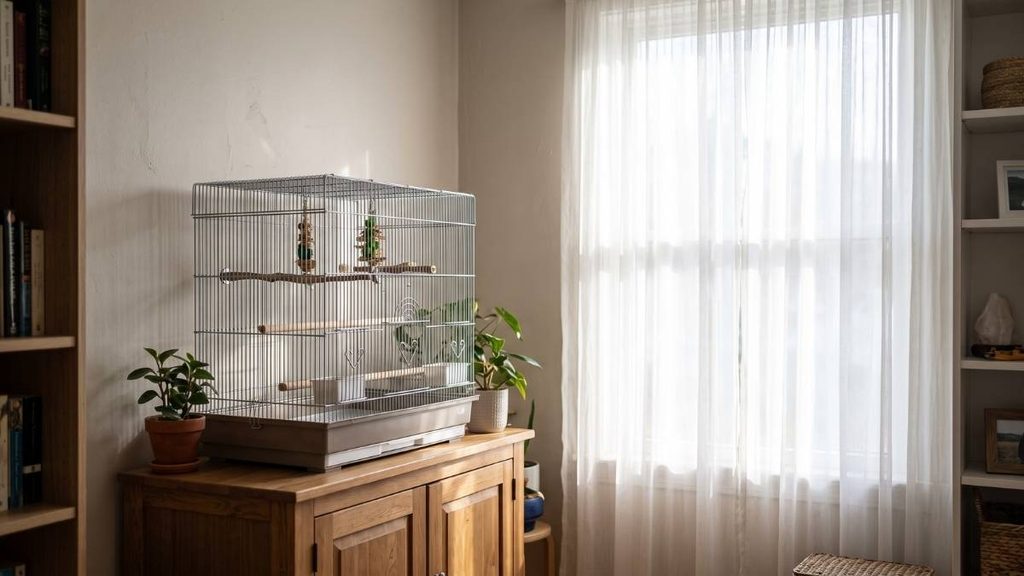
So, can you put a budgie cage near a window? Usually not directly against one. Natural light matters for budgies, but a window brings heat, cold, and visual stress that a well-chosen spot elsewhere in the room avoids.
Heat Buildup Through Glass
Glass traps solar heat, and a cage in direct sun can warm far faster than the room around it. Budgies cannot sweat and cope poorly with overheating, so a bird in a sunny window with no shaded retreat can become distressed quickly. Signs of heat stress, such as panting with wings held away from the body, call for moving the bird to a cooler spot right away and contacting an avian veterinarian.
Drafts and Chill
Older or unsealed frames, gaps around sills, and nearby air conditioner vents can send a steady stream of cold air across the cage. Budgies tolerate a stable, moderate room temperature far better than sudden swings, and persistent drafts are a commonly cited concern in avian husbandry guidance.
Stress From Outside
Windows expose a prey animal to passing hawks and crows, roaming neighborhood cats, and moving shadows. Even a harmless sight can trigger panic, with the bird thrashing against the bars and risking injury. A cage with a solid wall behind it, as covered in the Wall Rule, rarely has this problem.
The Ideal Setup
- Choose a bright room with plenty of indirect daylight.
- Keep the cage a few feet back from the window and off the sill.
- Make sure part of the cage is always in shade so the bird can choose its comfort.
- Check the spot at different times of day, since sun angles shift.
- Keep the position consistent so temperature stays stable.
Fresh air and sunshine are tempting, but they belong in a controlled setting. Outdoor time requires strict supervision and weather checks, and our guide on whether you can put a budgie cage outside explains those hazards in detail. Indoors, the goal is steady temperature control and gentle, indirect light.
Cage Height and Environmental Clearance
Why the Floor Is the Wrong Spot
A cage set on the floor puts a budgie at the level where drafts, dust, and foot traffic are worst. Birds also read anything above them as a potential threat, so constant movement overhead keeps them on edge. Dogs and cats see a low cage as easy access, and even a calm household pet can cause real fear simply by staring or circling.
Why Too High Causes Problems
A cage above eye level makes daily care harder. Reaching food dishes, replacing liners, and handling a nervous bird all become awkward, and a bird looking down at you may be less inclined to interact. Warm air also rises, so high spots can be stuffy and hotter than the rest of the room.
The Sweet Spot
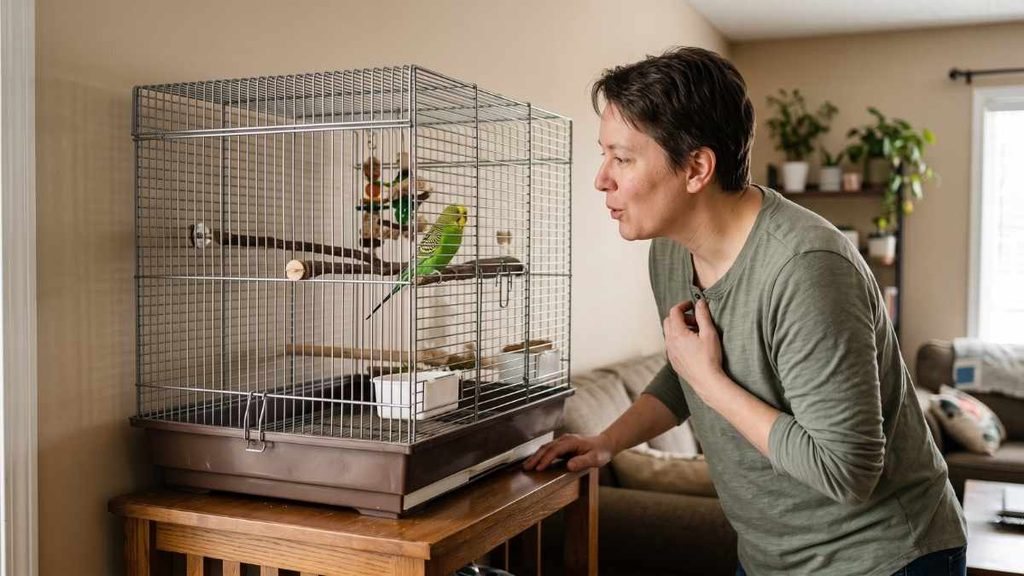
Aim for chest-to-eye level on a sturdy stand, sideboard, or credenza. The base must hold the cage’s full weight without wobbling, since vibration and tipping are stressful and dangerous. Our guide to budgie cage size and space planning covers how to measure your room, leave enough horizontal width for short flights, and choose a stand that supports the cage securely.
Clearance From Hazards
Budgies can reach through cage bars and chew nearby objects, so keep the cage safely away from curtains, electrical cords, toxic plants, and other potential hazards:
- Curtains and drapes: Fabric can be shredded, and loose threads can tangle around toes.
- Electrical cords: Chewed wires risk shock and fire. Keep them out of reach or enclosed.
- Potted plants: Many common houseplants are toxic if nibbled. Check any plant against a reliable avian toxicity list or ask an avian veterinarian before placing it nearby.
Air Quality and Temperature Stability Around the Cage
Temperature Targets
Most healthy adult budgies do well in a stable indoor environment that is comfortable for their owners. Consistency matters more than maintaining one narrow temperature range. Avoid placing the cage beside radiators, heaters, or sun-warmed windows, and keep it away from areas with sudden temperature fluctuations. Place a thermometer near the cage, at bird height, to monitor the conditions your budgie experiences. Young, elderly, or ill birds may need additional temperature management, so ask your avian veterinarian for guidance specific to your bird.
Airflow Without Direct Drafts
Gentle air circulation keeps a room fresh, but moving air should never blow directly onto the cage. Check these common culprits:
- Ceiling fans: Keep the cage out of the airflow path, and never let a bird out of the cage while a fan is running.
- Forced-air heating registers: These dry the air and send warm blasts across the cage. Move the cage away from vents or deflect the flow.
- AC units and portable fans: Avoid placing the cage where strong airflow or sudden temperature changes directly affect your bird.
Sound and Stress
Budgies hear well and startle easily. Avoid placing the cage right beside televisions, speakers, or doors that slam. Constant loud noise and sudden bangs can keep a prey animal tense and interfere with rest. A moderate level of ordinary household sound is healthy and social, but the cage should sit where the bird can retreat from the loudest area.
Sources & Veterinary References
- Association of Avian Veterinarians (AAV): Basic Care for Companion Birds
- Merck Veterinary Manual: Management of Pet Birds (Environmental Requirements)
Conclusion & Educational Disclaimer
The best place to put a budgie cage combines a secure wall backdrop, chest-to-eye-level elevation on a sturdy base, bright but indirect daylight, and a safe distance from kitchen fumes and other airborne irritants. Add stable temperatures, gentle airflow, and a room where the household gathers, and your bird has the foundation to feel calm, rested, and social. Check the spot across different times of day, then adjust as you learn what suits your bird.
Educational disclaimer: This article offers pet husbandry and housing guidance, not veterinary diagnosis or treatment. If your budgie shows signs of illness or distress, consult a qualified avian veterinarian.