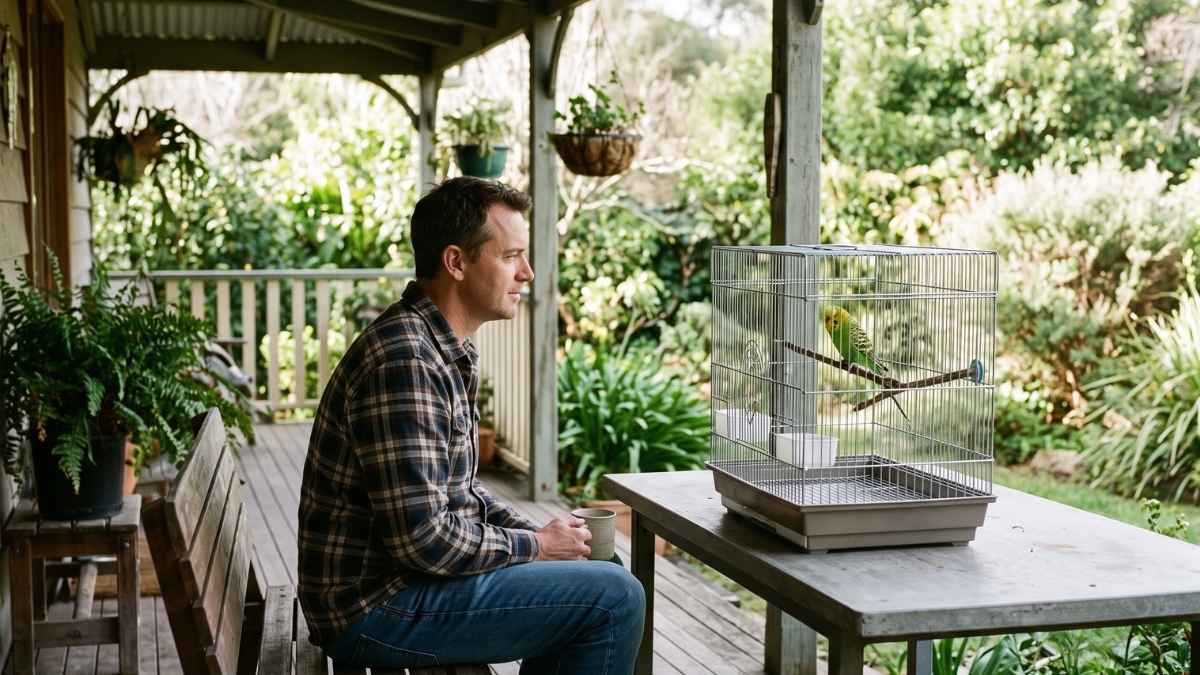
Can you put a budgie cage outside? Yes, but only under close, continuous supervision, in suitable weather, and with access to shade. An outdoor cage should never be left unattended, and a budgie should never be placed outside in an open or unsecured enclosure.
The reason owners consider it is understandable. Natural sunlight can help birds produce vitamin D3, which supports calcium absorption and normal bone health. This process depends on UVB wavelengths, and standard window glass blocks most UVB. A budgie sitting by a sunny window receives light and warmth, but little of the UVB needed for vitamin D3 production. Natural daylight also provides sensory enrichment and helps maintain a regular day-night rhythm.
Appropriate UVB exposure is one consideration in companion-bird care, alongside a balanced diet and suitable housing. However, outdoor time is not essential for every budgie. Diet, individual health, and the safety of the environment all matter, and a bird-safe UVB lamp may be an alternative when recommended for the bird’s circumstances.
Outdoor time is an addition to good husbandry, not a substitute for it. If you’re still building your daily routine, our guide on how to take care of a parakeet covers the diet, housing, and handling basics that should be in place first. The sections below explain weather considerations, shade requirements, and safety rules that make outdoor time worthwhile rather than risky.
Safe Outdoor Temperatures and Weather Conditions for Parakeets
There is no single outdoor temperature that is safe for every budgie. A healthy, gradually acclimated adult may tolerate mild outdoor conditions, but comfort and safety depend on more than the number on a thermometer. Wind, humidity, direct sunlight, sudden temperature changes, the bird’s health, and its ability to move into shade all affect the risk.
As a practical precaution, choose mild, stable weather rather than treating 70–80°F (21–27°C) as a guaranteed safe range. Do not use 65°F (18°C) as a universal lower limit, either. A temperature that one healthy, acclimated bird tolerates may be unsuitable for another bird, particularly one that is young, elderly, underweight, molting, or recovering from illness. If you are unsure whether the conditions are suitable, keep your budgie indoors and consult an avian veterinarian.
Because the temperature shown by a weather app may differ from the conditions around the cage, check the temperature at the intended location, preferably in the shade and near perch height, before every session. Remember that a thermometer reading cannot account for every risk from wind, direct sun, or rapid changes in weather.
Why Rapid Temperature Swings and Drafts Are Dangerous
Budgies kept indoors may not be acclimated to abrupt changes in temperature. Moving a cage from a comfortable room into cold, windy conditions can cause stress, especially for a small bird that is already unwell or vulnerable.
To reduce the risk:
- Introduce outdoor conditions gradually rather than moving a bird suddenly between very different environments.
- Position the cage out of direct wind, with a suitable barrier on the windward side.
- Avoid outdoor time when the forecast shows strong gusts, sudden temperature drops, or rapidly changing conditions.
- Bring the bird indoors if it begins shivering, remains fluffed up unusually, appears weak, or shows any change in breathing or behavior.
Drafts and sudden environmental changes are avoidable hazards. Our article on what not to do with parakeets covers other everyday mistakes that can compromise a budgie’s safety.
The Direct Sunlight and Heatstroke Trap
Budgie direct-sunlight risks are easy to underestimate. An adult budgie is a very small bird, often weighing only a few dozen grams, and can overheat when exposed to excessive heat. Birds do not sweat like humans. They release excess heat partly through panting and by holding their wings away from their bodies, but these mechanisms may not be enough in hot or humid conditions.
A cage placed in full sun can become dangerous quickly. Metal bars and solid surfaces absorb heat, while the air inside the enclosure can become warmer than the surrounding air. Even on a day that feels mild to a person standing in the shade, the temperature inside a sunlit cage may rise substantially. A budgie confined to a cage cannot simply move away from the heat if the entire enclosure becomes too hot.
Prevent overheating with these precautions:
- Provide a reliable shaded area. As a practical starting point, keep at least part of the cage shaded so the bird can move away from direct sunlight. The 50/50 approach described below is a precaution, not a veterinary standard or a guarantee against overheating.
- Choose cooler parts of the day and avoid hot midday conditions.
- Keep fresh water available throughout the session.
- Keep the cage away from hot concrete, pavement, and metal surfaces that can radiate heat.
- Do not use a cage cover that restricts airflow as a substitute for proper shade.
- Watch the bird continuously and bring it indoors if it shows signs of heat stress.
Recognizing Heat and Cold Stress
Watch your budgie continuously rather than glancing over occasionally.
Early signs of heat stress can include open-beak panting, wings held away from the body, rapid breathing, unusual stillness, and difficulty perching normally. Cold stress may appear as persistent fluffing, shivering, a tucked posture, or unusual inactivity.
If you notice these signs, move the bird to a suitable indoor environment promptly. A bird showing labored breathing, collapse, severe weakness, or persistent panting needs urgent veterinary attention. Do not assume that symptoms will resolve on their own.
Our guide on how to tell if a parakeet is sick, including the 3-3-3 rule, explains how to recognize concerning physical signs and when a bird needs veterinary attention.
Hidden Outdoor Dangers: Predators, Parasites, and Toxins
A backyard that looks peaceful to a person can feel like a hunting ground to a budgie. Even when the weather is suitable and the cage has shade, the outdoor environment introduces threats that an indoor room does not.
Predator Presence and the Panic Response
Budgies are prey animals, and their survival instincts make them sensitive to sudden movements, unfamiliar animals, and threats from above. A hawk circling overhead, a crow landing on a nearby fence, or a neighborhood cat approaching the cage can frighten a bird even without making physical contact.
A frightened budgie may thrash, strike the bars, or fall from its perch. Injuries can include damaged feathers, bleeding, fractures, and other trauma. A cage does not eliminate the risk of injury caused by panic.
Physical contact is also possible. Cats and other animals may reach through widely spaced bars, and a bird clinging to the side of the cage can be within range of a paw or bite. Small animals may enter low or poorly secured enclosures, while a bird may be injured if a predator strikes the cage.
To lower the risk:
- Keep the cage close to you and remain alert to activity around the entire area.
- Choose a sheltered position that reduces exposure to overhead threats while maintaining good airflow.
- Do not hang cages from trees or place them at ground level where animals can approach unnoticed.
- Bring the bird indoors if a cat, hawk, crow, or other potential threat appears nearby.
- Never leave the cage unattended, even briefly.
Wild Bird Droppings, Mites, and Disease Transmission
Wild birds can introduce pathogens and parasites into areas used by captive birds. Droppings that land on or near the cage may contaminate food, water, or surfaces. Close contact with wild birds can also increase the risk of exposure to parasites and infectious diseases.
Avian influenza and other infections can affect bird populations, and the level of risk varies by location and current outbreak activity. Check local veterinary or agricultural guidance before allowing outdoor exposure, particularly when disease alerts are active.
Practical precautions include:
- Avoid placing the cage beneath trees, rooflines, power lines, or other places where wild birds regularly perch.
- Skip outdoor sessions when local avian disease alerts or other relevant warnings make exposure inadvisable.
- Protect food and water from droppings, insects, and other contamination.
- Clean the cage exterior and outdoor stand after each session, using bird-safe cleaning practices.
- Wash your hands after handling outdoor equipment.
- Do not allow your budgie to share space with wild birds or backyard poultry.
Airborne Toxins and Contaminated Surfaces
A budgie’s respiratory system is highly sensitive to airborne irritants and toxic fumes. Materials that seem harmless to people may be dangerous to birds, particularly when exposure occurs close to the source.
Common outdoor hazards include:
- Lawn and garden chemicals: Herbicides, pesticides, and fertilizers may drift through the air or contaminate nearby surfaces.
- Barbecue and fire-pit smoke: Smoke from charcoal, wood, or other burning materials can irritate a bird’s respiratory system and cause serious breathing problems.
- Vehicle exhaust: Cages near driveways, garages, or busy roads may expose birds to exhaust fumes and airborne particles.
- Treated wood, paint, and metal surfaces: Painted railings, treated fences, and unsuitable metals may pose risks if a bird can chew or contact them.
- Toxic plants: Budgies may reach through cage bars to nibble leaves or flowers from plants that are unsafe for birds.
Check the surrounding area before every session. If your lawn has recently been treated, a neighbor is spraying chemicals, or smoke or exhaust is present, postpone the outing.
Why Outdoor Handling Errors Compound the Risk
Many outdoor injuries and illnesses result from small lapses that combine: a cage left in a windy corner while you answer the phone, a latch that was not fully secured, or a bird startled by a barking dog because the cage was placed too close to a fence.
These are similar to mistakes that can happen indoors, but outdoor conditions can make the consequences more serious. Reviewing common household hazards, improper handling habits, and cage placement errors beforehand helps ensure you recognize and avoid preventable accidents before stepping outside.
Outdoor Cage Setup: Security, Bar Spacing, and Shade Rules
A cage that is suitable indoors may not provide enough protection outdoors. Before a budgie spends any time outside, check the enclosure’s bar spacing, latch security, stability, and access to shade.
Bar Spacing: The 1/2-Inch Standard
For budgies, bar spacing should generally be no wider than about 1/2 inch (approximately 1.2 cm). Appropriate spacing helps prevent a bird from pushing its head through a gap and becoming trapped.
Wider gaps may also allow predators to reach inside or create opportunities for an escape attempt. Check the entire cage rather than relying only on the advertised specifications.
Run through these checks before every outdoor session:
- Measure the gaps at several points, including the door panels and any curved or decorative sections.
- Look for bent, loose, corroded, or sharp bars.
- Confirm that the cage is large enough for the bird to move comfortably and stretch its wings without striking the sides. Our Budgie Cage Size Guide: Dimensions for 1, 2, or More Birds explains cage dimensions and spacing for single birds and pairs.
- Avoid enclosures with openings or exposed lower sections that allow small animals to reach inside.
Escape-Proof Latches and Door Security
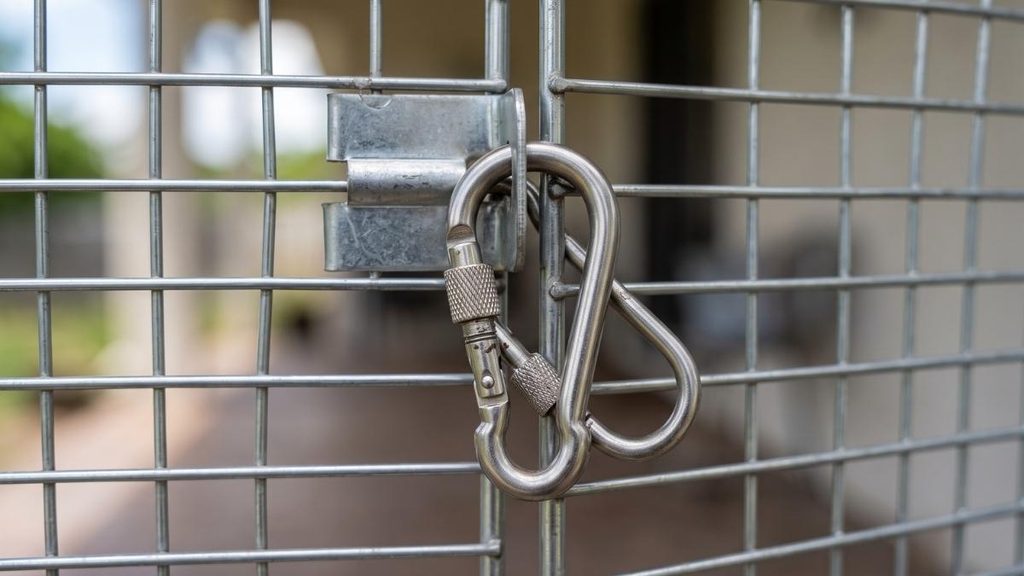
Budgies can learn to manipulate simple latches, and doors may shift when a cage is moved. An escape indoors is frightening; an escape outdoors can expose a bird to predators, traffic, and other hazards.
- Secure every door with a suitable locking clip or carabiner rather than relying on a simple built-in latch alone.
- Check sliding doors and add a safe secondary fastening where needed.
- Inspect food-cup doors and removable panels, which may provide overlooked escape routes.
- Check all fastenings again after moving the cage.
Wing clipping or a harness is not a substitute for a secure enclosure. Never open the cage outdoors unless the bird is inside a fully enclosed, escape-proof space.
A Stable Base: Stands and Tables, Not Hooks
Wind, nearby animals, and a bird’s sudden movements can destabilize a cage. An enclosure hanging from a hook, branch, or bracket may swing, spin, or fall, potentially frightening or injuring the bird.
Place the cage on a stable surface instead:
- Use a solid table, weighted stand, or cage stand designed to support the enclosure.
- Position it in a sheltered location where gusts cannot catch it from all sides.
- Avoid unstable surfaces such as railings, folding chairs, and uneven ground.
- Keep the cage away from hot concrete, pavement, and metal surfaces.
- Gently test the setup before placing the bird inside. If the cage rocks or shifts easily, choose a different location.
The 50/50 Shade Rule
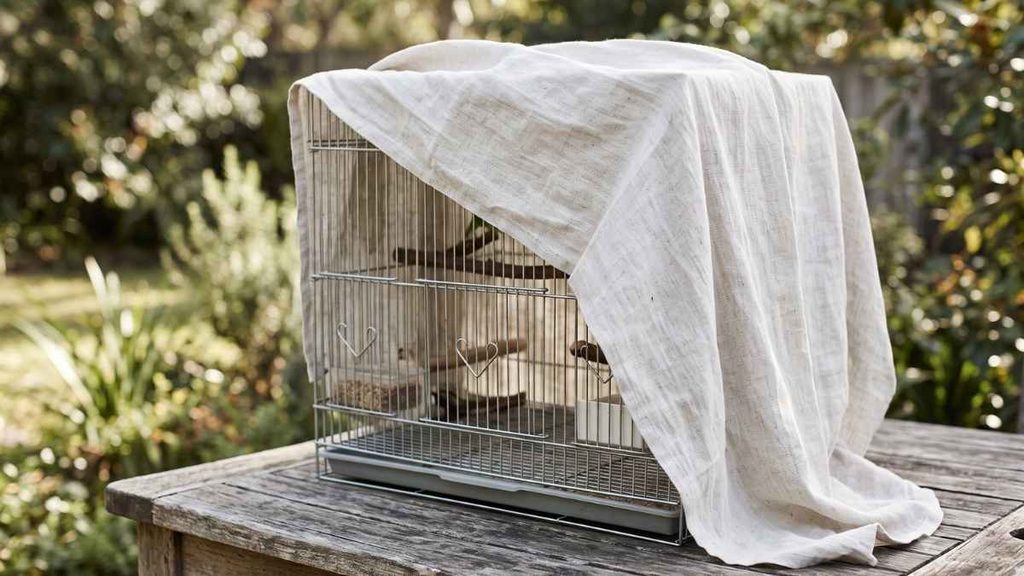
Keeping roughly half the cage shaded is a practical precaution that gives your budgie some choice between direct light and a cooler, sheltered area. It is not an established veterinary standard, and it does not guarantee protection from overheating. The amount of shade needed depends on the weather, the position of the sun, the cage material, airflow, and the bird’s condition.
Use these precautions:
- Provide a shaded area over part of the cage, including suitable protection from overhead sunlight.
- If using a light, breathable cloth, secure it safely so it cannot blow loose or become accessible for chewing.
- Leave the rest of the enclosure open to maintain airflow.
- Position the cage so the shaded area remains available as the sun moves.
- Keep food and water accessible, preferably in a shaded area.
- Never fully cover an outdoor cage in a way that traps heat or restricts ventilation.
Reassess the shade throughout the session. A location that was partly shaded when you set up may become fully exposed later. If you cannot maintain a reliably cool, shaded area or monitor the bird continuously, bring the cage indoors.
How to Take Your Budgie Outside Safely (Step-by-Step Rules)
Outdoor time works best when you follow the same safety checks each time. Treat the steps below as a practical checklist, not a guarantee that every outdoor environment is safe.
Step 1: Commit to 100% Active Supervision
Stay within arm’s reach of the cage and keep your attention on the bird throughout the session. Supervision means actively watching, not being nearby while you scroll your phone, water plants, or carry on another activity.
- Do not leave the cage unattended, even for a quick trip indoors. If you must go inside, take the bird with you.
- Arrange for another responsible adult to watch the bird if necessary.
- Remain alert to changes in weather, predator activity, and your bird’s behavior.
Step 2: Secure Every Entry Point Before Leaving the House
Check the cage indoors, where an escape is more easily contained. Confirm that every door, food-cup hatch, and removable panel is closed and securely fastened.
Complete these checks before going outside:
- Check the weather and the actual conditions at the intended cage location.
- Confirm that the area is free of smoke, exhaust, chemical sprays, and nearby wild-bird activity.
- Make sure the cage is stable and that a shaded area will remain available.
- Keep a suitable cloth ready if needed for shade, without compromising ventilation.
Step 3: Keep the First Sessions Short
A budgie that has never been outdoors must process unfamiliar sounds, moving shadows, wind, and the open sky. Even a confident bird can become frightened by these changes.
- Start with a brief session and remain close enough to respond immediately.
- Introduce outdoor conditions gradually, beginning with a sheltered location when appropriate.
- Extend sessions only if the bird remains relaxed and conditions continue to be suitable.
- Choose mild, calm weather and avoid times when temperatures or sunlight may become intense.
- End the session immediately if the bird shows signs of fear, overheating, cold stress, or other distress.
There is no fixed session length that is safe for every bird. A short session is not automatically safe if the weather or surroundings are unsuitable.
Step 4: Read Body Language Continuously
Your budgie communicates comfort and fear through posture, sound, and feather position. Learn its normal behavior so you can recognize changes.
| Relaxed Body Language (Comfort Signs) | Fear / Stress Indicators (End Session) |
| Soft chattering or gentle singing | Freezing rigid with wide, fixed eyes |
| Beak grinding and slow wing/leg stretching | Feathers sleeked flat, unusually elongated body |
| Loosely fluffed feathers resting on one foot | Rapid panting or open-beak breathing at rest |
| Calm, curious movements watching surroundings | Tail bobbing or wings held away from the body |
| Preening comfortably on the perch | Clinging to bars, thrashing, or abrupt silence |
A bird that freezes is not necessarily calm. Freezing can be a fear response, so do not interpret it as proof that the bird is comfortable.
If you see signs of fear, bring the bird indoors promptly. If you notice panting, wings held away from the body, shivering, weakness, or other possible signs of temperature stress, move the bird to an appropriate indoor environment and seek veterinary advice when indicated.
Step 5: Follow a Safe Re-Entry Protocol
The end of an outdoor session is another time when escapes can happen. Keep the cage doors shut until the bird is safely inside a closed room.
- Keep every door and hatch closed while carrying the cage indoors.
- Hold the cage securely and avoid sudden movements.
- Close exterior doors and windows behind you before opening the cage.
- Return the cage to its usual position and allow the bird to settle.
- Offer its normal food and fresh water once it is back in its usual environment.
- Clean the cage exterior and outdoor stand as needed, and wash your hands before returning to normal routines.
After the session, observe the bird for any changes in appetite, droppings, breathing, or activity. If anything seems abnormal, note when it started and contact an avian veterinarian.
Conclusion, Sources & Educational Disclaimer
Conclusion
Outdoor time can be a worthwhile addition to a budgie’s life, but it is optional enrichment, not a daily requirement. A bird with a balanced diet, a properly sized cage, regular social interaction, and appropriate indoor lighting can have its needs met without ever going outside. If your yard is exposed to wind, predators, wild birds, smoke, or chemical treatments, or if your bird is easily frightened, keeping it indoors is a responsible choice.
For owners who do bring their birds outside, the principles are consistent: suitable weather, reliable shade, a secure and stable enclosure, short and closely supervised sessions, and continuous attention from the moment the cage leaves the house until it returns indoors. No single temperature, shade ratio, or session length guarantees safety. When conditions are unsuitable, postponing the outing is the better choice.
Pay attention to your individual bird. Some budgies may enjoy the new sights and sounds, while others may remain uncomfortable outdoors. Either response is normal. A bird that is calm, active, and healthy indoors is not necessarily missing out. Your observation, patience, and willingness to end a session early matter more than following a schedule.
Veterinary References
The guidance in this article reflects general principles of companion-bird care and environmental safety. Relevant references include:
- VCA Animal Hospitals: “Recognizing the Signs of Illness in Pet Birds”
- Merck Veterinary Manual: “Overview of Pet Birds”.
Owners should also consult their local avian veterinarian and relevant regional agricultural or public health authorities for current guidance on disease outbreaks, seasonal hazards, and practices appropriate to their area.
Educational Disclaimer
This article is provided for educational and informational purposes only and does not constitute veterinary advice, diagnosis, or treatment. Every bird differs in age, health, temperament, and environmental needs, and outdoor conditions can change quickly. Consult a qualified avian veterinarian if you are unsure whether outdoor exposure is appropriate for your bird, particularly if it is young, elderly, underweight, molting, or has a history of illness. If your budgie shows signs of heat stress, cold stress, trauma, or breathing difficulty, seek veterinary care promptly.