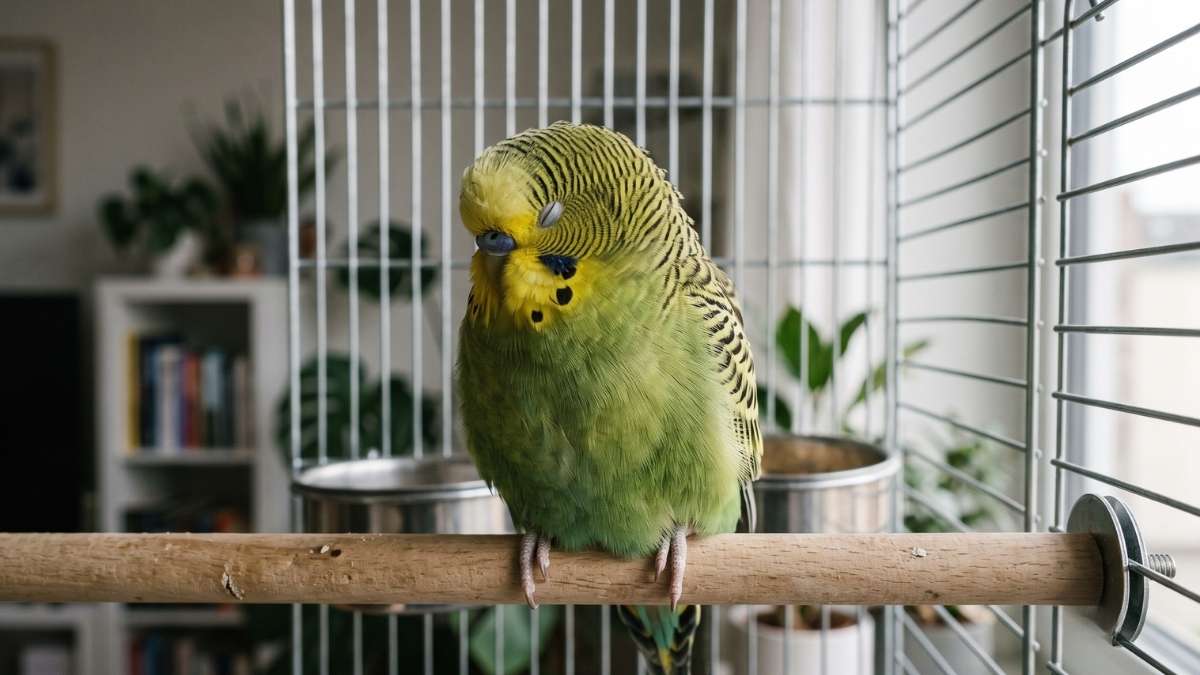
If you are asking yourself why is my budgie fluffed up and sleeping a lot, you are right to pay attention. A puffed-up bird is not always a sick bird, but a bird that stays that way through the day deserves a closer look.
Budgies fluff their feathers for perfectly healthy reasons. During preening, a content bird will ruffle everything out, shake, and then settle back to sleek. At naps, many perch on one foot with feathers loosely fluffed and eyes half-closed, which is normal rest. These moments are usually brief, and your bird should return to its usual alertness and activity afterward.
Constant daytime fluffing is different. When a bird holds that round, puffed silhouette for hours, it may be trapping air between its feathers to conserve body heat. Persistent fluffing, especially alongside unusual sleepiness or reduced activity, can indicate that the bird is unwell.
The difficulty is that budgies are prey animals, and instinct can lead them to hide signs of weakness. Avian veterinary sources, including the Association of Avian Veterinarians, emphasize the importance of recognizing subtle changes in a bird’s behavior. By the time a budgie looks noticeably sick, it may already need prompt veterinary attention.
That is why knowing your bird’s baseline matters. If you are still learning what a normal day looks like, our guide on how to take care of a parakeet walks through healthy activity levels, sleep schedules, and daily routines, so you can spot a change quickly.
Why Is My Budgie Puffed Up All Day? (Sickness vs. Normal Napping)
When owners ask why their budgie is puffed up all day, one important question is whether the bird is resting normally or conserving energy because it feels unwell. The two postures can look similar at a glance, but the bird’s overall behavior can help you recognize when something may be wrong.
What Healthy Fluffing and Napping Look Like
A relaxed budgie may show several reassuring signs:
- Loosely fluffed feathers. The plumage looks soft and slightly rumpled, then smooths down again after preening or resting.
- Perching on one foot. A healthy bird may tuck one foot into its belly feathers while resting or sleeping.
- Stretching. You may see a wing and leg extended together, a full wing fan, or a big yawn after waking.
- Beak grinding. A soft, gentle grinding sound as a bird drifts off is commonly associated with relaxed resting.
- Easy rousing. A sound, movement, or your voice brings the bird back to alertness.
Normal rest typically happens in short windows during the day and during the longer overnight sleep period. Between naps, a healthy budgie generally returns to its usual activities, such as chirping, climbing, preening, and exploring its surroundings.
What Sick or Lethargic Puffing Looks Like
A budgie that is unwell may show a combination of these signs:
- Persistent puffed-up feathers. The bird stays round and fluffed for long periods rather than briefly fluffing and settling down.
- Unusual posture. It may grip the perch with both feet, crouch, or sit on the cage floor. None of these postures alone confirms illness, but a change from its normal behavior matters.
- Low head. The head may sink into the shoulders or remain tucked down while the bird is awake.
- Half-closed eyes. The bird may look unusually sleepy or be slow to respond.
- Listlessness. It shows little interest in food, toys, movement, or flock calls.
- Persistent daytime sleepiness. A bird that remains puffed and drowsy through the morning and afternoon, when it would normally be active, needs attention.
Fluffed plumage, lethargy, and reduced activity are nonspecific but important signs of illness in pet birds. They do not identify a particular disease, which is why persistent symptoms should not be dismissed as a mood or a normal nap.
Comparing the Two States
| Physical Feature | Relaxed Fluffing (Normal Nap) | Possible Illness (Conserving Energy) |
| Feet Posture | Often tucks one foot up into belly feathers | Firmly grips perch with both feet, or sits on cage floor |
| Feather Shape | Softly fluffed briefly, then smooths down | Stays round and tightly inflated for hours on end |
| Eyes | Bright and alert upon waking | Dull, half-closed, heavy, or persistently squinting |
| Head Position | Tucked comfortably back over the wing | Sunk low into shoulders or held downward |
| Vocalizations | Soft beak grinding, melodic chattering | Unusually silent, withdrawn, or faint clicking |
| Alertness / Rouse | Snaps alert and re-engages quickly | Sluggish, slow to respond, or unresponsive |
| Timing | Short 10–20 minute daytime naps | Continuous puffing and dozing during active daylight hours |
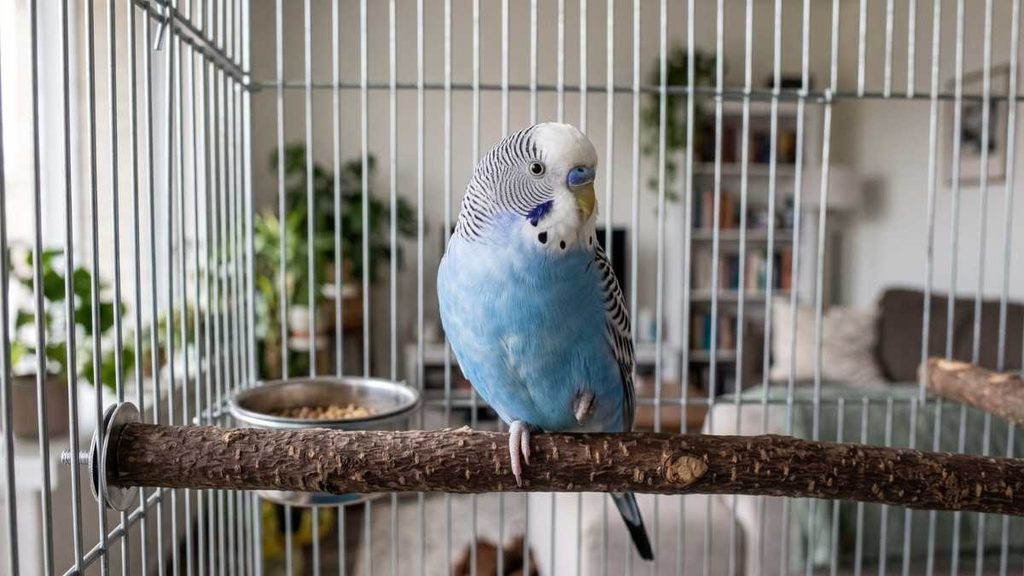
If you want to see what a thriving, comfortable bird looks like when it is awake, our guide on how do I know if my parakeet is happy covers the body language, vocalizations, and play behavior that make a useful point of comparison. A bird that stops showing its usual behaviors while staying puffed up may be unwell.
Is My Budgie Cold or Sick? (Environmental vs. Medical Causes)
Owners often arrive at this question by process of elimination: the room feels a little cool, the bird is puffed up, and a warmer spot might help. Cold can contribute to fluffing, but a cold bird and a sick bird can look similar. Do not rely on warming alone to determine whether your budgie is healthy.
How Do You Check If They Are Just Cold?
A bird that is too cold may fluff its feathers, seek a warmer area, or appear less comfortable. However, these signs are not enough to rule out illness.
Look at the overall situation:
- Recent temperature changes. Consider whether the room became colder, a window was left open, or air conditioning is blowing directly toward the cage.
- Seeking warmth. Your budgie may move toward a warmer area if it feels cold.
- Changes in normal behavior. Check whether it is still eating, drinking, moving, and responding as usual.
- Other symptoms. Persistent sleepiness, reduced appetite, abnormal droppings, breathing difficulty, or sitting on the cage floor are reasons to seek veterinary advice.
If the room is genuinely cold, move the cage to a comfortably warm, draft-free indoor area and avoid sudden temperature changes. Do not wait 30–60 minutes to see whether warming cures the symptoms if your bird is unusually sleepy or appears ill. Contact an avian or exotic-animal veterinarian promptly if the puffing and lethargy persist, and seek emergency care for breathing difficulty, severe weakness, or other urgent warning signs.
The Merck Veterinary Manual notes that illness can affect a bird’s ability to maintain its body temperature. A bird that remains fluffed up in a comfortable room may be unwell, but temperature alone cannot distinguish illness from cold.
If you are still unsure whether your budgie is cold or sick, it is safer to contact a veterinarian rather than waiting for more symptoms to appear.
Drafts and Sudden Temperature Drops
Budgies generally do better with a stable, comfortable indoor environment than with sudden temperature changes. Common problems in the home include:
- Drafty windows and doors, especially a cage placed on a sill or beside an entry point.
- Air conditioner and ceiling fan airflow blowing directly across the cage.
- Overnight drops when heating is switched off or a window is left open.
- Cold floors or exterior walls, particularly when the cage is placed in a chilly area.
Moving air can increase heat loss, especially for a bird that is already unwell. The same principle makes outdoor exposure risky for indoor birds. A cage that feels pleasant in midday sun can become uncomfortable when a cool breeze arrives or the temperature falls toward evening. Our guide on whether you can put a budgie or parakeet cage outside explains why birds accustomed to a stable indoor climate can be vulnerable to outdoor drafts and temperature changes.
If you suspect cold, correct the environment gently and observe your bird closely. Do not assume the problem is solved simply because the room is warmer.
Medical Causes of a Fluffed, Sleepy Budgie
Fluffed feathers and lethargy can occur with several medical conditions. Common categories include:
- Infections (bacterial, viral, or fungal). Infections can cause birds to fluff up, sleep more, become less active, and lose interest in food. Some conditions can progress quickly in a small bird.
- Respiratory disease. Infection or irritation of the airways may cause tail bobbing, open-beak breathing, wheezing, or clicking sounds. Any breathing difficulty needs urgent veterinary attention.
- Digestive problems and blockages. Crop or gut issues, ingested foreign material, or gastrointestinal disease can cause appetite loss, changes in droppings, and a hunched posture.
- Egg binding. A hen who is unable to pass an egg may sit fluffed up on the cage floor, strain, appear weak, or breathe heavily. This is an emergency that requires immediate veterinary care. Warmth may provide supportive comfort during transport, but it is not a treatment.
These conditions can look similar from across the room: a quiet, round, sleepy bird. That is why accompanying symptoms and prompt veterinary assessment matter.
Accompanying Signs That Mean It Is More Than Cold
Persistent fluffing and sleepiness can be warning signs, especially when they appear with other changes. Do not wait for several symptoms to develop before seeking help.
1. Heavy Breathing and Tail Bobbing
Watch the tail while your bird is perched at rest. A tail that repeatedly pumps up and down with each breath can indicate breathing difficulty. Other warning signs include:
- Breathing with the beak open while sitting still.
- Wheezing, clicking, or unusual respiratory sounds.
- Visible effort in the chest or abdomen.
- Frequent pauses to rest between activities.
Labored breathing is a serious warning sign in pet birds. A puffed-up budgie with tail bobbing or open-beak breathing needs emergency veterinary attention.
2. A Soiled or Pasted Vent
Check the feathers around the vent, just below the tail. They are generally expected to be clean and dry. Droppings stuck to the feathers, crusting around the opening, or staining beneath the tail can indicate digestive problems or that the bird is too unwell to keep itself clean. A veterinarian should assess persistent vent soiling, especially if the bird is also lethargic or straining.
3. Changes in Droppings
Healthy budgie droppings usually contain a formed green or brown fecal portion, a clear liquid urine portion, and a small white urate portion. Contact your veterinarian if you notice:
- Loose or watery droppings that persist or occur alongside other symptoms.
- Undigested seeds visible in the droppings, which may point to a digestive or crop problem.
- Persistent unusual colors, such as black, tarry, bright yellow, or bloody droppings.
- Very few or no droppings, particularly if your bird has stopped eating or appears weak.
Lining the cage bottom with plain paper rather than substrate makes changes easier to spot. Photographs of the droppings can also provide useful information for your veterinarian.
4. Squinting Eyes and Nasal Discharge
Bright, open eyes are typical of an alert bird. A budgie that keeps its eyes partly closed while awake or has swelling or crusting around the eyelids may be unwell. Look at the nostrils (the cere) as well. Wetness, bubbles, crusting, or staining on the feathers above the beak can indicate a respiratory problem. Occasional sneezing can happen, but sneezing alongside discharge or lethargy warrants veterinary advice.
5. Sitting on the Cage Floor
A budgie that has moved from its perch to the cage floor may be weak or seriously unwell. Healthy birds often prefer elevated perches, so a sudden change in this behavior is concerning, particularly when combined with persistent puffing, sleepiness, or reduced appetite. Do not wait for additional symptoms before contacting a veterinarian.
Why Waiting Is Risky
Budgies are small birds, and illness can progress quickly. A bird that stops eating or drinking may become seriously unwell, while instinct can make it difficult to recognize how sick it is at first.
The common mistake is to wait and see whether the bird improves. Even if your budgie seems briefly more alert, that does not prove the underlying problem has resolved. Persistent fluffing, unusual sleepiness, or reduced appetite deserves prompt veterinary advice.
If you want a fuller medical checklist, our guide on how to tell if a parakeet is sick covers a wider range of warning signs and explains the 3-3-3 rule. Keep in mind that no simple rule can replace a veterinary examination. When in doubt, contact an avian or exotic-animal veterinarian the same day.
How to Keep a Sick Budgie Warm (First Aid Support)
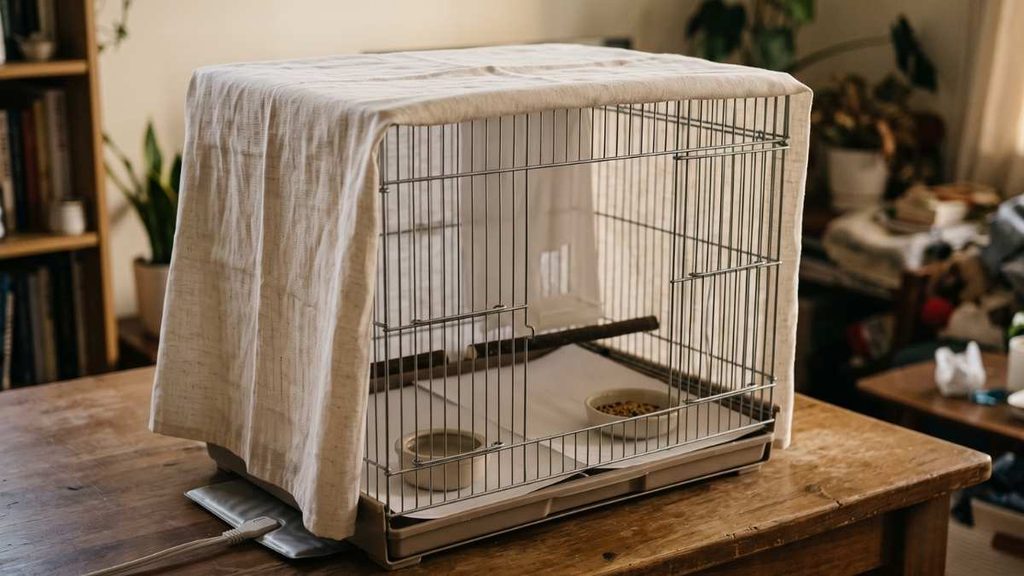
Knowing how to keep a sick budgie warm can help provide supportive care while you arrange veterinary treatment. A sick bird may fluff its feathers to conserve heat, but warmth alone will not treat the underlying cause. Contact an avian or exotic-animal veterinarian promptly and follow their advice while preparing for the appointment.
1. Provide Gentle, Safe Warmth
A veterinarian may recommend a warmer environment for a sick bird. A temperature around 80–90°F (27–32°C) is sometimes used for supportive care, but the appropriate temperature depends on the bird’s condition and the setup. Do not treat this range as a universal target or substitute it for veterinary guidance.
- Use a safe heat source. A carefully controlled heating pad placed outside and beneath one half of the cage, or a suitable external heat source, may provide warmth. Ensure the bird cannot contact hot surfaces or electrical equipment. Avoid products that may release fumes hazardous to birds, including overheated PTFE-coated materials.
- Heat only part of the cage. The bird must be able to move away from the warm area. Never trap it in a space where it cannot escape excessive heat.
- Keep it indoors. A stable indoor environment is preferable to taking a sick bird outdoors for sunlight or fresh air.
- Use a thermometer. Check the temperature near the bird’s resting area rather than relying only on a room thermostat.
- Watch for overheating. Panting, open-beak breathing, wings held away from the body, or moving persistently away from the heat may indicate overheating. Reduce the heat and contact your veterinarian if you are concerned.
If your bird has breathing difficulties or is becoming weaker, do not delay emergency care while adjusting the temperature.
2. Block Drafts and Partially Cover the Cage
Moving air can increase heat loss, so protect the cage from direct drafts.
- Drape a light blanket or cage cover over the back and two sides, and the top if needed.
- Leave the front uncovered so air circulates and you can observe breathing and posture.
- Keep fabric away from heat sources and keep the cage away from windows, doors, vents, and fans.
- Avoid fully enclosing the cage. Good ventilation is important, particularly if respiratory symptoms are present.
3. Make Food and Water Easy to Reach
A weak bird may struggle to reach its usual dishes. Make food and water accessible without forcing it to climb.
- Place shallow food and water dishes within easy reach, on the cage floor or a low, stable perch if necessary.
- Offer familiar foods the bird already eats, such as its usual seed mix or a millet spray.
- Keep water fresh and use a stable dish that the bird can access safely.
- Remove high perches and swings if weakness makes falling a risk. Provide a low resting area with clean paper on the floor.
- Keep handling to a minimum. Unnecessary restraint can cause additional stress.
What Not to Do
- Do not force-feed or syringe water unless specifically instructed and shown how to do so by a veterinarian. Liquid can enter the airway, and incorrect feeding can cause serious harm.
- Do not give human medications. Over-the-counter drugs, antibiotics, or home remedies may be dangerous for birds. Use medication only under veterinary guidance.
- Do not skip the vet because the bird seems warmer or brighter. Warmth may improve comfort, but it does not treat an infection, a blockage, or egg binding.
If you came here asking why is my budgie fluffed up and sleeping a lot, remember that supportive warmth may help while you arrange care, but it cannot tell you what is wrong or replace a veterinary examination.
When to Call the Vet & What to Expect
Warmth, quiet, and easy access to food and water may help keep a sick budgie comfortable, but they do not cure an infection, clear a blockage, or resolve egg binding.
If your budgie remains fluffed up and unusually sleepy during the day, or shows reduced appetite or other changes, contact an avian or exotic-animal veterinarian promptly—ideally the same day. Tail bobbing, open-beak breathing at rest, collapse, severe weakness, sitting on the cage floor while unwell, or suspected egg binding requires emergency veterinary attention.
Preparing for Safe Travel
Stress and temperature changes are concerns when transporting an unwell bird. A few steps can help:
- Use a small, secure carrier or travel cage rather than the full-size cage, with a low perch or clean paper on the floor so a weak bird is less likely to fall.
- Keep the carrier comfortably warm. Warm the car beforehand, cover part of the carrier while leaving adequate airflow, and avoid placing it near a vent blowing cold air. If using a warm water bottle outside the carrier, wrap it in a towel and make sure it cannot overheat the carrier or touch the bird.
- Shield it from drafts when carrying it between the house, the car, and the clinic.
- Bring information. Note when the fluffing began, changes in appetite and droppings, the bird’s diet, any new birds or possible exposure to other animals, and recent changes in routine. Photos of unusual droppings may help.
- Do not deliberately withhold food or water unless the veterinarian gives specific instructions.
- Call ahead so the clinic can confirm it treats birds and prepare for your arrival.
What the Veterinarian Will Likely Do
Every case differs, but a typical examination for a fluffed, lethargic budgie may include:
- History and observation. The vet may first observe the bird from a distance, since posture and breathing can provide useful information before handling.
- Physical examination. This may include weighing the bird, assessing body condition and hydration, listening to the heart and respiratory system, and examining the eyes, cere, vent, and crop. Further examination depends on the bird’s condition.
- Droppings and fecal tests. When indicated, testing may help identify parasites or other digestive problems.
- Diagnostic testing as needed. Depending on the findings, the veterinarian may recommend bloodwork, radiographs (X-rays), cultures, or other tests.
- Supportive stabilization. Some sick birds need a controlled warm environment, oxygen, fluids, or nutritional support provided under veterinary supervision.
- Targeted medication. Medication is selected according to the suspected or confirmed cause and the bird’s weight and condition.
Some conditions require hospitalization, so your veterinarian may discuss whether your bird needs monitoring at the clinic or can recover at home with a care plan.
Recovery at Home
If your budgie goes home, follow the medication and care instructions exactly. Do not stop prescribed treatment just because the bird seems better. Monitor appetite, droppings, breathing, posture, and activity, and attend any recommended follow-up appointments. If the bird worsens or develops new warning signs, contact your veterinarian immediately.
Educational Disclaimer
This article is provided for educational purposes only and is not a substitute for professional veterinary diagnosis or treatment. Every bird is different, and only a qualified avian or exotic-animal veterinarian who has examined your budgie can determine the cause of its symptoms and recommend appropriate care. If you believe your bird is ill, contact a veterinarian promptly.