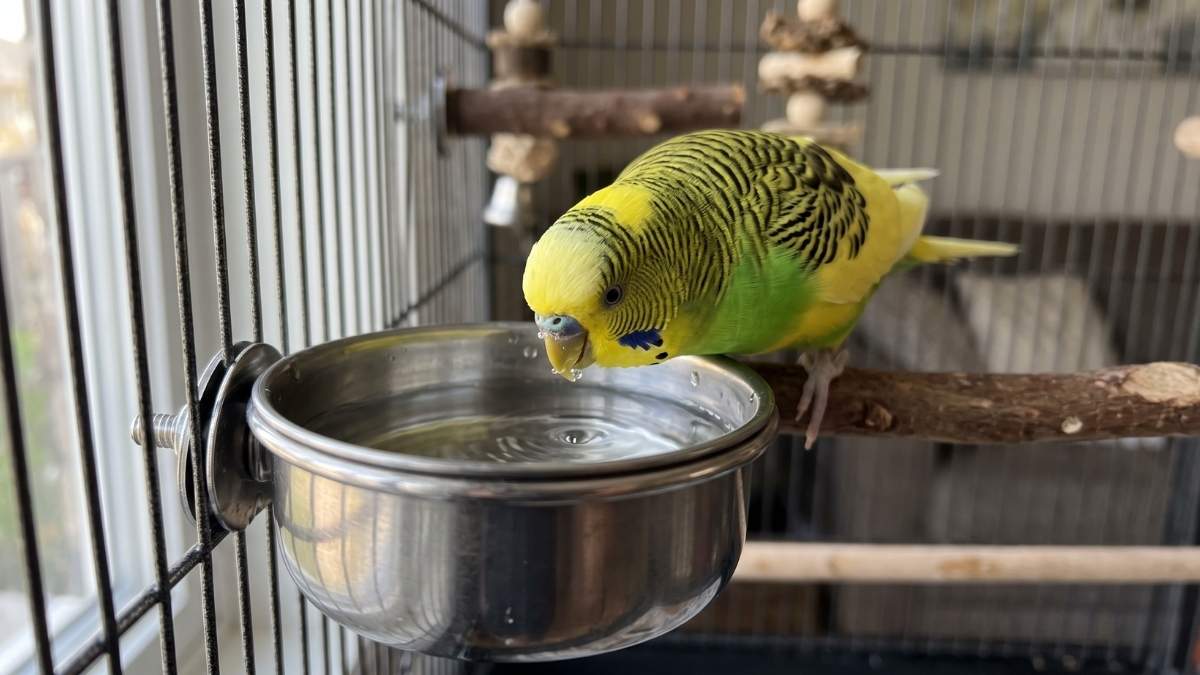
If you’re wondering how often do budgies drink water, the answer may surprise you: budgies often drink in brief, easy-to-miss visits to their water dish. However, drinking frequency and daily water intake vary depending on the bird’s diet, activity, environment, and individual needs.
If you’ve watched your bird for an hour and never once seen it drink, take a breath. This is one of the most common worries new owners have, and in many cases it’s completely normal.
Budgies evolved in the interior of Australia, where water availability can vary. Like other birds, they produce urates as part of their normal waste, but their water needs still depend on factors such as diet, temperature, and health. Their drinking habits can therefore differ from one bird to another.
Quick Summary
- Daily intake: Water needs vary with diet, temperature, activity, and individual health.
- Sip duration: Drinking can be brief and easy to miss.
- Why owners miss it: The sips are brief, quiet, and may happen when you’re out of the room or looking away.
Knowing what normal looks like makes it much easier to spot the rare moments when something actually is off.
Why Do I Never See My Budgie Drink Water?
If you’ve never caught your budgie at the water dish, you’re in good company. This is a common worry among new owners, and it can have a simple explanation.
The Blink-and-You-Miss-It Sip
A budgie may dip its beak, tip its head back, and swallow quickly. There’s no lapping or lingering like a cat or dog. Because drinking can be brief, it’s easy to see why some visits happen while you’re in another room, at work, or simply looking elsewhere.
Prey Animal Caution
In the wild, budgies can be vulnerable when gathering at water sources. That instinct doesn’t necessarily switch off in a living room. Some captive birds may drink more readily when the room feels calm or when no one is watching closely. If you watch the dish closely, your budgie may simply wait you out. Backing off and doing something quietly nearby may give your bird more confidence to drink.
Water Intake From Fresh Produce
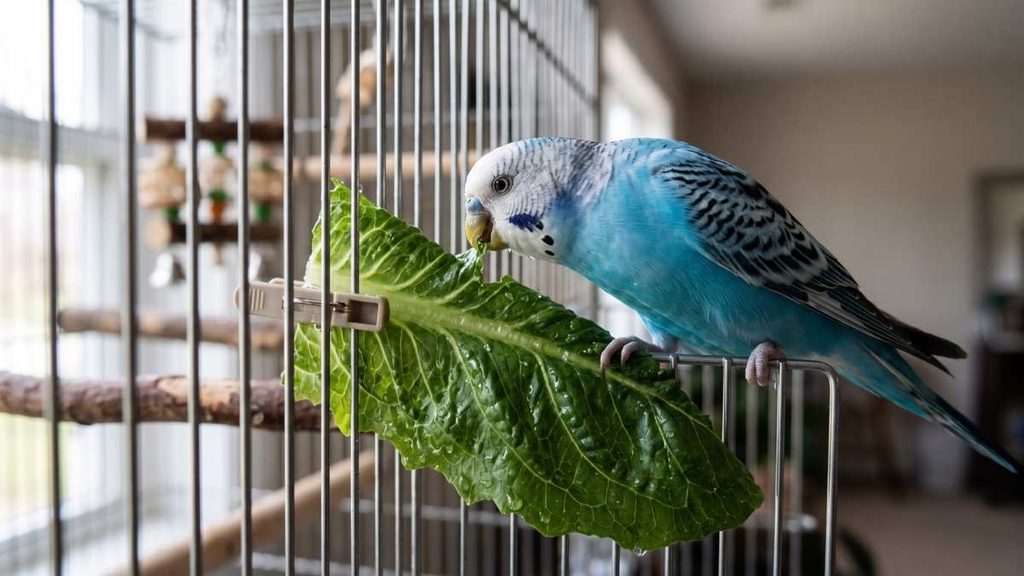
Diet matters too. Budgies offered wet, washed leafy greens, cucumber, or sprouts can take in some water from food, which may affect how often they visit the bowl. However, fresh produce does not replace the need for constant access to clean drinking water. Our guide to safe vegetables parakeets can eat covers which crisp greens and hydrating daily veggies to offer, and how to prepare them.
Check the Evidence Instead of Staring
Rather than waiting to witness a sip, look for signs that your bird is behaving normally:
- The water level may drop over the day, although spills and evaporation can also affect it.
- Droppings have a formed fecal portion and a white urate portion, with some variation depending on diet and hydration.
- Your bird is alert, active, and chirping as usual.
These signs can be reassuring, but they cannot confirm hydration on their own. Continue checking the water supply and your bird’s overall condition.
How Long Can a Budgie Survive Without Water?
Budgies are adapted to life in Australia, but that does not mean a pet bird can safely go without water. A budgie without access to drinking water can become seriously unwell, and the risk may increase in a warm environment or when the bird is already ill. There is no reliable, safe survival window that owners should wait for.
Exact outcomes vary with the bird’s size, health, temperature, humidity, and diet. Treat any loss of access to water seriously, especially for young, elderly, or already unwell birds.
Why Water Should Never Be Withheld
Even though budgies may take only brief drinks, those drinks matter. Water access should be constant, because the most common causes of a waterless cage are accidents, not neglect:
- Clogged water bottles: Seed hulls or debris can block the spout, and the bird gets nothing even though the bottle looks full.
- Dry or empty dishes: A small dish can be drained, spilled, or fouled with droppings faster than you’d expect.
- Knocked-over bowls: Curious or startled birds tip dishes easily.
Check water at least twice daily, and test bottle spouts by hand. If you discover that your budgie has been without water, provide fresh water immediately and contact an avian veterinarian if you suspect dehydration or notice changes in the bird’s behavior, appetite, droppings, or activity.
Signs of Dehydration and When to Worry
A budgie that drinks rarely is not necessarily a dehydrated budgie. Low visible intake in a bright, active bird with usual droppings may simply mean you haven’t witnessed it drinking. Dehydration is a change in the bird’s condition, and drinking habits alone cannot confirm whether a bird is hydrated.
What Clinical Dehydration Looks Like
Watch for changes in your bird’s normal condition, especially in combination:
- Changes in the eyes or appearance: Eyes that look unusually dull or sunken can be concerning, but appearance alone cannot confirm dehydration.
- Changes around the beak or nostrils: Unusual dryness or crusting should be assessed in context, as these signs can have other causes.
- Droppings changes: Changes in the amount or appearance of droppings, including unusually dry feces or changes in the liquid portion, may indicate a problem but are not specific to dehydration.
- Fluffed, weak posture: A bird sitting motionless on a perch, or on the cage floor, with feathers puffed up.
Normal Versus Worrying
A normal budgie is generally alert, vocal, and active, with droppings that have a formed fecal portion and a white urate portion. Their appearance can vary with diet and other factors. A budgie that becomes quiet, stays fluffed up, or produces noticeably abnormal droppings needs attention.
When to Call an Avian Vet
Dehydration in a small bird can become serious quickly, so don’t wait it out. Make fresh water available and contact an avian veterinarian promptly if you notice unusual droppings or changes in drinking, appetite, or activity. Seek urgent veterinary care if your bird is weak, sitting on the cage floor, or having difficulty breathing. Dehydration can be associated with other illnesses, including digestive problems. Our guide on how to tell if a parakeet is sick covers the wider warning signs and when to consult an avian veterinarian.
Safe Water Choices and Dish Hygiene
Getting the water setup right matters as much as making sure water is available. A clean, reliable source encourages healthy drinking and helps reduce contamination in the cage.
Bowls vs. Gravity Bottles
Neither option is perfect, so many keepers offer both:
- Open stainless steel or ceramic bowls: These are natural for budgies, easy to see into, and simple to scrub. The downside is that droppings, seed hulls, and food bits can fall in.
- Gravity water bottles: These can help limit contamination. However, the ball bearing in the spout can jam, and some birds never learn to use one.
If you use a bottle, check the spout by hand daily and watch that your bird actually drinks from it.
Why Daily Changes and Scrubbing Matter
Water left standing can grow slimy biofilm, a film of bacteria and organic residue that rinsing alone won’t remove. Clean drinking water is a basic part of good bird care. Change water daily, and more often if it looks cloudy or contains droppings. Scrub bowls and bottle parts with hot water and a dedicated brush, then rinse thoroughly.
Where to Place the Dish
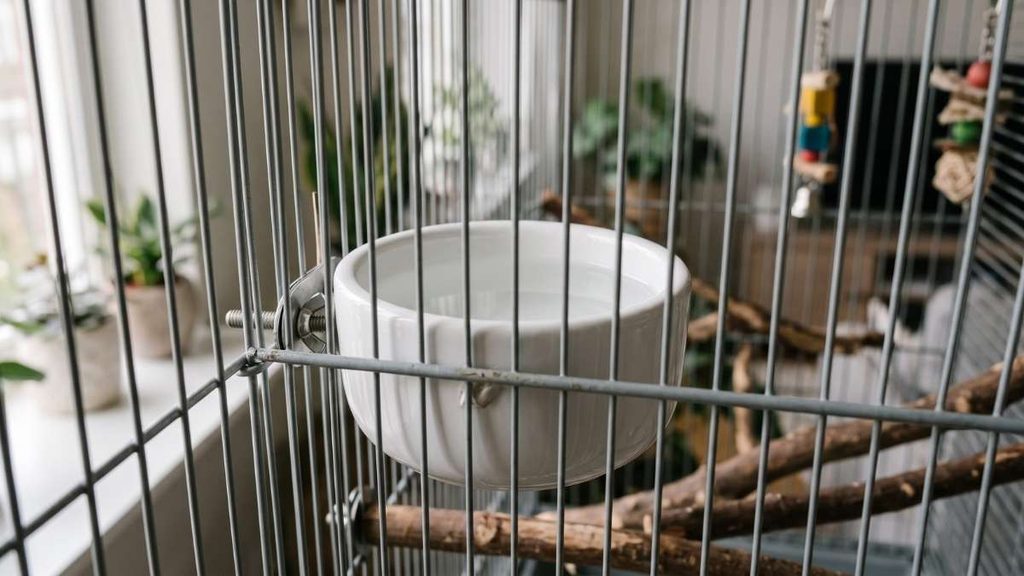
Never put a water dish directly under perches, where droppings will land in it. Place it to the side, at a comfortable height, away from overhead perches. A stable, draft-free spot also helps, and our guide on where to put a budgie cage explains how to choose a clean, safe room and arrange the cage layout.
Tap, Filtered, or Distilled?
- Tap water: Often suitable where the local drinking-water supply is safe for human consumption.
- Filtered water: May be a useful option if your tap water has a strong taste or smell or you have concerns about your local supply.
- Untreated well water: Have it tested for bacteria and contaminants before using it as your bird’s drinking water.
- Distilled water: Ask your avian veterinarian whether it is appropriate for your bird’s circumstances rather than assuming it is necessary or unsuitable for every situation.
If you’re unsure about your local water quality, ask your avian veterinarian.
Sources & Veterinary References
- Association of Avian Veterinarians (AAV): Basic Care for Companion Birds (Nutrition & Water)
- Merck Veterinary Manual: Routine Care of Pet Birds (Water Requirements)
Conclusion & Educational Disclaimer
Not seeing your budgie drink is, in many cases, completely normal. These birds can take brief drinks that are easy to miss, and what matters is the bigger picture: fresh water offered and changed daily, droppings that remain typical for your bird, and a bird that stays alert, active, and vocal. If those signs are normal, that is reassuring, but keep checking the water supply and your bird’s behavior.
This guide draws on general companion-bird husbandry principles. For concerns about hydration or changes in your bird’s condition, seek advice from a qualified avian veterinarian.
Educational disclaimer: This article provides general pet husbandry and care information, not veterinary medical advice. If your budgie seems unwell, contact a qualified avian veterinarian promptly.