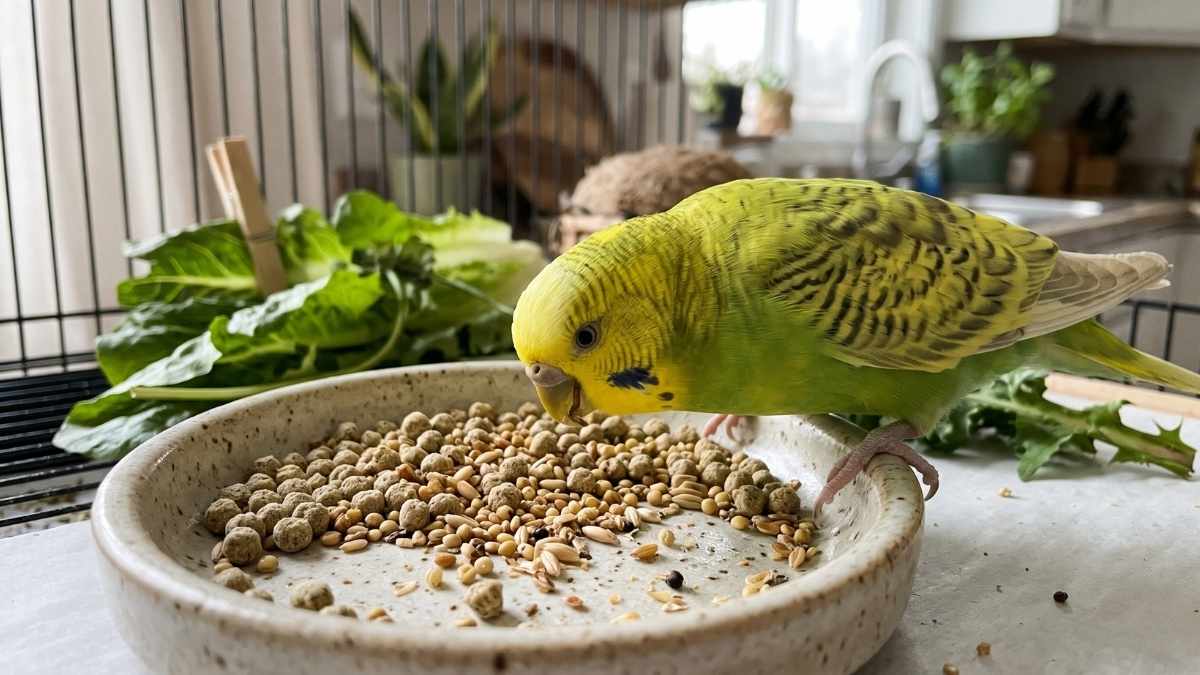
The debate over pellets vs seeds for budgies is one of the most common questions new owners face, and the answer is more nuanced than either camp usually admits. Wild budgerigars in Australia do eat primarily grass seeds, which is why seed mixes feel like the natural choice for a pet parakeet. But a wild budgie’s life looks nothing like a captive one. In the wild, these birds fly long distances daily, forage for fresh, sprouting, and seasonal seeds, and burn a tremendous number of calories doing it.
An indoor budgie lives differently. With a cage, a few toys, and a full seed dish always within reach, it expends a fraction of that energy. Meanwhile, grocery-store seed mixes are often high in fat and low in vitamin A, calcium, and several essential amino acids. Birds also tend to pick out favorites, such as millet and sunflower, and leave the rest. Avian veterinary guidance, including the nutritional recommendations of the Association of Avian Veterinarians, identifies unbalanced seed-based diets as a concern for obesity and preventable illness in companion parakeets.
Seeds are not the villain here. They are simply an incomplete foundation. A balanced approach looks like this:
- Pellets as a fortified base: A formulated pellet supplies consistent vitamins, minerals, and amino acids in every bite.
- Quality seeds for enrichment: Fresh, varied seeds work best as a measured portion that supports natural foraging behavior.
- Daily fresh vegetables: Leafy greens and colorful vegetables add vitamin A precursors, fiber, and variety.
The Risks of an All-Seed Diet in Companion Parakeets
Can parakeets live on seeds alone? Technically, yes, for a time. But the question that matters clinically is how well and for how long. Standard avian nutrition references explain that an unsupplemented seed diet cannot meet a budgie’s full nutritional needs.
What Commercial Seed Mixes Lack
Many commercial seed mixes are energy-dense but nutritionally unbalanced:
- High in fat: Oilseeds such as sunflower, safflower, and niger can provide concentrated calories. The nutritional balance of a seed mix matters, particularly for a sedentary indoor bird.
- Deficient in vitamin A: Seeds are generally poor sources of vitamin A, which supports healthy skin, respiratory lining, and immune function.
- Low in calcium and iodine: Seed-based diets may not provide adequate amounts of these minerals, which are important for bone strength, egg-laying health, and thyroid function.
- Lacking essential amino acids: Seed-based diets may not supply adequate amounts of essential amino acids such as lysine and methionine, which support normal growth, feather development, and tissue repair.
Long-Term Clinical Risks
Because deficiencies build slowly, a seed-fed budgie can look fine for years before problems surface. Avian veterinarians commonly see:
- Hepatic lipidosis (fatty liver disease): Excess energy intake and an unbalanced diet can contribute to fat accumulation in liver tissue, impairing its function.
- Obesity: Extra weight strains the heart, joints, and respiratory system.
- Lipomas: These fatty tumors often develop on the chest or abdomen and can interfere with movement and comfort.
- Weakened immune defense: Vitamin A deficiency can compromise the health of the respiratory and digestive tract linings, making birds more vulnerable to infection.
Many of these conditions advance quietly, so owners should know the early warning signs. Changes in droppings, fluffed feathers, a swollen or discolored beak, and unexplained weight loss are all worth attention, and our guide on how to tell if a parakeet is sick explains how to recognize them and when to call an avian vet.
Why Avian Veterinarians Recommend Formulated Pellets
When comparing a budgie seed vs pellet diet, the deciding factor is consistency. A formulated pellet is designed to provide balanced nutrition in each bite, which a seed mix cannot reliably do when a bird selectively eats certain seeds.
How Pellets Solve the Selective Eating Problem
Budgies are natural sorters. Given a mixed dish, a parakeet will often hull and eat its favorites, usually millet and sunflower, and leave the less exciting seeds behind. Pellets are made from ground ingredients that are extruded or pressed into a uniform shape, so there is less opportunity to pick out individual ingredients. A properly formulated pellet helps provide a more consistent nutrient intake.
What a Formulated Diet Provides
Veterinary nutrition references for companion birds highlight several advantages:
- Uniform micronutrients: Vitamins A, D3, and E, along with calcium, iodine, and trace minerals, can be included in formulated amounts.
- Steady amino acids: Properly formulated pellets provide essential amino acids to support feather growth and tissue repair.
- Controlled fat levels: Pellet formulas vary, but a suitable formulated diet can help provide a more balanced nutrient intake and manage overall energy consumption.
Common Pellet Myths
- “Budgies won’t accept the taste.” Many birds are cautious about unfamiliar foods. With a gradual approach, some budgies adapt well, although acceptance and the time required vary between individuals.
- “Pellets remove natural foraging.” Pellets are a base diet, not a replacement for enrichment. Foraging toys, scattered seeds, and fresh vegetables still keep a parakeet mentally and physically active.
- “Pellets are artificial.” Quality formulas use ingredients such as grains and vegetables, along with added nutrients, to help fill the nutritional gaps that seed-based diets can leave behind.
The Ideal Budgie Diet: Finding the Right Balance
The most useful way to settle the question of pellets vs seeds for budgies is to stop treating it as a choice between the two. A formulated diet should be balanced with appropriate fresh foods and, where recommended, measured seeds. Budgies evolved as seed-eating foragers, and hulling, cracking, and searching for food are part of their natural biology. Foraging opportunities can be maintained without relying on an all-seed diet.
The Recommended Budgie Diet Components
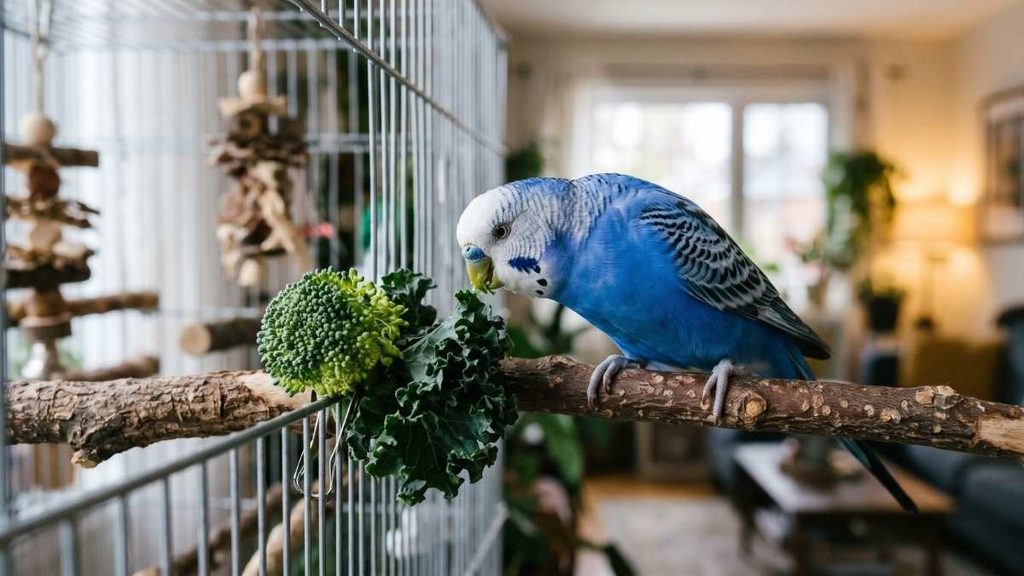
Avian veterinary feeding recommendations vary, so there is no single percentage ratio that should be presented as suitable for every budgie. Many guidelines recommend formulated pellets as a major part of the diet, alongside suitable fresh vegetables and a controlled amount of seeds. The appropriate proportions depend on the bird’s health, age, activity level, and current diet:
- Formulated pellets: Use a suitable, complete pellet as the nutritional foundation when recommended for your bird.
- Clean seed mix: Offer an appropriate, measured portion to support foraging without allowing seeds to dominate an unbalanced diet.
- Fresh leafy greens and vegetables: Dark leafy greens, bell peppers, carrots, and broccoli add variety, fiber, and nutrients, including vitamin A precursors.
An avian veterinarian can help determine suitable proportions for your budgie and guide any dietary changes, especially if the bird has been eating seeds exclusively.
Eating Behavior Worth Watching
As your parakeet settles into a balanced routine, you may notice energetic head movements around mealtimes. These are often completely normal, and our guide on why your budgie bobs its head explains how to tell healthy feeding and digestion behavior from signs that deserve attention.
How to Safely Transition a Budgie from Seeds to Pellets
Learning how to switch a budgie to pellets is mostly a lesson in patience. Budgies that have eaten only seeds often do not recognize pellets as food at first. A bird can ignore a full bowl of pellets and, if its seeds are removed too quickly, begin to starve without any obvious sign that anything is wrong. Budgies have small energy reserves and can decline fast, so the transition needs to be gradual and monitored.
The Golden Rule: Never Go Cold Turkey
Removing the seed dish overnight is one of the most dangerous mistakes an owner can make. A hungry, confused parakeet may refuse unfamiliar food and develop serious health problems if it does not eat enough. Our guide on what not to do with parakeets covers this and other common feeding errors in more detail. Avian veterinarians generally advise a gradual, carefully monitored conversion rather than an abrupt change.
Step-by-Step Transition & Monitoring Schedule
| Stage | Timeline Guideline | Feeding Action | Weight & Health Check |
| Introduction | Weeks 1–2 | Offer pellets in a separate dish beside seeds; sprinkle a small amount over the usual seeds | Weigh daily; observe if the bird touches or crumbles the pellets |
| Gradual Shift | Weeks 3–4 | Slowly adjust proportions only after confirming the bird eats pellets | Watch for weight loss (≥1–2% loss per week warrants contacting an avian vet) |
| Consolidation | Weeks 5–8+ | Continue toward the veterinarian-recommended balance of pellets, measured seeds, and greens | Check droppings daily; stop reductions immediately if stool is tiny or absent |
Techniques That Encourage Acceptance
- Moisten the pellets: Slightly dampened pellets may be easier for some birds to explore. Replace them within a few hours, or sooner in warm conditions, to prevent spoilage.
- Encourage curiosity: Budgies are social eaters. Eating pellets in front of your budgie can spark curiosity. Mimicking eating behavior may encourage a hesitant parakeet to try.
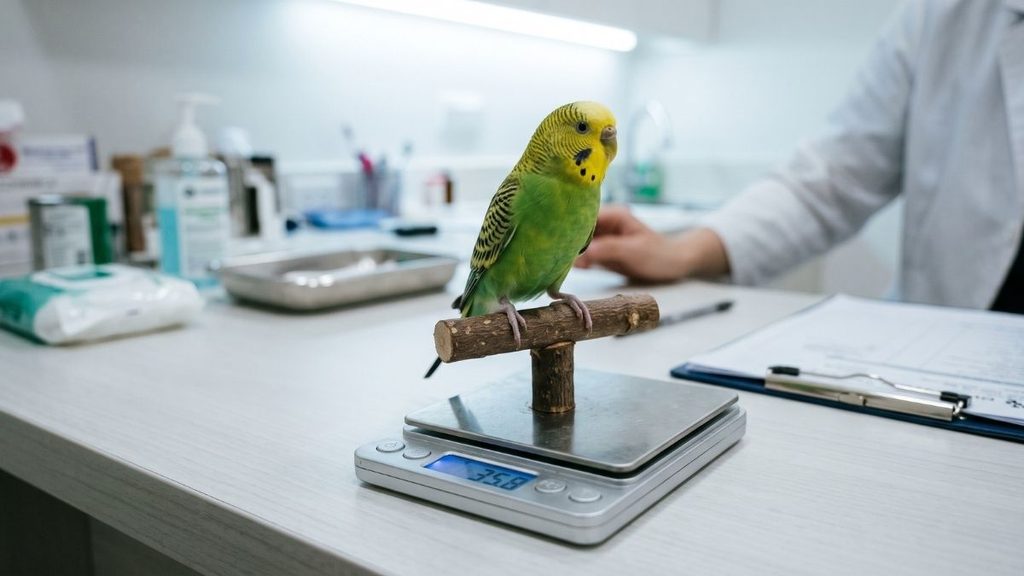
- Weigh daily on a gram scale: Weigh your budgie at the same time each morning, before feeding. Watch for any downward trend in weight. A loss of around 1–2% of body weight in a week during conversion is a reason to contact an avian veterinarian promptly rather than waiting for further loss. If weight falls or your bird is eating less, do not keep reducing its familiar food while waiting for it to adapt.
- Watch droppings and appetite: Droppings can change in color and appearance when the diet changes, but very small or absent droppings, reduced appetite, or a marked change in droppings can signal that your budgie is not eating enough. Contact an avian veterinarian promptly if these signs occur.
Conclusion & Educational Disclaimer
Moving a budgie from an all-seed diet to a balanced foundation takes time, and setbacks along the way are normal. Some parakeets accept pellets within weeks, while others need months. What matters is steady progress, daily observation, and a willingness to slow down when your bird needs it. A diet built on formulated pellets, measured quality seeds, and fresh vegetables can support liver health, immune function, and a healthy body condition over time.
Educational Disclaimer: This guide is for educational purposes only and does not replace professional veterinary care. Nutritional recommendations here reflect general principles from companion avian clinical nutrition guidance. Consult a qualified avian veterinarian before changing your budgie’s diet, especially if your bird is underweight, young, breeding, or ill.