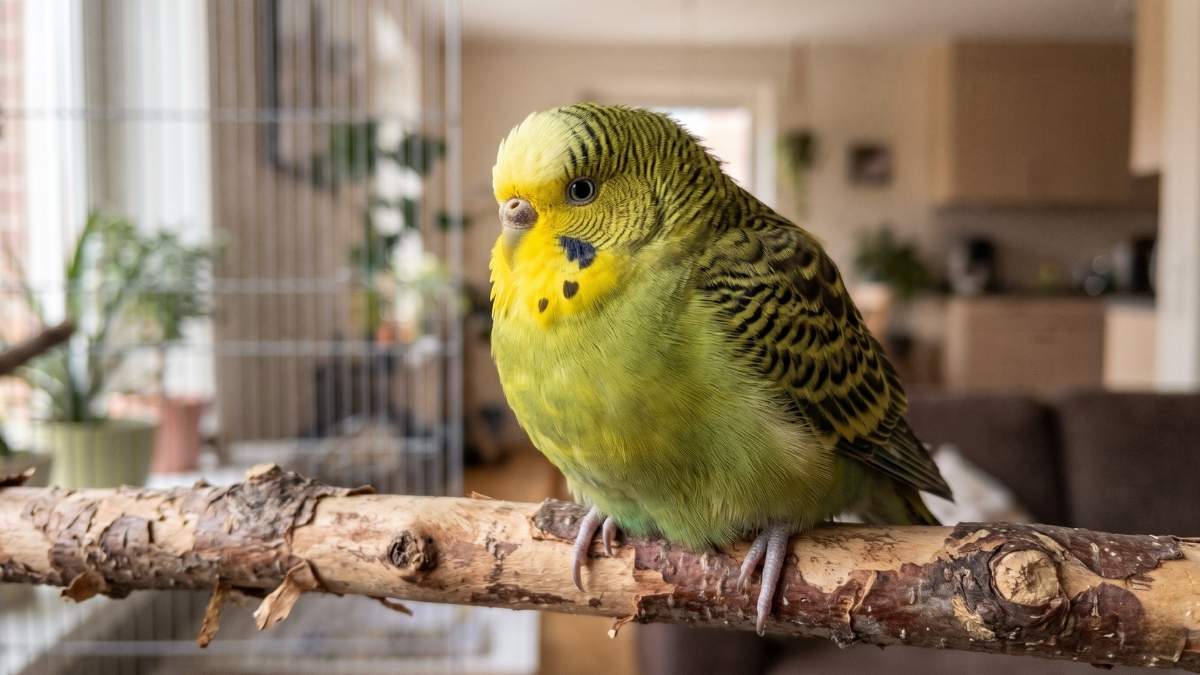
If you’ve ever wondered what temperature is too cold for budgies, the short answer is that a room kept around 70°F to 80°F (21°C to 27°C) is generally comfortable for pet parakeets. However, there is no single temperature at which every budgie becomes dangerously cold. Health, age, acclimation, drafts, and sudden temperature changes all affect how well a bird tolerates cooler conditions.
Avian Physiology and Heat Regulation
The reason comes down to avian physiology. Budgies maintain a high internal body temperature, typically around 104°F to 108°F (40°C to 42°C), which is several degrees above that of humans. Keeping the body that warm requires energy. When the surrounding air is cold, a parakeet must use more energy to maintain its body temperature, which can be especially challenging for a small, ill, or underweight bird.
Wild budgies are native to Australia’s arid interior, where days are warm and the climate is dry. Although they can experience cooler nights, this does not mean every pet budgie will tolerate cold conditions equally well. Captive birds may have limited experience with temperature changes, so their comfort and health should guide how they are kept. This is why the question of whether parakeets can tolerate cold has a more cautious answer for pet birds than many owners expect.
Standard avian veterinary guidance emphasizes steady, moderate temperatures and protection from sudden drops. Individual tolerance varies with age, health, and condition, so young, elderly, or ill birds need extra care.
The sections ahead cover the ideal range, warning signs, and safe ways to keep your bird comfortable.
Ideal Temperature Range for Budgies and Parakeets
The budgie ideal room temperature is generally around 70°F to 80°F (21°C to 27°C). Within this range, most healthy pet parakeets can remain comfortable without needing to cope with excessive cold or heat. Individual birds may tolerate temperatures outside this range, but their behavior and health should always be monitored.
The parakeet temperature range that matters most is not just the number on the thermostat but also how quickly it changes. Gradual seasonal shifts may be easier for a healthy, acclimated bird to tolerate than sudden temperature drops. A room that becomes much colder overnight can leave a bird uncomfortable, particularly if its cage is near a drafty window or door. Maintaining stable conditions and avoiding direct drafts are more useful than treating one exact temperature as a universal safety limit.
Temperature Range & Keeper Action Guide
| Temperature Range (°F & °C) | Bird Status / Comfort Level | Recommended Keeper Action |
| General Comfort: 70°F–80°F (21°C–27°C) | Commonly recommended indoor range for healthy pet birds | Maintain steady conditions and monitor with a cage-level thermometer |
| Cooler Conditions: 65°F–69°F (18°C–20°C) | Some healthy, acclimated birds tolerate this individual responses vary | Check for drafts and watch for persistent fluffing or reduced activity |
| Colder Conditions: Below 65°F (Below 18°C) | May be uncomfortable or unsuitable, especially for young, old, or ill birds | Gradually warm the room and monitor the bird closely |
| Very Cold Conditions: Below 60°F (Below 15°C) | Significant concern, especially for ill, underweight, or unacclimated birds | Warm the environment safely contact an avian vet if the bird appears unwell |
Treat these figures as general guidance, since age, health, and acclimation all affect individual tolerance.
Why Drafts Are More Dangerous Than Cool Air
A still room at 68°F may be easier for a parakeet to tolerate than a warmer room with a steady stream of moving air. The difference lies in how birds insulate themselves. A budgie’s feathers trap a layer of warm air close to its body, helping it retain heat. A continuous draft can increase heat loss, making it harder for the bird to stay comfortable even when the thermometer reads a moderate temperature.
Avian husbandry guidance emphasizes protecting birds from direct air movement, not just monitoring room temperature. A thermometer measures the room, but it cannot tell you what a single leaky window is doing at perch height.
Common Draft Hotspots
Check for moving air around the cage without using an open flame or smoke near your bird. The most frequent culprits include:
- Leaky window frames: Aging seals and single-pane glass let cold air spill into the room, especially on windy nights.
- Exterior entry doors: Each opening sends a rush of outdoor air across the floor and nearby furniture.
- Floor-level placement: A cage sitting near the ground may be exposed to cold air and drafts, depending on the room.
- HVAC and air conditioning vents: Direct airflow from vents, ceiling fans, or portable units can make a bird uncomfortable, even when the air itself is not cold.
Positioning the Cage to Avoid Drafts
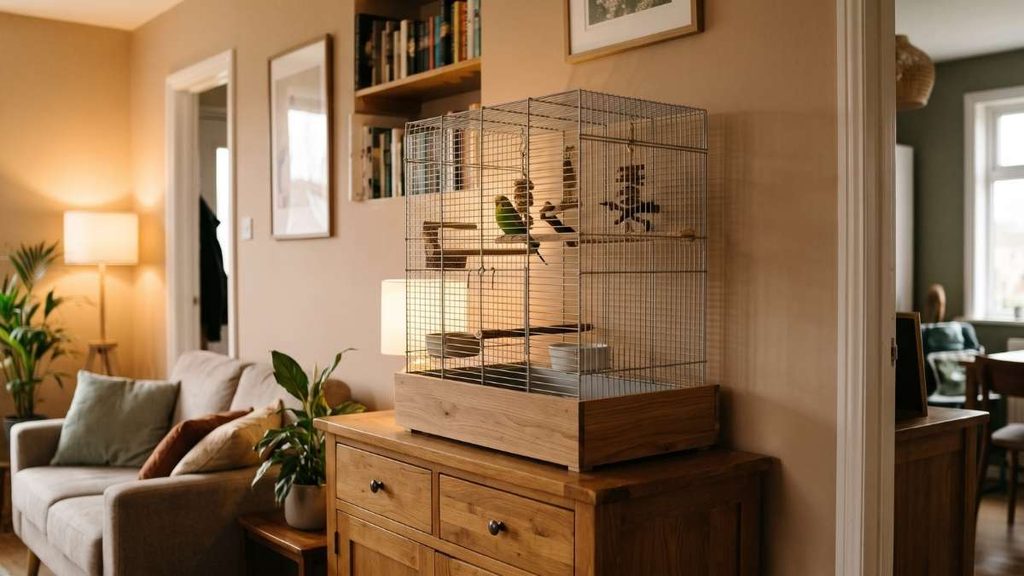
Most draft problems can be reduced by placement alone. Choose a spot along an interior wall, keep the cage at a comfortable height, and avoid corners beside windows or doors. Our guide on where to put a budgie cage walks through room selection step-by-step to position the cage against solid walls and away from drafty windows and exterior doors.
A well-placed cage can improve a bird’s comfort without requiring the thermostat to be set excessively high.
Signs Your Parakeet Is Too Cold: Shivering vs. Illness
Knowing the signs a budgie is cold lets you act before a chill becomes a medical problem. Birds instinctively hide weakness, so early cues can be subtle and easy to mistake for ordinary rest.
Behavioral Indicators of Cold Stress
- Prolonged, tight feather fluffing: A bird puffs its feathers to trap a warmer layer of air against its body. Brief fluffing is normal, but a parakeet that stays tightly puffed for long stretches may be trying to conserve heat or may be unwell.
- Feet tucked up or beak buried continuously: Pulling a foot into the belly feathers or resting with the beak tucked into the back feathers can be normal during sleep. If these behaviors persist during the daytime alongside other signs of discomfort, pay closer attention.
- Visible shivering across the breast: Rapid muscle tremors can help generate heat. Shivering in a bird that appears cold or unwell warrants prompt attention.
- Huddled posture or lethargy: A bird sitting low on the cage bottom, or quiet and slow to respond, may be seriously unwell and needs prompt veterinary attention.
Cold Bird or Sick Bird?
If your bird appears mildly chilled, move the cage away from drafts and keep the room at a comfortable, stable temperature. Observe the bird closely, but do not rely on warming alone to determine whether it is healthy. A bird that appears better after the environment warms may still need attention if other symptoms are present.
A bird that stays fluffed, dull, and unresponsive even after the room has warmed may be battling something beyond the temperature. Other red flags include tail bobbing with each breath, open-beak breathing, clicking or wheezing sounds, watery or abnormal droppings, and loss of appetite. Our guide on how to tell if a parakeet is sick explains how to differentiate normal warmth-fluffing from clinical illness, lethargy, and respiratory distress.
Persistent fluffing can also be a sign of illness. If your bird does not improve with a comfortable environment, or shows lethargy, breathing difficulties, or reduced appetite, contact an avian veterinarian promptly. Breathing difficulties or severe weakness require urgent veterinary attention.
Managing Overnight Temperature Drops Safely
Many households lower the thermostat at night to save energy, and a substantial overnight drop can make a budgie uncomfortable. A sleeping parakeet may be less active as the room cools, so it is important to monitor the temperature where the cage is located. Keeping the room around 65°F (18°C) or warmer overnight is a cautious target for many indoor pet birds, although individual needs vary. Avoid large, sudden temperature changes, particularly for young, elderly, ill, or underweight birds.
Using a Breathable Cover Correctly
A well-chosen cover may help reduce direct drafts around a cage, but it should not be relied on as the main way to warm the bird. Done poorly, it can restrict airflow or contribute to overheating. Follow these principles:
- Choose light, breathable fabric, such as cotton, that does not have loose threads or fraying edges.
- Leave part of the cage uncovered so fresh air can circulate freely.
- Keep the fabric clear of perches and food dishes, and avoid loose threads or fraying edges that could catch a toenail.
- Check the cage to confirm the bird is calm and not panting or holding its wings away from its body, both signs of possible overheating.
Heavy blankets or covers should not be used in a way that restricts ventilation or traps excessive heat. Our guide on should you cover a budgie cage at night covers choosing breathable natural fabrics and avoiding heavy synthetic blankets in detail.
A cage-level thermometer is a useful way to monitor the temperature around your bird overnight.
Safe Heating Methods (and Lethal Space Heater Hazards)
Choosing safe heating methods for birds is important because some heating appliances and their coatings can release fumes that are highly toxic to birds. A heater should warm the room safely without exposing the bird to fumes, direct contact with hot surfaces, or excessive heat.
The PTFE/Teflon Warning
Polytetrafluoroethylene (PTFE), commonly associated with Teflon, is used in some non-stick coatings. Certain heating elements and heat lamps may also contain PTFE. When these coatings overheat, they can release toxic fumes that may cause severe respiratory damage and sudden death in birds. Birds are particularly vulnerable to these fumes, which may be colorless and odorless. Veterinary guidance treats suspected PTFE exposure as an emergency.
Before using a heater near a bird, check the manufacturer’s documentation for information about PTFE and other non-stick coatings. Do not assume that a product is bird-safe simply because it is marketed as such. Avoid using any appliance that may release toxic fumes around your bird, and remember that the absence of an unusual smell does not guarantee safety.
Safer Supplemental Heating Options
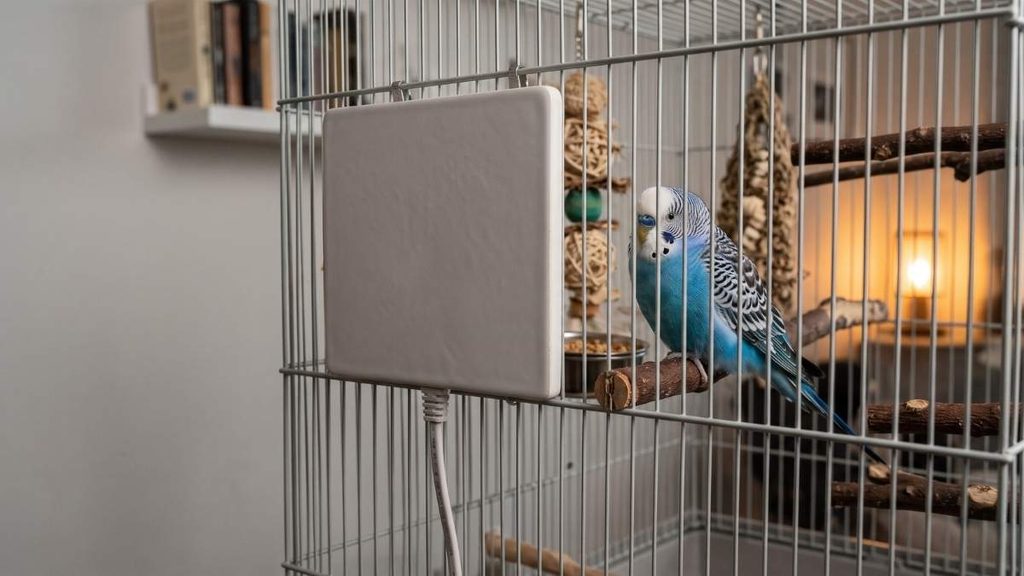
- Room heating: Heating the room to a comfortable, stable temperature is generally preferable to directing intense heat at the cage. Choose an appliance whose manufacturer can confirm that it does not contain potentially hazardous non-stick coatings, and follow all safety instructions.
- Radiant heating equipment: Specialized heating panels may be suitable when designed for animal use and installed according to the manufacturer’s instructions. Ensure the bird cannot touch the heating surface and can move away from the warm area.
- Oil-filled electric radiators: These can provide steady room heating. Check the manufacturer’s information about coatings and materials, keep the radiator at a safe distance from the cage, and prevent the bird from reaching hot surfaces or electrical cords.
Whichever method you choose, monitor the temperature around the cage and avoid overheating. If your bird is ill or showing signs of cold stress, seek veterinary guidance rather than relying on a home heating setup alone.
Conclusion & Educational Disclaimer
Keeping a budgie comfortable through winter doesn’t require complicated equipment. Knowing what temperature is too cold for budgies, checking for drafts at perch level, and keeping the room at a stable, comfortable temperature can help protect most healthy pet parakeets from cold stress. A cage-level thermometer, a well-placed cage, and a suitable cover to reduce drafts on cooler nights can help support a comfortable environment.
These recommendations reflect general avian husbandry principles that favor stable, moderate conditions for companion birds. Individual birds may have different needs depending on their health, age, and acclimation.
Educational Disclaimer: This article offers general husbandry guidance only and is not a substitute for veterinary care. If your budgie shows signs of hypothermia or illness, contact an avian veterinarian promptly.