Understanding budgie preening vs plucking is one of the most valuable skills a bird owner can develop, because the two behaviors can look alike at a glance yet signal opposite things about your bird’s health.
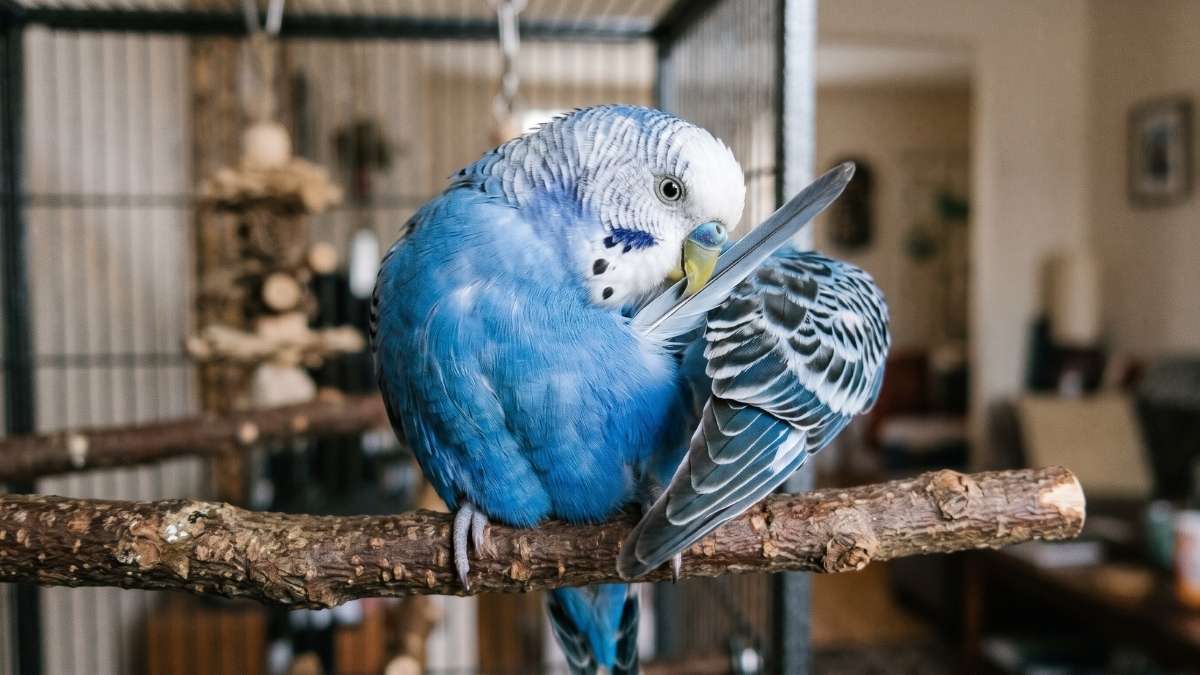
Feathers are not just decoration. They provide insulation, waterproofing, flight, and communication, and each one needs regular upkeep. That is why a healthy budgie may spend a substantial part of the day preening. The bird nibbles along each feather shaft, draws it through the beak, and spreads oil from the uropygial (preen) gland to keep the vane aligned and conditioned. Parakeets also preen after bathing, after eating, and before rest, so a busy beak around the wings, chest, and back is usually reassuring rather than alarming.
Feather plucking, known in avian medicine as feather destructive behavior (FDB), is different. Instead of maintaining feathers, the bird chews, damages, or pulls them out, leaving ragged edges, thinning patches, or bare skin. Avian veterinary guidance describes FDB as a multifactorial condition rather than a “bad habit.” Medical, environmental, and psychological causes often overlap, and a parakeet that plucks is communicating distress that deserves a careful, systematic response.
Because early intervention improves outcomes, this guide will help you recognize healthy grooming, separate it from normal molting, identify likely underlying causes, and decide when to involve an avian veterinarian.
What Healthy Budgie Preening Looks Like
Normal budgie preening behavior is methodical, calm, and interspersed with rest. Once you know the pattern, it becomes much easier to recognize when something departs from it.
How Parakeets Groom
Each feather has a central shaft with branching barbs, and those barbs are held together by microscopic hooklets, much like a zipper. Flight, bathing, and everyday movement pull the vane apart, so a parakeet draws each feather gently through its beak to “zip” the barbs back into alignment. You may see a short nibbling motion along the shaft, followed by a smooth pull from base to tip.
Waterproofing and conditioning come from the uropygial (preen) gland, a small oil gland at the base of the tail. The bird rubs its beak against the gland, then spreads the oil across the wings, chest, and back. Healthy preening is often followed by a quick full-body shake, called rousing, which resettles the plumage.
Allopreening: Grooming a Cage Mate
Budgies cannot easily reach their own head and neck, so bonded birds groom each other in those spots. This behavior, called allopreening, strengthens pair bonds and flock cohesion. A parakeet may also offer its head to a trusted person for gentle scratching. Allopreening is typically relaxed and reciprocal: the receiving bird leans in, fluffs slightly, and may close its eyes. Mild feather ruffling is normal, but repeated one-sided pulling, bald spots on the head, or a bird that is being chased or cornered during “grooming” warrants a closer look.
Preening Excitement and Head Movements
Not every rapid head movement is grooming. Excited birds may preen briefly, bob, or regurgitate toward a mirror, toy, or favorite companion. If you are unsure whether you are seeing affection or mistaken grooming, our guide on why does my budgie bob its head explains social bonding, courtship signals, and energetic head movement.
Healthy preening leaves intact feathers with smooth edges and no exposed skin.
Budgie Preening vs Plucking: Key Differences
Three things can leave a parakeet with loose feathers on the cage floor: routine grooming, seasonal molting, and feather destructive behavior. The signs of molting vs plucking in a parakeet overlap more than most owners expect, so look at the pattern of feather loss, the condition of the skin, and your bird’s overall demeanor.
Seasonal Molting
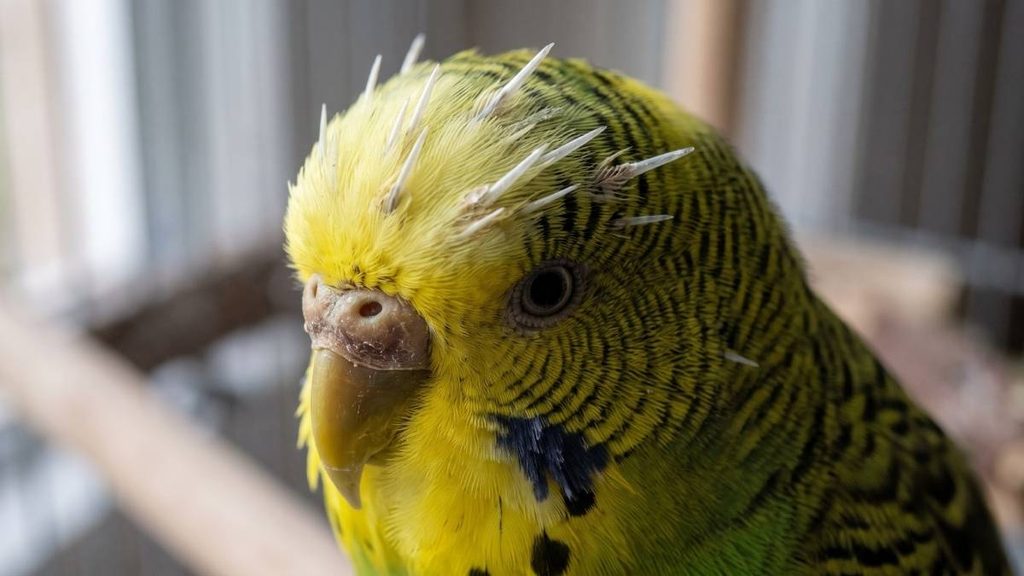
Molting is the natural replacement of worn feathers. It often produces a fairly balanced pattern of feather loss, with new feathers growing in as old ones fall out. You may notice pin feathers, the waxy, tube-like new feathers that look like small spikes, especially on the head and neck. Some developing pin feathers contain a blood supply and can be sensitive, so a molting budgie may be irritable, quieter, and want more rest. Extra preening and a light dusting of feather dander are expected. Skin generally stays intact, and new feathers gradually fill in.
Feather Plucking
Plucking, or budgie feather destructive behavior, is often asymmetrical or localized. Common sites are the chest, flanks, thighs, legs, and under the wings, which a bird can easily reach. Look for chewed or frayed feather shafts, missing feathers with little or no regrowth, redness, scabs, or open wounds. These last signs can indicate self-mutilation and call for prompt veterinary attention. Bald patches on the head alone may point to a cage mate, a skin condition, or another medical issue rather than self-plucking, since a bird cannot reach its own crown.
Side-by-Side Comparison
| Feature | Normal Preening | Seasonal Molting | Feather Plucking (FDB) |
| Distribution | Whole body, evenly | Often fairly balanced | Patchy and localized (chest, flanks, legs) |
| Feather Condition | Smooth, intact, well aligned | Old feathers shed new pin feathers visible | Chewed, frayed, or pulled-out feathers |
| Skin State | Normal and unbroken | Usually intact | Possible redness, scabs, bleeding, or wounds |
| Behavior | Calm, interspersed with rest | May be itchy, tired, or sometimes cranky | Repetitive, intense, compulsive may seem distressed |
| Timeline | Daily, in short bouts | Occurs periodically | May persist or worsen without intervention |
If your bird’s pattern matches the last column, or you are unsure, document it with dated photos and consult an avian veterinarian.
Why Do Parakeets Pluck Feathers? Clinical and Environmental Triggers
When owners ask why their budgie is pulling feathers, the honest answer is that it is rarely one thing. Avian veterinary guidance generally treats feather destructive behavior as multifactorial and recommends ruling out medical causes before assuming a behavioral one. A bird that looks “bored” may also be itchy, nauseated, or in pain.
Medical Triggers
- Parasites: Giardia is an intestinal protozoan that has been associated with feather-picking behavior in some small parrots, particularly cockatiels. It should not automatically be assumed to be the cause in a budgie. External parasites and skin conditions can also cause irritation, but a veterinarian needs to identify the underlying problem.
- Skin infections: Bacterial or fungal dermatitis, along with inflamed or infected feather follicles, can make a parakeet chew at the affected area.
- Liver and internal disease: Hepatic disease, fatty liver (common in seed-heavy diets), and other systemic illnesses may show up alongside feather changes or a rough, poorly kept coat.
- Heavy metal toxicity: Zinc or lead exposure from galvanized wire, hardware, old paint, or certain toys can cause neurologic and gastrointestinal signs and may be accompanied by feather problems.
- Nutritional deficiency: Poor feather quality from an all-seed diet can contribute to fragile plumage and other nutritional problems.
Because these conditions cannot be told apart at home, learning how to tell if a parakeet is sick is a useful first step. Fluffed posture, appetite changes, altered droppings, and tail bobbing alongside feather loss all point toward a possible medical problem rather than stress alone.
Environmental and Psychological Triggers
- Boredom and under-stimulation: Budgies are flock animals with active minds. Too few toys, foraging opportunities, or interaction can redirect energy toward the feathers.
- Inadequate cage size: Cramped cages limit flight, climbing, and normal movement.
- Chronic sleep deprivation: Bright light, noise, or late-night activity can interfere with sleep and contribute to stress.
- Reproductive frustration: Hormonal triggers such as nest-like spaces, constant daylight, or reproductive stimulation may contribute to feather problems in some birds.
- Sudden change or conflict: Moves, new pets, loss of a cage mate, or bullying from another bird can all trigger stress-related behavior.
Most cases combine several of these factors, which is why a veterinary workup comes before any behavioral plan.
How to Stop Feather Destructive Behavior Safely
Stopping feather destructive behavior is a sequence, and the order matters. Start with a veterinary assessment, then adjust the environment, and expect improvement to take weeks rather than days.
Step 1: Book an Avian Veterinary Exam First
Schedule an exam with an avian veterinarian before assuming the behavior is psychological. Depending on the findings, your vet may recommend bloodwork, a skin scrape or feather follicle sampling, a fecal test for parasites such as Giardia, and sometimes radiographs. Bring dated photos, a diet list, and notes on when the behavior started. Medical causes should be assessed before starting a behavioral plan.
Step 2: Redirect Chewing With Foraging
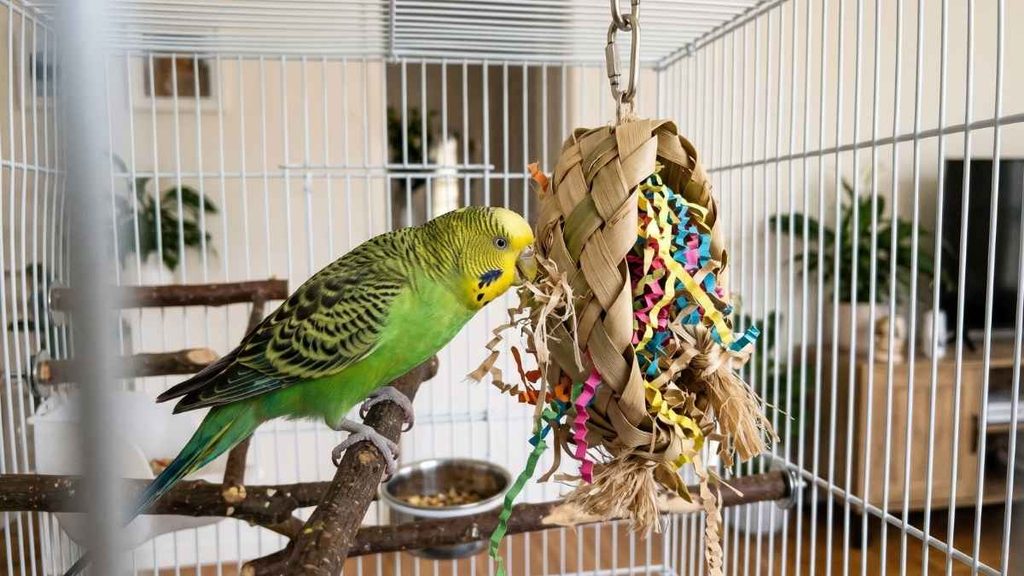
Many parakeets chew because they have nothing better to work on. Offer:
- Shreddable paper, palm leaf, and soft balsa or untreated wood toys.
- Foraging toys where treats or millet are hidden in paper, cardboard, or woven grass.
- Rotated toys every week or two to keep novelty high.
Choose bird-safe, untreated materials and avoid anything with zinc-coated hardware.
Step 3: Improve the Diet
Aim for a diet built on formulated pellets, with fresh dark leafy greens and chopped vegetables daily and seed as a smaller portion. Transition gradually, since many budgies resist new foods, and monitor droppings and appetite throughout.
Step 4: Protect a 10–12 Hour Sleep Routine
Provide a consistent, dark, quiet 10–12 hours each night, away from drafts, televisions, and household activity. For practical guidance on blocking light and noise without causing panic, see our guide on should you cover a budgie cage at night.
What Not to Do
Do not apply topical sprays, bitter anti-chew liquids, or home remedies without veterinary direction. These products can irritate skin, be toxic if swallowed during preening, and mask an underlying illness. Avoid physical collars unless your veterinarian prescribes one, as they carry their own stress and risks.
Sources & Veterinary References
- Veterinary Textbooks: Avian Medicine: Principles and Application by Ritchie, Harrison & Harrison; and Clinical Avian Medicine by Harrison and Lightfoot.
- Association of Avian Veterinarians (AAV): Basic Care for Companion Birds
- Merck Veterinary Manual: Management of Pet Birds (Feather Destructive Behavior)
Conclusion & Educational Disclaimer
Telling normal grooming from feather destructive behavior comes down to pattern, skin condition, and your bird’s overall demeanor. Healthy preening leaves smooth, intact plumage. Plucking leaves damage, bare patches, or irritated skin. Early intervention with an avian veterinarian gives your budgie the best chance of recovery, because feather picking can become an ingrained habit that persists even after the original trigger is resolved
Educational Disclaimer: This article is for educational purposes only and is not a substitute for professional veterinary advice, diagnosis, or treatment. If your parakeet is plucking, bleeding, or showing signs of illness, contact a qualified avian veterinarian promptly.