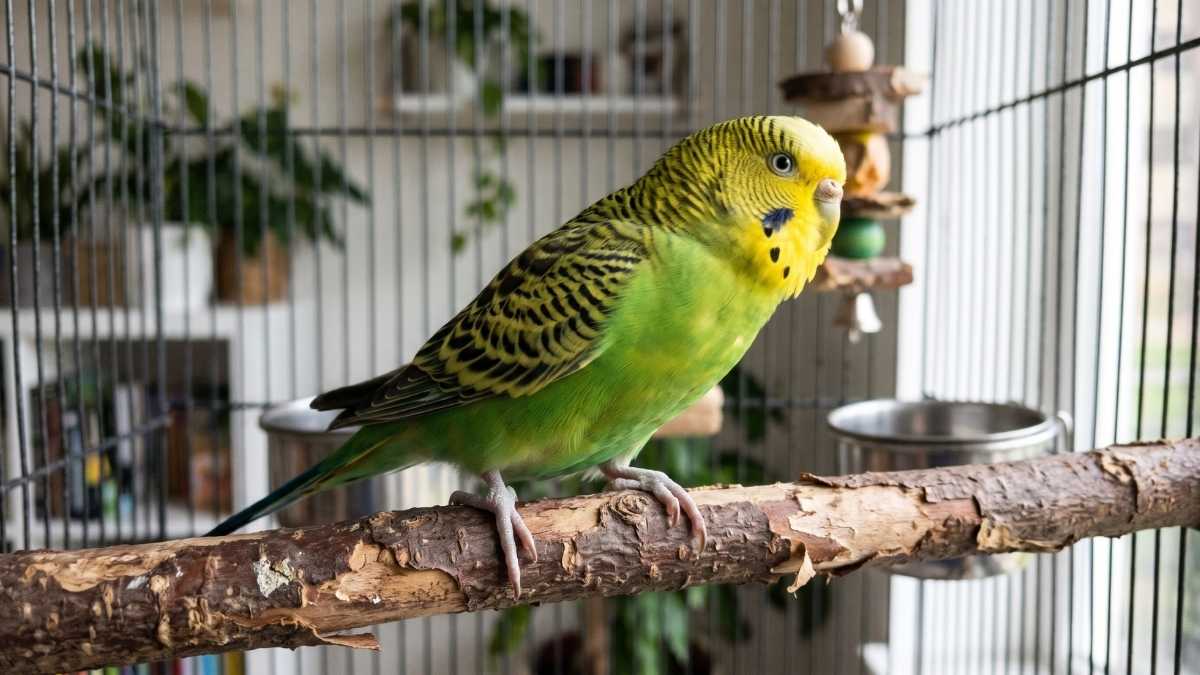
Why does my budgie bob its head? It’s one of the most common questions new parakeet owners ask, and the answer is rarely a single thing. Head-bobbing is among the most expressive, multi-functional gestures in a budgie’s body language. The same rhythmic nod can signal pure excitement, a leftover juvenile feeding instinct, or an affectionate courtship display, depending on the context around it.
What Head Bobbing Actually Means
In wild flocks, budgies rely on small, fast visual signals to coordinate with their mates, rivals, and young. Companion parrot ethology literature describes head-bobbing as a ritualized movement that began in chick-to-parent feeding interactions and was later adopted into adult social behavior. That is why a fully grown budgie can bob toward a favorite person, a mirror, or a bell toy with the same motion it used as a nestling.
Understanding the budgie head bobbing meaning starts with reading the whole bird, not just the head. Watch the eyes, the feathers, the beak, and the sounds that accompany the movement. A bird’s behavior is best interpreted alongside its posture, appetite, droppings, and overall activity.
Quick Summary: The Three Main Motivations
- Excitement and play: Quick, bouncy bobs paired with chatter, pinned pupils, or toy interaction may signal high-energy enthusiasm.
- Courtship and bonding: Slower, more deliberate bobbing aimed at a mate, a person, or a reflection may be part of an affectionate courtship display.
- Hunger and begging: Younger birds especially pump their heads to solicit food, echoing how chicks beg from their parents.
Head Bobbing Context & Behavioral Indicators
| Behavior Category | Motion Style | Accompanying Signals | Likely Target | Contextual Meaning |
| High Energy / Play | Quick, springy vertical bounce | Chatter, chirping, pupil dilation (pinning) | Music, owner voice, toys | Social stimulation, flock engagement |
| Courtship Display | Deliberate, rhythmic vertical pumping | Soft vocal clicks, beak tapping, sleek crown | Finger, mirror, cagemate | Pair-bonding, hormonal courtship feeding |
| Juvenile Begging | Rapid, slightly clumsy nodding | Low crouched posture, fluttering wings, peeping | Caregiver, parent, food bowl | Natural hunger reflex, reassurance-seeking |
| Vomiting (Medical) | Violent side-to-side head shaking | Matted head feathers, fluffed, low perch sit | Cage walls, perches, bars | Involuntary illness sign (crop infection, toxin) |
Pure Excitement, Music, and Social Energy
Few things are as endearing as a budgie who hears a favorite song, spots you walking into the room, and starts nodding along. Head-bobbing can accompany excitement, play, and social interaction, although its meaning depends on the bird’s overall body language and the situation.
Syncing Movement With Sound
Excited budgies may pair rapid, springy vertical head movements with chirping, whistling, and chattering. Some birds also bob when they hear music, familiar sounds, or their owner’s voice. These movements may accompany excitement or social engagement, but head-bobbing alone cannot establish exactly what a bird is feeling.
Eye-Pinning: The Happy Tell
Look closely at the eyes. Eye-pinning is the rapid dilation and constriction of the pupils, and it may accompany excitement, curiosity, or intense focus. Alongside it, you may see lifted head feathers, an alert posture, and increased activity. Interpret these signs together rather than treating eye-pinning alone as proof that your budgie is happy.
Healthy Energy vs. Breathing Trouble
Vigorous head-bobbing may be normal social behavior. Respiratory effort looks different. A budgie who is perched quietly, fluffed, and showing a steady, rhythmic tail pump with each breath is working to breathe, not celebrating. Our guide on why a budgie may be tail bobbing explains this distinction in detail. Tail bobbing at rest can be a warning sign that warrants prompt veterinary evaluation.
A simple rule of thumb:
- Head bobbing with chatter, bright eyes, and activity: May be normal social or excited behavior when the bird is otherwise well.
- Tail bobbing while sitting still, often with open-beak breathing or fluffed feathers: Contact an avian vet promptly.
Courtship Display: Showing Affection to You, Toys, or Mates
If you have ever wondered why your budgie is bobbing its head at you, courtship is a possible explanation. Head-bobbing can be part of courtship behavior that helps build and maintain pair bonds, and a budgie who bonds with you may direct it at you.
The Bob-and-Feed Sequence
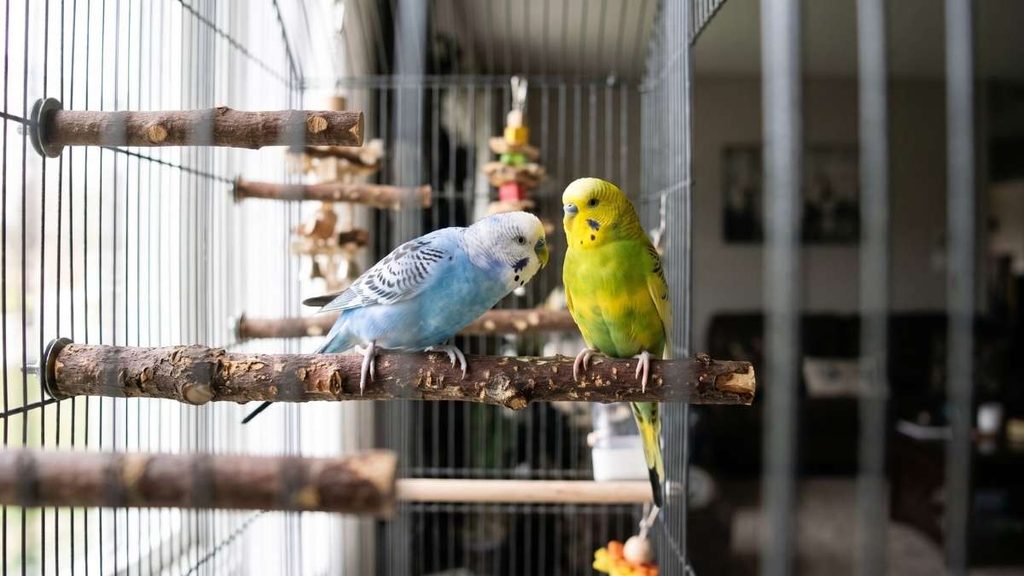
A courting male may bob enthusiastically, often with pinned pupils, soft chattering, and tapping or rubbing his beak against the target of his affection. The sequence may end with him bringing up softened seeds from his crop, a behavior called courtship feeding. In wild flocks, food-sharing can form part of courtship and pair-bonding behavior. Regurgitation directed toward a bonded companion can be normal, but it should be interpreted in context rather than automatically assumed to be harmless.
Companion budgies may redirect this instinct toward whatever they have bonded with:
- A human thumb or finger: May be a sign of bonding, rather than a request for food.
- A favorite toy: Bells, plastic figurines, and small plush items may become targets of courtship behavior.
- A cagemate: A common recipient of social and courtship behavior.
Both male and female budgies may show courtship-related behaviors, including regurgitation.
Mirror Obsession and One-Way Courtship Loops
Mirrors are where affection can turn into fixation. A reflection bobs back every time your budgie bobs, chatters back instantly, and never feeds him in return. The result can be a repetitive courtship interaction that may contribute to hormonal arousal or obsessive behavior in some birds. Our guide on what not to do with parakeets explains why reflective mirrors and other artificial reproductive stimulation are best avoided.
Limiting triggers that encourage persistent courtship behavior may help prevent it from becoming excessive.
Regurgitation vs. True Vomiting: When Head Bobbing Signals Illness
Understanding the difference between vomiting and regurgitation in budgies is one of the most important skills a budgie owner can develop. The two can look alike at a glance, but they can have very different causes and urgency levels.
Courtship Regurgitation vs. Pathological Vomiting
| Clinical Factor | Normal Regurgitation | True Vomiting (Urgent Concern) |
| Motion | Controlled vertical rhythmic pumping | Forceful, erratic side-to-side head flicking |
| Demeanor | Alert, engaged, bright, vocal | Lethargic, fluffed, exhausted, inactive |
| Discharge | Clean, intact or softened seeds deposited neatly | Sticky mucus, slimy regurgitate splattered widely |
| Face & Head | Head and facial feathers stay dry and clean | Wet, sticky, matted plumage around face and cere |
| Target | Directed intentionally toward mate, finger, or toy | Involuntary; expelled onto cage bars, floor, walls |
Normal Regurgitation: A Deliberate Affection Behavior
Courtship-related regurgitation is often purposeful and directed toward a bonded bird, person, toy, or mirror. The bird may remain alert and engaged during the display. However, regurgitation can also be associated with illness, so consider the bird’s overall condition and seek veterinary advice if the behavior is new, frequent, or accompanied by other symptoms.
Look for:
- Rhythmic vertical pumping: A steady up-and-down bob that builds toward the deposit.
- A calm, engaged demeanor: The bird stays bright, alert, and eager, often chattering softly.
- A targeted deposit: Clean, whole or softened seeds placed on a mirror, toy, or your finger.
- Clean head feathers: The face, beak, and crown remain dry and tidy.
True Vomiting: An Urgent Veterinary Concern
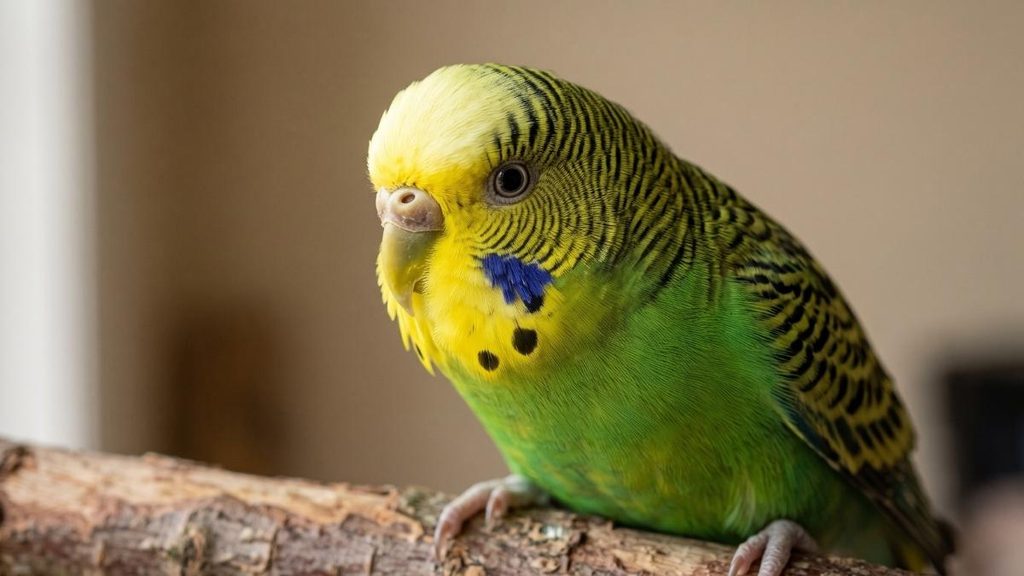
Vomiting is involuntary and distressing. Budgie head bobbing and regurgitating in a healthy bird looks organized, while vomiting looks like a bird struggling. Warning signs include:
- Violent side-to-side head shaking: Forceful flicking rather than a rhythmic nod.
- Sticky mucus or half-digested food: Flung across cage bars, walls, or perches instead of placed deliberately.
- Wet, matted feathers: Soiled plumage around the beak, face, and crown.
- Behavioral decline: Lethargy, fluffed posture, reduced appetite, or sitting low on the perch.
Vomiting can be associated with serious conditions such as crop infections, toxin ingestion, or systemic illness. Small birds can decline rapidly, so waiting overnight is risky. Our guide on how to tell if a parakeet is sick walks through recognizing matted head feathers, lethargy, and signs of systemic digestive infection in more detail.
If you suspect vomiting, keep your budgie warm and contact an avian veterinarian immediately.
Baby Budgies and the “Feed Me” Begging Reflex
When a young budgie bobs its head, it may be doing exactly what instinct built it to do: ask for food. Young budgies may show a distinct begging display, particularly during the transition from parental feeding to independent eating. The behavior can also persist for some time after weaning.
What Begging Looks Like
A hungry youngster typically drops into a low, crouched posture, bobs its head rapidly and somewhat clumsily, and flutters its wings in quick, trembling bursts. You may also hear soft, high-pitched peeping. The bird often directs this at a parent, a cagemate, or the person who hand-feeds or cares for it most.
In the nest, this reflex prompts parent budgies to feed their chicks by regurgitating crop contents. The begging behavior is innate and may continue after weaning, particularly when a young bird is seeking food, attention, or reassurance.
What To Do
- Check the basics: Confirm fresh seed, pellets, and clean water are always available.
- Don’t force-feed: A recently weaned bird that is eating independently does not need hand-feeding.
- Watch the trend: Begging in a bird that is eating well is normal, but constant begging alongside weight loss or a thin keel warrants an avian vet visit.
Monitoring weaning progress and body condition in young birds is important, since small changes can matter in such tiny patients.
Sources & Veterinary References
- Association of Avian Veterinarians (AAV): Basic Care for Companion Birds
- Merck Veterinary Manual: Routine Care of Pet Birds (Behavior)
Conclusion: A Bobbing Budgie Is Usually a Happy Budgie
Rhythmic vertical head-bobbing paired with cheerful chirping, bright eyes, and an eager, social attitude can be a sign of a thriving, engaged parakeet. In many cases, you are watching excitement, play, or affection, not a problem. Keep reading the whole bird, and trust your own daily observations: you know your budgie’s normal better than anyone.
Changes in appetite, droppings, posture, or breathing can be important warning signs, even when a bird’s other behaviors appear normal.
Educational Disclaimer: This guide is for general educational purposes and does not replace professional veterinary advice. If your budgie seems unwell, contact a qualified avian veterinarian promptly.