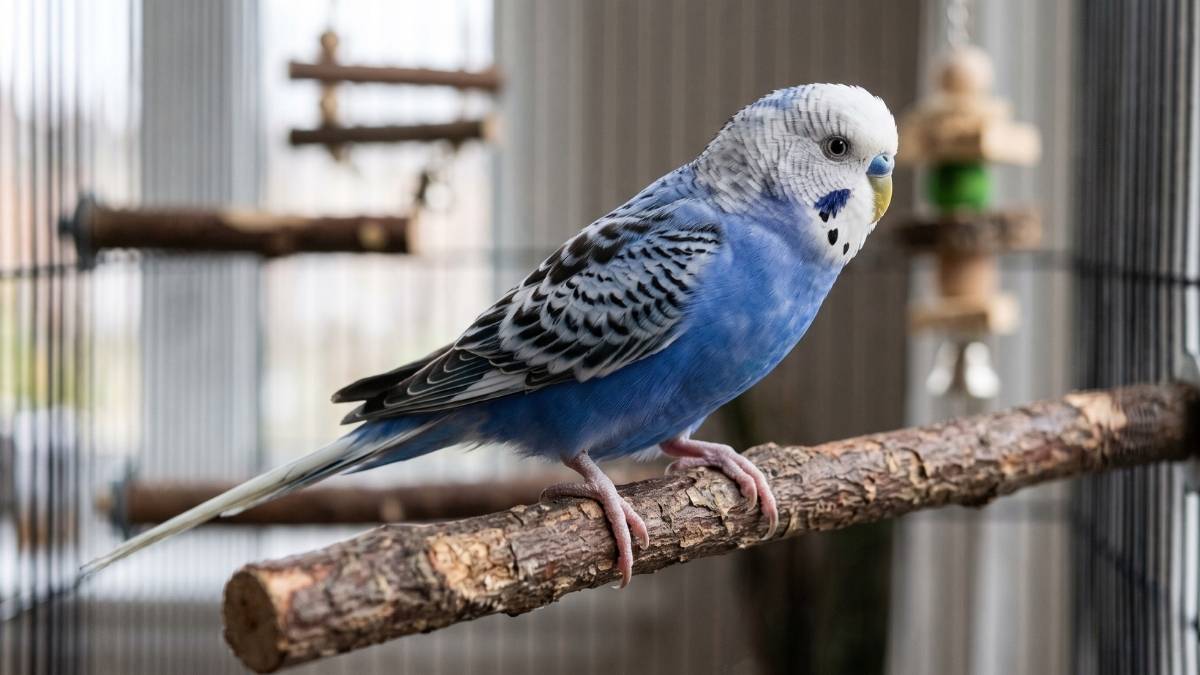
The best perches for budgies are the ones that let their feet change position all day, because a budgie’s feet are its most-used tools for standing, climbing, gripping, and sleeping. Budgies have zygodactyl feet, with two toes pointing forward and two pointing back, a design built for wrapping securely around branches of different widths and angles. In a budgie’s life, that means roughly 24 hours a day of weight-bearing, since they even sleep perched.
Using only one perch diameter may concentrate pressure on the same areas of the foot pads. Over time, unsuitable perches and prolonged pressure can contribute to pododermatitis, commonly called bumblefoot. Signs may include redness, swelling, sores, and, in severe cases, deeper infection. Providing appropriately sized perches of different diameters and textures is an important part of supporting foot health.
Quick Summary: Core Criteria for Healthy Perching
- Varied textures: Mix smooth, rough, and bark-covered surfaces so pressure and friction shift across the foot.
- Variable diameters: Offer perches of different widths so toes grip at different angles and foot muscles stay active.
- Natural wood variety: Branches with irregular shapes and different diameters give budgies opportunities to grip in different positions and help vary pressure across the feet.
Getting these three elements right is the foundation of a foot-healthy cage.
Safe Wood Types and Perch Materials to Avoid
Choosing safe wood for budgie perches starts with the tree species, then the sourcing. Budgies chew everything they perch on, so every piece should be non-toxic and free of chemical residue.
Safe Natural Wood Branches
- Eucalyptus: Aromatic, sturdy, and naturally textured, with varied diameters along a single branch.
- Manzanita: Dense, durable, and gnarled, so it holds up to chewing and offers irregular gripping angles.
- Apple and pear: Soft enough to chew, firm enough to last, and widely recommended in avian husbandry.
- Willow: Flexible and slightly springy, which reduces repetitive pressure on the foot pads.
- Other bird-safe woods: Apple, pear, willow, and other confirmed bird-safe tree species may be suitable when branches are untreated, clean, and correctly prepared. Always verify the species before use.
Sourcing and Cleaning Branches
Use only untreated, pesticide-free wood. Avoid branches from roadsides, lawns treated with herbicides, or nurseries that spray. Before a branch goes in the cage:
- Wash and scrub it with plain warm water and a stiff brush to remove dirt, insects, and debris.
- Rinse thoroughly, with no soap or disinfectant residue left behind.
- Prepare the branch safely. Clean and dry the branch thoroughly, and use only wood from a positively identified, bird-safe species. Do not rely on baking alone to make an unknown or chemically contaminated branch safe. If you cannot confirm the wood’s identity or treatment history, do not put it in the cage.
Perch Material Safety & Selection Guide
| Perch Type | Safety Rating | Primary Benefit / Risk | Best Position in Cage |
| Natural Wood Branches (Apple, Manzanita, Willow) | Recommended | Varied grip, exercises foot tendons, prevents focal pressure | Main activity zones & high sleeping roost |
| Flat Wood Platforms | Recommended | Allows feet to relax flat, relieves tendon strain | Upper corner away from dishes |
| Cotton Rope Perches | Safe with Monitoring | Soft and flexible; risk of fraying threads and fiber ingestion | Mid-height bridge; inspect regularly |
| Smooth Wooden Dowels | Avoid as Primary | Uniform width concentrates pressure on same foot pads | Maximum 1 near bottom, or replace |
| Sandpaper & Rough Concrete | Hazardous for Roosting | Abrasive grit strips skin layers and leads to bumblefoot sores | Avoid sandpaper entirely; limit grooming perches |
| Smooth Plastic Perches | Not Recommended | Slippery, zero foot stimulation, causes repetitive strain | Replace with natural wood branches |
Ideal Perch Diameters and Claw Health
Diameter is where many setups go wrong, even when the wood itself is safe. Many budgies benefit from perches in the approximate 3/8-inch to 3/4-inch (1–2 cm) range, but the best diameter depends on the individual bird and the branch shape. Offer several appropriately sized diameters so your budgie can change its grip comfortably.
How to Check the Fit
A properly sized perch allows your budgie to grip securely without the toes being stretched excessively or forced into an awkward position. The front and back toes should be able to wrap comfortably around the perch without the nails pressing into the foot pads. Check your bird’s grip on more than one perch diameter rather than relying on a fixed percentage of the perch’s circumference:
- Too thin: The nails curl past each other or dig into the foot pads, and the bird has to grip tightly to stay balanced, which tires the toes.
- Too thick: The toes cannot wrap far enough, so the foot flattens and strains the tendons and joints.
Watch your budgie while it rests. A relaxed stance, with the toes curled comfortably and the body steady, tells you the diameter suits that bird’s feet.
Natural Texture and Natural Claw Wear
Uneven natural bark does more than add grip. Its ridges and bumps exercise the foot tendons with every shift of weight. The gentle friction also blunts needle-sharp claw tips gradually, as your budgie climbs, shuffles, and sidesteps along the branch.
Natural branches provide varied gripping surfaces and may help wear down sharp claw tips during normal movement. However, natural perches do not reliably prevent overgrown nails in every bird. Check your budgie’s nails regularly, and if they become long, curled, or snag on cage bars and toys, follow our guide on how to trim budgie nails safely rather than relying on abrasive surfaces.
How to Arrange Perches Inside the Cage
A good budgie perch setup balances comfort, movement, and cleanliness. Where each branch sits matters as much as what it is made of.
1. Give Your Budgie a High Sleeping Perch
Budgies instinctively roost at the highest point available, because height feels safe. Place a comfortable natural branch, such as willow or apple in a mid-range diameter, near the top of the cage, away from direct drafts. This is where your bird will spend its nights, so choose the most foot-friendly perch you have for this spot and avoid concrete or sandpaper surfaces here.
2. Leave Horizontal Flight Corridors
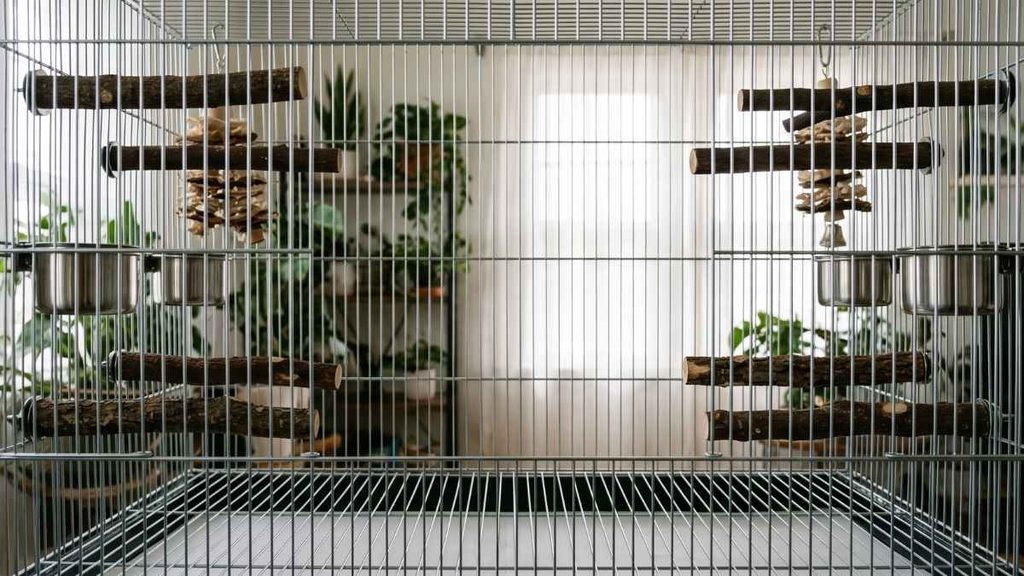
Budgies are flyers, and short hops between perches are real exercise. Resist the urge to fill every inch of the cage with branches and toys:
- Keep open, unobstructed space between perches so your budgie can spread its wings and move or fly safely.
- Place perches on opposite sides of the cage so flights cross open space rather than ending in a bar-to-bar scramble.
- Use fewer, better branches rather than many mediocre ones.
If your bird can’t spread its wings and glide between perches, the cage is either too crowded or too small. Our guide on budgie cage size explains the minimum dimensions that leave room for horizontal flight.
3. Stagger Heights and Positions
Arrange perches at different levels and angles rather than in a neat row. Staggering encourages climbing, hopping, and small flights, and it shifts weight across the feet throughout the day:
- Offset perches so one doesn’t sit directly above another.
- Vary the angles, mixing horizontal branches with a few slightly slanted ones.
4. Keep Droppings Away from Food and Water
Never place a perch directly over a food dish, water bowl, or lower perch. Droppings falling into dishes contaminate them, and soiled lower perches raise the risk of foot infection. Position perches to the side of dishes, with the highest roosting branch clear of everything below. Overall cage placement affects this too, so see our advice on where to put a budgie cage.
Adding Specialty Perches: Platforms, Ropes, and Swings
Natural branches should form the backbone of the cage, but a few specialty perches add rest, softness, and movement. Used alongside the best perches for budgies, they round out the variety that keeps feet healthy.
Flat Resting Platforms and Corner Shelves
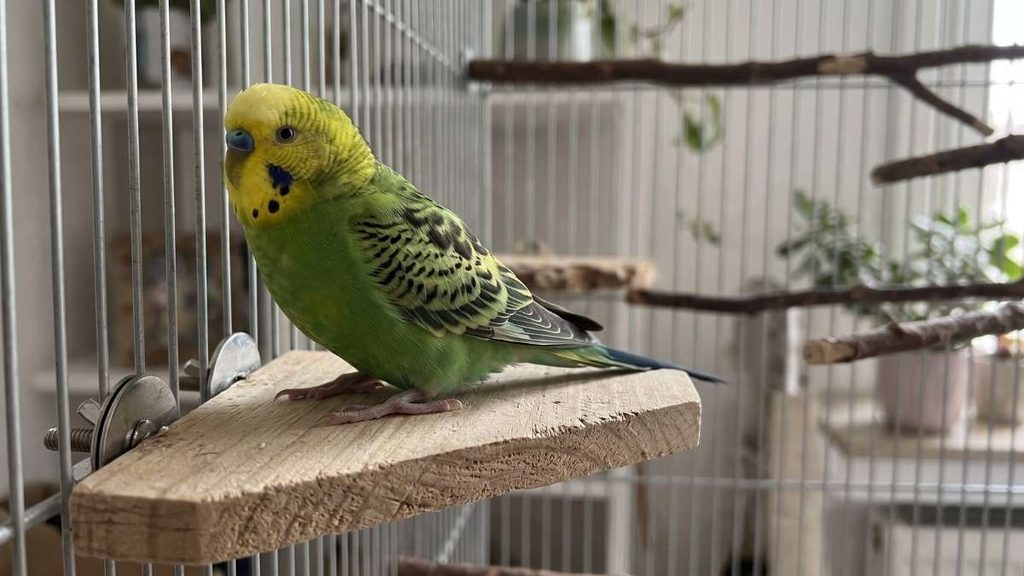
A small wooden platform or corner shelf lets the feet lie completely flat, which relieves the tension that a constant curled grip places on the tendons. This is especially helpful for older birds, birds with arthritic joints, and any budgie showing early redness on the foot pads. Choose untreated wood, and mount the shelf where it will not block flight corridors or sit above food and water dishes.
Cotton Rope Perches
Cotton rope is soft, flexible, and easy on the feet, and its give adds a different texture to the mix. It also needs regular inspection:
- Check for fraying every few days: Loose threads can wrap around toes and restrict circulation.
- Trim stray strands: Use small, sharp scissors, taking care not to cut the structural weave.
- Watch for chewing: Loose or swallowed fibers can cause injury or digestive blockage. Replace any rope that is being actively shredded, has loose strands, or is badly worn.
Choose 100% cotton with no dyes or synthetic blends, and wash it periodically to keep it hygienic.
Swings
Swings offer enrichment, balance exercise, and gentle rocking that many budgies enjoy. Hang one in a spot with room to move freely, away from cage walls and other perches, and choose a model with a sturdy, appropriately sized rung, ideally natural wood. Use one swing at most so that it adds interest without crowding the space.
Sources & Veterinary References
- Association of Avian Veterinarians (AAV): Basic Care for Companion Birds (Housing & Perches)
- Merck Veterinary Manual: Routine Care of Pet Birds (Cage Accessories & Foot Health)
Conclusion & Educational Disclaimer
Replacing standard dowels with a mix of natural branches is one of the easiest ways to protect your budgie’s foot health and prevent bumblefoot. Choose safe wood, vary diameters and textures, and arrange perches so your bird can climb, fly, and rest comfortably. The best perches for budgies are the ones that keep the feet shifting all day. Providing varied, appropriately sized perches is a practical part of good budgie housing and foot-care management.
Educational Disclaimer: This article offers pet husbandry and housing guidance, not veterinary diagnosis. If you notice redness, swelling, sores, or limping, consult an avian veterinarian promptly.