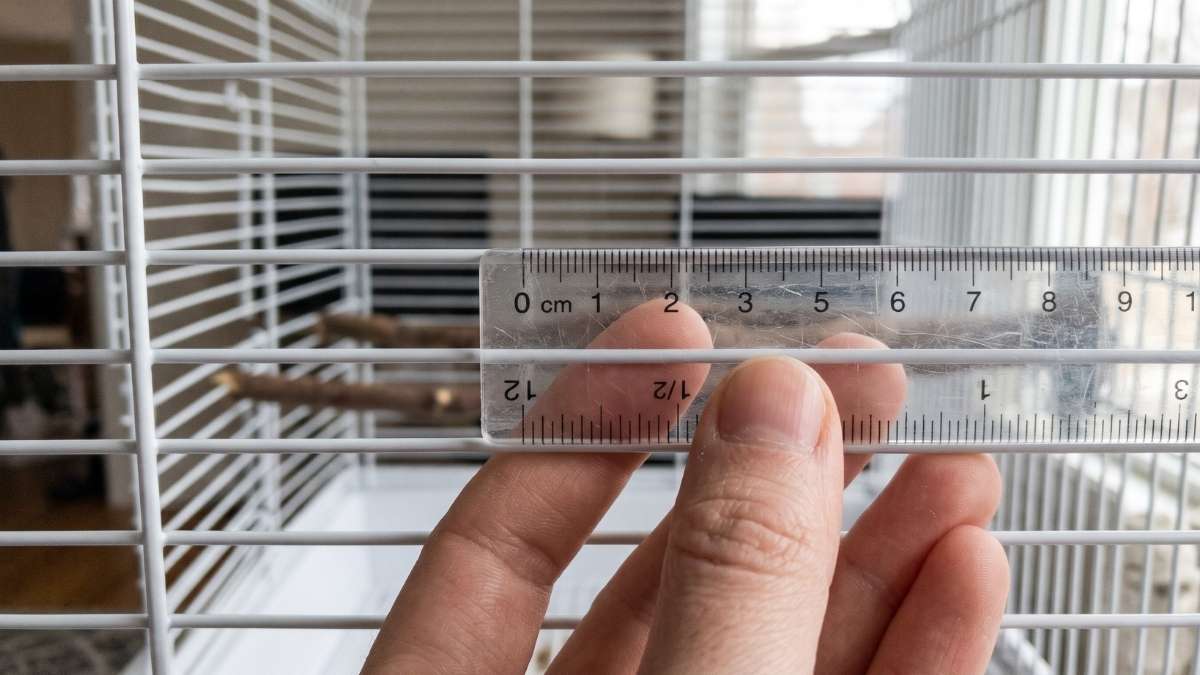
Correct budgie cage bar spacing is one of the most important structural safety specifications in any enclosure, because a gap that looks harmless to a human can trap a parakeet’s head. An adult budgie weighs roughly 30 to 40 grams, about the same as a few coins, and its small frame has little margin for error. Unlike a cage’s color, shape, or accessories, bar spacing cannot be corrected after an accident. It has to be right before the bird ever enters the cage.
Why a Budgie’s Skull Makes Wide Gaps Dangerous
A parakeet’s head is narrowest around the beak and forehead, which lets the bird push its face forward through a gap while exploring, reaching for food, or investigating a neighbor. The head is wider toward the rear, making it possible for a bird to push forward through a gap but become trapped when trying to pull back.
The result can be a one-way passage: forward is easy, and backward is not. A bird that cannot withdraw its head may panic and thrash, which can wedge the head tighter. The consequences can include:
- Soft-tissue injury and swelling of the head and neck
- Cervical trauma from twisting and pulling
- Compression of the trachea or neck vessels
- Suffocation or strangulation if the bird is not found quickly
Standard companion avian references, including Ritchie, Harrison & Harrison’s Avian Medicine and Clinical Avian Medicine by Harrison and Lightfoot, discuss cage-related injuries in companion birds. Prevention includes choosing an appropriately designed enclosure.
The Safe Bar Spacing Rule: Exactly What Size Budgies Need
A commonly recommended maximum for parakeet cage bar spacing is 1/2 inch (12.7 mm) or smaller, measured as the clear gap between two adjacent bars, not center to center. A gap of 3/8 inch (about 9.5 mm) is also appropriate and may provide an extra margin of safety for very small or young birds, such as recently fledged chicks and petite English budgies. Whatever the cage’s other merits, a gap wider than 1/2 inch should not be considered suitable for a budgie.
Many cages marketed as “small bird” or “all-purpose” are built for larger species. Cockatiel and conure cages commonly use 5/8 inch or 3/4 inch spacing, which may suit larger birds but can be hazardous for a parakeet. At these widths, a budgie’s head may pass through and then become trapped when the bird tries to withdraw it. Never assume a cage is budgie-safe because it is sold as a “starter” or “small bird” cage. Measure it.
A large enclosure does not offset a wide gap. Generous flight space is valuable, and our budgie cage size guide covers the volume and dimensions that support healthy flight, but a spacious cage is safe only when its bar spacing is appropriate for a small parakeet. A bird flying in a roomy cage with 3/4 inch bars has simply been given more room to get caught.
Parakeet Cage Bar Spacing Safety Chart
| Bar Spacing Dimension | Suitability for Budgies | Primary Safety Risk Level |
| 3/8 inch (9.5 mm) | Excellent | Small gaps may occasionally catch a toenail |
| 1/2 inch (12.7 mm) | Commonly recommended maximum | Low when the cage is otherwise well maintained |
| 5/8 inch (15.9 mm) | Unsafe | Head entrapment, particularly in smaller or younger birds |
| 3/4 inch (19 mm) | Unsafe | Head entrapment, neck trauma, strangulation, and escape |
Use a ruler or caliper on the actual cage before purchase, and check several spots, since poorly manufactured cages can vary from bar to bar.
Horizontal vs. Vertical Cage Bars: Climbing Mechanics
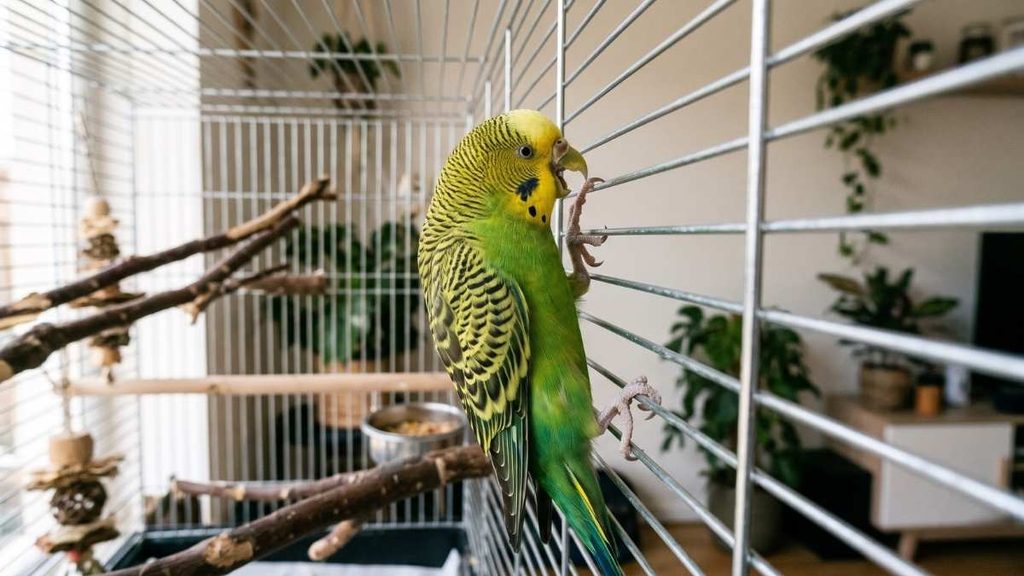
Budgies are natural climbers. Like other parrots, a parakeet has zygodactyl feet, with two toes pointing forward and two pointing back, which gives a secure, pincer-like grip on branches and wire. The beak works as a third limb: a budgie reaches out, hooks the bars, and hauls itself up before releasing the grip and repositioning its feet. A cage should support this beak-and-foot climbing pattern.
Horizontal bars can make climbing easier because they provide level surfaces for the feet to grip. They can encourage climbing and everyday movement, which contributes to physical activity. The question of horizontal vs vertical cage bars for budgies is partly about convenience and climbing access, rather than an absolute safety difference.
Cages built entirely with vertical bars may offer fewer convenient footholds for climbing, although many birds can still move around them using their beaks and feet. Horizontal bars do not override the spacing rule, though. Whether the bars run horizontally or vertically, the clear gap between them should measure 1/2 inch (12.7 mm) or less.
Horizontal wires can also provide anchor points for perch hardware. Varied natural hardwood perches in different diameters can be mounted securely between the bars using suitable hardware, such as stainless steel washers, which helps prevent wobble and spinning under the bird’s weight. Our guide on the best perches for budgies covers which woods and diameters to choose and how to place them for good foot health.
Safe Cage Wire Materials vs Toxic Metal Hazards
Choosing safe wire for a bird cage matters as much as choosing the right gap width, because budgies chew, mouth, and preen against their bars all day. Any damaged or unsuitable metal surface can become a potential source of ingestion.
Safe Wire Options
- Quality, bird-safe powder-coated wrought iron or steel: A properly manufactured, non-toxic powder coating is applied and cured to create a durable finish. Its safety depends on the coating’s composition and condition. It should remain intact, without chips or flaking.
- 304 stainless steel: A preferred material for long-term safety. It resists rust, tolerates frequent cleaning, and avoids the coating-related risks associated with painted or powder-coated surfaces. It costs more, but it does not chip or flake.
Metals to Avoid
- Galvanized wire: Hot-dip galvanizing leaves a zinc layer. Damaged, corroded, or accessible zinc-coated wire can expose birds to zinc if they chew or swallow it. Zinc is a recognized avian toxicant. Hardware-cloth and fencing wire are common sources, so never improvise a cage or add-on from them unless the material is confirmed safe for birds.
- Lead-soldered joints: Cheap or imported cages may use soldered joints containing lead. Lead is toxic to birds and can be ingested when they chew or mouth exposed joints.
Inspecting bar welds and chipped powder coating during routine cleaning catches problems early, and our guide on how to clean a budgie cage safely walks through that inspection step by step, including what to do about rust.
Recognizing Heavy Metal Toxicity
Zinc and lead poisoning can cause similar signs, and symptoms may worsen quickly. Possible warning signs include:
- Lethargy, fluffed posture, and reduced appetite
- Vomiting or regurgitation
- Green, watery droppings or changes in droppings
- Wing droop or weakness in the legs
- Seizures, tremors, or loss of balance
These signs are not specific to heavy metal poisoning, but any combination of them needs prompt veterinary attention. Learning how to tell if a parakeet is sick helps you catch subtle changes in posture and droppings early. Contact an avian veterinarian immediately, since diagnosis may involve blood testing and radiographs, and treatment must be guided by a veterinarian.
Hidden Bar Traps: Springs, Latches, and Flaking Finishes
A cage can meet the 1/2 inch spacing recommendation along every bar and still contain hazards at its moving parts and seams. These danger zones are easy to overlook because they are not part of the bar pattern itself.
Structural Danger Zones

- Guillotine slide-up doors: These doors rise on a track and can drop if a bird bumps the frame or the catch slips. A head or neck caught beneath the edge risks a crush injury. Secure every slide-up door with a suitable locking clip or a small carabiner, and check that the clip cannot be worked loose by a curious beak.
- Flared corner gaps: Wire that is bent around corners, curved tops, or play-top rails can flare outward, opening a gap wider than 1/2 inch (12.7 mm) even when the flat panels measure correctly. Run a ruler across every corner, curve, and door seam, not just the middle of the wall.
- Spring-loaded feeder doors: Flip-down or spring-loaded flaps can pinch a toe, a beak, or a head if they snap shut while the bird is nearby. Check that the mechanism cannot trap your bird. If it presents a risk, secure it open or replace it with a safer feeder.
Weld and Finish Inspection
Rough welds, exposed wire ends, and flaking paint become hazards over time. Chipped powder coating exposes bare metal that can rust, and a budgie that swallows flakes risks exposure to metal contaminants.
Make inspection part of every wash. While the cage is empty and clean, check each weld joint for cracks, sharp burrs, or rust bloom, and scan the coating for chips or bubbling. The how to clean a budgie cage safely guide includes this inspection within a routine cleaning schedule. Replace or professionally repair any cage showing active flaking, since patching with household paint or sealant introduces a new potential hazard.
Conclusion & Educational Disclaimer
Verifying budgie cage bar spacing before you buy helps remove one of the most serious preventable hazards in a parakeet’s home. Measure every gap at 1/2 inch (12.7 mm) or smaller, choose bird-safe powder-coated steel or 304 stainless steel, and inspect doors, welds, and finishes regularly. These steps give your budgie a safer foundation for a long, healthy life, though no cage replaces attentive supervision.
References: Association of Avian Veterinarians (AAV) husbandry and clinical guidelines; Ritchie, Harrison & Harrison’s Avian Medicine; Clinical Avian Medicine by Harrison and Lightfoot.
Educational Disclaimer: This guide is for educational purposes only and does not replace professional veterinary advice. If your bird shows signs of illness or injury, contact a qualified avian veterinarian immediately.