
A broken blood feather budgie emergency can look dramatic, with bright red blood dripping from a wing or tail onto your parakeet’s perch or cage floor. Staying calm and acting quickly matters, and understanding what a blood feather is will make the right response much clearer.
What Is a Blood Feather?
A blood feather, also called a pin feather, is a new feather that is still actively growing. While it develops, blood vessels run through the central shaft, delivering the blood and nutrients the feather needs to grow. You can usually recognize one by its dark, waxy-looking shaft, often partly wrapped in a flaky protective sheath. Budgies grow these feathers during normal molts and when replacing feathers lost to injury.
Once a feather reaches full length, the blood supply recedes and the shaft dries out. A mature feather is essentially lifeless keratin, much like human hair or fingernails. It can be trimmed, bent, or lost without the same bleeding risk as a growing feather.
A growing shaft behaves very differently. When it snaps, the blood vessels inside can be damaged, allowing blood to escape from the broken end. For this reason, bleeding from a broken blood feather may continue and needs prompt attention. A parakeet weighs only about 30 to 40 grams and has a very small blood volume, so even a seemingly small amount of blood loss can become dangerous.
The good news is that minor bleeding may be controlled with appropriate first aid, but a broken blood feather should be treated as a potentially serious injury. Contact an avian veterinarian promptly, even if the bleeding appears to stop.
Common Causes of Broken Feathers in Parakeets
Blood feathers are fragile because they contain living tissue and have not yet hardened. Knowing how they break helps you spot risks in your budgie’s environment and prevent repeat injuries.
Night Frights and Thrashing
A common cause of a broken blood feather in a budgie is nocturnal panic. A sudden noise, a passing shadow, or a flash of headlights can jolt a sleeping parakeet off its perch and send it flapping against the cage bars in the dark. Budgie night frights can snap growing feathers in seconds, and owners may discover the blood afterward.
Clumsy Landings During Molt
Molting changes how a bird flies. Missing or half-grown wing and tail feathers can affect balance and flight, so a parakeet may misjudge a perch, clip a toy, or crash into a cage wall. Young budgies in their first molt may be especially vulnerable while several new feathers are emerging.
Grooming a Heavy Molt
During a heavy molt, the skin may feel itchy and the sheaths around pin feathers can be irritating, so your budgie may preen vigorously. A bird working at a stubborn sheath can accidentally bite or damage a tender blood feather. Normal molt grooming is not the same as compulsive feather damage, and understanding how budgie preening differs from plucking will help you tell routine behavior from a sign of a deeper problem.
Other Household Hazards
Growing feathers can also catch on cage doors, toys with narrow gaps, or rough edges, and they can be damaged by rough handling or a cagemate’s bite. During molt, inspect the cage regularly for anything a flapping bird could snag on.
How to Stop the Bleeding: Parakeet First Aid
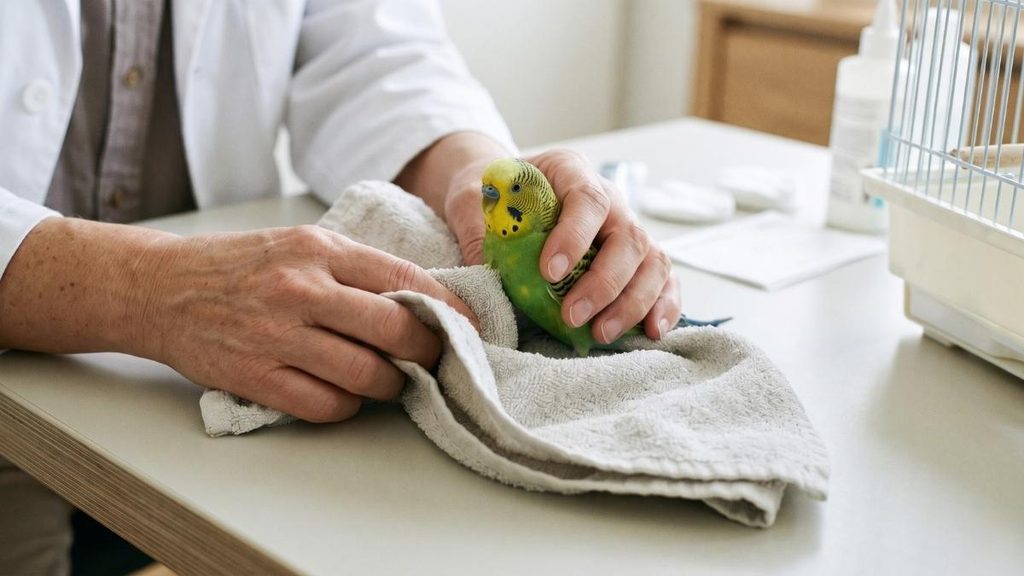
Knowing how to respond to budgie feather bleeding comes down to staying calm, applying gentle pressure when appropriate, and getting veterinary help. Gather your supplies first, but do not delay contacting an avian veterinarian if bleeding is active.
Avian Bleeding First Aid Kit
| First Aid Item | Primary Purpose | Safe Household Alternative |
| Bird-safe styptic powder | May help control minor bleeding from a feather tip | Cornstarch, for temporary first aid |
| Small towel | Helps gently restrain the bird if necessary | Clean washcloth |
| Cotton pad or gauze | Applies gentle pressure around the bleeding area | Clean gauze |
| Shallow dish | Holds powder if directed for use | Small clean container |
| Flashlight | Helps locate the bleeding feather | Phone light |
Step 1: Keep Your Budgie Calm
Dim the room and reduce noise. If your parakeet needs to be handled, use a small towel and keep restraint as brief as possible. Never squeeze the chest, because birds need movement of the breastbone to breathe. If your bird is weak, struggling to breathe, or showing signs of shock, avoid unnecessary handling and seek emergency veterinary help.
Step 2: Identify the Bleeding Area
Look for the dark, bloodied shaft on the wing, tail, or body without pulling or bending the feather. Spread the feathers gently only if your bird tolerates it. The break may be hidden beneath other feathers.
Step 3: Apply Gentle Pressure and Seek Veterinary Advice
If the bleeding is from a clearly visible feather tip, apply gentle, steady pressure with clean gauze. Bird-safe styptic powder or a small amount of cornstarch may help control minor bleeding at the tip of a feather. Avoid getting powder into the bird’s eyes, nostrils, mouth, or open skin wounds.
Do not repeatedly disturb the area to check whether a clot has formed. If bleeding continues, restarts, or appears more than minor, seek immediate veterinary attention. Do not delay treatment by repeatedly applying powder or trying to remove the feather yourself.
Critical Warnings
Never use household chemicals, liquid bandages, or silver nitrate sticks unless specifically directed by an avian veterinarian. These products may irritate or injure delicate tissue, and birds may ingest substances while preening.
Do not pull the feather yourself. Removing a firmly anchored blood feather can damage the follicle and surrounding tissue, and may cause additional bleeding or injury. A veterinarian should decide whether removal is necessary and perform it safely.
Should You Pull a Broken Blood Feather?
Older advice for a broken blood feather in a budgie sometimes recommended pulling the shaft immediately. However, removing a blood feather can itself cause injury and should not be treated as routine home first aid. The priority is to control bleeding and obtain veterinary guidance.
When Pulling Becomes Necessary
A veterinarian may decide that removal is necessary if a damaged feather continues to bleed or cannot be managed safely in place. This is an emergency situation, particularly if your bird is losing blood. An avian veterinarian can assess the injury and determine the safest way to remove the feather if required.
The Risks of Home-Pulling
Pulling a blood feather is not like pulling a splinter, and a parakeet’s body is delicate.
- Follicle damage: Tearing or twisting the shaft can injure the follicle, the skin structure that produces the feather. A damaged follicle may grow a deformed feather or none at all.
- Fractured wing bones: A firmly anchored primary feather resists pulling. If the wing is not properly supported, force can injure the surrounding structures, including the wing bones.
- Renewed bleeding: Removing the feather can leave an open follicle, and rough removal may cause further bleeding.
Do not attempt to pull a blood feather at home, even if the bleeding is difficult to control. Apply gentle pressure when appropriate and get emergency veterinary assistance.
If the Bleeding Stops
Leave the feather and clot alone. Do not pick at the clot or powder, and keep your budgie calm and quiet. Arrange a prompt consultation with an avian vet to check for hidden injury and determine whether further treatment is needed.
Aftercare and Signs of Avian Shock
Once the bleeding has stopped, the next few hours matter. A 35-gram budgie has a very small total blood volume, so even a seemingly small amount of blood loss can be significant. What looks like a small stain on the cage floor should not be dismissed.
Post-Crisis Care
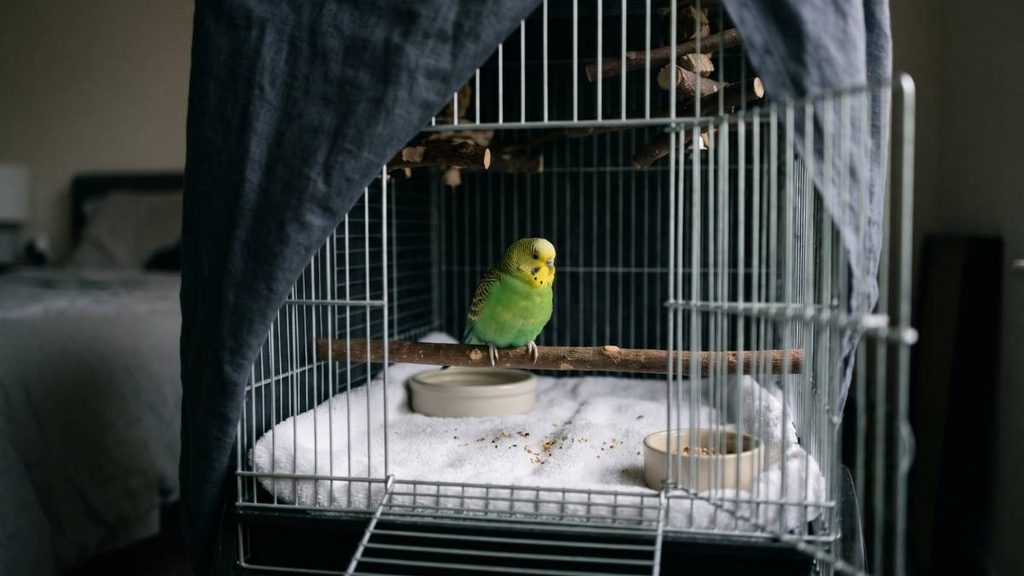
Set up a quiet recovery space and keep stress to a minimum while arranging veterinary care.
- Keep your budgie comfortably warm: If your bird appears weak or is showing signs of shock, a veterinarian may recommend controlled warming. Avoid setting a fixed high temperature or placing a heat source where the bird cannot move away from it.
- Keep it quiet: Reduce noise and activity. Covering part of the cage may help your bird feel secure, but ensure adequate ventilation.
- Lower the perches: If your bird is weak, place perches close to the cage floor and provide a safe, soft landing area to reduce the risk of a fall.
- Offer food and water close by: Keep familiar food and fresh water within easy reach. Do not force-feed or force water into a weak bird.
- Skip unnecessary handling: Avoid unnecessary handling, which can increase stress and disturb the injured area.
Warning Signs of Shock and Severe Blood Loss
Check on your budgie frequently while following your veterinarian’s instructions. Seek emergency veterinary help immediately if you notice:
- A pale beak, cere, or feet
- Extreme lethargy or unresponsiveness
- Sitting fluffed on the cage floor and unable to perch
- Rapid or labored breathing, or tail bobbing
- Cold feet or visible weakness
Birds hide illness instinctively, so subtle changes count. Our guide on how to tell if a parakeet is sick covers these and other symptoms in more detail.
Conclusion
A broken blood feather budgie emergency feels alarming, but preparation can help you respond safely. Keep clean gauze, a small towel, and suitable first-aid supplies available. Apply gentle pressure to minor bleeding, avoid pulling large flight feathers yourself, and let an avian veterinarian assess the injury and handle removal whenever it is needed. Afterward, keep your parakeet calm and quiet, and watch closely for signs of shoc
References :
- Association of Avian Veterinarians (AAV) clinical guidelines
- Clinical Avian Medicine (Harrison and Lightfoot)
- Avian Medicine (Samour)
Educational Disclaimer: This article is for educational purposes only and is not a substitute for professional veterinary care. Always consult a qualified avian veterinarian for diagnosis and treatment of your bird.