A healthy parakeet grooming routine starts with the bird itself, not with you. Budgies are meticulously clean animals, and in a well-set-up home they handle nearly all of their own budgie grooming without human help. Understanding that natural routine is the foundation for everything else in this guide.
How Your Budgie Maintains Itself
A budgie spends hours each day on self-care. Preening is the main task: the bird draws each feather through its beak to realign the barbs, spread protective oil from the preen gland at the base of the tail, and clear away dust and debris. It also nibbles the waxy sheaths off new pin feathers as they emerge. Beak maintenance happens alongside this. Because a parakeet’s beak is made of keratin that grows continuously, chewing, grinding, and rubbing it on safe materials such as wood and suitable chew toys help wear it naturally.
Standard references such as Harrison’s Clinical Avian Medicine treat regular, thorough preening as a core marker of a well bird.
The Owner’s Role: Facilitate, Don’t Groom
You are not grooming a budgie the way you would brush a dog or bathe a cat. Your job is to support the behaviors your bird already performs well: provide baths, suitable chew materials, and safe, varied perches, then step in only where captivity falls short. Nails are the main example. Indoor perches may not wear them down sufficiently, so they sometimes need occasional trimming.
Everything else is about watching closely and keeping the environment right.
Essential Parakeet Grooming Supplies
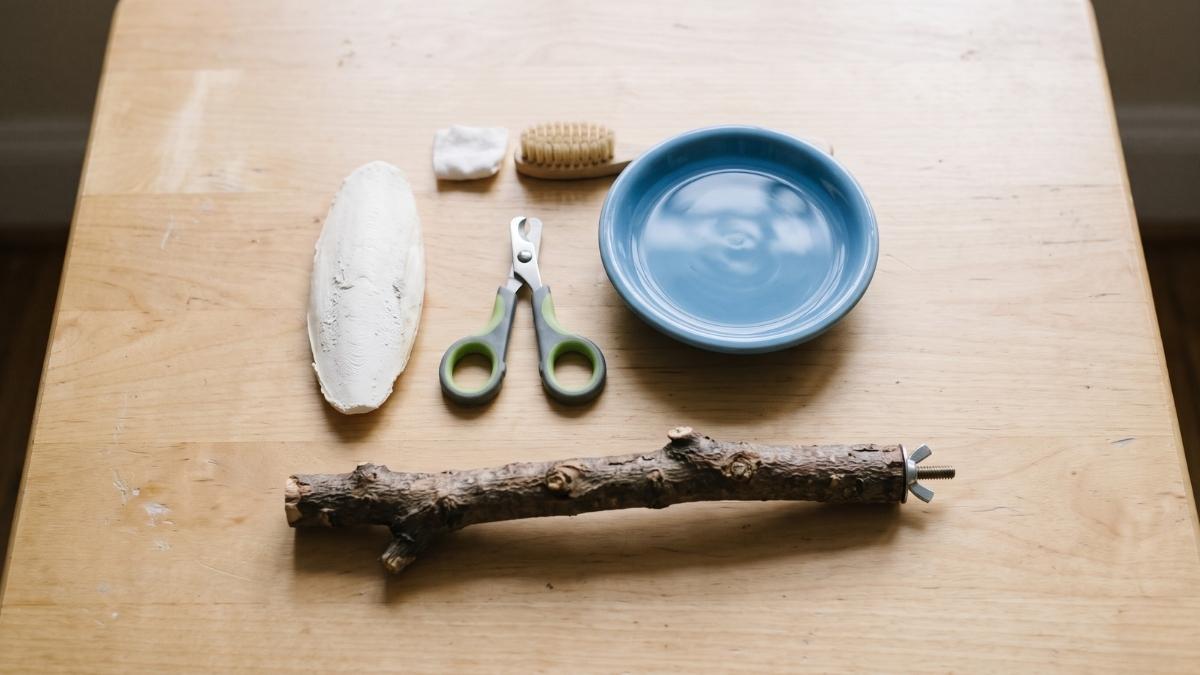
A well-equipped cage and a small first-aid kit cover nearly every grooming need your budgie will have. Everything below is bird-safe when chosen and used appropriately, and is generally easy to find at pet stores or through your avian vet.
Parakeet Grooming Toolkit
| Grooming Item | Primary Purpose | Frequency of Use |
| Cuttlebone | Provides a surface for chewing and may supply additional calcium | Can be offered in the cage replace when worn down or soiled |
| Shallow bird bath or dish | Encourages bathing, which helps keep feathers clean and supports preening | Offered several times per week, or daily if your bird enjoys it |
| Natural wood perches (varied diameters) | Exercises the feet and may provide some natural nail wear | Permanent cage fixtures rotate or replace when heavily chewed |
| Small nail clippers or scissor-style trimmers | Shortens nails that have grown too long | Only when needed |
| Styptic powder or cornstarch | Helps stop bleeding if a nail is clipped too short | Keep on hand use only in an emergency |
| Soft towel | Gently restrains the bird for a nail trim | Only during trims, when necessary |
| Bright light or flashlight | Helps show the blood vessel (quick) inside the nail | Only during trims |
Safe Choices and Items to Skip
Choose untreated, bird-safe wood such as manzanita or java wood, and avoid sandpaper perch covers, which can irritate the feet and cause sores. Mineral blocks are not essential for every bird, and their suitability depends on the bird’s diet and individual needs. Never use scented sprays, essential oils, or human grooming products on your budgie, since birds have highly sensitive respiratory systems.
Beak trimming tools are intentionally absent from this kit. Severe beak overgrowth needs a veterinarian, not home clipping.
Beak Care: Chewing and Trimming
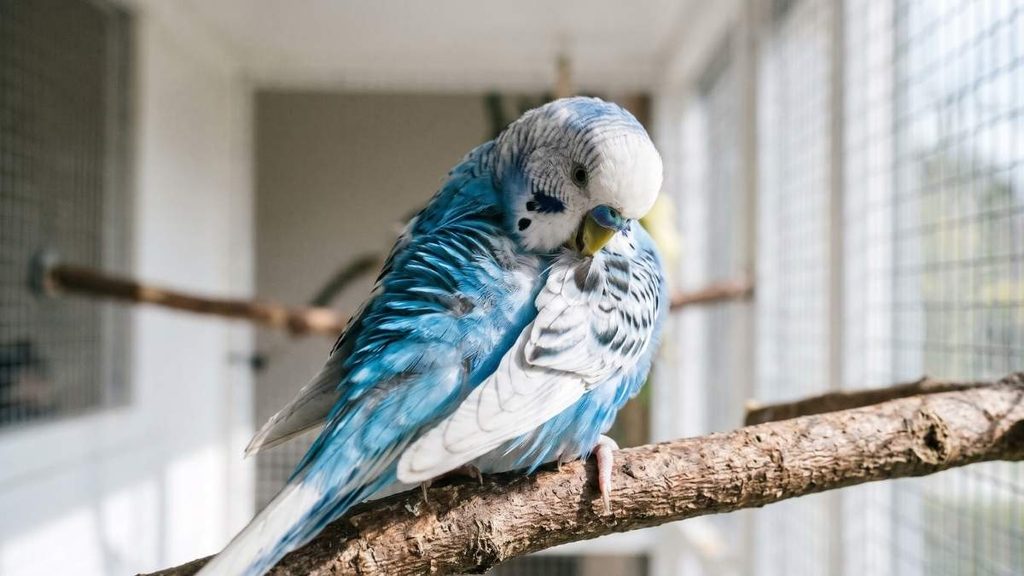
Parakeet beak care is mostly a hands-off job. A healthy budgie usually keeps its own beak in shape through normal chewing and activity. The beak is made of keratin that grows continuously, and everyday use helps wear it down. Provide safe natural wood perches and suitable chew toys. Cuttlebone can also be offered as an additional chewing material and calcium source, but it is not a guaranteed way to prevent beak overgrowth.
Never Trim or File a Beak at Home
Do not clip, file, or sand your budgie’s beak yourself, even if it looks a little long. The beak contains living tissue with a blood supply and nerve endings, so an injury can cause bleeding, pain, and infection. A beak that is shaped incorrectly can also make it hard for the bird to eat, and clippers can crack or split the keratin. Nail clippers and emery boards have no place in budgie beak care.
When an Abnormal Beak Signals a Medical Problem
An overgrown, flaky, or misaligned beak is a symptom, not simply a grooming problem. Avian references such as Ritchie, Harrison & Harrison’s Avian Medicine link these changes to underlying conditions, including:
- Liver disease, which can cause abnormal keratin growth and an overgrown, sometimes discolored beak.
- Knemidocoptic mites, which burrow into the beak and cere and produce a crumbly, honeycombed texture.
- Scissor beak, in which the upper and lower beak grow out of alignment, often due to malformation, trauma, or nutritional problems.
Book an appointment with an avian veterinarian if you notice any of these changes. The vet will diagnose the cause and decide whether the beak needs professional reshaping, while also treating any underlying condition.
Nail Maintenance for Indoor Budgies
In the wild, a budgie climbs and lands on rough, irregular branches and grass stems that help wear its nails down. Indoors, many perches are smooth, uniform in diameter, and gentler on the feet. Even a bird with suitable perches may end up with long nails, because a cage cannot fully replicate the variety of natural surfaces. Nails are the one part of budgie grooming where owners commonly need to step in.
Signs It’s Time for a Trim
Check your bird’s feet every few weeks. Nails may need attention if you notice:
- Snagging: The nails catch on clothing, toys, cage bars, or fabric perch covers, which can lead to a torn nail or trapped toe.
- Sideways toes: When the bird stands on a flat surface, the nails are long enough to push the toes out to the side instead of letting the foot rest naturally.
- Curling: Nails visibly curve into a hook or spiral.
- Difficulty perching: The bird seems unsteady, grips awkwardly, or avoids certain perches.
Helping Nails Wear Naturally
Offer perches in several diameters and textures, including natural wood branches, and rotate them occasionally. Natural surfaces may provide some gentle friction and help with nail wear, but they cannot guarantee that trimming will never be needed. Avoid sandpaper covers, which can cause foot sores.
When nails are long enough to snag on perches or distort the feet, follow the proper nail trimming steps. That guide covers restraint, locating the quick, and how to use styptic powder or cornstarch if a nail bleeds. If you are nervous about the first trim, an avian vet or experienced groomer can demonstrate the technique.
Bathing and Feather Health
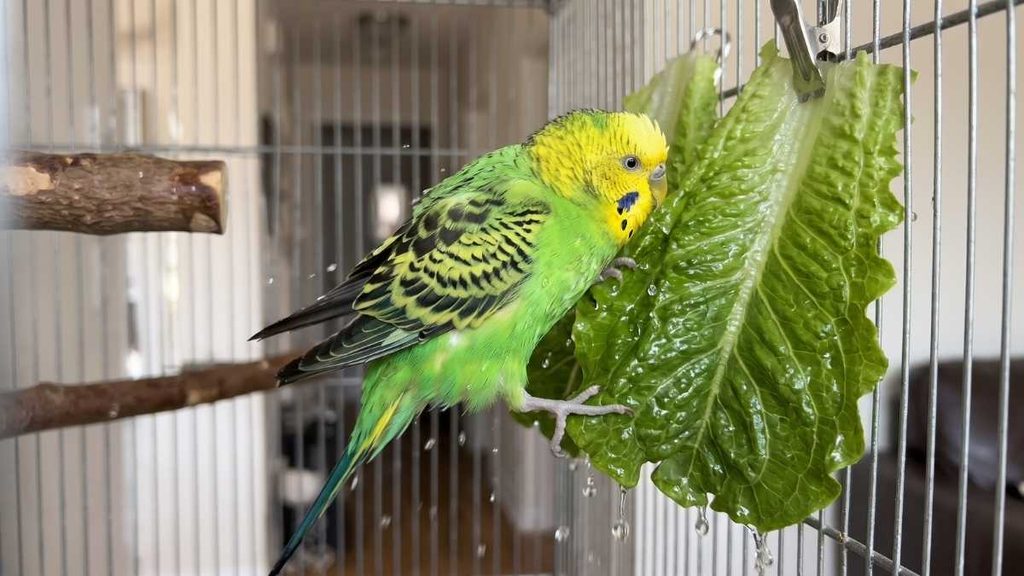
Regular bathing is one of the most useful things you can offer as part of a healthy parakeet grooming routine. Water can soften the keratin sheaths around emerging pin feathers during a molt, making them easier for your budgie to preen away. Baths also help wash away loose dander and debris from the feathers, supporting normal feather care. Many owners find that budgies who bathe regularly have tidier-looking feathers, although bathing preferences vary from bird to bird.
Safe Bathing Methods
Let your bird choose the method it likes best:
- Shallow dish: Offer a wide, shallow dish with about one centimeter of lukewarm water, placed in the cage or on a play stand.
- Wet leafy greens: Dampen romaine, kale, or cilantro and place it in the cage. Many budgies rub against the leaves, which mimics bathing in wet foliage.
- Gentle misting: Use a clean spray bottle that has never held chemicals, set to a fine mist, and spray above the bird so droplets fall like light rain. Avoid aiming directly at the face.
Setting a Schedule Without Forcing It
Never dunk, hold, or spray a frightened budgie. Forced bathing creates stress and can make the bird avoid water altogether. Offer water at a consistent time of day, preferably in the morning so feathers have time to dry, and let the bird participate on its own terms. For guidance on how often budgies should bathe, including adjustments for molting and cooler weather, see that dedicated guide. If your bird consistently ignores water, try a different method before giving up.
Preening vs Over-Grooming
Every budgie carries a built-in conditioning system: the uropygial gland, also called the preen gland, a small oil-producing gland at the base of the tail. When your parakeet preens, it rubs its beak against this gland, picks up a thin film of oil, and spreads it along its feathers. The oil helps condition and waterproof the plumage and maintain feather flexibility. This is why a healthy bird’s feathers often look smooth and slightly glossy, and why daily preening deserves to be left undisturbed.
Healthy Preening vs Feather Destruction
Normal preening is calm, orderly, and spread across the day, often in relaxed sessions after bathing or meals. The bird works through its wings, chest, back, and tail, and its feathers stay intact. Trouble starts when grooming becomes focused, frantic, or damaging. Warning signs include:
- Bald patches, broken feather shafts, or chewed feather edges
- Repeated attention to one body area, especially the chest or flanks
- Visible skin irritation, redness, or bleeding
- Feather damage that appears alongside changes in appetite, droppings, or mood
Because causes range from stress and boredom to parasites, skin infection, and nutritional or hormonal problems, owners shouldn’t guess. To learn the difference between budgie preening and plucking, review that guide, then schedule a veterinary exam if you see persistent damage.
Sources & Veterinary References
- Veterinary Textbooks: Avian Medicine: Principles and Application by Ritchie, Harrison & Harrison; and Clinical Avian Medicine by Harrison and Lightfoot.
- Association of Avian Veterinarians (AAV): Basic Care for Companion Birds
- Merck Veterinary Manual: Management of Pet Birds (Routine Care)
Conclusion
A sound parakeet grooming routine is mostly about observation. Provide clean water for bathing, safe chew materials, varied perches, and a calm environment, then watch your budgie’s daily habits so you can spot changes early. Sudden shifts in preening, beak shape, or nail length are often your first clue that something needs attention.
Educational Disclaimer: This article is for educational purposes only and is not a substitute for professional veterinary advice, diagnosis, or treatment. Consult a qualified avian veterinarian about your bird’s specific health concerns.