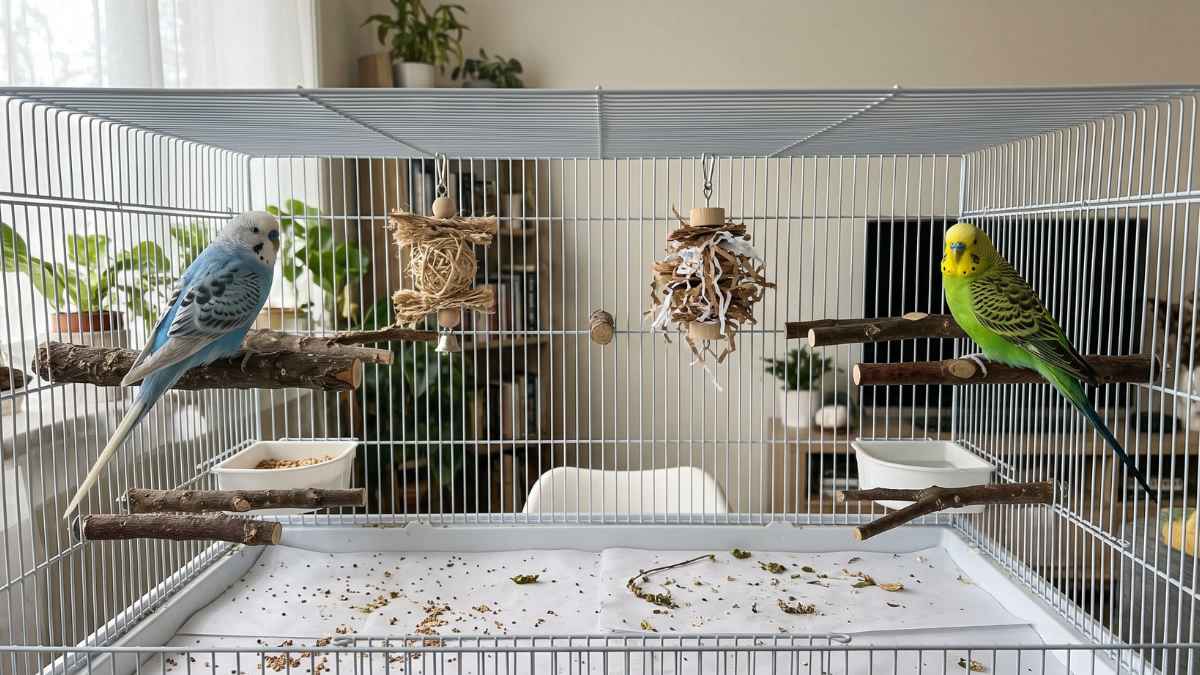
If you have just watched one budgie pin another against the cage bars, you are probably asking yourself: can parakeets kill each other? The honest answer is yes. It is uncommon, and most budgie squabbles never go beyond loud chatter and posturing. But severe territorial or hormonal aggression can result in serious injuries and, in rare cases, death, especially when the victim cannot escape.
The Hard Truth About Parakeet Aggression
Death is a rare outcome, but it is real, and it is why a serious fight should never be dismissed as “them sorting it out.” More commonly, severe parakeet aggression causes injuries such as damaged toes, beak injuries, facial wounds, and patches of plucked or torn feathers.
A budgie’s beak is a strong tool designed to crack seed husks and manipulate food. During an attack, bites can injure another bird’s toes, face, cere, or eyes. Because budgies are small, even an injury that looks minor can cause significant blood loss, shock, or infection.
Escape is an important factor. In the wild, a losing bird may fly away. In a cage, it has limited room to escape, and an aggressive bird may continue attacking a cornered cagemate. That is why serious aggression calls for immediate separation, not a wait-and-see approach.
Budgies Fighting or Playing? How to Tell the Difference
Mild bickering is normal between two budgies sharing a space. They may squabble over a favorite perch or a millet spray, then settle within seconds and go back to preening side by side. That is ordinary social negotiation.
True parakeet aggression looks different. The behavior becomes persistent, with one bird repeatedly pursuing, biting, or preventing the other from moving away.
Playing vs. Aggressive Behavior
| Behavior Context | Normal Play / Mild Squabble | Dangerous Aggression |
| Beak jousting | Brief, light tapping or beak-locking; either bird can disengage | Hard bites aimed at the face, eyes, or feet; one bird clamps on and holds |
| Chasing | Roles may swap; both birds act normally afterward | One bird repeatedly pursues while the other flees, hides, or is cornered on the cage floor |
| Vocalization | Chatter, chirps, and short grumbles | Sustained screeching or hissing, especially distress calls from the victim |
| Body posture | Relaxed stance and normal movement | Repeated lunging, open-beak threats, raised wings, or a defensive posture; interpret these signs in context |
| Aftermath | Preening or perching together | Blood, missing feathers, or a bird that hides, fluffs up, or stops eating |
When to step in: Intervene immediately if you see blood, a bird being repeatedly cornered, bites that hold on, or the same bird targeted repeatedly. If you are unsure whether you are watching budgies fighting or playing, separate them safely. A temporary separation is far safer than allowing a potentially dangerous fight to continue.
Top Triggers for Parakeet Aggression
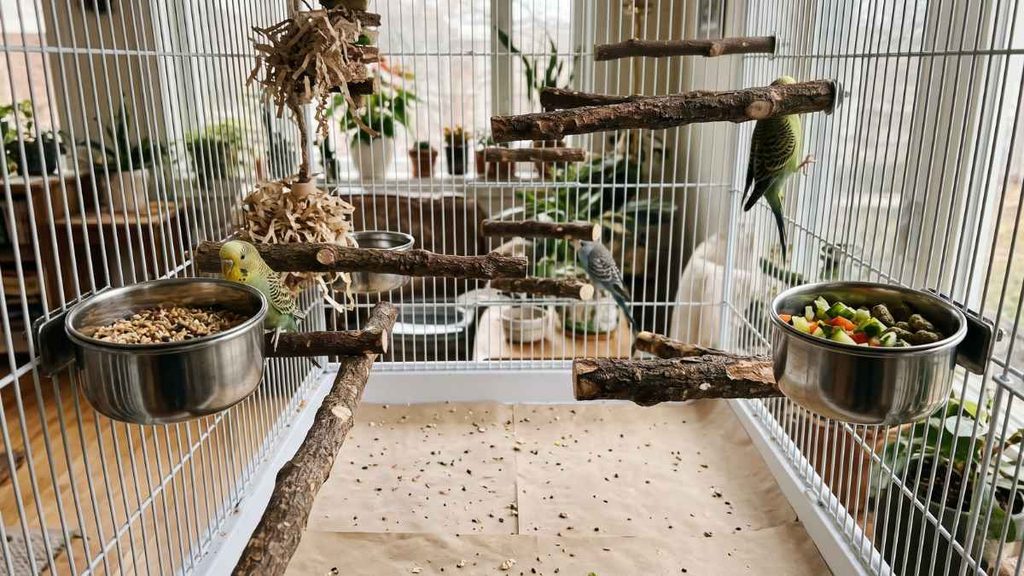
If you keep asking yourself why your budgies are attacking each other, the answer may trace back to one or more common triggers. Identifying the cause matters because aggression can become more serious when the underlying problem goes unaddressed.
1. Resource Guarding
A budgie may claim a single food bowl, a favorite swing, or the one perch closest to the millet, then attack any bird that approaches. The guarding bird may treat a shared resource as something to defend. Offer duplicate food dishes, water sources, toys, and swings, and place them at opposite ends of the cage so neither bird can control everything from one spot.
2. Hormonal and Breeding Frustration
Hormonal budgies, especially hens, may treat a dark corner, nest box, or cardboard hut as a nest and attack anyone who comes near, even a longtime cagemate. Warning signs can include shredding paper, nesting behavior, and persistent defense of one spot. Remove nest boxes and other nest-like spaces, avoid providing dark enclosed areas that encourage nesting, and maintain a consistent day-and-night routine with adequate uninterrupted sleep. Avoid encouraging breeding behavior through inappropriate nesting materials or breeding conditions.
3. Lack of Space
Cramped quarters can force two birds into constant contact, making every perch or feeding area a potential point of conflict. An undersized cage can contribute to resource competition and chronic stress, and a bird with no room to retreat may struggle to escape an aggressor. Compare your setup against the minimum budgie cage dimensions and remember that width matters because budgies need horizontal room to move and exercise.
How to Safely Separate Fighting Budgies
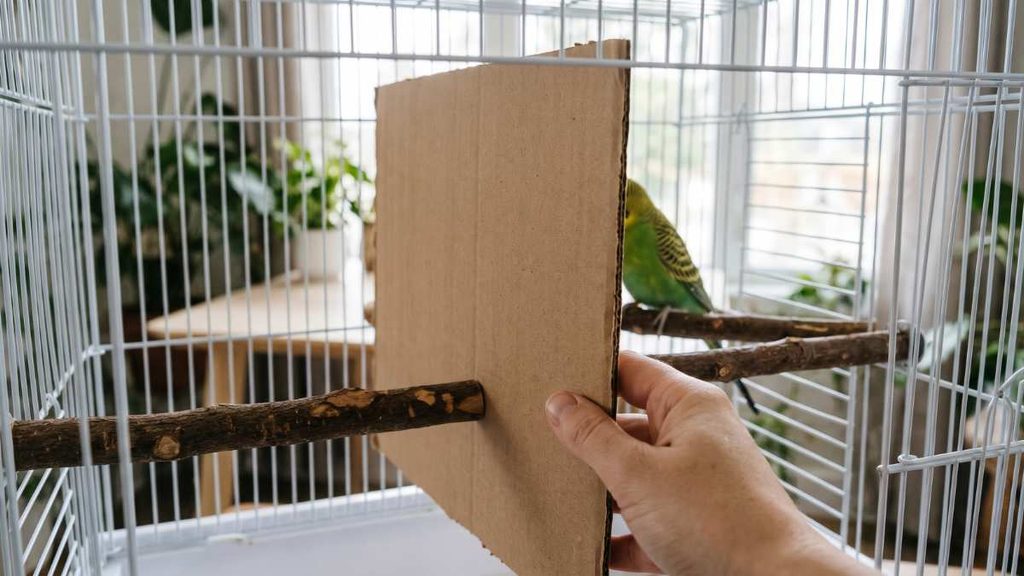
When a fight turns vicious, act quickly. A bird being held, cornered, or bitten repeatedly can suffer serious injuries in a short time. Follow these steps to separate fighting budgies while reducing the risk of further injury.
Step-by-Step Separation
- Stay calm and keep your hands out. Never push bare fingers into a biting match. A budgie’s beak can break your skin, and a startled bird may redirect its bite onto your hand or its cagemate.
- Block, don’t grab. Use a small towel or a flat piece of cardboard as a barrier to break physical contact and separate the birds. Move slowly and avoid striking or pushing either bird.
- Separate the birds safely. Once they are apart, place them in separate secure cages. If you need to handle a bird, use a soft towel only when necessary and avoid putting pressure on its chest.
- Check the victim. Look for bleeding, difficulty gripping, drooping wings, swelling, or labored breathing. Handle the bird as little as possible, especially if it appears weak or distressed.
- Keep the birds apart. Place their cages where they cannot reach or bite each other through the bars. If seeing each other triggers further aggression, move them into separate rooms.
Set Up a Quiet Recovery Space
If the injured bird is stable and can perch normally, provide a quiet, comfortable cage with food and water within easy reach. If it is weak, bleeding, unable to perch, or having difficulty breathing, avoid unnecessary handling and seek urgent veterinary help rather than trying to manage the injury at home.
Keep the environment calm and free of other pets. Once the bird is settled, follow these tips on how to calm down a parakeet to reduce stress while it recovers.
If you see bleeding that does not stop, a missing toe, eye damage, or breathing difficulty, contact an avian vet immediately.
Preventing Future Fights in Your Flock
Once the injured bird has recovered, prevention is essential to reduce the chance of another attack. The goal is to reduce competition and remove environmental triggers that may encourage territorial behavior.
Give Every Bird Its Own Resources
- Two of everything: Provide separate food bowls, water stations, and duplicate toys, swings, and cuttlebones, spaced apart so one bird cannot guard all of them.
- Multiple high perches: Budgies prefer to sit high, so offer several suitable perches at different positions to reduce competition over a single favorite spot.
- Clear sight lines: Avoid cluttered layouts with dead ends where a bird can be trapped. Make sure each bird has room to move away from another.
- Rotate toys: Swapping toys occasionally can reduce boredom and provide new opportunities for exploration. Avoid introducing a highly valued item that one bird may guard.
Reintroduce Birds the Right Way
Do not immediately return separated parakeets to the original cage. The aggressor may continue to defend the same territory, and the previous conflict may resume.
If both birds have recovered and the underlying cause has been addressed, a gradual reintroduction may be considered. Start with separate cages placed at a safe distance from each other. If both birds remain calm, the cages can gradually be moved closer while ensuring they cannot bite through the bars.
Only consider short, closely supervised interactions in a neutral space when both birds appear comfortable. Stop immediately if you see lunging, repeated chasing, biting, or cornering. Do not rush the process or assume that a certain number of days is enough.
Some pairs never reconcile, and that is a safe outcome rather than a failure. Review the rules for housing two parakeets in the same cage to confirm your pair is well matched, and consider keeping an incompatible pair in separate cages permanently. A bird living separately in a calm environment is far safer than one living with an aggressor.
Conclusion: When to See an Avian Vet
So, can parakeets kill each other? In rare and extreme cases, yes. More often, severe budgie aggression leaves lasting harm such as damaged toes, injured beaks, and torn feathers. The rule never changes: serious aggression requires immediate separation, followed by a review of the cage setup, available resources, space, and any possible breeding triggers.
Check Both Birds Thoroughly
Examine the victim and the aggressor, because either bird can be hurt. Look carefully without forcing the bird to struggle or causing additional stress. Watch for:
- Hidden bleeding under the wings, around the neck, and near the vent
- Eye injuries, including swelling, squinting, discharge, or a closed eye
- Toe bites or a foot the bird will not put weight on
When to Call the Vet
Contact an avian veterinarian promptly if either bird has been bitten or injured, even if the wound looks small. Birds can hide signs of pain and illness, and a bird that is fluffed up, unusually quiet, or eating less may need urgent assessment. Bleeding that will not stop, eye damage, a missing toe, weakness, or labored breathing requires emergency veterinary attention.
Sources & References
- Bird Behavior & Aggression Triggers: Best Friends Animal Society (Bird Behavior and Training)
- Pet Bird Communication & Territorial Management: Lafeber Company (Bird Behavior Guide)
- Avian Health & Emergency Care: Association of Avian Veterinarians (AAV)
Disclaimer: This article is for educational purposes only and is not a substitute for professional veterinary advice, diagnosis, or treatment. If your budgie is injured or you are concerned about its health, consult a qualified avian veterinarian promptly.