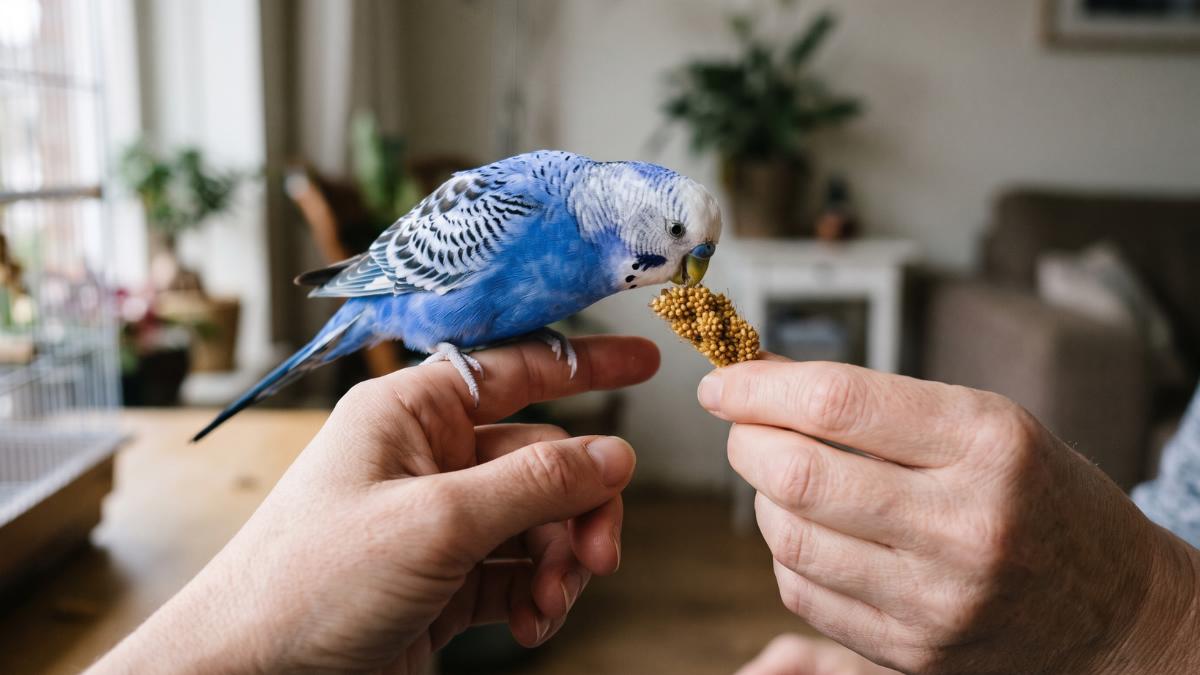
Building trust with a budgie takes time, patience, and consistency. Budgies are naturally cautious birds, especially when they enter a new home. They need to feel safe before they become comfortable around people.
Some budgies start approaching their owners within a few days, while others may take several weeks or even months. The key is to let your bird move at its own pace rather than trying to force interaction.
Whether you have a newly adopted budgie or one that is still afraid of your hands, these simple steps can help you build a positive relationship.
Understanding Your Budgie’s Behaviour
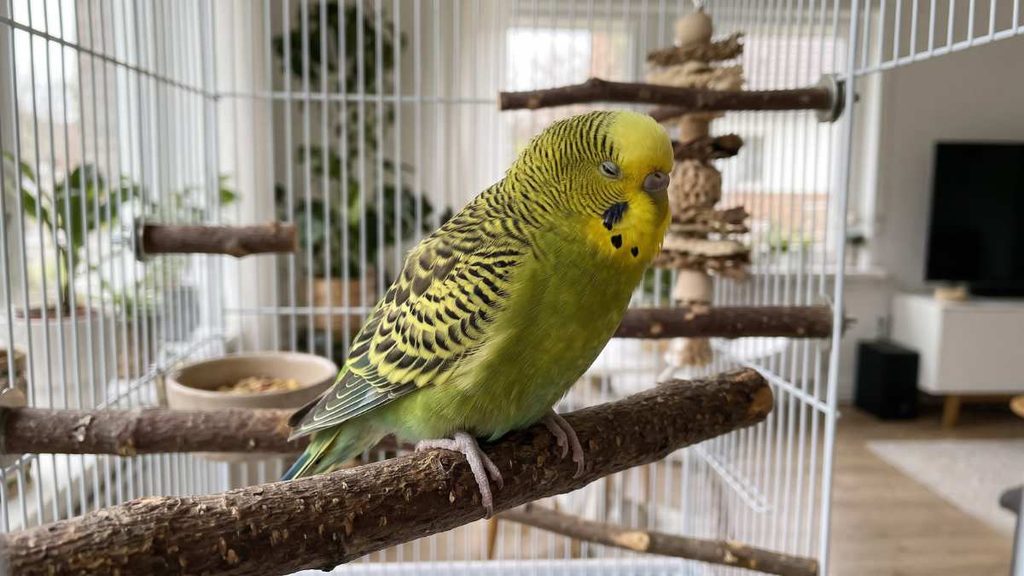
Before starting any taming process, it is important to understand your budgie’s body language. Birds communicate through small movements, and recognising these signs can help you avoid making them uncomfortable.
| Behaviour | What it may mean |
| Moving away from your hand | Your budgie may feel uncomfortable or threatened |
| Leaning towards you | Your budgie may be curious or interested |
| Fluffed-up feathers | Can indicate relaxation, but persistent fluffing may also signal illness |
| Beak grinding | Often a sign of relaxation, especially before sleep |
| Wide eyes or a stiff posture | May indicate alertness, excitement, or fear depending on the situation |
| Open-beak breathing | Can indicate overheating, stress, or a health problem |
Pay attention to your bird’s overall behaviour rather than relying on one sign alone. If your budgie repeatedly moves away, freezes, or tries to escape, give it more space.
The 7-Day Taming Rule: A Simple Starting Plan
The 7-Day Taming Rule is a basic framework to help you start building trust with your budgie. It is not a guaranteed method or a fixed deadline. Some birds become comfortable quickly, while others need much longer.
The goal is to make your presence and hands feel safe through gradual, positive experiences.
Days 1–2: Let Your Budgie Get Used to You
During the first couple of days, focus on helping your budgie feel comfortable in its new surroundings.
- Sit near the cage and speak in a calm, gentle voice.
- Avoid sudden movements or loud noises around the cage.
- Do not try to touch, grab, or chase your budgie.
- Spend short periods near the cage and give your bird time to observe you.
- Avoid prolonged direct staring, as it may make a nervous bird uncomfortable.
If your budgie seems frightened, increase your distance and allow it to settle before trying again. The aim is simple: help your budgie understand that your presence does not pose a threat.
Days 3–4: Introduce Your Hand Slowly
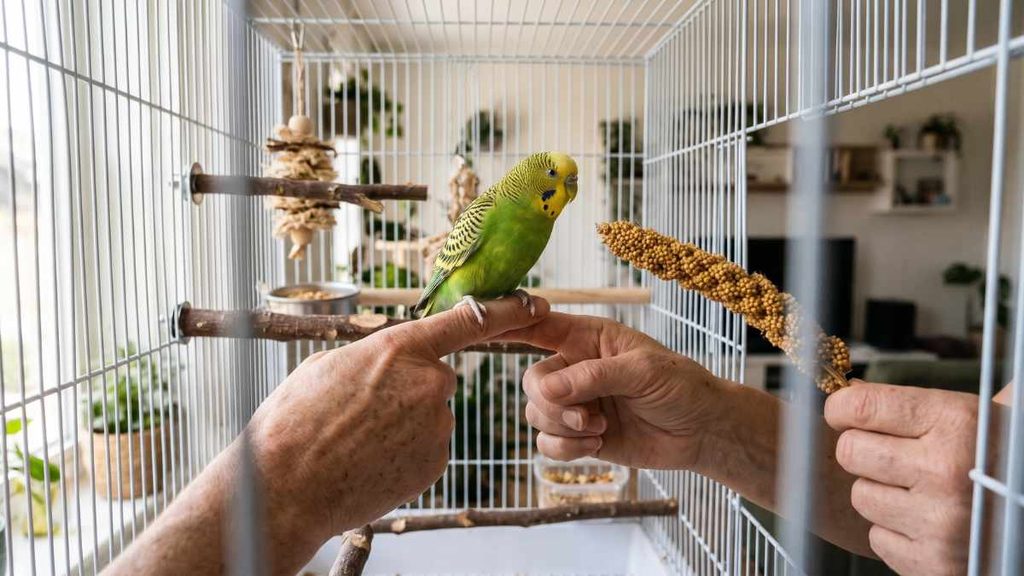
Once your budgie seems more comfortable with you nearby, you can begin introducing your hand.
- Start by placing your hand near the cage without making sudden movements.
- Offer a small piece of millet through the cage bars.
- If your budgie approaches voluntarily, let it take the treat without trying to touch it.
- If it moves away, do not follow it with your hand.
- Gradually move closer only when your bird appears comfortable.
Some budgies may accept treats through the bars, while others need more time. If your bird is frightened by a hand inside the cage, do not force this step. Continue offering treats from outside and progress gradually.
Millet can be a useful reward because many budgies enjoy it. However, never withhold regular food or make your bird hungry to encourage interaction.
Days 5–7: Encourage Your Budgie to Step Up
If your budgie is comfortable taking treats from your hand, you can begin introducing step-up training.
- Hold your finger steadily near your budgie’s feet.
- Offer a small piece of millet to encourage it to approach.
- Allow your budgie to step onto your finger voluntarily.
- Reward it calmly when it makes progress.
- Keep the training sessions short and stop if your bird shows signs of fear.
Do not push your finger against your budgie’s belly or force it to step up. Give it time to understand what you are asking.
If your budgie is not ready by day seven, continue with the earlier steps. There is no need to rush the process.
Common Mistakes to Avoid While Taming a Budgie
Even with good intentions, some actions can make a budgie more fearful of its owner. Avoid these common mistakes:
- Chasing your budgie around the cage: This can increase fear and make it less comfortable around your hands.
- Grabbing it unnecessarily: Never catch your budgie just to make it familiar with your touch.
- Moving too quickly: Progress should depend on your bird’s comfort, not a fixed schedule.
- Making sudden movements: Quick hand movements can frighten a nervous bird.
- Forcing step-up training: Allow your budgie to approach and step onto your finger voluntarily.
- Ignoring signs of stress: If your bird repeatedly retreats or tries to escape, stop and give it space.
If your budgie is already very frightened, learning how to calm down a parakeet can help you understand how to create a more comfortable environment.
How Long Does It Take for a Budgie to Trust You?
There is no exact timeline for building trust with a budgie. Some birds may begin accepting treats within a few days, while others may need several weeks or months before they feel comfortable stepping onto a hand.
A budgie’s age, previous experiences, personality, and environment can all influence how quickly it becomes comfortable. Consistency matters more than speed. Short, positive interactions are generally more helpful than long sessions that leave your bird frightened.
Building a Strong Bond With Your Budgie
Trust does not come from taming alone. Your budgie also needs a comfortable environment, proper nutrition, enough rest, and regular opportunities for exercise and enrichment.
- Provide a balanced diet with suitable vegetables and other safe foods. You can learn more about a complete budgie diet and safe foods.
- Keep the cage clean and provide suitable toys and perches.
- Allow your budgie enough time to rest without disturbance.
- Spend time near your bird and talk to it gently.
- Respect its boundaries and allow it to choose when to interact.
With patience and positive experiences, your budgie may gradually become more comfortable sitting near you, taking treats, stepping onto your finger, and interacting with you.
Every bird has its own personality. Some enjoy close interaction, while others prefer a little more personal space. You can also learn more about whether parakeets and budgies get attached to their owners to understand how these birds form relationships with people.
Building trust is a gradual process. Let your budgie set the pace, celebrate small improvements, and focus on making every interaction a positive experience.
Sources & References
To ensure the highest standard of care, the behavioral training methods in this guide are drawn from established companion bird experts and force-free training protocols:
- Bird Behavior & Hand-Taming: Best Friends Animal Society (Bird Behavior and Force-Free Training)
- Lafeber Company: Earning Your Pet Bird’s Trust
- Association of Avian Veterinarians (AAV): Basic Care and Behavioral Enrichment for Companion Birds
Disclaimer: This article is for educational purposes only and is not a substitute for professional veterinary advice, diagnosis, or treatment. If your budgie shows signs of illness, severe stress, or sudden behavior changes, consult a qualified avian veterinarian promptly.