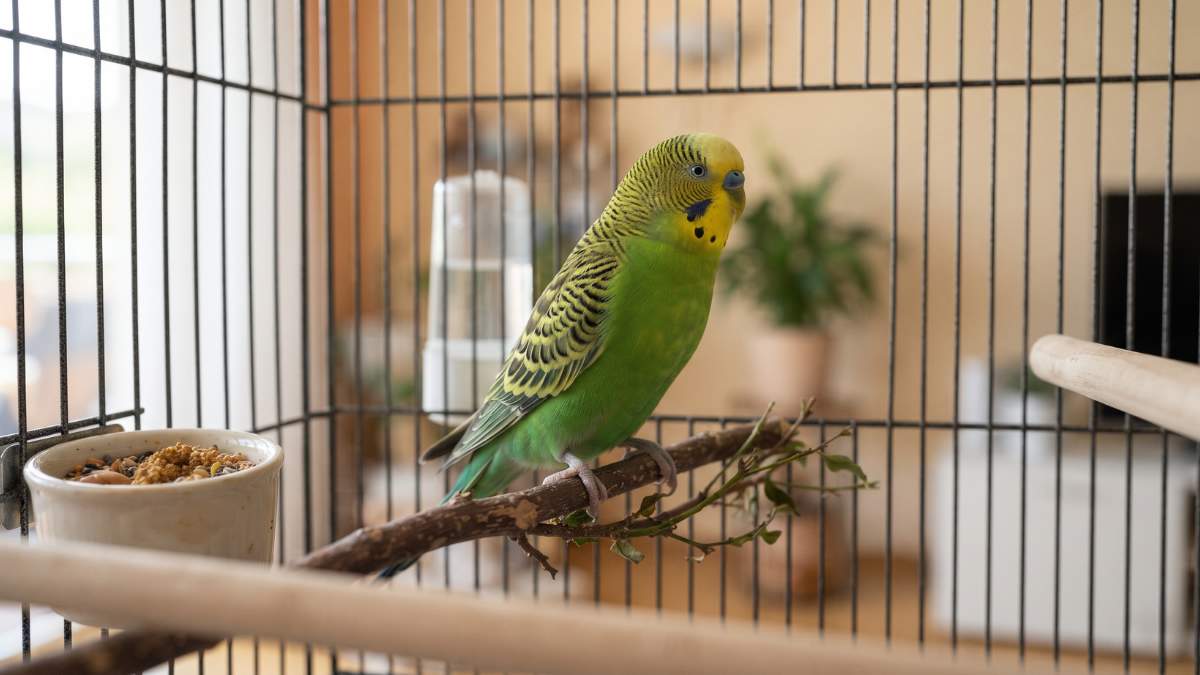
Knowing what normal parakeet poop looks like can help you notice possible health problems in your budgie. Birds instinctively hide signs of illness, so changes in their droppings can sometimes be noticed before obvious symptoms appear. Checking the cage paper every day, ideally at a similar time, is a useful way to monitor your bird’s health. A few seconds spent noting the color, shape, and consistency of fresh budgie droppings can help you recognise changes from your bird’s normal pattern.
To read those changes, you first need to know what you are looking at. Birds pass digestive and urinary waste through a single opening called the cloaca, so what lands on the paper is one combined dropping made of three distinct parts.
The 3 Parts of a Bird Dropping
1. Feces (the solid part) Feces are the digestive waste. In a healthy budgie, they usually appear as a formed, coiled or slightly curved central portion. Their color and texture can vary depending on what your parakeet has eaten and how well it is digesting its food.
2. Urates (the white chalky part) Urates are the creamy white, chalky waste produced by the kidneys. Instead of dissolving waste in large amounts of water, as mammals do, birds excrete much of their nitrogenous waste as a semi-solid paste. Urates typically appear as a white cap or patch alongside or on top of the feces.
3. Urine (the clear liquid) Urine is the clear, watery fluid that surrounds the feces and urates. In a healthy bird, it is usually present in a relatively small amount, leaving a faint damp area around the dropping. Because each part has its own normal appearance, a change in any one of them can be useful to notice.
What Does Normal Parakeet Poop Look Like?
Normal parakeet poop is usually small, well-formed, and fairly consistent from one dropping to the next. The feces may look like a tight coil, a small circle, or a short curved tube. Their size can vary depending on your budgie’s size, food intake, and the time of day. The texture should be moist but formed, holding its shape instead of spreading across the paper. Beside it, you should usually see a distinct white or creamy cap of urates and a small amount of clear urine.
Healthy budgie droppings are commonly green or brown, with the shade varying depending on diet. A bird eating mostly seed may produce darker green droppings, while a pellet-based diet can produce browner ones. Mild day-to-day variation is common. A sudden or persistent change in shape, color, or consistency is worth paying attention to, especially if your bird also behaves differently.
Budgie Poop Color & Texture Guide
| Dropping Appearance | Normal or Abnormal? | What It Means |
| Green or brown, firm and coiled, with white urates | Usually normal | Common appearance of healthy droppings, although appearance alone cannot confirm that a bird is healthy. |
| Clear, thin urine around the feces | Usually normal in small amounts | A small amount of liquid urine is a normal part of a dropping. |
| Red or purple | Needs investigation | Some foods can temporarily change the color, but unexplained red may indicate blood. |
| Black and tarry | Abnormal | May indicate digested blood from the digestive tract and needs prompt veterinary attention. |
| Bright yellow or lime-green urates | Abnormal if persistent | Can be associated with liver disease, reduced food intake, or other illness. |
| Loose, shapeless feces with excess liquid | Abnormal if persistent | May occur with digestive illness, infection, stress, or dietary changes. |
Do not wait for an abnormal dropping to last a full day if it contains blood, looks black and tarry, or appears alongside changes in behavior. Contact an avian vet promptly. Any persistent unexplained change also deserves veterinary advice.
Watery Poop vs. True Diarrhea
The most common misconception among new owners is that any wet dropping means diarrhea. Watery parakeet poop is often caused by extra urine, and it can be temporary. True parakeet diarrhea is a change in the feces themselves. Telling the two apart can help you recognise what has changed, although a veterinarian may need to examine your bird to identify the cause.
Polyuria: Excess Clear Urine
Polyuria means the bird is passing more urine than usual. The feces may stay coiled and well formed, and the urates may remain white, but a larger amount of clear liquid spreads around them.
Temporary increases in urine can occur after:
- Eating water-rich foods such as cucumber, lettuce, celery, or melon
- Bathing or drinking more water than usual
- Brief excitement or stress, such as a new environment or a vet visit
If the droppings return to their usual appearance and your bird is behaving normally, the change may have been temporary. Persistent or repeated polyuria, particularly without an obvious dietary or environmental reason, needs a veterinary check. It can be associated with kidney problems, diabetes, or other illnesses, but the cause cannot be identified from droppings alone.
True Diarrhea: Loss of Fecal Structure
In true diarrhea, the solid part has lost its usual shape. The feces look mushy, shapeless, or liquid, and may blend into the urates and urine so you can no longer clearly distinguish the three parts. This is concerning, particularly when it persists or appears with other symptoms. Possible causes include bacterial or parasitic infections, spoiled food, and dietary upset.
Small birds can become unwell quickly, so do not wait for a fixed 24-hour period if your budgie has repeated watery or abnormal droppings, reduced appetite, weakness, or other signs of illness. Contact an avian vet for advice.
Know Your Bird’s Baseline
The best way to judge a change is to know what is normal for your own bird. Eating, vocalizing, preening, and perching as usual alongside a temporary increase in clear urine can be reassuring, but these signs do not rule out illness. These are also some of the habits described in our guide on how to tell if your parakeet is happy. A budgie whose behavior has changed along with its droppings needs prompt attention.
How Diet Affects Budgie Droppings
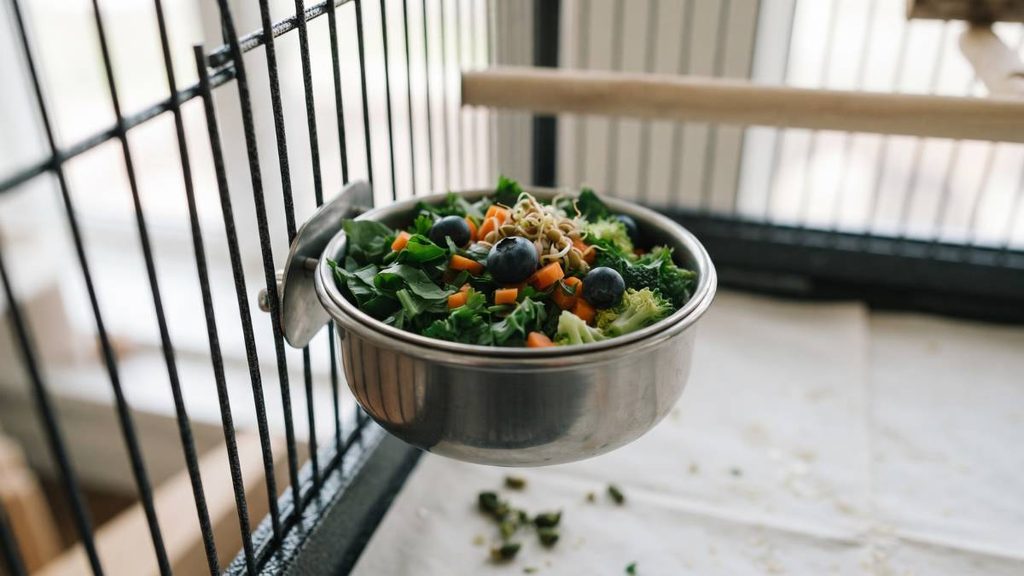
What goes into your parakeet can directly affect what comes out, and many changes in budgie droppings are temporary reflections of a recent meal. Knowing the usual diet-related patterns can help you recognise possible food-related changes while staying alert to signs that may need veterinary attention.
Seed and Pellet Diets
A seed-based diet may produce dark green feces with white urates. Pellets can change the appearance. Some colored pellets contain added dyes, which may affect the color of a budgie’s droppings. Depending on the ingredients and pigments, droppings may appear brownish or take on other shades. Natural, undyed pellets often produce browner or more uniform droppings. If you switch brands or food types, the color and appearance of the droppings may change as your bird adjusts.
Fresh Foods That Temporarily Change Color
Fresh produce can alter dropping color temporarily, which is one reason owners sometimes mistake a normal food-related change for a medical problem. Typical examples include:
- Blueberries and blackberries: can create dark blue, purple, or nearly black feces and staining
- Beetroot: may turn feces or urine red or pink, which can look alarmingly like blood
- Dark leafy greens: such as spinach or kale, can produce deeper green droppings
You can see which fresh foods are safe, and how often to offer them, in our complete budgie diet and safe foods guide.
When to Seek Advice
Food-related color changes are usually temporary, but the time they take to disappear can vary depending on the food and the bird. Do not rely on a strict 24-hour rule to decide whether a change is harmless. If an unusual color persists, cannot be explained by something your bird has eaten, or appears alongside changes in appetite or behavior, contact an avian vet. Red or black, tarry droppings should be assessed promptly rather than watched for a day.
Warning Signs: When to Call the Avian Vet
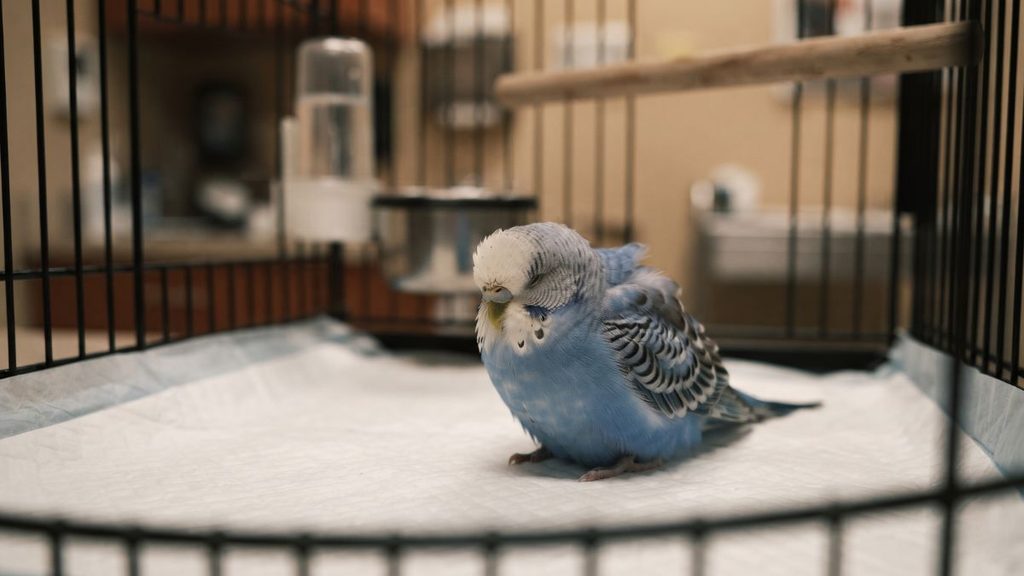
Many changes in droppings are temporary, but some can point to serious illness. Because birds may hide symptoms until they are quite unwell, treat the signs below as reasons to contact an avian vet promptly rather than simply waiting to see what happens.
Red Flags in Budgie Droppings
- Black, tarry droppings: May indicate digested blood from higher in the digestive tract, which can be associated with internal bleeding or other serious conditions. Some foods can also darken droppings, but unexplained black, tarry droppings need urgent veterinary assessment.
- Lime-green or bright yellow urates: Urates are normally white or creamy. A persistent green or yellow tint can be associated with liver disease, reduced food intake, or other illness. The cause needs veterinary diagnosis.
- Undigested seeds in the feces: Visible undigested food material is unusual and may suggest a digestive or absorption problem, particularly when your budgie is also losing weight or showing other symptoms. It needs veterinary evaluation.
- Foul odor: Fresh droppings normally have little smell. A strong, unusual, sour, or rotten odor may be a warning sign, especially when accompanied by changes in appearance or behavior.
- Bright red blood: Red that cannot be explained by beetroot or similar foods should not be ignored. Contact an avian vet promptly.
Droppings Plus Posture: A Medical Emergency
Abnormal droppings combined with a fluffed-up, sleepy, lethargic bird sitting at the bottom of the cage can indicate a serious illness and requires urgent veterinary attention. A bird in this condition may be struggling to maintain its normal body temperature or conserve energy. Read our guide on why your budgie is fluffed up and sleeping a lot, but do not delay veterinary care. Keep your bird quiet and comfortably warm while arranging transport, and avoid overheating it.
Do Not Use Home Remedies
Do not give over-the-counter medications, antibiotics, apple cider vinegar, or herbal treatments unless an avian vet specifically recommends them. These treatments may be ineffective, cause harm, or delay the correct diagnosis. A sick budgie needs a professional examination.
Disclaimer: This guide is for educational purposes only and does not replace professional veterinary advice, diagnosis, or treatment.
Sources and References
The information in this guide reflects standard avian veterinary teaching on droppings, digestion, and illness in companion birds. For further reading, consult the following:
Veterinary Reference Texts
- Harrison, G. J., & Lightfoot, T. L. (Eds.). Clinical Avian Medicine. Spix Publishing.
- Speer, B. L. (Ed.). Current Therapy in Avian Medicine and Surgery. Elsevier.
- Ritchie, B. W., Harrison, G. J., & Harrison, L. R. (Eds.). Avian Medicine: Principles and Application. Wingers Publishing.
Professional and Educational Resources