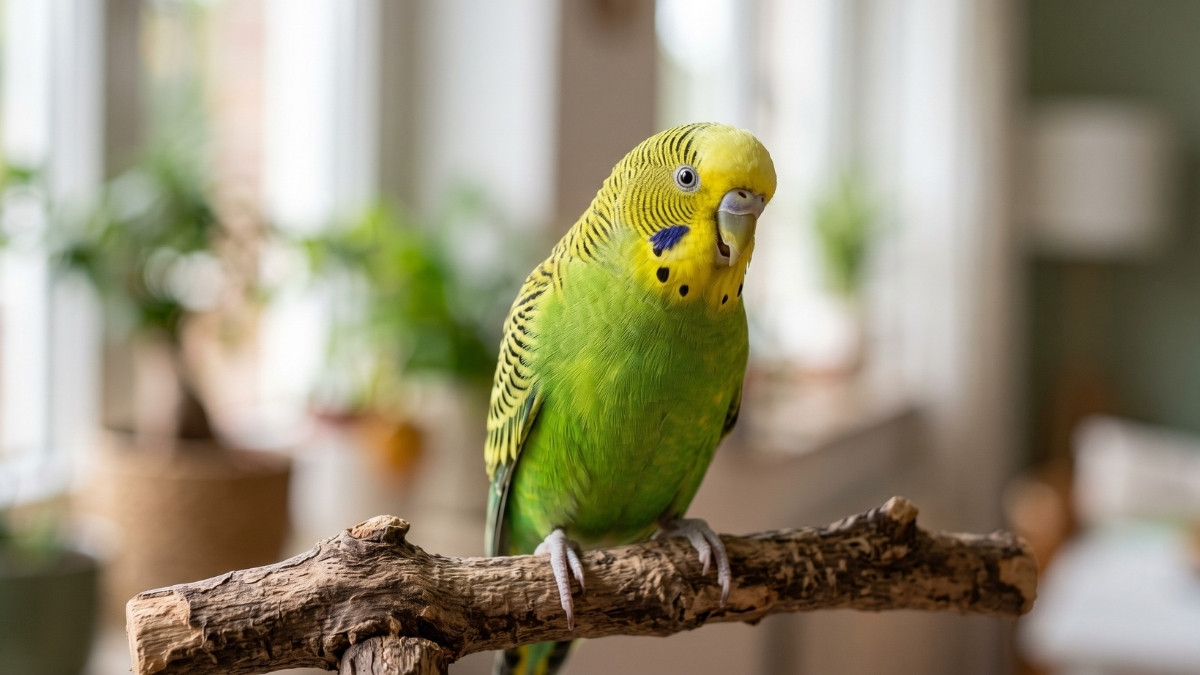
How do I know if my parakeet is happy? Look for a combination, not a single sign: relaxed body language, soft and varied vocalizations, playful curiosity, and an interest in the company around it. A thriving budgie moves through its day with energy and ease, and it engages with its surroundings.
Why does it matter? Budgies are prey animals, and prey animals tend to hide trouble. The Merck Veterinary Manual notes that birds often mask illness until a problem is well advanced, and stress can be easy to miss too. Regular, attentive observation is one of the most useful tools you have. Once you know what normal looks like for your bird, a change stands out.
It also helps to separate a bird that is quiet and tolerating from one that is truly thriving. A budgie that sits still, keeps its distance and causes no trouble isn’t necessarily content. It may simply be coping.
A thriving bird explores, plays, eats with interest, chatters, and seeks out company. Stillness can mean calm, or it can mean withdrawal, so the rest of the picture matters.
If you’re new to keeping a budgie, our Parakeet Care Guide covers the basics of daily care.
9 Clear Signs Your Budgie Is Happy and Thriving
No single behavior proves that your budgie is happy. Look for a pattern over days and weeks, and consider each sign alongside your bird’s normal body language, appetite and activity.
1. Continuous Soft Chattering and Singing
Happy budgie sounds are varied and fairly steady through the day. You may hear soft chirps, warbling and quiet babble, often with louder periods in the morning and late afternoon and quieter periods when your bird rests or eats.
Some budgies mutter to themselves, interact with a toy or mimic household sounds and words.
The tone matters. Contented chatter is usually relaxed, and the bird’s body language should look comfortable at the same time.
A harsh, repeated screech can mean something different, such as alarm, fear or distress. If you hear an unusual sound, look around for a possible cause, such as a sudden noise, perceived threat or another bird calling urgently.
A bird that mimics sounds is also showing engagement with its surroundings. If yours is picking up sounds, our guide on how to teach your budgie to talk can help you build on it.
2. Relaxed Beak Grinding at Bedtime or Perch Time
Beak grinding is a soft, dry, rasping sound made when a budgie rubs its upper and lower beak together.
You’ll often hear it when your budgie is drowsy and settled, such as on a favorite perch in the evening. Your bird may have its eyes partly closed or rest on one foot.
Beak grinding generally suggests that your bird feels safe enough to relax.
It’s a quiet sound, so it can be easy to miss. Sitting quietly near the cage in the evening can help you notice these small behaviors.
3. Fluffed Feathers While Relaxed
Budgies fluff their feathers for several normal reasons, including preening, stretching and settling down to sleep.
A brief, soft fluff can be normal parakeet body language. The bird may shake out its feathers, rearrange them and then smooth them down again.
A comfortable bird that’s resting should look relaxed overall. Its eyes may be bright or partly closed, its posture should be easy, and it should respond normally when something interesting happens nearby.
The difference is how long the fluffing lasts and what other signs appear with it.
A bird that stays puffed up for long periods, sits at the bottom of the cage, becomes lethargic or eats less may be unwell. VCA Animal Hospitals lists fluffed feathers among possible signs of illness in pet birds.
If your bird remains unusually fluffed up or shows other concerning changes, contact an avian or exotics veterinarian.
4. Quick Tail Wagging and Wing Stretching
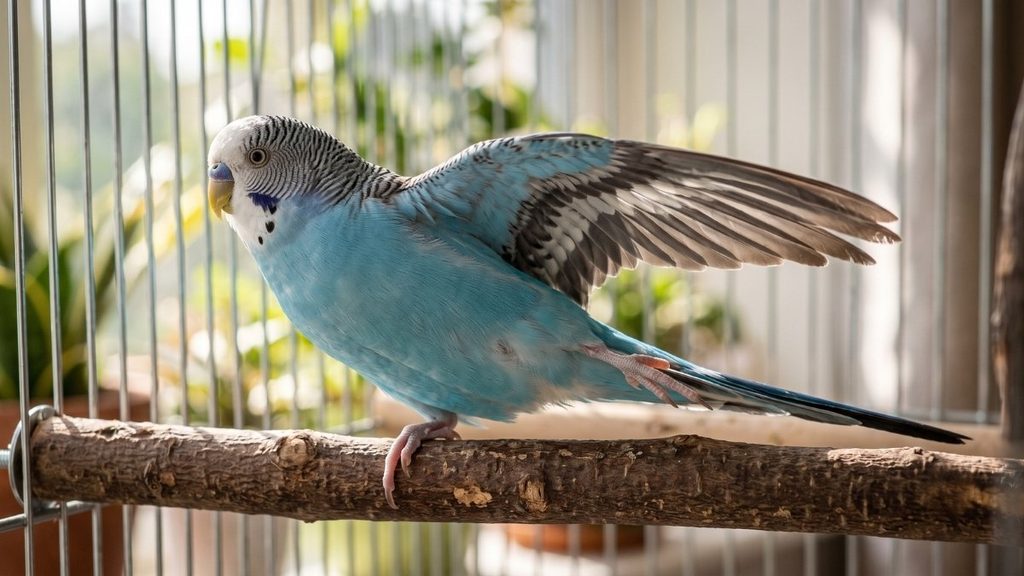
A quick, side-to-side tail wag can occur when a budgie settles after stretching or preening. Some birds may also do it during interaction or when they notice a familiar person.
However, don’t use tail wagging by itself as proof that your bird is happy. Always consider the rest of its body language.
Stretching can also be a sign of comfort. A relaxed budgie may extend one wing and the matching leg together before neatly tucking them back.
Birds that feel unsafe tend to remain tense and ready to move away, so a calm stretch can indicate that your bird feels comfortable in its surroundings.
Don’t confuse tail wagging with tail bobbing.
If your bird’s tail repeatedly moves up and down with each breath, especially if it is breathing heavily or with an open beak, contact an avian or exotics veterinarian promptly.
5. High Energy, Foraging and Toy Destruction
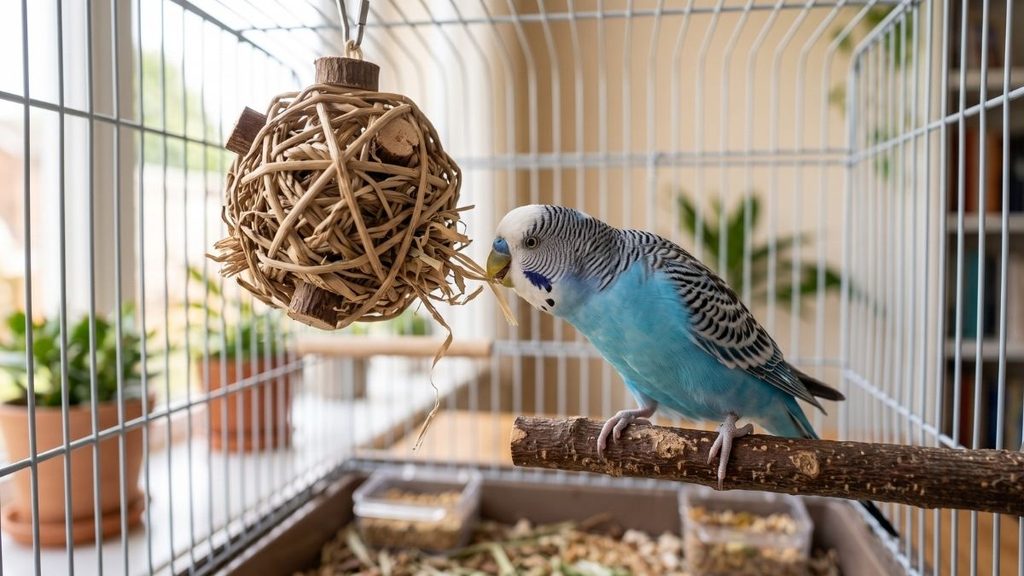
A thriving budgie is often busy.
It may climb the cage bars, hop between perches, play with toys, ring a bell or tear apart something it can safely chew.
Shredding toys isn’t necessarily misbehavior. Chewing and foraging are natural behaviors, and a bird that actively works on a safe paper or soft-wood toy is using its beak and exploring its environment.
Many budgies also enjoy foraging for food. They may investigate food on the cage floor or search through a safe foraging setup.
Watch the overall pattern.
A bird that is lively, interested in new objects and eating normally is generally showing healthy levels of activity. A sudden drop in activity or interest in toys deserves attention because birds can hide signs of illness.
6. Head Bobbing and Playful Bowing
Head bobbing is a quick, rhythmic up-and-down movement, and both male and female budgies can do it.
It may appear when a budgie is excited, greeting a familiar person or interacting with a cagemate, mirror or toy.
Head bobbing can be part of social and courtship behavior, so context matters.
A bird that bobs its head while chirping and interacting may simply be excited or socially engaged.
However, constant mirror-related courtship can encourage hormonal behavior in some birds. If head bobbing occurs alongside frequent regurgitation or other unusual changes, discuss it with your veterinarian.
7. Strong Appetite and Enjoyment of Fresh Foods
A thriving budgie usually eats with interest.
It may head toward its food dish at mealtimes, investigate different foods and show excitement about favorites such as fresh vegetables or a small amount of millet.
Active foraging can also be a positive sign. Your bird may sort through its food, nibble on a leaf or investigate a new vegetable.
Appetite is one of the useful things to monitor because a sudden change in eating can be an early warning sign of illness. VCA Animal Hospitals lists changes in eating among signs that can occur when pet birds are unwell.
Variety can also keep mealtimes interesting. Seeds alone do not provide a complete diet, so a balanced budgie diet should include appropriate formulated food along with suitable fresh foods.
For more information, see our complete budgie diet and safe foods guide.
8. Preening and Grooming in Your Presence
Budgies often preen when they feel secure.
You may see your bird smooth its feathers, groom around the base of its tail or run its beak along its wings.
If your budgie sits near you and calmly preens without constantly watching for danger, it can indicate a good level of comfort.
A bird that feels threatened is more likely to remain alert and focused on its surroundings.
Some budgies may also gently preen a person’s hair, fingers or eyebrows. This resembles the grooming behavior budgies use with flock mates and can be a sign that the bird is comfortable interacting with you.
9. Seeking Human Interaction and Stepping Up Freely
A budgie that moves toward the front of the cage when you approach, calls to you or chooses to perch on your shoulder or finger may be showing that it feels comfortable around you.
Look at how the interaction happens.
A bird that steps onto your finger willingly, without frantic fluttering or backing away, is showing trust in your hands.
A budgie that stays near you, chats, and seeks you out is showing deep social comfort and trust. If you want to know whether this bond has turned into true affection, explore our guide on the 7 signs your parakeet is attached to you.
Not every budgie will be highly interactive. Some birds are naturally more reserved and express contentment in quieter ways.
Your bird doesn’t need to be a lap bird to be happy. Look at the overall pattern and compare its behavior with what is normal for that individual bird.
Happy Budgie vs. Stressed or Unwell Budgie
Stress and illness can sometimes look similar in birds, so this comparison should be used to spot changes rather than diagnose a problem.
| Behavior | Happy, thriving budgie | Stressed or unwell budgie |
|---|---|---|
| Body posture | Relaxed posture, smooth feathers, normal stretching | Rigid or crouched posture, prolonged fluffing, sitting low or on cage floor |
| Sounds | Soft chatter, warbling, normal vocalizations | Harsh repeated screeching or sudden unusual silence |
| Eating | Active and interested in food | Eating less, picking at food or ignoring favorite foods |
| Interaction | Curious, approaches you and plays | Hiding, avoiding contact or becoming unusually defensive |
Subtle Warning Signs to Watch For
Some changes are easy to dismiss.
- Sitting silently on the cage floor: A healthy budgie normally prefers to perch. Sitting on the floor, especially with other changes, can be concerning.
- Freezing posture: A bird that suddenly becomes stiff and still, with wide eyes, may be frightened or stressed.
- Feather plucking: Feather plucking can have medical as well as behavioral causes, so don’t automatically assume it is boredom.
- Open-mouth breathing: Heavy or difficult open-beak breathing at rest can signal a serious problem. Contact an avian or exotics veterinarian promptly.
The Merck Veterinary Manual notes that birds often hide illness until it is advanced, so even small changes from your bird’s normal behavior are worth noticing.
What Can Cause Stress in a Budgie?
Your bird’s environment can have a major effect on its behavior.
Merck notes that small cages with limited opportunities for exercise can have physical and psychological consequences for pet birds. A cramped cage can therefore contribute to stress and reduce opportunities for normal activity.
Our budgie cage size guide explains cage dimensions for one, two or more birds.
Routine matters too. Budgies can benefit from a predictable daily schedule for food, light, quiet time and interaction.
For basic daily care, see our parakeet care beginner guide.
How to Keep Your Parakeet Happy Every Day
Happiness in a budgie comes from small, consistent habits.
Give Your Budgie Opportunities to Forage
Scatter a small amount of suitable food in a safe shallow tray or use an appropriate foraging setup.
Foraging encourages your bird to search for food and can provide mental stimulation.
Provide Safe Out-of-Cage Exercise
Daily time outside the cage can give your budgie opportunities to fly and explore in a bird-safe room.
Make sure the area is secure before allowing your bird to fly freely.
The Merck Veterinary Manual notes that limited exercise can have physical and psychological consequences for pet birds.
Talk and Interact Calmly
Talk to your budgie in a calm voice, whistle back and include your bird in normal household activity.
Even a few minutes of relaxed interaction can become part of your bird’s daily routine.
Rotate Suitable Toys
Budgies can become interested in new objects and activities.
Rotating safe toys periodically can help keep the environment interesting while still allowing your bird to become familiar with its surroundings.
Provide Consistent Sleep
Budgies need regular periods of quiet and darkness for rest.
Many bird-care sources recommend around 10 to 12 hours of dark, quiet rest each night. Keep bedtime reasonably consistent and reduce lights and sudden noise while your bird is sleeping.
Final Thoughts
The best way to tell if your parakeet is happy is to look at the whole pattern of behavior, rather than searching for one magical sign.
A relaxed budgie may chatter, play, forage, preen, stretch, eat normally and interact with its surroundings. Some birds will actively seek human attention, while others show contentment in quieter ways.
The most important thing is to learn what is normal for your budgie.
If your bird suddenly becomes quiet, stops eating, stays fluffed up, loses interest in normal activities or shows breathing problems, don’t assume it is simply having a bad day. Birds can hide illness, so sudden behavioral changes deserve attention.
A happy budgie isn’t necessarily the most affectionate or talkative bird. A bird that feels safe, stays active, eats normally and behaves naturally is showing you that its environment is working for it.
Sources & Veterinary References
- Merck Veterinary Manual: Management of Pet Birds
- VCA Animal Hospitals: Recognizing the Signs of Illness in Pet Birds
- VCA Animal Hospitals: Budgies – Feeding
This article is for educational purposes and isn’t veterinary advice. If your budgie’s behavior, appetite or droppings change suddenly, contact an avian or exotics veterinarian.