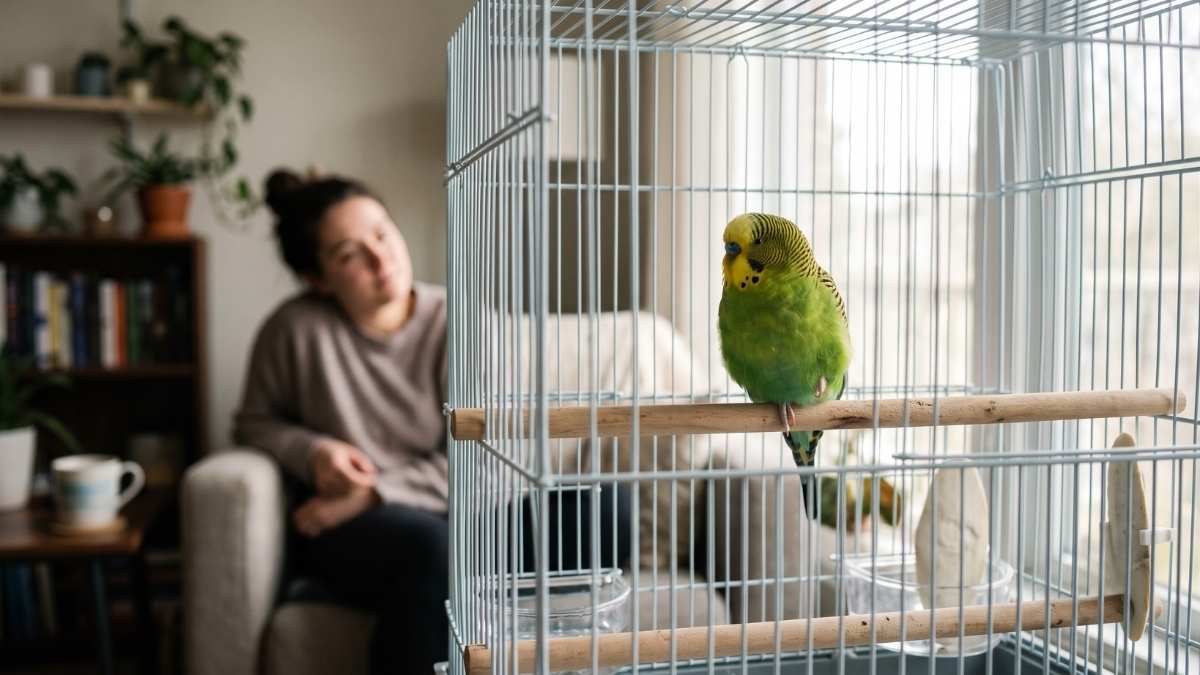
Knowing how to tell if a parakeet is sick is one of the most important skills a budgie owner can develop, and one of the hardest, because your bird is biologically wired to hide every sign of it. In the wild, budgies are prey animals. A flock member that looks weak or slow becomes the easiest target for hawks, falcons, and other predators, so evolution has rewarded birds that keep eating, perching upright, and acting normal for as long as physically possible. That instinct didn’t disappear when your budgie moved into a living room.
The result is a frustrating dilemma. By the time a parakeet visibly fluffs up, sits on the cage floor, or stops eating, the illness is often well advanced. Avian veterinary sources, including the Merck Veterinary Manual, note that birds commonly show clinical signs only after a disease has progressed significantly, which is why many avian vets describe a sick bird at home as a bird that has already been sick for days.
Time matters even more because of how small and fast a budgie’s body is. With a high metabolic rate and very little energy reserve, a parakeet can decline from “slightly off” to critical within a day or two, especially if it stops eating.
The best defense is a firm grasp of your bird’s normal routine. If you’re still building those daily foundations, our guide on how to take care of a parakeet walks through the habits that make subtle changes easier to spot.
What Does an Unhealthy Parakeet Look Like? (Visual and Physical Signs)
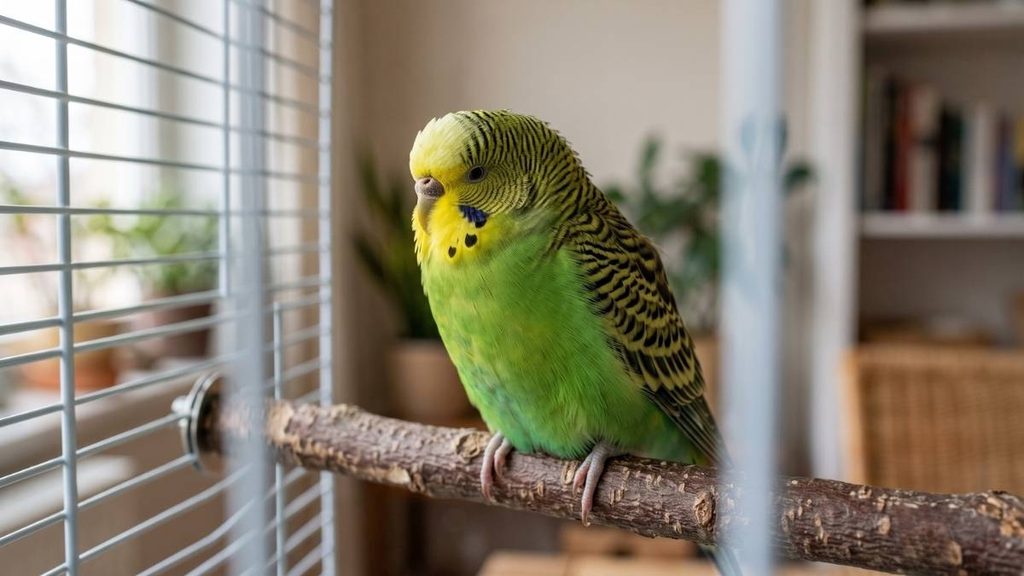
An unhealthy parakeet usually looks “off” before it looks obviously ill. Most owners describe it the same way: the bird is there, but something is missing. Learning to translate that gut feeling into specific, observable signs lets you act while there is still time to help. The Association of Avian Veterinarians and the Merck Veterinary Manual both stress that physical changes in appearance, posture, and droppings are among the earliest reliable indicators of illness in pet birds.
Fluffed Feathers During the Day
A budgie that stays puffed up during active daylight hours is trying to hold in body heat. Fluffing traps air between the feathers, and a bird that is unwell and struggling to regulate its temperature will do it constantly. Brief fluffing during a preen or a nap is normal. A bird that looks like a round ball for hours, especially with eyes half closed, is not.
Tail Bobbing With Each Breath
Watch the tail while your bird is at rest. A tail that pumps up and down with every breath signals that the bird is working hard to move air, a classic sign of respiratory distress. Open-beak breathing at rest or clicking sounds add to the concern. Respiratory problems can worsen quickly in small birds, so this sign warrants prompt veterinary attention.
Crusty Cere, Nasal Discharge, or Stained Eye Feathers
Check the cere (the fleshy area above the beak containing the nostrils), the nares, and the feathers around the eyes. Warning signs include:
- Crusting or flaking on or around the cere
- Wet, bubbly, or dried discharge in or near the nostrils
- Swollen, watery, or squinting eyes
- Dampness or staining on the feathers around the eyes and face
Soiled or Pasted Vent Feathers
The feathers beneath the tail should be clean and dry. Droppings stuck to the vent area point to diarrhea, digestive upset, or an underlying systemic problem, and a bird that cannot keep itself clean is often one that does not feel well enough to preen.
Changes in Droppings
Droppings are one of the most useful health readouts you have. Normal budgie droppings have a formed green or brown fecal portion, a white urate portion, and a small amount of clear liquid. Concerning changes include:
- Excess urates: a noticeably larger chalky white or yellowish portion
- Watery diarrhea: the fecal portion loses its shape and the liquid spreads widely on the paper
- Undigested seeds: whole seeds appearing in the droppings
- Color shifts: persistent bright yellow, black, or bloody droppings
A single odd dropping after a meal of fresh vegetables is not cause for alarm. A pattern that lasts more than a day is.
Sitting on the Cage Floor or Gripping Weakly
Healthy budgies perch high and grip firmly. A bird sitting on the cage floor, clinging to a low perch, or swaying and losing balance is showing significant weakness. This is not a “wait and see” sign. Birds that come down from their perches are often seriously ill.
Healthy Versus Sick: The Behavioral Contrast
Physical signs make the most sense when you compare them against what a well budgie looks and sounds like: bright, alert eyes, sleek feathers, steady chirping and chattering, curious play with toys, and an appetite for favorite foods. When that cheerful noise fades into silence and the playful bird turns withdrawn, the change is often as telling as any visible symptom. Our guide on how do I know if my parakeet is happy describes those healthy vocalizations and behaviors in detail, which makes it easier to recognize when your bird has stopped showing them.
Is Your Budgie Sick or Just Adjusting? The 3-3-3 Rule for Parakeets
If you recently brought a budgie home and it is sitting silently in a corner, the question isn’t only whether something is wrong. It’s whether this is normal adjustment or the beginning of an illness. That is where the 3-3-3 rule comes in.
A note on where it comes from: the 3-3-3 rule originated in dog rescue and describes the first 3 days, 3 weeks, and 3 months after adoption. It is not a formal veterinary standard for birds, and neither the Association of Avian Veterinarians nor the Merck Veterinary Manual publishes it as one. Many bird owners and rescues have adapted it as a practical, informal guide to how a newly adopted bird settles in, and it reflects what avian professionals generally describe: new birds need time to decompress. Use it as a timeline for expectations, never as a reason to delay care.
The First 3 Days: Decompression
Everything about your home is unfamiliar to a new budgie: the sounds, the smells, the light, the large animals watching it. Expect a bird that freezes, sits quietly, startles easily, and eats and plays very little. This is stress-induced decompression, not necessarily sickness. Give it a quiet corner, a consistent routine, and space.
“Minimal” does not mean “none.” Even in this phase, you should see some eating, some drinking, and regular droppings.
The First 3 Weeks: Learning the Routine
As the bird realizes nothing has attacked it, curiosity returns. It begins testing the cage, exploring perches and toys, eating more confidently, and making its first tentative chirps. Progress may be uneven, with bold days followed by shy ones, but the overall direction should be forward.
The First 3 Months: Trust and Personality
By about three months, most budgies show their true selves: confident flock behavior, regular vocalizing, play, and comfort around you. A bird that has not reached that point isn’t necessarily sick, but it may need a calmer environment or a health check.
Adjustment Versus Emergency: How to Tell the Difference
When you’re working out how to tell if a parakeet is sick rather than simply nervous, the key distinction is that stress looks like withdrawal, while illness looks like physical symptoms. A frightened bird is quiet but physically sound.
| Normal Adjustment | Warning Signs of Illness |
|---|---|
| Quiet, watchful, or frozen when approached | Fluffed up for hours with eyes half closed |
| Eats and drinks a little, especially when left alone | Not eating or drinking, or a marked reduction in droppings |
| Normal breathing, even when startled | Tail bobbing, open-beak breathing at rest, or clicking sounds |
| Droppings small but formed, with a green or brown portion and white urates | Watery, bloody, black, or persistently abnormal droppings |
| Perches and clings with a firm grip | Sitting on the cage floor, swaying, or falling |
| Gradual improvement day by day | Steady decline, or sudden change after initially seeming settled |
When the Rule Stops Applying
The 3-3-3 timeline never overrides physical symptoms. Any of the following means a same-day call to an avian veterinarian, no matter how recently your bird came home:
- Labored or open-mouth breathing at rest
- Sitting on the floor of the cage
- A marked reduction in eating or drinking
- Vomiting, bleeding, or discharge from the eyes or nostrils
- Loss of balance or an inability to perch
Because budgies have such fast metabolisms, a day of waiting can be the difference between treatable and critical. Newly acquired birds can also carry or develop infections that stress can unmask. If you are unsure, a veterinary check in the first week is a sensible baseline, and it gives you a record of what healthy looks like for your bird.
Can a Sick Parakeet Get Better on Its Own?
A sick parakeet should not be expected to recover without appropriate veterinary care. A mild, brief upset, such as a single loose dropping after fresh greens, can resolve without intervention. But a bird that is showing true signs of illness (fluffed up, lethargic, off its food) should not simply be left alone and monitored indefinitely.
Why Time Works Against a Sick Budgie
An adult budgie typically weighs only about 30 to 40 grams, roughly the weight of a few coins. Small bodies can lose heat and energy quickly, particularly when a bird is ill or stops eating. That is why changes in appetite, activity, posture, and behavior should be taken seriously.
That is why avian veterinary references, including the Merck Veterinary Manual, emphasize that sick birds need supportive care (warmth, hydration, and nutrition) alongside treatment of the underlying cause, and why the Association of Avian Veterinarians encourages owners to seek care promptly rather than monitor at home.
What a 24-Hour Delay Can Do
When a sick budgie stops eating or drinking, its condition can worsen quickly. Reduced food and water intake can contribute to weakness and dehydration, while the underlying illness continues to progress.
These changes can become serious faster than most owners expect. Knowing how to tell if a parakeet is sick is only useful if it triggers action, and the time to act is when you first notice something wrong, not when the bird is obviously failing.
Daytime Sleeping: A Warning Sign Worth Taking Seriously
One of the subtlest early signals is a change in sleep patterns. Healthy budgies sleep deeply at night and are active and noisy during the day, with only short, light naps. A bird that dozes for long stretches in daylight, sits with eyes half closed, or tucks its head into its back feathers while the household is active is conserving energy because it doesn’t have enough to spare.
To judge this accurately, you need to know what healthy overnight rest looks like. A consistent, dark, quiet sleep routine of roughly 10 to 12 hours helps your budgie recover and makes abnormal daytime drowsiness easier to spot. If your bird gets regular rest in a calm, dark room at night but still dozes continuously through the daylight hours, that contrast is a meaningful red flag.
What to Do Instead of Waiting
If you notice persistent fluffing, daytime lethargy, reduced eating, or any of the physical signs covered earlier, contact an avian veterinarian the same day. While you arrange care, keep the bird warm and quiet, and make sure food and water are within easy reach. Home support can help stabilize a bird, but it is not a substitute for diagnosis.
What Can You Give a Sick Budgie? (Emergency First Aid & Safe Support)
The honest answer is: warmth, water, and easy access to food, and then a veterinarian. Nothing you can give at home treats the underlying disease. What you can do is keep a weakened bird stable and comfortable until a professional can examine it. Just as important is knowing what to leave alone.
What Never to Give a Sick Budgie
Well-meaning owners cause real harm in the first hours of an emergency, and a bird this small has almost no margin for error. Do not give:
- Human medications of any kind. Aspirin, ibuprofen, acetaminophen, cold remedies, and similar drugs can be toxic to birds, and a dose that is trivial for a person can be lethal for a 30 to 40 gram budgie.
- Antibiotics left over from you, another pet, or a previous visit. The wrong drug, dose, or duration can worsen the illness, and many bird illnesses are not bacterial at all.
- Unverified online remedies. Apple cider vinegar, tea tree or other essential oils, herbal tinctures, and “miracle” additives found in forums or social media groups are not supported by avian veterinary guidance. Essential oils and aerosols are particularly dangerous because birds’ respiratory systems are exquisitely sensitive.
- Forced food or water. Syringing liquid into a weak bird’s mouth risks aspiration into the lungs, which can kill quickly. Leave hand-feeding and medicating to your vet unless they have shown you how.
The Association of Avian Veterinarians and the Merck Veterinary Manual both emphasize that treatment should be matched to a diagnosis. Guessing at home delays the real care your bird needs.
Safe Support While You Wait for the Vet
If your bird is showing signs of illness, call an avian veterinarian first. These steps are supportive measures to use alongside that call, not in place of it.
1. Supplemental Heat
A sick bird may have difficulty maintaining its body temperature, so a mildly warmer environment may help support it while you arrange veterinary care. A temperature around 80–90°F (27–32°C) is commonly used for supportive warming.
- Move the bird to a quiet room and raise the room temperature, or use a heat source placed safely outside the enclosure, such as a heat lamp or heating pad under part of a hospital cage, so the bird can move away if it gets too warm.
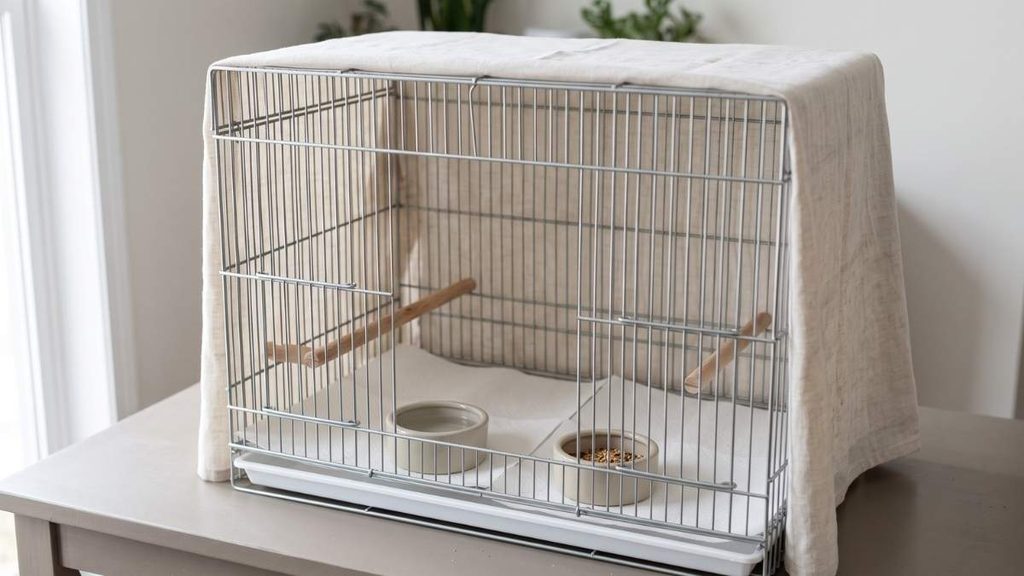
- Partially cover the cage to hold in warmth, leaving ventilation open.
- Use a thermometer rather than guessing.
- Watch for overheating: wings held away from the body, panting, or open-beak breathing mean it is too hot.
- Never use a heat source containing a non-stick (PTFE/Teflon) coating, as fumes from these products are deadly to birds.
2. Hydration Support
Make fresh water easily accessible. Do not force water into a weak or struggling bird because liquid can enter the lungs. If your veterinarian recommends an electrolyte solution or assisted hydration, follow their exact instructions.
3. Low Perches and Easy-to-Reach Food and Water
A weak budgie often cannot climb or grip well, and a fall from a high perch can cause injury. Lower or remove tall perches, and place a shallow dish of water and a dish of its usual food right on the cage floor. Tempting favorites such as millet spray, soft greens, or soaked seed can encourage a reluctant eater. Anything that gets calories into a sick bird is worth offering, and any noticeable drop in eating should be reported to your vet.
Setting Up a Hospital Cage
A smaller, simplified enclosure makes it easier to keep a sick bird warm, reduces the distance it has to travel to food and water, and lets you observe droppings and appetite closely. It also doubles as a quarantine space if you have other birds. A small travel cage or a modest cage with the floor lined with plain paper towels works well. Remove toys and extra accessories, and keep it in a quiet, draft-free room.
If you are unsure what size works for a temporary setup versus your bird’s permanent home, our budgie cage size guide covers dimensions for one, two, or more birds, so you can plan both the hospital cage and the long-term cage properly.
When Home Support Isn’t Enough
Warmth and hydration buy time, but they do not cure disease. If your budgie is on the cage floor, breathing with an open beak, or has stopped eating, treat it as an emergency and get to a vet immediately. Knowing how to tell if a parakeet is sick means little if the next step is waiting at home, so use these measures to stabilize your bird on the way, not as a replacement for professional care.
How Do You Treat a Sick Parakeet? (When to See an Avian Veterinarian)
Treating a sick parakeet starts with a correct diagnosis, and that takes a veterinarian. Because the same outward signs, such as fluffing, lethargy, and poor appetite, can come from dozens of different causes, the right treatment depends entirely on identifying which one you are dealing with. A bird treated for the wrong problem loses precious time.
The Role of an Avian Veterinarian
Birds are not small dogs or cats, and their anatomy, physiology, and medication needs differ in ways general practice clinics may not be equipped to handle. A veterinarian with avian experience, ideally one who is board-certified or who regularly sees pet birds, will know how to examine and handle a fragile patient with minimal stress. The Association of Avian Veterinarians maintains a clinic-finder on its website, which is a useful starting point if you do not already have a vet.
A typical visit may include:
- Physical examination and weight check. Weight, measured in grams, is one of the most telling indicators in a budgie, and your vet may compare it with earlier records if you have them.
- Fecal examination. A direct fecal smear lets the vet look under the microscope for parasites such as Giardia or protozoa, along with yeast and abnormal cells.
- Gram stain. A stain of a fecal or swab sample helps show the balance of bacteria and whether yeast or an overgrowth of harmful organisms is present, which guides the choice of medication.
- Bloodwork and imaging. Where needed, blood tests and X-rays can reveal organ disease, egg-related problems, tumors, or respiratory conditions that are invisible from the outside.
- Culture and sensitivity testing or PCR testing. For certain infections, these tests identify the exact organism and which drugs will work against it.
What Treatment May Involve
Once a diagnosis is made, treatment is tailored to the bird. Depending on the cause, your vet may prescribe species-appropriate antibiotics, antifungals, or antiparasitic medication, often dosed by weight and delivered orally, by injection, or in some cases added to water or food. Supportive care frequently comes first: warmth, fluid therapy, assisted feeding, and sometimes oxygen for a bird in respiratory distress.
This is why avian references such as the Merck Veterinary Manual emphasize supportive care together with treatment of the underlying disease. Medication alone is rarely enough for a bird that is already weak, and it is never a good idea to guess at drug choice or dose at home.
Follow your vet’s instructions exactly. Finish the full course of any prescribed medication, keep recheck appointments, and report any change in appetite, droppings, or behavior promptly.
Safe Transport to the Clinic: A Checklist
The trip itself can be stressful for a sick bird, so a little preparation goes a long way.
- Use a small, secure travel cage or carrier. A familiar, smaller enclosure keeps the bird from flapping or falling.
- Keep it warm. Warm the car before you leave, and consider a heat source placed safely outside the carrier. Partially cover the carrier with a light cloth, leaving ventilation openings.
- Cover to reduce stress. A partly covered carrier cuts visual stimulation and helps calm a frightened bird.
- Avoid drafts. Keep vents and windows away from the carrier, and shield it from cold air when moving between car and clinic.
- Place low perches and food within reach. Put a shallow dish with a little food and water on the floor, or a low perch if the bird can still grip.
- Bring a fresh dropping sample. A recent dropping on paper, or a photo of it, can help your vet.
- Bring information. Note when symptoms started, the diet, the cage setup, any new birds, and recent changes in the home.
- Drive smoothly. Keep the carrier secure and level, and avoid loud music.
A Calm Way Forward
Finding out your bird is unwell is frightening, but you are not powerless. The owners whose birds do best are usually the ones who notice small changes early, act the same day, and follow through with care. Learning how to tell if a parakeet is sick, watching the droppings, the posture, the appetite, and the daily rhythm of your bird, is the single most useful habit you can build. Many sick budgies recover well when problems are caught early, and your attention is what makes that possible.
Veterinary References
- Merck Veterinary Manual (Pet Owner and Professional editions), sections on pet bird health and disorders of the respiratory, digestive, and other body systems
- Association of Avian Veterinarians (AAV), owner resources and guidance on finding avian veterinary care
Educational Disclaimer
This article is provided for general educational purposes only and is not a substitute for professional veterinary advice, diagnosis, or treatment. Birds can decline quickly. If you believe your parakeet is ill, contact a qualified avian veterinarian immediately. Never begin, change, or stop any treatment without veterinary guidance.