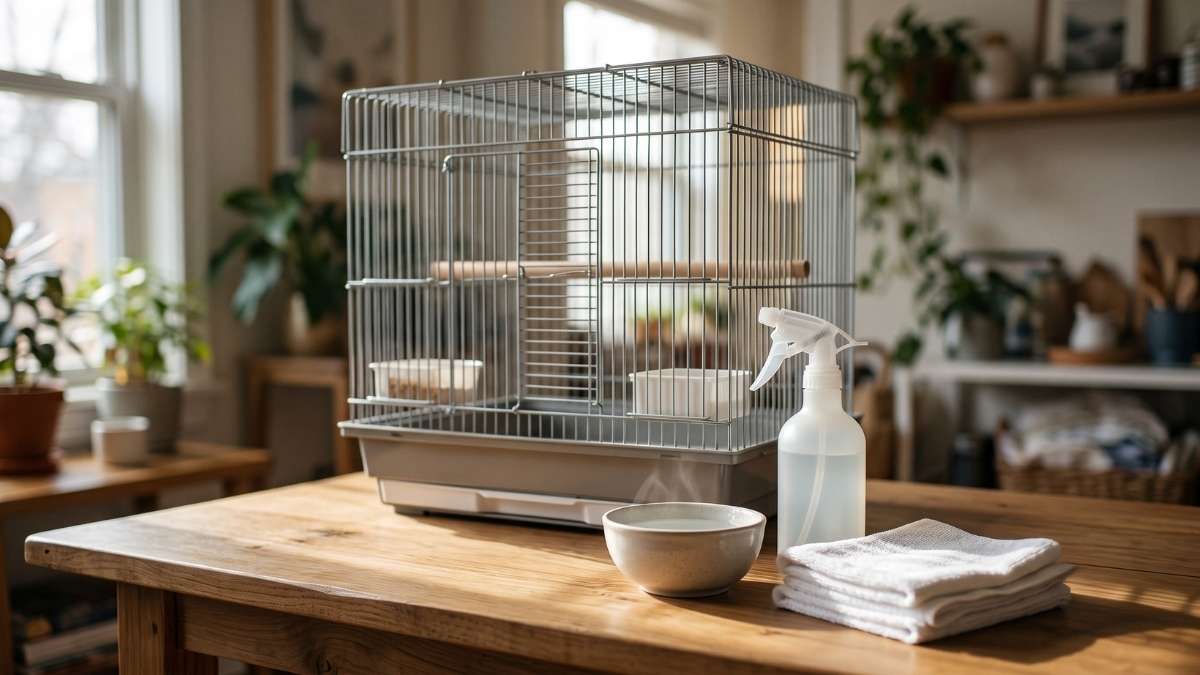
Knowing how to clean a parakeet cage properly is one of the most important health skills a budgie owner can develop, because your bird’s home is also its bathroom, dining room, and bedroom. Unlike mammals, birds have a highly efficient respiratory system that includes air sacs and moves air through the lungs in a continuous one-way flow. This system supports flight, but it also makes birds particularly sensitive to airborne irritants.
That is why hygiene matters so much. Droppings and other organic waste can contribute to ammonia buildup, while damp seed hulls, soiled perch covers, and forgotten fresh vegetables add to the problem. Moisture and decaying food can support the growth of bacteria and fungi, including Aspergillus, a mold that can cause serious respiratory disease in birds. Budgies also tend to hide signs of illness, so changes in breathing or behavior should never be ignored. Good sanitation is an important part of preventive bird care.
Here is the reassuring part: a clean cage does not demand exhausting daily scrubbing. A short, consistent routine of replacing soiled liners, refreshing food and water, and removing perishable leftovers helps prevent hygiene problems before they start. Reserve heavier cleaning for scheduled deep-clean days, making it a predictable part of your overall how to take care of a parakeet routine.
How Often Do You Have to Clean a Parakeet Cage?
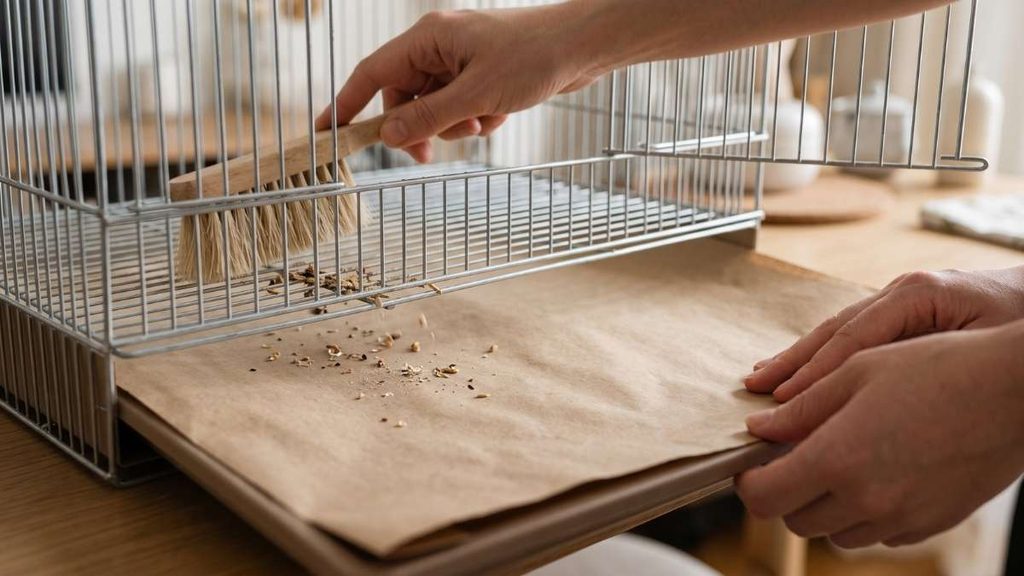
The short answer is a little every day, a bit more every week, and a full breakdown periodically. This layered approach helps prevent droppings, spoiled food, and moisture from building up without turning cage care into a chore. The exact schedule depends on the number of birds, the cage setup, and how quickly it becomes dirty.
Daily Tasks (About 5 Minutes)
- Change the liner: Remove soiled paper every morning so droppings do not sit. If you cover your parakeet at night, swapping the liner during your morning wake-up routine keeps the cage fresh before daily activity begins.
- Scrub food and water bowls: Wash with hot water and a mild, unscented dish soap, rinse thoroughly, and refill.
- Remove fresh produce: Remove uneaten vegetables and fruit before they spoil. In warm conditions, check them frequently and avoid leaving perishable food in the cage for extended periods.
Weekly Tasks (15-20 Minutes)
- Wipe the perches: Remove dried droppings and residue.
- Scrub the bottom tray and grate: Droppings and hulls often collect here.
- Spot clean wire bars and toys: Focus on beak-contact areas and soiled corners.
Periodic Deep Clean (40-50 Minutes)
- Break the cage down: Remove accessories, perches, and trays.
- Rinse with warm water: Loosen stuck-on debris before disinfecting.
- Disinfect when needed: Use a product suitable for bird housing, following its label directions exactly.
- Rinse and dry completely: Remove all product residue and allow every surface to dry before your bird returns.
| Frequency | Cleaning Task | Tools Needed | Time Required |
| Daily | Liner change, bowl scrub, fresh produce removal | Fresh liners, mild dish soap, small brush | ~5 minutes |
| Weekly | Perch wiping, tray & grate scrub, spot cleaning bars | Stiff scrub brush, disposable cloths, warm water | 15–20 minutes |
| Periodic Deep Clean | Full breakdown, washing, disinfecting when needed, thorough drying | Suitable disinfectant, bottle brush, clean towels | 40–50 minutes |
Once you know how to clean a parakeet cage in these tiers, adjust the schedule to your flock. Messy eaters or multiple birds may need more frequent attention.
Safe Bird Cage Disinfectants: What Can You Use?
When people ask what to clean a bird cage with, the best answer is usually the gentlest option that works. Birds are particularly sensitive to airborne chemicals, so the right product and how you use it matter as much as the scrubbing itself.
Safe Cleaning Solutions
- Plain hot soapy water: An unscented, mild dish soap handles most daily and weekly cleaning jobs. Rinse until no suds or slippery residue remain.
- Distilled white vinegar and warm water (50/50): If you have wondered whether you can clean a bird cage with vinegar, it can help loosen mineral deposits and residue. However, vinegar is a cleaner, not a reliable disinfectant. Do not mix it with bleach or other cleaning products.
- Veterinary-grade F10 disinfectant: Certain F10 products are used in animal-care settings. Choose a formulation appropriate for the intended use, and follow the manufacturer’s dilution, contact-time, ventilation, rinsing, and re-entry instructions. Do not assume every formulation is suitable for every surface or situation.
- Baking soda paste: Mix baking soda with a little water, apply it to stubborn dried droppings, scrub, and rinse thoroughly. Use it as a cleaning aid, not as a substitute for a suitable disinfectant when disinfection is needed.
Whatever you choose, keep your bird away from cleaning fumes and wet surfaces. Rinse where required by the product label and let the cage dry completely before your bird returns. Never mix cleaning products, even if each product is suitable for a particular cleaning task on its own.
Prohibited and Dangerous Chemicals
Avoid exposing your budgie to:
- Bleach fumes or improperly diluted bleach. Some disinfectants containing bleach may be used for bird housing under specific conditions, but the bird must be removed from the area and the product must be used according to its label, with appropriate ventilation and thorough rinsing where directed. Never mix bleach with vinegar, ammonia, or any other cleaner.
- Aerosol disinfectant sprays used near your bird or its cage.
- Ammonia-based cleaners used around your bird.
- Scented window cleaners or products that leave irritating residues.
- Pine cleaners and heavily fragranced products that may release irritating fumes or leave unsuitable residues.
Strong fumes and airborne cleaning droplets can harm a bird’s respiratory system. Keep your budgie in a separate, well-ventilated area during cleaning, and do not bring it back until the area is safe and any product-specific re-entry instructions have been followed. Our guide on household chemicals and other common mistakes to avoid with parakeets explains these hazards in more detail.
If your budgie shows labored breathing, tail bobbing, or open-mouth breathing after any chemical exposure, move it away from the source to fresh air if you can do so safely and contact an avian veterinarian urgently. Do not delay veterinary care while trying home remedies.
Step-by-Step: How to Deep Clean a Parakeet Cage
Once you know the safe products, the process itself is simple. Follow these five steps for a thorough periodic deep clean that protects your bird from start to finish.
1. Relocate Your Bird
Move your parakeet to a secure travel carrier placed in a quiet, draft-free room away from cleaning products and fumes. If you prefer to offer supervised free-flight time instead, close windows, cover mirrors, switch off ceiling fans, and remove other hazards first. Our guide on safely letting budgies out of their cage walks through how to prepare a secure room. Never leave your bird unattended in either setup.
2. Remove Accessories
Take out all dishes, perches, and toys. Discard worn rope toys, frayed fabric, or anything that is cracked or impossible to clean, and set the rest aside for washing.
3. Scrub the Cage Bars and Grate
Use warm water and mild, unscented dish soap with a dedicated, non-abrasive bird-cage scrub brush. Dried droppings tend to cling to the spots where horizontal bars meet vertical ones and in corner crevices, so work a small brush or old toothbrush into every joint. Bar spacing and cage shape affect how easy these areas are to reach, and our budgie cage size guide explains how to choose a layout that is simpler to keep clean. Lift out the grate and scrub both sides, along with the tray beneath it.
4. Disinfect and Rinse Thoroughly
If disinfection is needed, apply a suitable bird-housing disinfectant according to the manufacturer’s instructions, including the required dilution and contact time. Keep your bird away from the area during use. Rinse surfaces where directed by the product label, removing residue thoroughly, and allow everything to dry before your budgie returns. Never combine disinfectants or mix them with other cleaners.
Residue is one of the hidden hazards to avoid because birds chew bars and perches and preen anything that touches their feathers.
5. Dry Completely
Air-dry the cage in a clean, well-ventilated area, or towel-dry surfaces with clean towels. Sunlight may help dry surfaces, but it should not be relied on as a substitute for proper cleaning and disinfection. Check the joints, tray rails, and perch fittings, since trapped moisture can encourage mold and contribute to corrosion. Reassemble only when everything is fully dry, then return your budgie to a fresh, clean home.
Cleaning Perches, Toys, and Managing Cage Odor
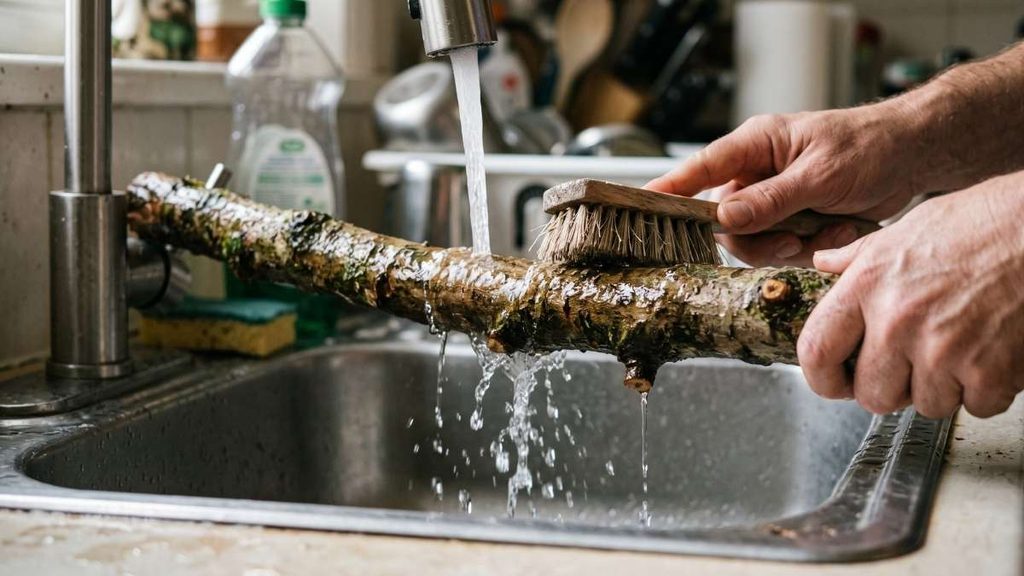
Accessories take the most direct beak, foot, and feather contact in the cage, so they deserve their own attention between deep cleans.
Natural Wood Perches
Wood is porous, which makes it both a useful perch material and a surface that can retain moisture and debris. Scrape dried droppings off with a dedicated stiff brush or suitable scraper, then wipe the surface with a damp cloth. Avoid leaving natural wood wet for long periods, since moisture can encourage mold growth. If a perch is heavily stained, cracked, damaged, or smells musty even after cleaning and drying, replace it rather than trying to salvage it.
Plastic vs. Shreddable Toys
Durable acrylic and plastic toys can generally be washed in warm, soapy water, rinsed well, and dried completely before returning to the cage, provided the manufacturer’s instructions allow it. Shreddable items are different. Paper, cardboard, and rope toys that become soiled, damp, frayed, or contaminated with droppings should be discarded or replaced, as they may not be possible to clean reliably. Rotating toys weekly also makes it easier to spot items that are due for washing or replacement.
Managing Cage Odor
A well-kept budgie cage should have little noticeable odor. If you notice a persistent smell, common causes include damp liners, droppings left too long, or spoiled food hidden in a corner. Fix the source by changing liners, wiping the tray, and checking beneath perches and dishes.
Never cover odor with scented room sprays, plug-in air fresheners, or fragranced candles. Birds are sensitive to airborne particles and fumes, and masking a smell only hides the problem while potentially adding respiratory irritants. If an odor returns quickly despite good cleaning routines, check for hidden waste or damp material and mention the problem to your avian veterinarian if it persists or your bird shows any signs of illness.
Sources & Veterinary References
- Association of Avian Veterinarians (AAV): Basic Care for Companion Birds
- Merck Veterinary Manual: Management of Pet Birds (Hygiene and Husbandry)
Conclusion & Educational Disclaimer
A clean cage is one of the simplest ways to support your parakeet’s respiratory health and overall well-being. Once you know how to clean a parakeet cage in manageable tiers, the work becomes routine: a few minutes each day prevents big messes, and periodic deep cleans help prevent waste, moisture, and mold from building up. Stay consistent, use appropriate cleaning products safely, and your budgie will benefit from a cleaner environment.
The practices in this guide reflect general companion-bird hygiene principles. For specific disinfection procedures, follow the product manufacturer’s instructions and consult a qualified avian veterinarian when necessary.
Educational Disclaimer: This article is provided for educational purposes only and is not a substitute for professional veterinary advice, diagnosis, or treatment. If your bird shows signs of illness, breathing difficulty, or chemical exposure, contact a qualified avian veterinarian promptly.