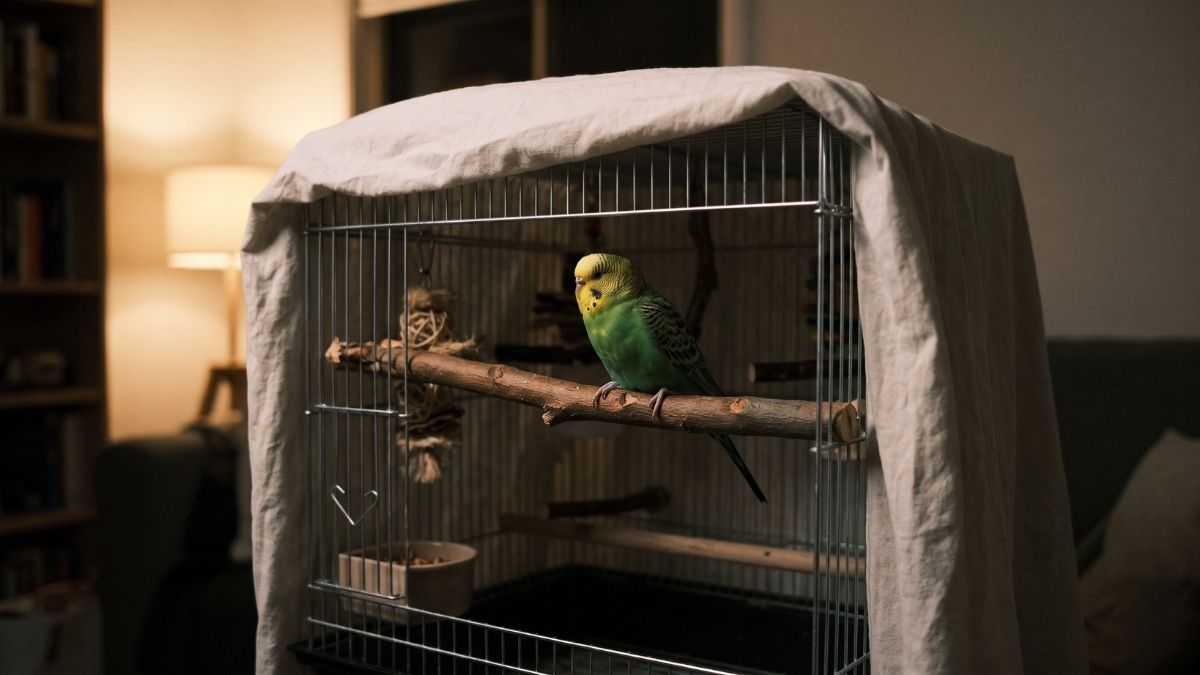
Budgie night frights can turn a quiet bedroom into chaos in seconds: a loud crash from the cage, violent wing flapping, a body hitting the bars in the dark, and high-pitched screeching that sends you running. Many owners find their parakeet on the cage floor, having fallen from the perch, panting and wild-eyed. If this is you, take a breath. This is frightening to witness, and many birds settle again with calm handling, but injuries can occur and should not be overlooked.
Why Parakeets Panic in the Dark
The cause can be related to how budgies see and respond to their surroundings. Companion parrots, including parakeets, are diurnal birds and have limited ability to navigate in darkness compared with nocturnal animals. In the wild, budgerigars are prey animals, so an unexpected touch, flash, or noise may trigger an escape response. In a dark cage, a startled bird may have difficulty seeing the bars and perches, increasing the risk of a collision.
Quick Triage Steps: While Your Parakeet Is Thrashing
- Soft light: Switch on a dim lamp or gentle night light so your bird can see its surroundings.
- Gentle, familiar voice: Speak softly and slowly, using the words and tone your budgie already knows.
- No sudden cage grabbing: Keep your hands away and avoid reaching in. Sudden movement can add to the panic.
Midnight Fright vs. Normal Night Movement
| Behavioral Signal | Harmless Night Adjustment | Active Night Fright (Emergency) |
| Wing Action | Brief stretch or single shuffle on perch | Frantic, uncontrolled flapping against bars |
| Vocalization | Soft beak grinding, occasional low peep | Sharp, repetitive distress screeching |
| Cage Position | Balanced securely on high sleeping perch | Fallen to the cage bottom, scrambling wildly |
| Response to Voice | Settles back to sleep within seconds | Continues thrashing until indirect light is given |
| Post-Event State | Puffs feathers and tucks head to sleep | Heavy panting, wide eyes, trembling wings |
Common Triggers Behind Midnight Cage Panic
Night frights may begin with something small that your parakeet cannot identify in the dark. The exact trigger is not always obvious. If episodes recur, note the time, the room conditions, and anything that happened just before the disturbance.
Sudden Light Flashes and Sweeping Shadows
Headlights passing through blinds can sweep moving bars of light across a wall, potentially startling a sleeping bird. A phone screen lighting up on a nearby nightstand, a TV switching on, or a flashing indicator light may also disturb some birds.
Sounds and Vibrations
A refrigerator compressor kicking on, pipes knocking after someone runs water, or a door clicking shut can startle a parakeet from sleep. Sounds and vibrations that are difficult to identify may trigger a flight response in a sensitive bird.
Nocturnal Pests
An insect moving near the cage or a mouse investigating spilled seed could disturb a sleeping bird, although pests are not necessarily the cause of unexplained night frights. If your budgie panics repeatedly, check the cage and surrounding area in daylight for signs of pests, such as droppings, gnaw marks, or scattered seed hulls.
Drafts and Temperature Changes
Cold air from a window or an air-conditioning vent may make a bird uncomfortable. Check the cage area for drafts and sudden temperature changes, but remember that these are possible sources of discomfort rather than confirmed causes of every night fright.
Where the Cage Sits Matters
Placement can help reduce potential disturbances. Position the cage with one side against a solid wall, giving your parakeet a secure boundary at its back, and keep it away from drafty windows and direct, moving light. Our guide on where to put a budgie cage covers room-by-room options for reducing light, noise, and airflow disturbances.
Cage Covers: Total Blackout vs. Partial Covering
A cover may help some parakeets settle at night, but covering a cage completely in a pitch-black room may make it harder for a startled bird to find its perch. If a budgie wakes suddenly and begins flapping, limited visibility can increase the risk of collisions. However, night frights can happen even when a cage is uncovered, so a cover should not be assumed to be the cause.
The Three-Wall Covering Method
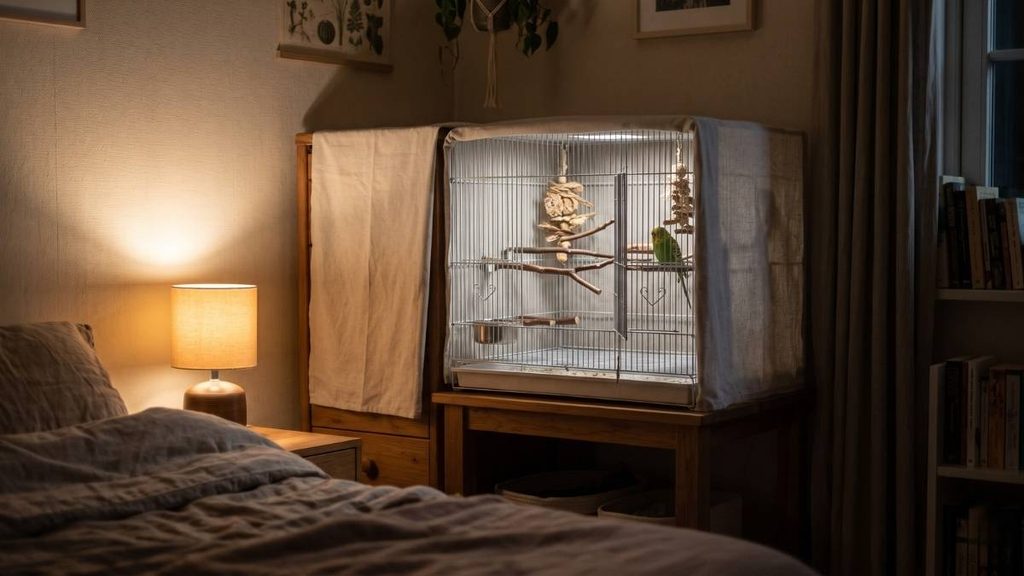
Partial covering is one option to try if your bird settles better with a cover:
- Cover three sides: Drape the back and both sides to reduce drafts and block some passing light and shadows.
- Leave the front open: An uncovered front may allow some ambient light into the cage, helping your parakeet orient itself if it wakes.
- Keep ventilation clear: Allow air to circulate rather than trapping warm, stale air around the bird.
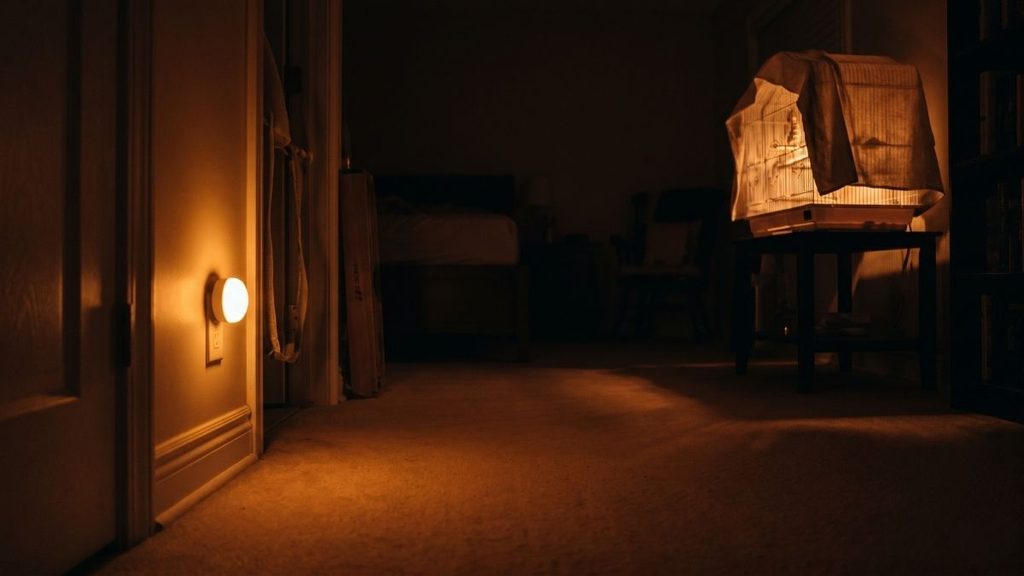
- Consider a dim night light: A soft, steady light in the room may help some birds orient themselves after waking.
Observe your budgie’s response and adjust the setup if covering the cage appears to make it more restless.
Choosing the Right Fabric
Use a lightweight, breathable fabric such as cotton or a loosely woven sheet, and avoid heavy, insulated, or plastic-backed materials that may restrict airflow or trap heat. Our guide on whether you should cover a budgie cage at night explains how to match fabric weight to your room conditions and keep ventilation safe. Check that the cover cannot be pulled into the cage, since loose threads or hanging edges can snag toes and wings.
What to Do When a Night Fright Happens: Step-by-Step Triage
Hearing your budgie crash around the cage at night is alarming, and your first instinct may be to rush in. Slow, quiet actions can help reduce further panic. Work through these steps while watching for signs of injury or breathing difficulty.
Step 1: Turn On a Soft, Indirect Light
Switch on a warm lamp or a hallway light with the door partly open. Avoid suddenly shining a bright light directly into your frightened parakeet’s eyes. The goal is to provide enough light for your bird to see the perches and cage walls.
Step 2: Speak Low, Slow, and Familiar
Talk in a gentle voice, using the phrases your budgie hears every day. Stay a short distance back from the cage at first. A steady, familiar voice and calm movements may help your parakeet settle.
Step 3: Keep Your Hands Out of the Cage
Resist the urge to reach in while your bird is actively thrashing. To a panicking bird, a hand moving through the bars may cause further alarm. If your parakeet is not trapped or seriously injured, give it a chance to settle before attempting to handle it. If it is bleeding, struggling to breathe, or appears seriously injured, contact an avian veterinarian urgently for guidance.
Step 4: Wait for Your Budgie to Settle
If your bird is not showing signs of an emergency, give it time to settle and regain its footing. Signs of recovery may include:
- Breathing returning to its usual pattern and the tail stopping its pumping
- Feet gripping a perch firmly
- Feathers returning to a relaxed position
- Quiet chirping or soft chattering returning
This may take several minutes. Stay nearby and keep the environment quiet. Once your parakeet is calm, observe it for signs of injury. Do not delay veterinary care if breathing difficulty, bleeding, weakness, or other concerning signs persist.
Post-Panic Health Check: Inspecting for Injuries
Once your parakeet is calmer, take a careful look from a distance before deciding whether handling is needed. Use soft light and keep movements slow. A bird may appear to recover after a night fright but still have an injury, so watch its posture, balance, breathing, and ability to perch.
Post-Panic Physical Triage Checklist
| Observed Symptom | Possible Cause | Recommended Action |
| Drooping or Trailing Wing | Sprain or bone fracture from cage collision | Limit movement; contact an avian veterinarian promptly |
| Bleeding from Feather Shaft | Snapped emerging blood/pin feather | Apply gentle direct pressure with clean gauze; seek vet guidance |
| Scraped Cere or Beak Blood | Head collision with bars or hard accessories | Check for breathing ease; have vet evaluate for head trauma |
| Lethargic / Unable to Perch | Shock, severe sprain, or internal injury | Keep warm (85°F/29°C), minimize handling, emergency vet visit |
Drooping Wings
Compare the two wings while your budgie sits at rest. A wing that hangs lower than the other, dangles at an unusual angle, or is held away from the body may indicate an injury. Watch for a bird that cannot climb, grips with only one foot, or avoids flying. Do not try to straighten or wrap a wing. Limit unnecessary movement and contact your avian vet promptly.
Ceres and Nares
Look at the cere, the fleshy area above the beak where the nostrils sit. Check for visible bleeding, swelling, or injury around the beak and nostrils. Blood around the head or beak after a collision should be assessed by an avian veterinarian, as head trauma can be difficult to judge by appearance alone.
Broken Blood Feathers
A blood feather is a newly growing feather with a blood supply running through its shaft. If it breaks, it may bleed. Because budgies are small, significant blood loss can become serious quickly.
If you notice active bleeding, keep your bird as calm as possible and contact an avian veterinarian promptly for instructions. If you can do so safely, apply gentle, direct pressure to the bleeding area with clean gauze. Do not pull out a broken blood feather or apply styptic powder or other products to the feather shaft unless a veterinarian specifically instructs you to do so. If bleeding is heavy, continues, or your bird becomes weak, seek emergency veterinary care.
Our guide on using styptic powder and first-aid supplies when trimming budgie nails explains the role of first-aid products in routine nail care. However, bleeding from a broken blood feather is a different situation and may need veterinary treatment.
Contact an Avian Vet Urgently If:
- Bleeding is heavy or does not stop promptly
- Your parakeet is fluffed, lethargic, weak, or unsteady after the incident
- A wing droops or your bird cannot perch normally
- Your bird has open-beak breathing or persistent tail pumping
- You suspect a head injury or another significant collision injury
Prevention: Night Lights and Safe Sleep Setup
A well-planned sleep area may help reduce some night frights. A stable cage interior, a suitable light level, and thoughtful placement can help a startled parakeet find its footing. Because individual birds respond differently, observe your budgie and make changes gradually.
Night Light Best Practices
If your budgie appears to benefit from a night light, choose one that is dim, steady, and positioned to avoid shining directly into the cage:
- Choose a dim, steady light: Rather than relying on a fixed wattage, judge the light by its brightness and placement. It should provide gentle visibility without brightly illuminating the sleeping area.
- Position it across the room: Place the light so it gently illuminates the surroundings without shining directly into your bird’s eyes. A light set too close or at an awkward angle may cast shadows from toys and perches.
- Avoid sudden changes: Flickering, color-changing, or motion-activated lights may startle some birds. A steady light is a better option if your budgie responds well to it.
Cage Interior Adjustments
Small changes inside the cage may reduce the chance of a startled bird colliding with nearby objects:
- Provide a secure sleeping perch: The main roosting perch should be stable and comfortable for your bird to grip. A suitable natural-wood perch can offer a secure surface.
- Review swinging toys near the top: If dangling toys, bells, or loose ladders are close to the sleeping perch, consider moving them away from the sleeping area so there is less chance of a collision.
- Keep the sleeping zone clear: Leave enough open space around the main roosting perch for your bird to reposition without immediately hitting an obstacle.
Make these changes gradually and observe how your budgie responds over the following nights.
Conclusion & Educational Disclaimer
Budgie night frights are frightening to witness, but calm handling and a suitable sleep setup may help reduce the risk of further episodes. A dim, steady night light if your bird benefits from one, a stable roosting perch, an appropriately covered cage if preferred, and thoughtful placement away from drafts and sudden disturbances can all be worth considering. Stay patient, keep a record of what happens before each episode, and adjust one thing at a time.
For individual advice about your bird’s sleep setup or repeated night frights, consult an avian veterinarian. Do not assume that every episode is harmless, particularly if your budgie has collided with the cage or shows signs of injury.
Educational Disclaimer: This article offers general pet-care guidance and is not a substitute for veterinary diagnosis or treatment. If your budgie is injured, bleeding, having difficulty breathing, or showing signs of illness, contact an avian veterinarian promptly.