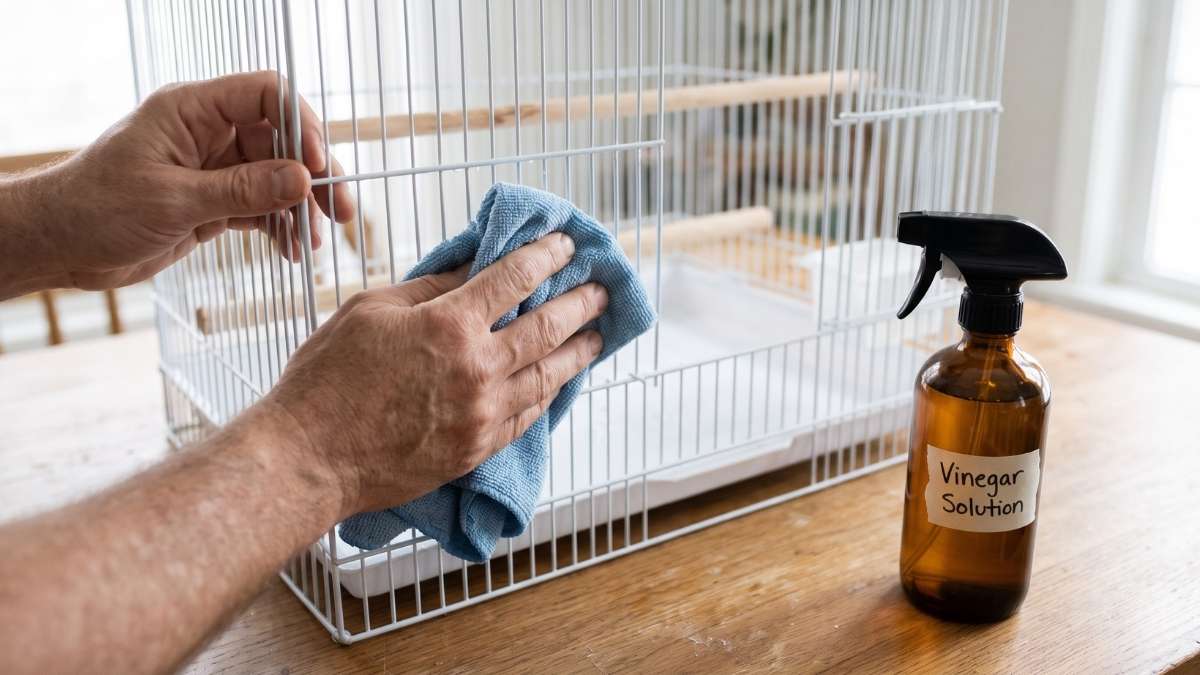
Knowing how to clean a budgie cage correctly is one of the most important health skills a parakeet owner can develop, because the cage is both your bird’s home and the air supply it breathes around the clock. Cleaning protects your bird only when the method is as careful as the goal.
Why Budgies Are Uniquely Vulnerable to Dirty Cages and Harsh Cleaners
A budgie weighs roughly 30 to 40 grams and runs on a very high metabolic rate, so it moves a large volume of air through its body relative to its size. Its respiratory system also differs from ours: a network of air sacs moves air through the lungs in a continuous flow, which makes gas exchange highly efficient. This also makes avoiding airborne irritants and toxins especially important.
Neglected cages create real hazards. Damp droppings and spilled food can support the growth of microorganisms, including Aspergillus fungi, whose spores can cause the respiratory disease aspergillosis. Contaminated surfaces can also spread bacteria such as Salmonella. As droppings break down, they can release ammonia, which irritates the airways.
Harsh chemical cleaners can also be dangerous. Strong fumes from cleaning products, aerosol disinfectants, and scented sprays can harm birds, and residue left on bars and perches may expose them after cleaning. Avian veterinary guidance recommends keeping birds away from cleaning fumes and ensuring that cleaned surfaces are thoroughly rinsed and dry before birds return.
A safe routine keeps the cage clean without adding anything toxic to your budgie’s air.
Safe Disinfectants vs Dangerous Household Chemicals
Many products that make a home smell clean may be hazardous to a parakeet. Keep your bird away from bleach fumes, ammonia-based cleaners, Lysol products, aerosol disinfectants, and scented sprays during cleaning. Product formulations vary, so always follow the label and veterinary guidance before using a disinfectant around bird equipment. Never use cleaning products in a way that exposes your bird to fumes or residue. Mixing bleach with ammonia produces toxic gases and must never be done. Plug-in fresheners, scented candles, and aerosol sprays should also stay out of the room during and after cleaning.
An avian-safe cage disinfectant should be selected for the task, used at the label-directed dilution and contact time, and rinsed away when instructed.
- Diluted White Distilled Vinegar: Vinegar can help loosen dried droppings and mineral deposits during routine cleaning. Mix equal parts white distilled vinegar and water (1:1) in a clearly labeled bottle. Vinegar is a cleaning aid, not a reliable disinfectant against all disease-causing organisms, so do not rely on it when proper disinfection is needed after illness or heavy contamination.
- Avian Veterinary F10SC Disinfectant: F10SC is a veterinary disinfectant used in animal-care settings. Use it only according to the product label, including the correct dilution and contact time. Follow the label’s instructions about rinsing, ventilation, and drying, and keep your budgie away from the area during application. Do not assume that using a disinfectant more frequently is always necessary the cleaning schedule should reflect the cage’s condition and any specific veterinary advice.
- Hot Water and Mild Unscented Dish Soap: For everyday washing, hot water with a small amount of mild, unscented dish soap works well. Rinse until no suds or slickness remain, because soap residue can irritate your bird if it comes into contact with the skin or is swallowed during preening.
Whichever method you choose, how to clean a budgie cage safely always ends with thorough rinsing when required and complete drying.
How to Clean a Budgie Cage: The Step-by-Step Routine
How often to clean a parakeet cage depends on the task. Small daily jobs prevent most problems, and deeper cleaning on a set schedule catches what daily care misses. Consistent cleaning helps protect your budgie’s health more effectively than occasional heavy scrubbing.
Cage Cleaning Frequency & Target Checklist
| Frequency | Tasks Included | Target Cage Areas |
| Daily | Replace the bottom liner, remove soiled food and droppings, refresh water, wash dishes with hot water and unscented soap, spot-wipe spills | Cage floor or tray, food and water dishes, perches, bars near feeding areas |
| Weekly | Move your budgie to a safe space, scrub the tray and grate, wipe surfaces with a suitable cleaning solution, wash toys and perches, rinse well, and dry completely | Tray, grate, bars, perches, toys, outer base |
| As Needed | Disassemble and clean hard-to-reach areas use an appropriate disinfectant when necessary and according to label inspect for rust, chipped paint, and frayed toys | Entire cage, corners, door hinges, latches, play stand, nearby floor and wall |
Daily Care
A fresh liner each morning keeps droppings from drying into crusts and makes daily monitoring easier. It also lets you monitor your budgie’s health, since changes in the color, volume, or consistency of droppings are often the first sign of illness. For liner options and what to avoid, see our guide on what to put at the bottom of a budgie cage.
Weekly Deep Wipe
The weekly routine for how to clean a budgie cage follows a consistent order:
- Move your parakeet to a secure room or carrier.
- Ensure the cleaning area is well ventilated without directing fumes or drafts toward the bird.
- Remove all dishes, toys, and the tray.
- Scrub off dried droppings with a brush before applying any solution.
- Wipe the bars and surfaces with a suitable cleaning solution. If using vinegar, remember that it helps clean but is not a reliable disinfectant.
- Rinse with clean water and dry thoroughly before your bird returns.
Monthly Reset (As Needed)
Inspect the cage regularly and clean the places daily care never reaches, such as hinges, welds, and corners. Use a suitable disinfectant when needed, following the product label and any veterinary advice. Check every surface for rust or flaking finish, which can expose your budgie to harmful metals if chewed.
Securing Your Parakeet During Deep Cleaning
Before you disassemble anything, decide where your budgie will stay. A bird left in the room during scrubbing is exposed to splashing, fumes, and the stress of watching its territory come apart. A bird loose in an unprepared room faces hazards of its own.
Option 1: A Secure Travel Cage or Carrier
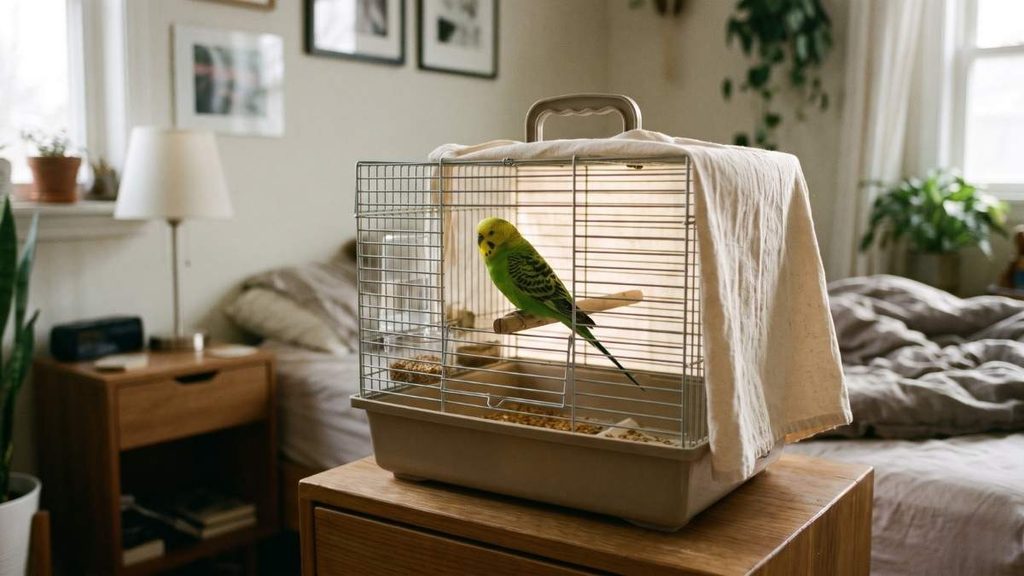
A small travel cage or carrier is the simplest choice. Place it in a quiet, well-ventilated room away from the cleaning area, with fresh water, a few favorite seed treats, and a perch. Keep the room temperature steady and avoid direct sun or drafts. Your parakeet should have a familiar toy or two and, if it is comfortable with it, a light cover over part of the carrier to reduce stress. Never leave the carrier near the sink, the kitchen, or anywhere that cleaning products are in use.
Option 2: A Bird-Proofed Room
If your budgie is accustomed to time out of the cage, a bird-proofed room works well. Close windows and doors, cover mirrors and glass, switch off ceiling fans, and remove houseplants, open water, and other pets. Check for gaps behind furniture where a small bird could become trapped. Stay in the room and supervise throughout. For a full checklist of room safety and how to manage supervised time, see our guide on can budgies be let out of their cage.
Returning Your Bird
Return your budgie only when the cage is fully rinsed as required, completely dry, and free of any cleaning-product odor. A damp cage encourages mold, and lingering fumes can irritate the respiratory system. Offer fresh food and water, then watch your parakeet closely for the first hour to confirm it is eating, perching, and behaving normally.
How to Wash Perches, Food Dishes, and Toys
Cleaning budgie perches, dishes, and toys matters as much as cleaning the cage itself, because these are the items your parakeet touches, chews, and eats from every day.
Textured Wooden Perches
Natural wood is porous, so droppings dry into the grooves and bark where they are hard to reach. Cleaning budgie perches starts with dry scraping. Use a stiff brush, a wooden skewer, or the back of a butter knife to loosen and lift dried droppings before any liquid touches the wood. Then scrub with the diluted vinegar solution or hot water with a drop of unscented dish soap, and rinse well with clean water.
Wood must be completely dry before it goes back in the cage, since damp surfaces can encourage mold growth. Let perches dry thoroughly in a warm, airy spot. Perches that stay stained, crumbly, or soft after cleaning should be replaced. For advice on choosing safe woods and caring for natural bark, see our guide to the best perches for budgies.
Food and Water Dishes
Wash stainless steel bowls daily with hot water and unscented dish soap, scrubbing away any film or crusted seed, then rinse until no soap remains. Stainless steel is smooth and non-porous, so it generally cleans more thoroughly than plastic or ceramic with worn glaze. Dry the dishes before refilling, and discard any bowl that is cracked, deeply scratched, or rusted.
Toys
Inspect toys every week. Wash hard plastic, acrylic, and metal toys with the same soap or vinegar cleaning method, then rinse and dry them fully. Remember that vinegar is not a reliable disinfectant. Discard toys that are frayed, because loose threads can wrap around toes or necks. Throw out wooden, rope, or paper toys that are moldy, heavily soiled, or have a musty smell, since porous materials can be difficult to clean thoroughly.
Drying and Reassembling the Habitat
Every surface must be completely dry before your budgie goes back in. Moisture left in joints, tray seams, and wooden perches encourages mold and bacteria, so drying is a safety step, not a finishing touch.
Sun-Drying the Empty Cage
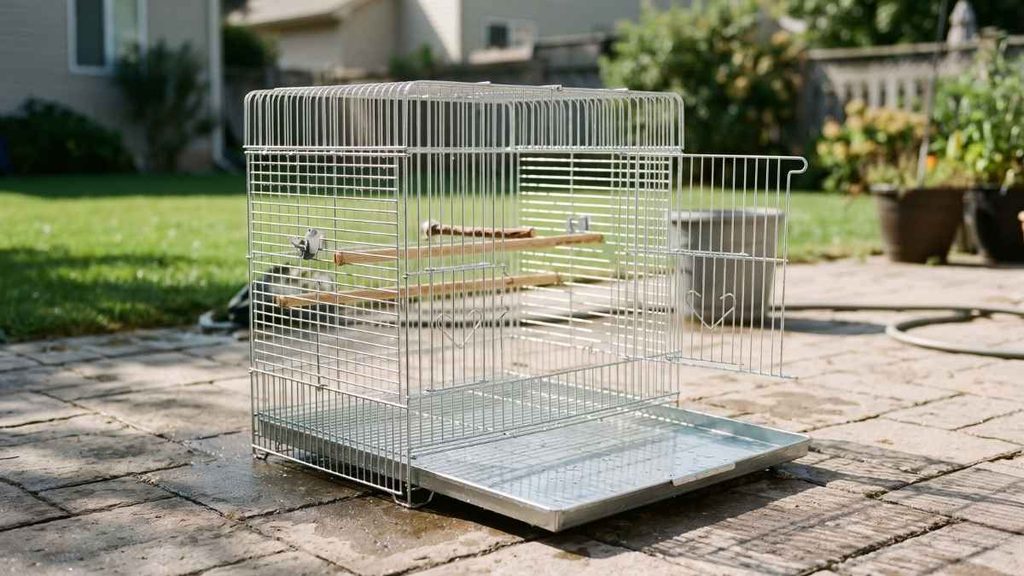
On a mild, dry day, natural sunlight may help dry the empty cage. However, sunlight is not a dependable disinfection method and does not replace proper cleaning or the use of an appropriate disinfectant when needed. Scrub and rinse first, and allow the cage to dry completely. For the full checklist of outdoor precautions, see our guide on can you put a budgie or parakeet cage outside.
- Take only the empty cage outside. Your parakeet stays indoors, away from predators, wild bird contact, and temperature extremes.
- Choose mild weather and stay nearby, since cats, rodents, and insects may approach an unattended cage.
- Bring the cage in before metal bars heat up, and let them cool fully before your bird touches them.
On cold or rainy days, dry the cage indoors with towels and let it air dry in a ventilated room.
Reassembling the Cage
Once everything is completely dry, rebuild the habitat:
- Check that doors, latches, and hinges close securely.
- Fit a fresh liner in the tray.
- Reinstall the perches, then the dishes and toys.
- Confirm that no cleaning-product odor remains.
Returning the Cage to Its Spot
Place the clean cage back against an interior wall in a draft-free area, away from kitchen fumes, windows, and vents. For guidance on choosing the safest position, see our guide on where to put a budgie cage. Then bring your budgie back and watch it settle in.
Conclusion & Educational Disclaimer
A healthy budgie cage comes from small, steady habits. Five minutes each day to change the liner, wash the dishes, refresh the water, and check the droppings helps prevent the buildup that makes stressful deep scrubbing necessary. Use diluted vinegar as a cleaning aid or an appropriate veterinary disinfectant when needed, keep your parakeet away from cleaning fumes and residues, and dry everything fully before your bird returns.
Educational Disclaimer: This guide is for general education and does not replace care from a qualified avian veterinarian. If your budgie shows labored breathing, tail bobbing, or sudden changes in droppings, contact an avian vet promptly.